5 pounds 1941
Market Prices
4 salesAbout This Note
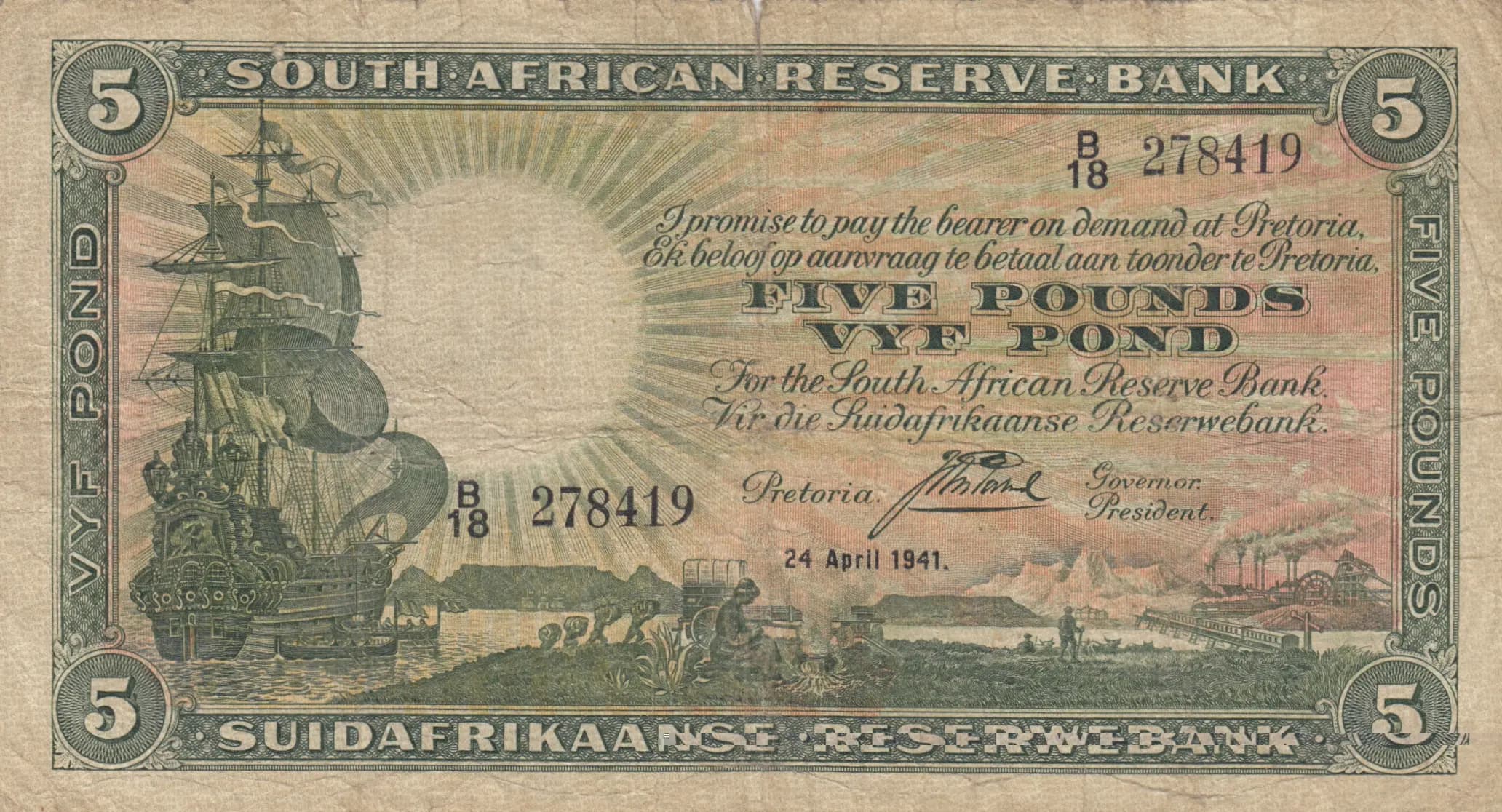
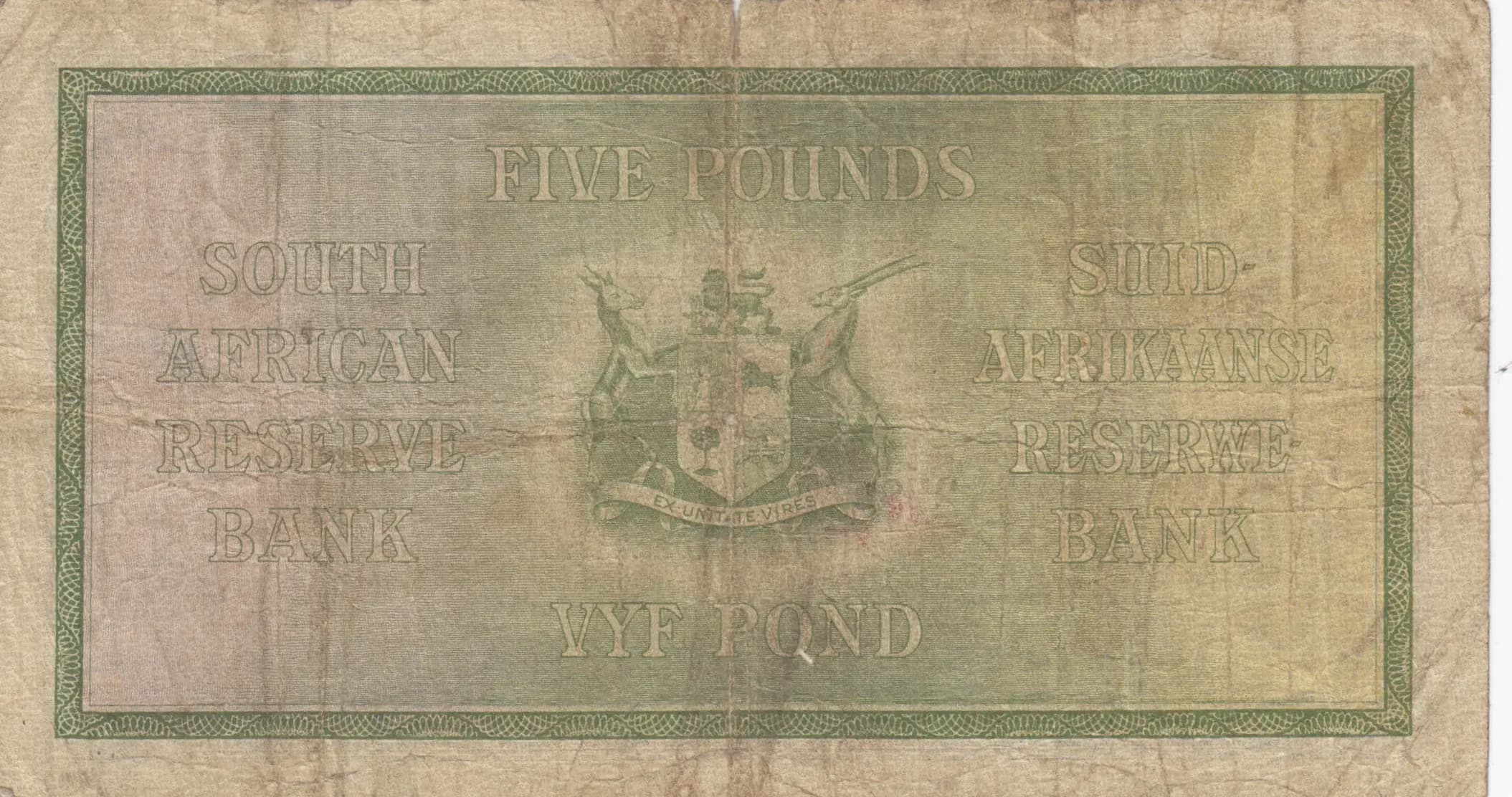
A well-circulated example of the South African Reserve Bank 5 Pounds note dated 24 April 1941, graded VG. The note displays the characteristic bilingual English/Afrikaans design of the P-86b series, featuring an impressive sailing ship vignette on the obverse and the South African coat of arms on the reverse. Despite moderate circulation wear including center fold, creases, and age-related toning, the note remains fully legible with clear impressions of the intricate engraved designs.
Common. The P-86b series was issued over an extended period (1933-1944 according to catalog references) with substantial circulation. The eBay price data shows VG examples selling in the $36-80 range, consistent with common circulation notes. Print runs for this denomination during this period were substantial, and no specific scarcity indicators exist for the 1941 date or this variety.
This 1941 issue reflects South Africa's post-Union monetary development, issued during the final years of the sterling-based currency system before decimal conversion. The prominence of the sailing ship (depicting early colonial exploration) and the vignette showing covered wagons and settlement imagery emphasize the nation's historical narrative of European expansion and development. The bilingual English-Afrikaans text represents the formal recognition of both European settler communities within the Union of South Africa during this period.
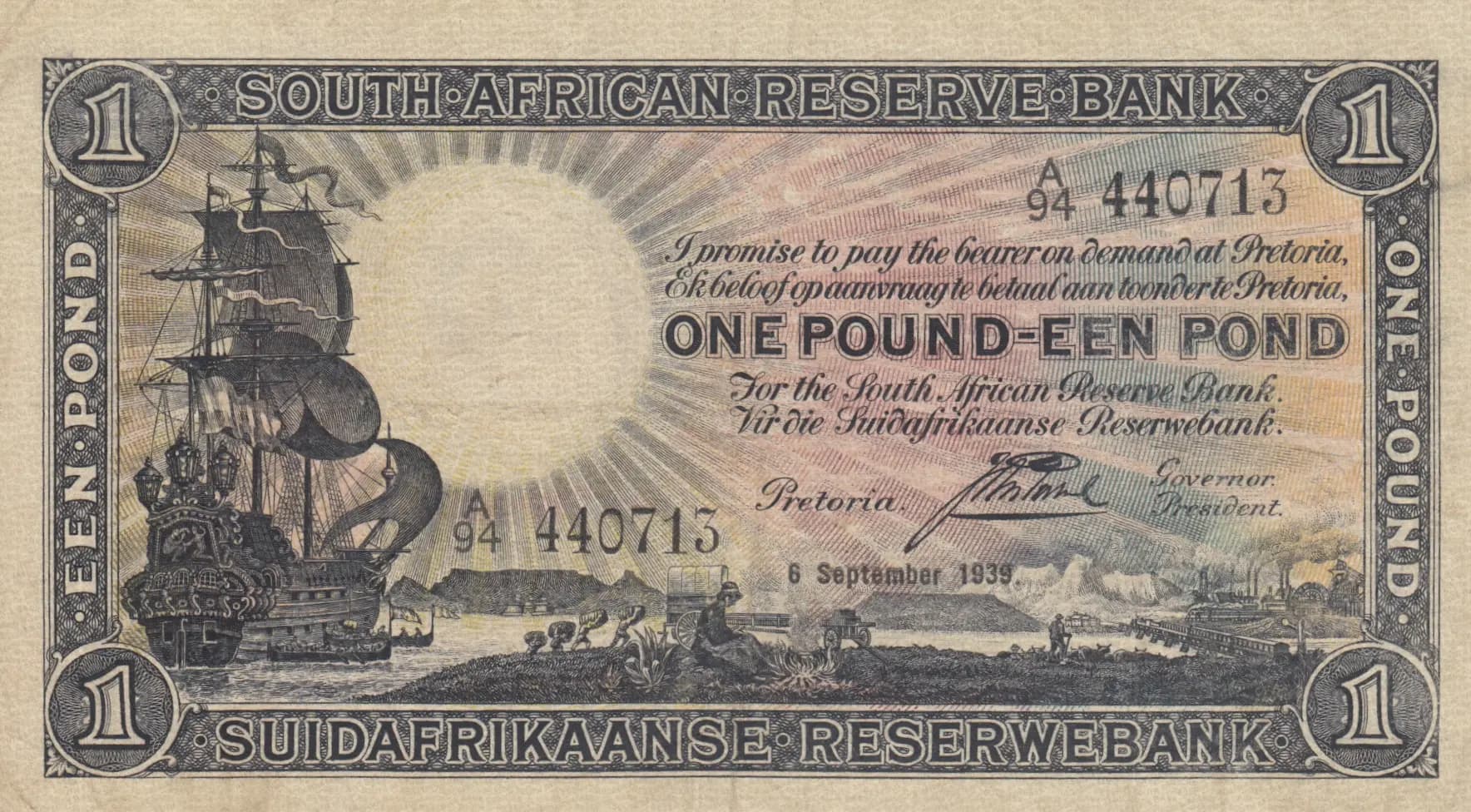
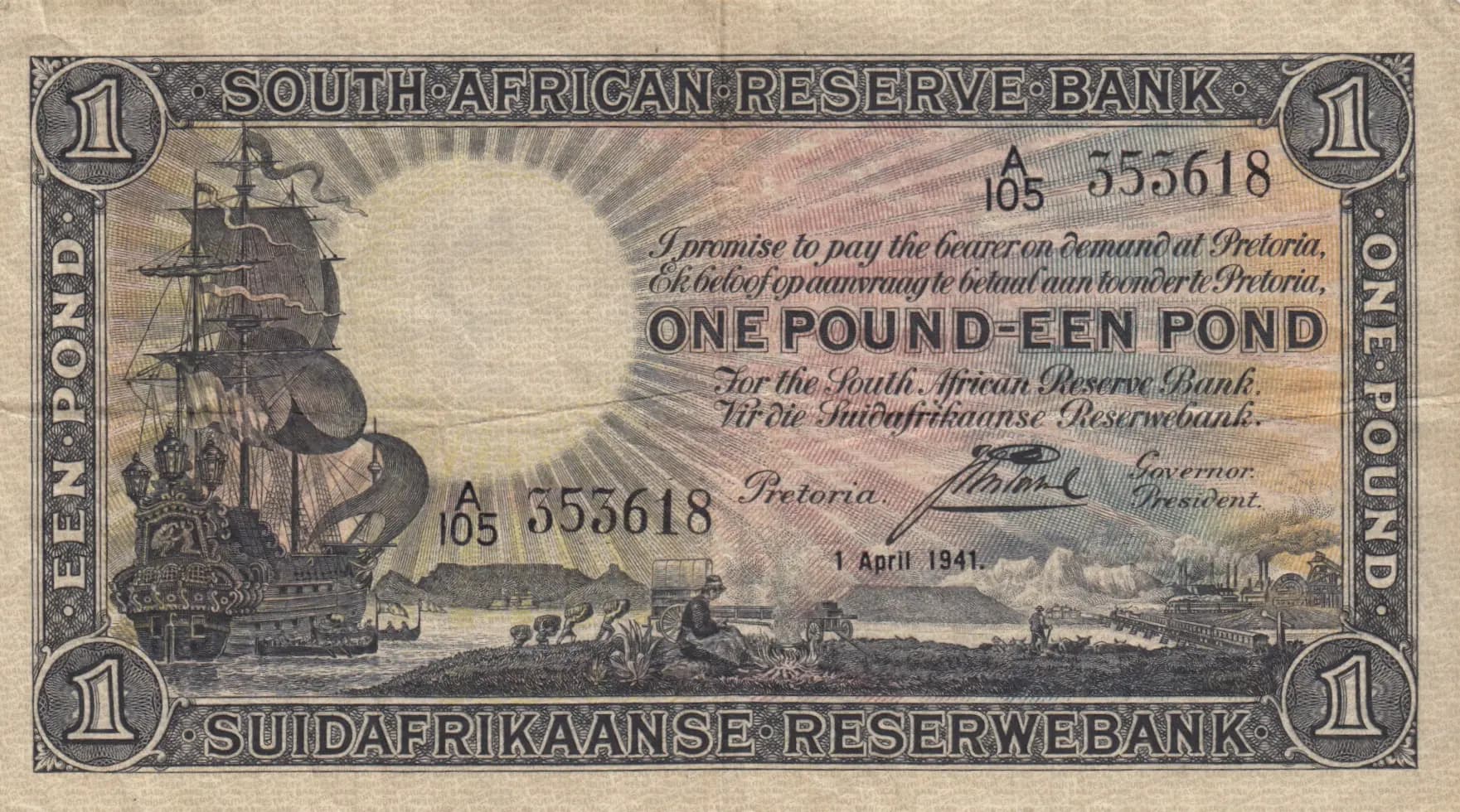
The obverse features a detailed engraved sailing ship with multiple masts positioned prominently on the left side, representing early European exploration and maritime commerce. Below this is a significant historical vignette depicting the Great Trek narrative: covered wagons (ox wagons), oxen teams, settlers, mountainous landscape (likely Table Mountain or the Drakensberg range), and industrial/settlement structures in the distant background, symbolizing the colonial expansion and development themes central to Union identity. The reverse displays the official South African coat of arms featuring a quartered shield with supporters (two human figures in classical style) flanking the shield, surmounted by a crown, with the national motto 'UNITE YE' on a banner beneath. Denomination numerals '5' appear in ornamental circular medallions in all four corners of the obverse. The color scheme of green and brown/tan tones with cream underprint is characteristic of higher-denomination notes of this era.
FRONT SIDE: 'SOUTH AFRICAN RESERVE BANK' (English) / 'SUID-AFRIKAANSE RESERWEBANK' (Afrikaans); 'FIVE POUNDS' (English) / 'VYF POND' (Afrikaans); Promise to Pay clause in English and Afrikaans: 'I promise to pay the bearer on demand at Pretoria' / 'Ek beloof om op aanvraag te betaal aan toonder te Pretoria'; 'For the South African Reserve Bank' / 'Vir die Suidafrikaanse Reserwebank'; Serial Number: 'B 18 2784119'; Date: '24 April 1941'; Authority signatures: 'Governor' and 'President'. REVERSE SIDE: 'FIVE POUNDS' (English) / 'VYF POND' (Afrikaans); 'SOUTH AFRICAN RESERVE BANK' (English) / 'SUID-AFRIKAANSE RESERWEBANK' (Afrikaans); Coat of Arms motto: 'UNITE YE' (English).
Intaglio (steel engraving) throughout, evidenced by the fine line work, cross-hatching patterns, and the characteristic deep impression of detailed security designs visible in the images. The South African Reserve Bank notes of this period were typically printed by De La Rue or similar Crown security printers; the exceptional quality of the engraved vignettes and coat of arms indicates professional security printer production, standard for Commonwealth currency of the 1930s-1940s.
This note is cataloged as P-86b variant, identified by the watermark of J. van Riebeeck (as opposed to P-86a and P-86c variants). The serial number prefix 'B 18' and the specific date of 24 April 1941 are typical of notes from this series' mid-period production run. The bilingual English-Afrikaans text confirms this as the post-1929 design variant that replaced the earlier Dutch-text P-85 issue. The signatures visible (Governor and President) would require cross-reference with known signatories of the South African Reserve Bank during 1941 to identify the specific signing variety.