1 pound 1941
Market Prices
17 salesAbout This Note
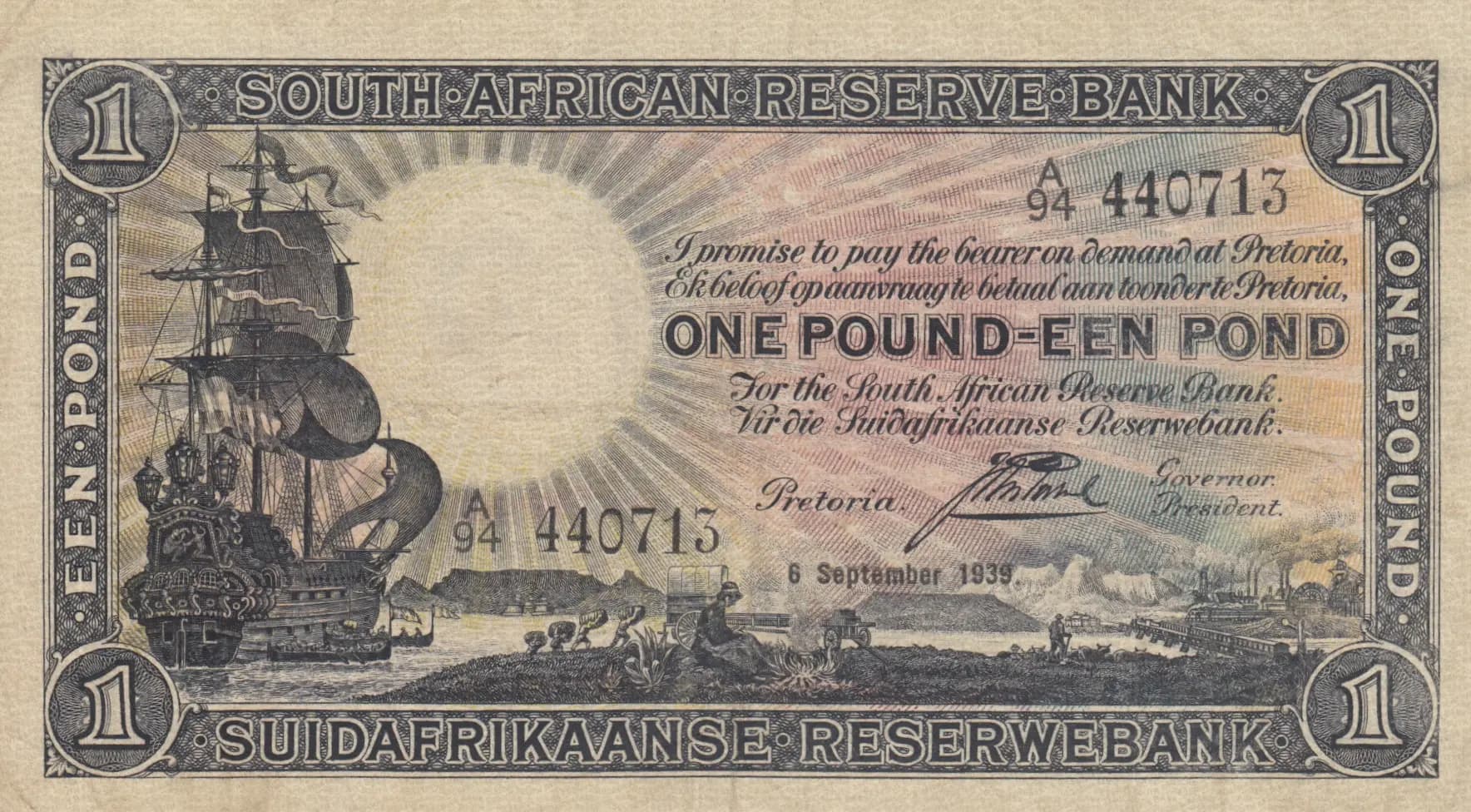
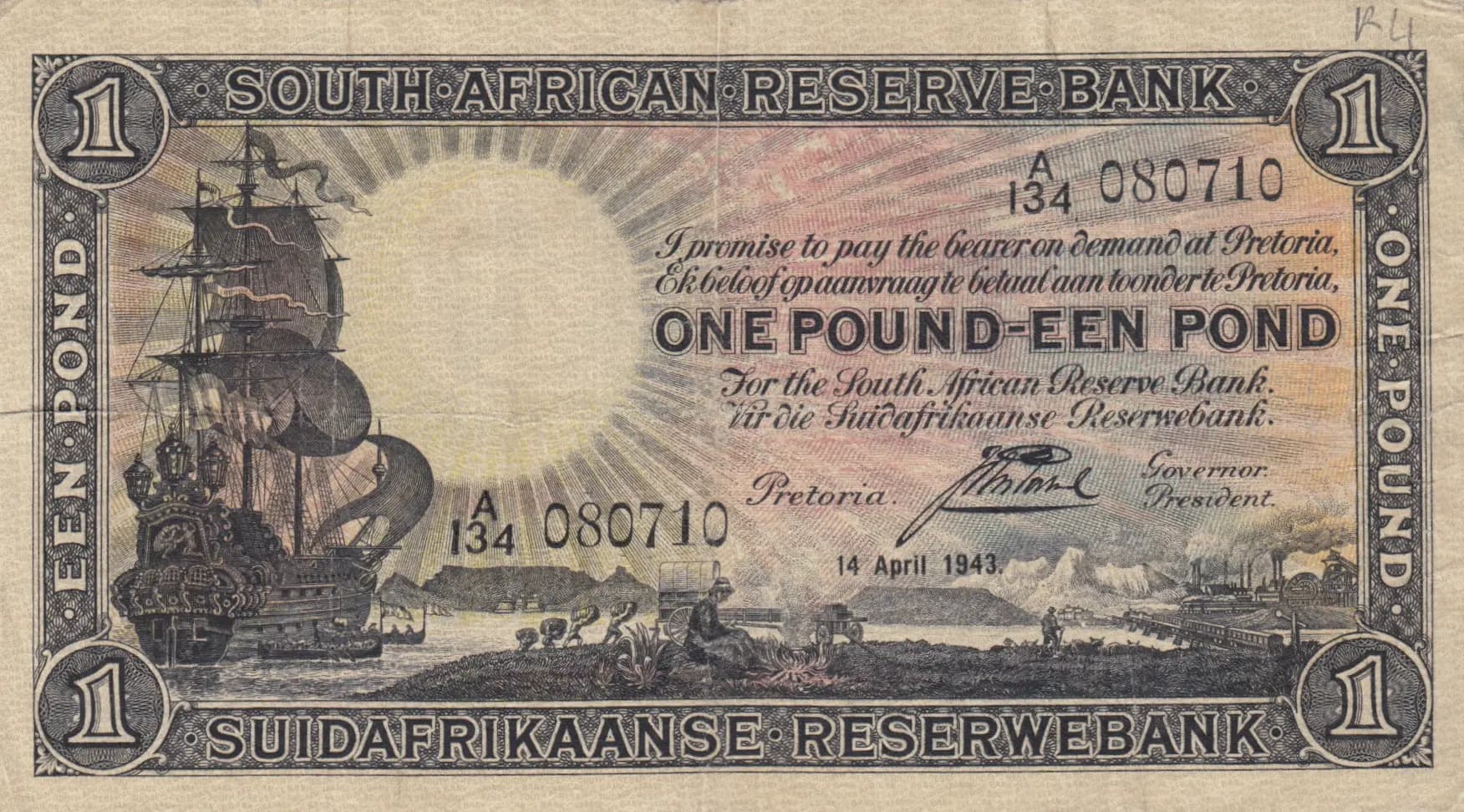
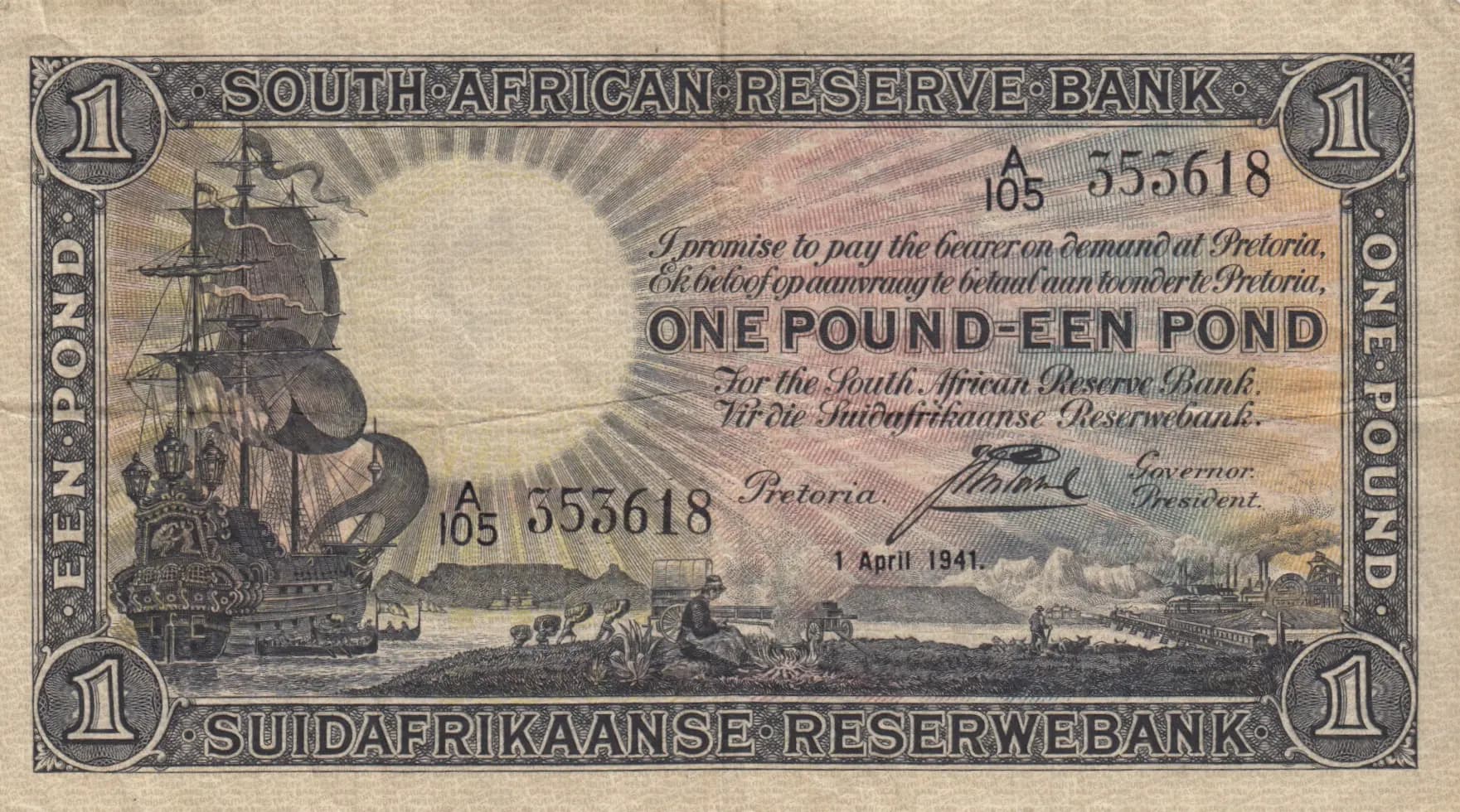
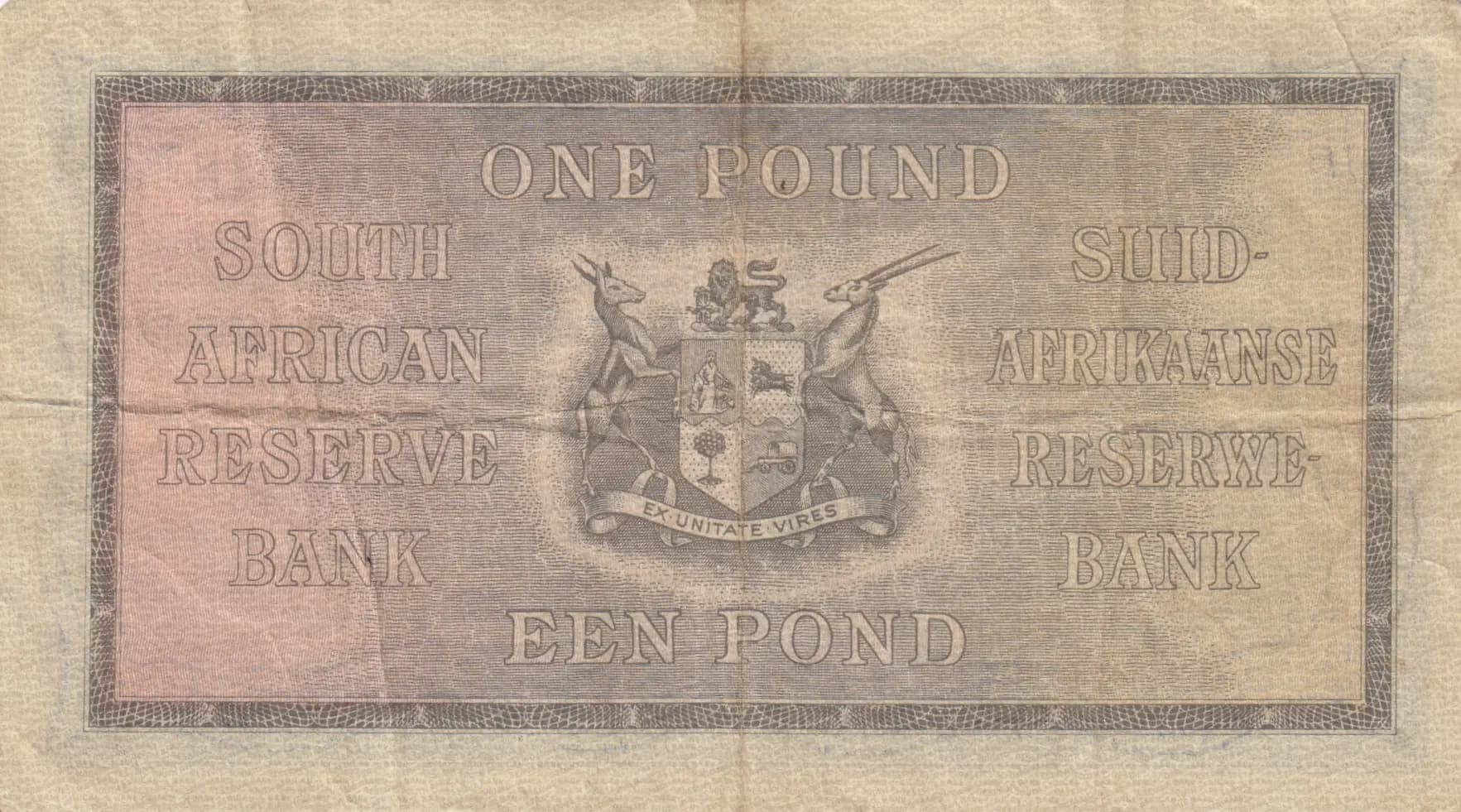
This is a South African One Pound note dated 1 April 1941, issued by the South African Reserve Bank, graded in Fine (F) condition. The note features striking maritime imagery on the front, including a historic sailing ship with full rigging and an elaborate harbor scene depicting trading and industrial activity, rendered in black and sepia tones with visible age-related wear consistent with an 80+ year old banknote. The reverse displays the South African coat of arms with springbok supporters and the motto 'Ex Unitate Vires,' presented in dual English and Afrikaans text reflecting the bilingual nature of the era.
Common. The eBay sales history shows consistent availability of this note in Fine condition, with prices ranging from $8.50 to $35.97 across multiple transactions from 2010-2022, and more recent sales in the $24-29 range. The 2016 catalog value for VF is $100 and UNC is $200, indicating this is a standard-circulation issue from a major issuing authority with substantial print runs. Notes regularly appearing in the sub-$35 market in F condition are definitionally common in numismatic terms. There is no evidence of limited print runs, recalls, or scarcity affecting the P-84e variety.
This note was issued during World War II, a pivotal period for South Africa as the nation navigated its role in the global conflict while maintaining its developing economy. The prominent maritime imagery—the galleon, harbor scene, and trading activity—reflects South Africa's historical importance as a trading hub and its connection to European colonial commerce at the Cape. The dual English and Afrikaans inscriptions underscore the political and linguistic tensions of 1940s South Africa, where both European languages held official status despite the growing dominance of Afrikaans nationalism.
The front depicts a rich maritime scene centered on historical European colonial trade imagery. The left side features a fully-rigged galleon or trading vessel under full sail, symbolizing South Africa's role in historic maritime commerce. The lower portion contains an elaborate harbor vignette showing multiple ships, dock workers, and industrial structures, representing the country's port economy and mercantile heritage. A large circular watermark area occupies the center. The right side contains the promise to pay text and denomination markers. The reverse presents the South African coat of arms, featuring a shield with multiple quarterings (representing the Union provinces), supported by two springbok antelopes, topped with a crown, and displaying the heraldic motto 'EX UNITATE VIRES' on a banner below. Both sides employ fine line engraving throughout, with dual-language text in English and Afrikaans forming an integral part of the security design. The color palette of black, sepia, and tan on cream-colored paper creates a dignified, period-appropriate appearance.
FRONT SIDE: 'SOUTH AFRICAN RESERVE BANK' (English) / 'SUIDAFRIKAANSE RESERWEBANK' (Afrikaans); 'ONE POUND - EEN POND' (English and Afrikaans); 'I promise to pay the bearer on demand at Pretoria' (English) / 'Ek beloof opname te betaal aan man vorder te Pretoria' (Afrikaans); 'for the South African Reserve Bank' (English) / 'vir die Suidafrikaanse Reserwebank' (Afrikaans); Date: '1 April 1941'; Signature positions: 'Governor' and 'President'; Serial number: 'A 105 555618'. BACK SIDE: 'ONE POUND' (English) / 'EEN POND' (Afrikaans); 'SOUTH AFRICAN RESERVE BANK' (English) / 'SUUD-AFRIKAANSE RESERVE BANK' (Afrikaans); Coat of arms motto: 'EX UNITATE VIRES' (Latin, meaning 'From unity, strength').
This note was produced using traditional intaglio (engraved line) printing, evidenced by the fine detail visible in the maritime vignettes, coat of arms heraldry, and decorative borders. The South African Reserve Bank notes of this period were typically printed by security printers specializing in currency production. The dual-language inscription placement and the intricate engraved security details (including the watermark area and fine line patterns) indicate sophisticated currency production standards of the era. The precision of the line work and the tonal gradations visible in the photographic examination confirm high-quality intaglio engraving as the primary technique.
This note is identified as Pick P-84e, one of four cataloged variants for the 1 pound denomination (P-84b, P-84c, P-84e, P-84f). All variants share the J. van Riebeeck watermark. The differences between these varieties relate to signature combinations and minor design elements typical of banknote production runs. The serial number visible on this note is 'A 105 555618,' with the prefix 'A' indicating the printing series. The date of 1 April 1941 matches the catalog issue date of 1938 for this general series, reflecting the note's position within the SARB's early currency production period.