2 rand 1978
Market Prices
24 salesAbout This Note
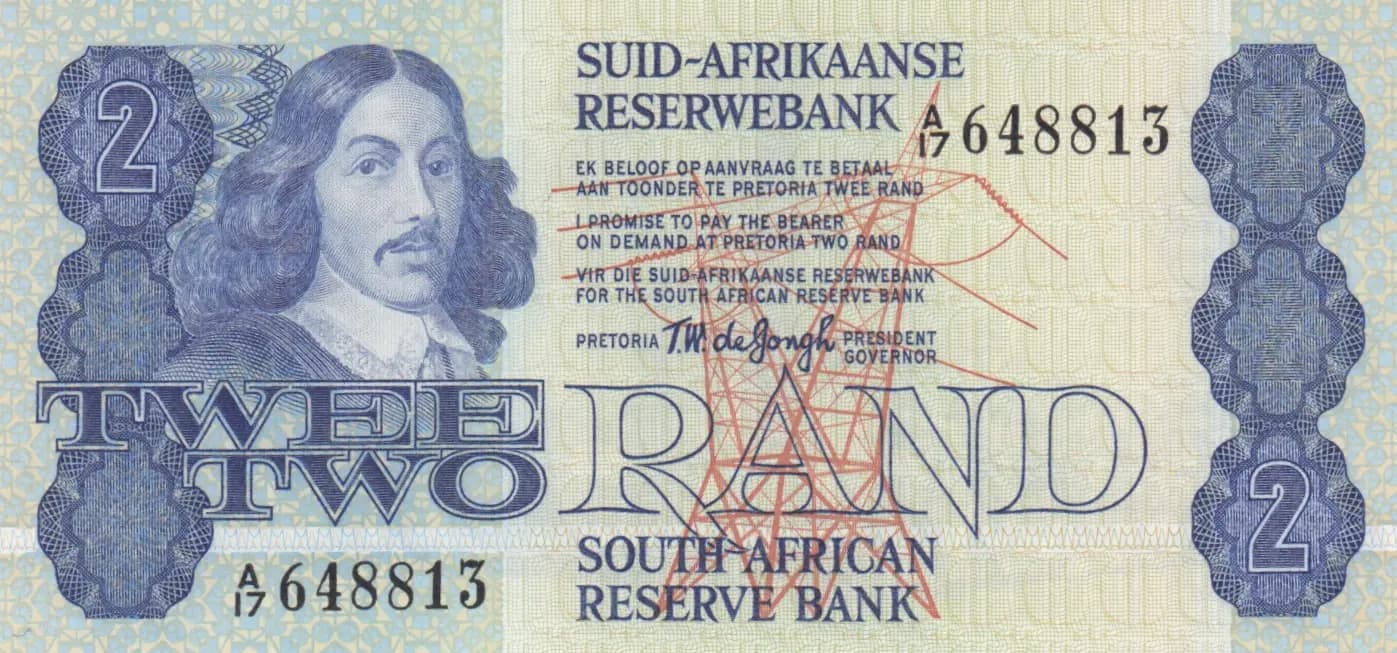
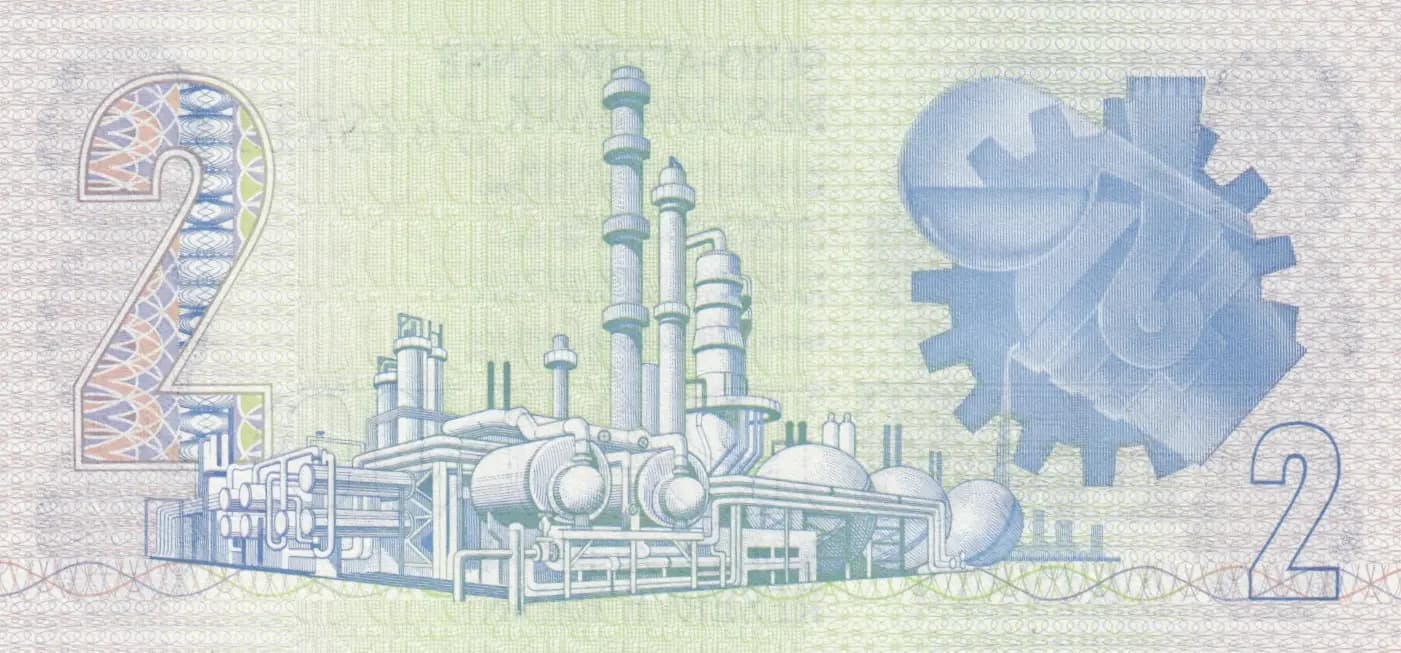
This is a 1978 South African 2 Rand note (Pick 118a) in uncirculated condition, featuring a portrait of a 17th-century historical figure on the obverse and an industrial refinery complex on the reverse. The note displays exceptional condition with sharp printing, clean margins, and no visible wear, representing the classic South African Reserve Bank design from this era with bilingual Afrikaans/English inscriptions.
Common. eBay market data shows consistent sales activity across multiple condition grades from 2014-2025, with UNC examples realizing $3-5 USD in recent sales, indicating strong collector interest but no scarcity premium. The 1978-1980 series (Pick 118a) was part of regular circulation issue with substantial print runs. The note's modest secondary market value and ready availability in multiple condition grades confirm common status despite its historical and design significance.
Issued during South Africa's apartheid period, this 1978 note reflects the nation's economic focus on industrial development, evidenced by the prominent Sasol Refinery depicted on the reverse—a symbol of South African mineral and energy processing capabilities. The obverse portrait represents a historical figure from South Africa's colonial past, consistent with the iconography of South African currency during this period, while the bilingual presentation (Afrikaans and English) reflects the official language policy of the era.
The obverse features a formal portrait of a man with long, curled hair in 17th-century period costume, positioned at the left of the note, identified as Bartholomeus Vermuyden (a historical figure from South Africa's colonial period). The reverse depicts the Sasol Refinery, a major South African industrial facility, rendered in detailed line engraving showing multiple tall processing towers, smokestacks, and spherical storage tanks characteristic of petroleum refining operations. The design incorporates ornamental geometric patterns throughout, with decorative numerals '2' framing the refinery scene on both sides. A watermark area is visible in the upper right corner on the reverse. The color scheme employs light blue and cream tones on the obverse and pale green/blue tones on the reverse, creating a sophisticated appearance typical of South African Reserve Bank notes of this period.
FRONT: 'SUID-AFRIKAANSE RESERWEBANK' / 'SOUTH AFRICAN RESERVE BANK' (South African Reserve Bank); 'EK BELOOF OP AANVRAAG TE BETAAL AAN TOONDER TE PRETORIA TWEE RAND' (I promise to pay the bearer on demand at Pretoria Two Rand); 'I PROMISE TO PAY THE BEARER ON DEMAND AT PRETORIA TWO RAND'; 'VIR DIE SUID-AFRIKAANSE RESERWEBANK / FOR THE SOUTH AFRICAN RESERVE BANK'; 'TWEE RAND' / 'TWO RAND' (Two Rand); 'PRETORIA'; signature 'Th. de Jongh' with title 'PRESIDENT GOVERNOR'; Serial number 'A/79 648813'. BACK: Denomination numeral '2' appearing on both left and right sides. The reverse features the refinery complex with no additional major inscriptions beyond the denomination markers.
This note was produced using intaglio printing (fine line engraving), evidenced by the sharp detail visible in the portrait, the intricate geometric security patterns, the ornamental numerals, and the complex industrial illustration on the reverse. The high quality of the line work, the precise reproduction of fine details in the refinery complex, and the crisp serif typography are consistent with traditional intaglio/engraved banknote production. While specific printer attribution for this Pick number is not definitively confirmed in standard references, South African Reserve Bank notes of this era were typically produced by De La Rue or similar security printers specializing in intaglio currency production.
This note is identified as Pick 118a (1978 issue). Serial number observed: A/79 648813, indicating a 1979 printing from the series (prefix 'A/79'). Known varieties for this Pick number include different signature combinations and date prefixes within the 1978-1980 issuing period. The signature 'Th. de Jongh' as Governor represents the standard signature used during this period. No overprints or special markings are evident on this specimen, indicating it is a regular issue variety without commemorative or replacement characteristics.