2 rand 1961
Market Prices
24 salesAbout This Note
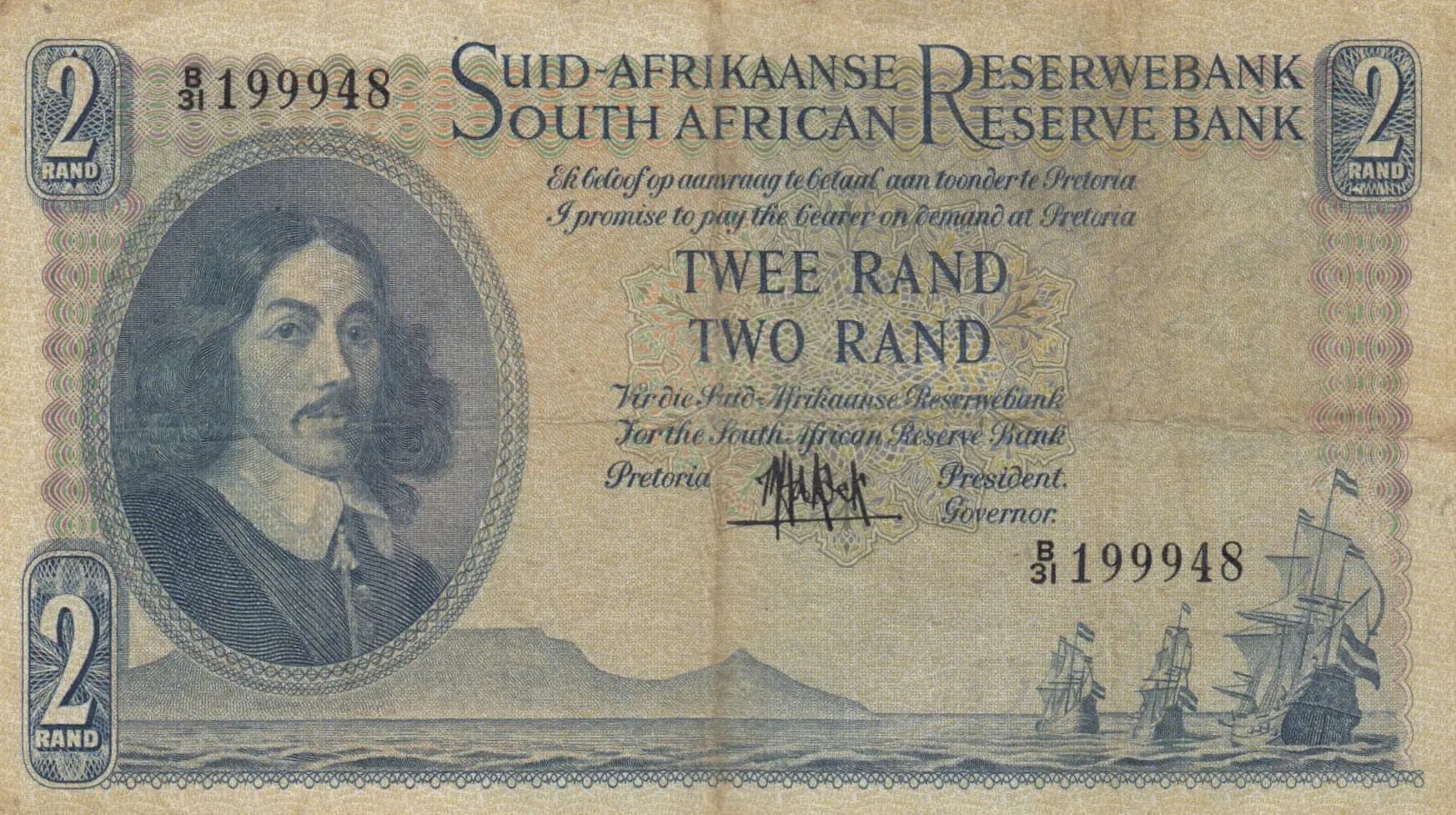
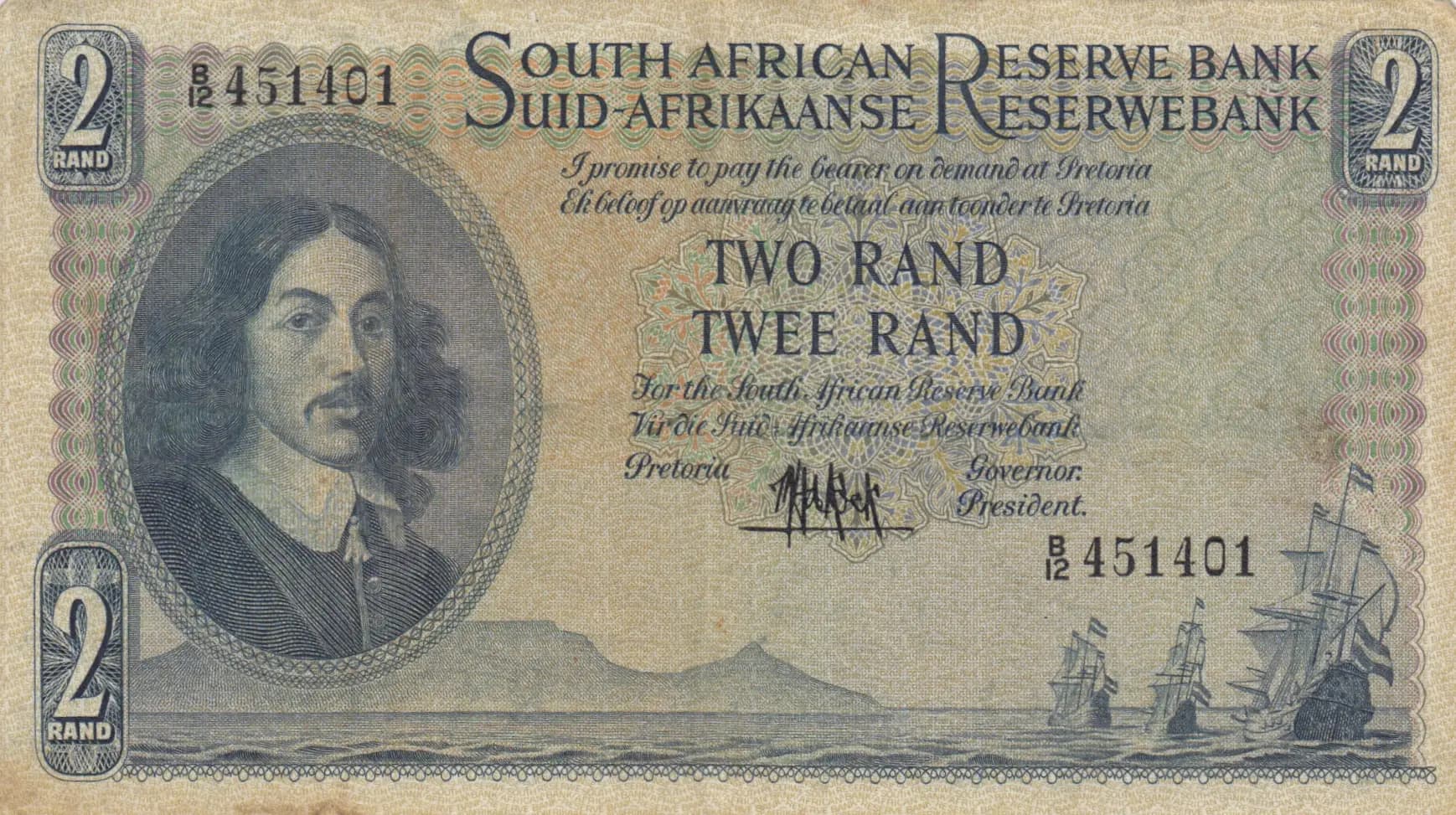
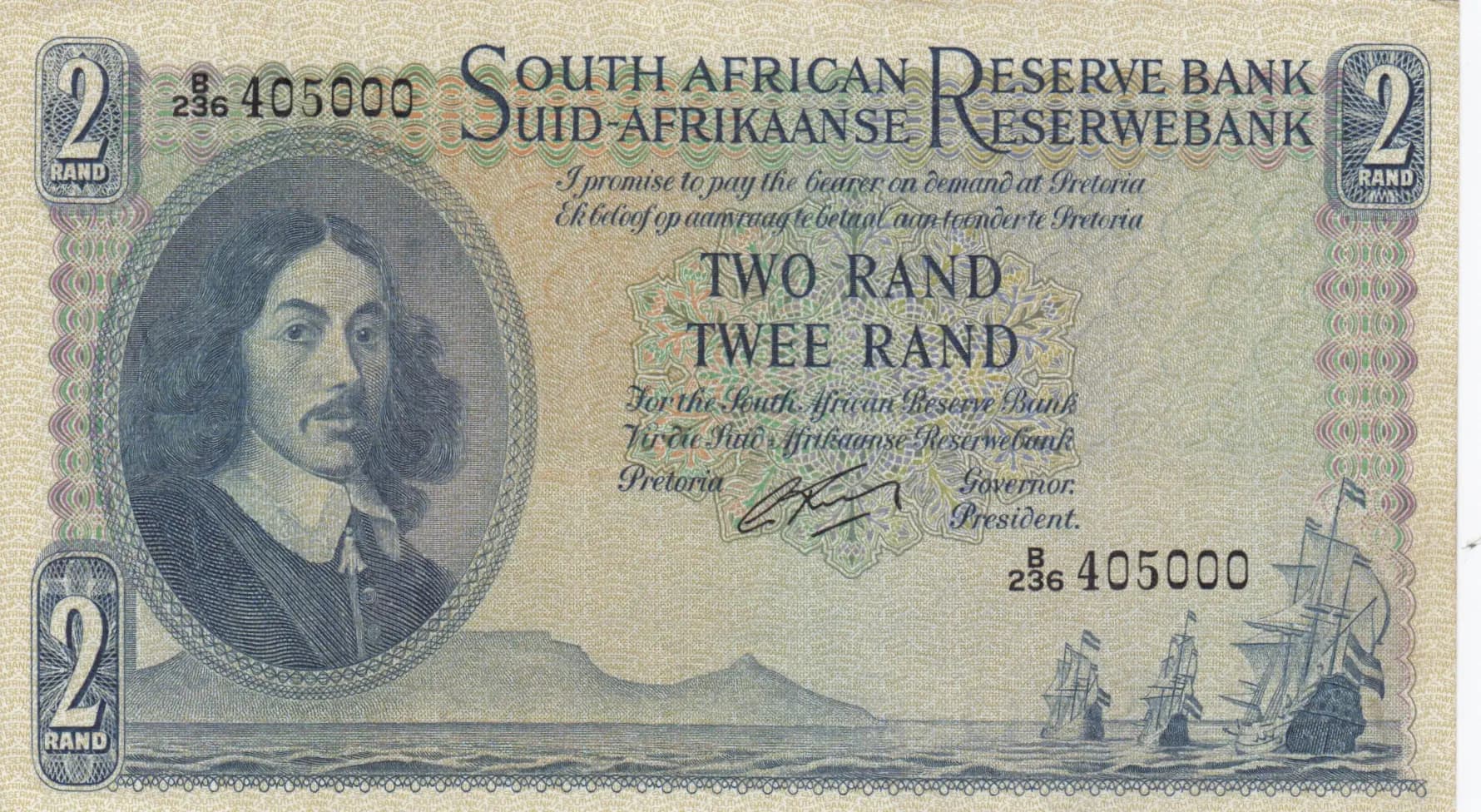
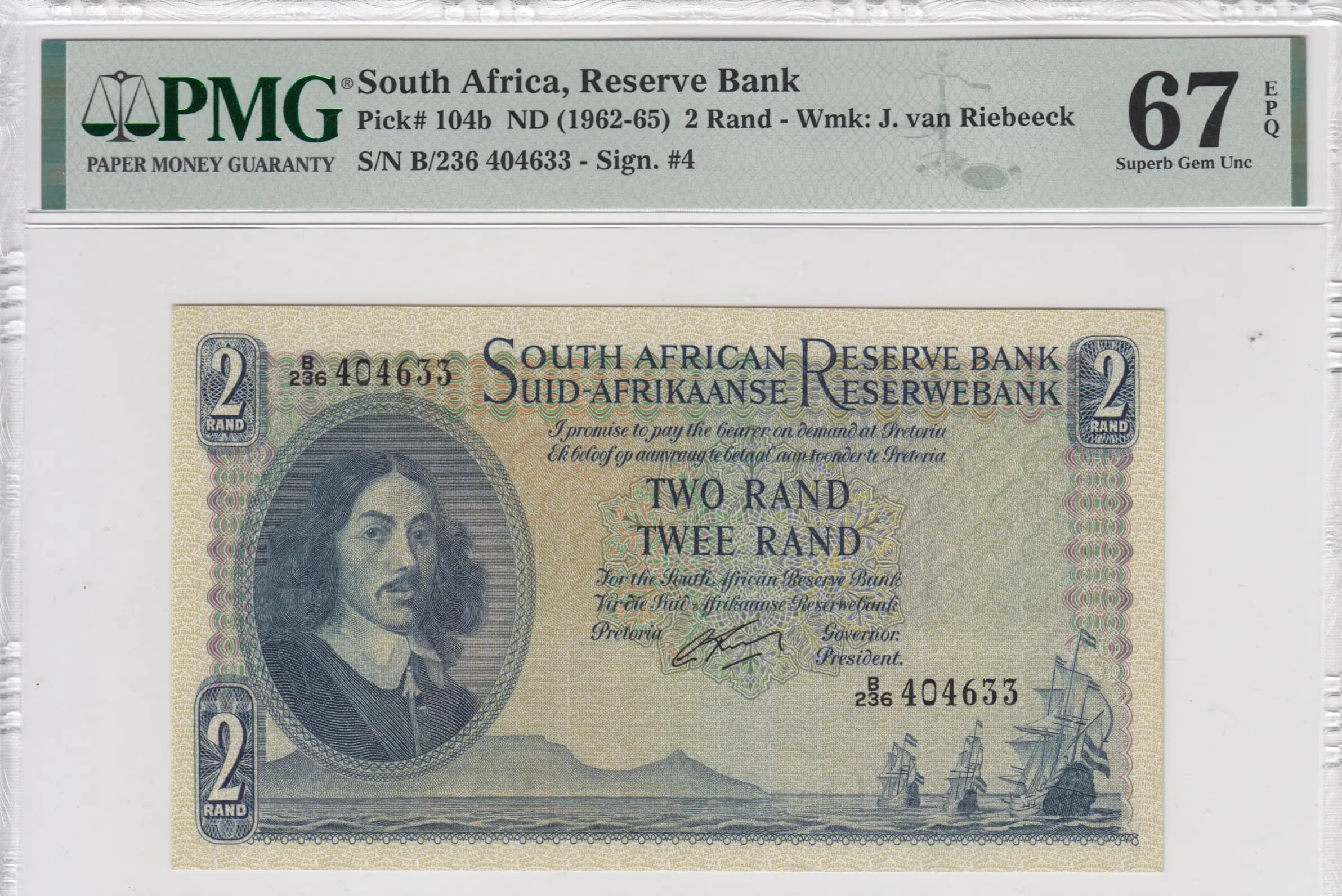
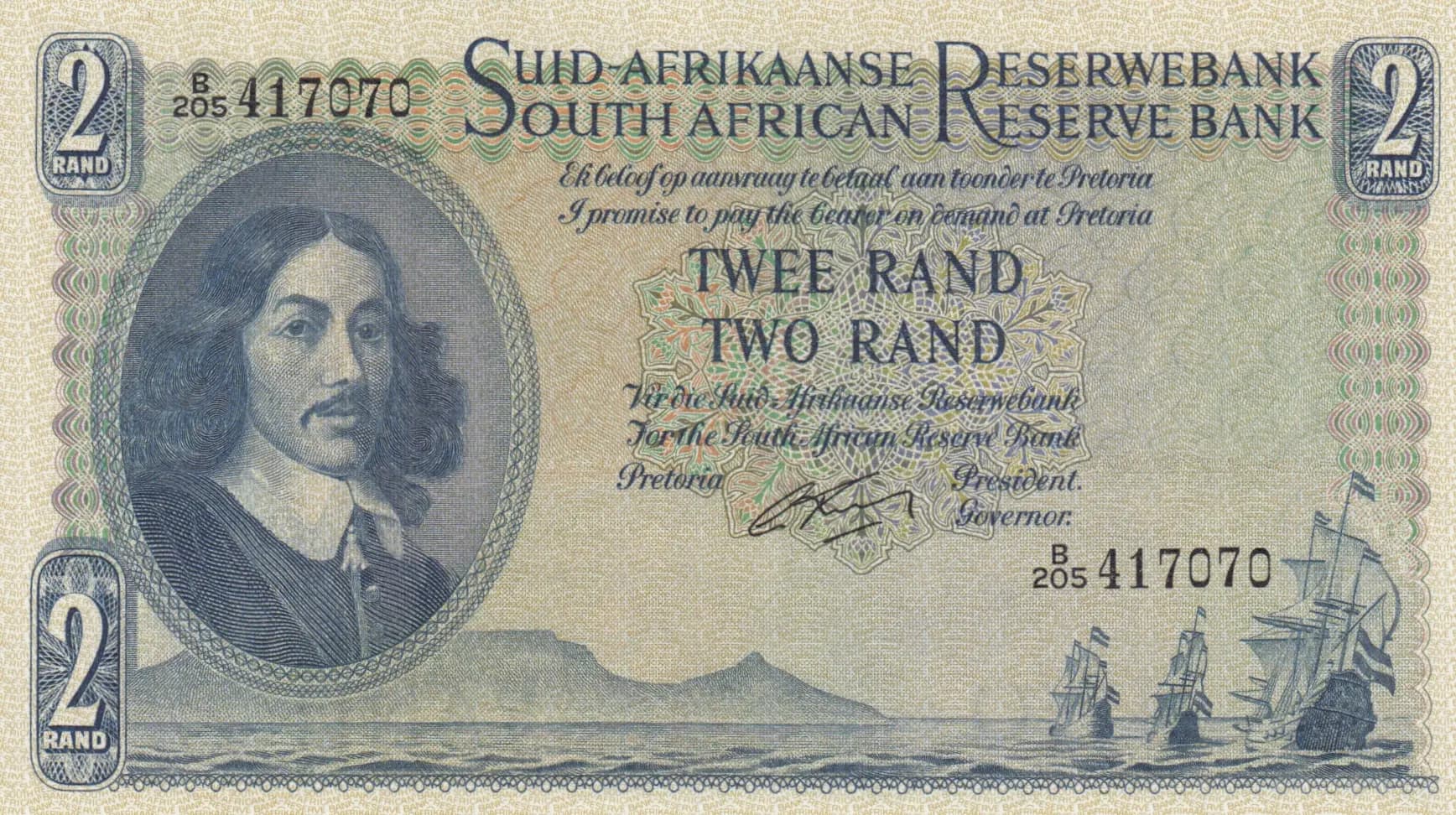
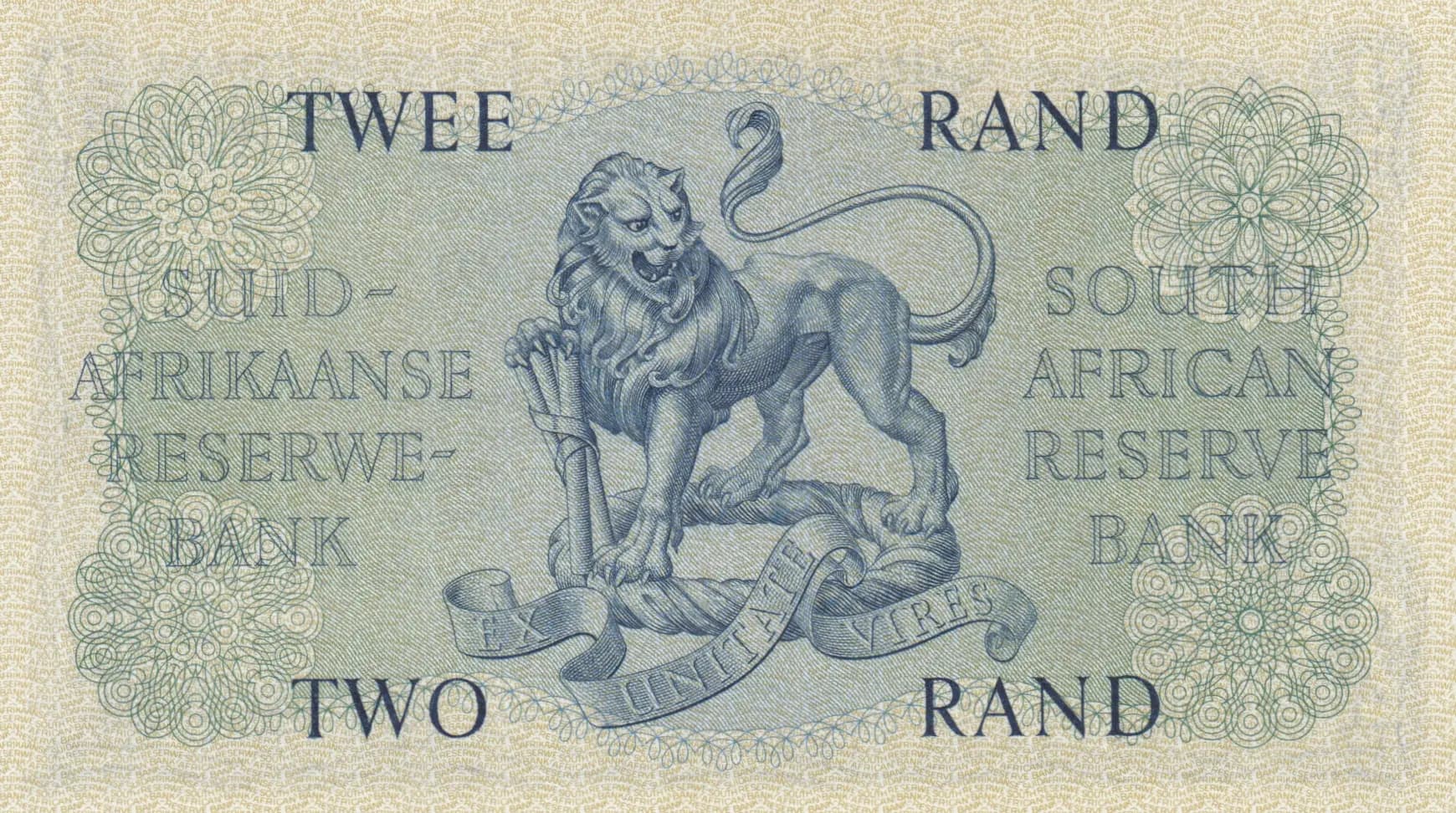
This is an exceptional uncirculated example of the South African 2 Rand note from 1961 (Pick P-105b), featuring the distinctive Afrikaans-first bilingual design typical of this variant. The note exhibits pristine condition with no visible wear, creases, or damage, displaying crisp detail throughout the fine-line engraving work. The reverse features a striking dynamic lion engraving that is characteristic of South African numismatic design from this era, making this an attractive example for collectors of early South African currency.
Common. This is a regular issue note with substantial print runs during the 1961-1965 production period. eBay market data shows consistent sales at modest prices ($5-$35 USD range depending on condition), with UNC examples averaging approximately $20-30. While the note is over 60 years old and has historical significance, the abundance of surviving examples and steady market supply indicate this is a standard banknote for collectors rather than a scarce or rare variant.
This 2 Rand note was issued during the early years of the South African Reserve Bank's operations following the country's transition to the Rand currency system. The imagery reflects post-apartheid era symbolism, with the lion serving as a national emblem and the sailing ships on the obverse referencing South Africa's maritime heritage and colonial history. The bilingual Afrikaans-English inscription layout reflects the country's dual official language policy during the 1960s.
The obverse features a portrait of Jan van Riebeeck (historically identified, though earlier cataloging sometimes referenced Bartholomeus Vermuyden) shown in profile facing left, dressed in period 17th-century clothing with distinctive long beard and collar. The portrait is flanked by decorative circular medallion patterns. The lower right corner depicts three tall-masted sailing ships at sea with mountainous background, symbolizing maritime exploration and the founding era of the Cape Colony. The reverse showcases a dynamic lion engraving in climbing or leaping pose, rendered in fine detail with prominent mane and musculature, positioned above an ornamental banner containing the bank name in both official languages. Both sides employ cream/beige backgrounds with blue and green accent colors and intricate geometric border designs.
FRONT: 'SUID-AFRIKAANSE RESERWEBANK' (Afrikaans: South African Reserve Bank), 'SOUTH AFRICAN RESERVE BANK' (English), 'TWEE RAND' (Afrikaans: Two Rand), 'TWO RAND' (English), 'Ek beloof op aanvraag te betaald, aan toonerde Pretoria' (Afrikaans: I promise to pay on demand to the bearer at Pretoria), 'I promise to pay the bearer on demand at Pretoria' (English), 'President', 'Governor', 'Pretoria'. BACK: 'TWEE' (Afrikaans: Two), 'TWO' (English), 'RAND' (Currency name, bilingual), 'SUID-AFRIKAANSE' (Afrikaans: South African), 'RESERWE' (Afrikaans: Reserve), 'AFRICAN RESERVE BANK' (English).
This note was produced using intaglio (line engraving) printing, evidenced by the fine-line patterns visible throughout the design, the crisp detail in the portrait and lion engraving, and the ornamental patterns that would be characteristic of security printing from this period. The South African Reserve Bank utilized De La Rue or similar security printers for production of early Rand series notes. The multi-color effect visible (blue and green elements on cream background) indicates a multi-plate printing process typical of high-security banknote production.
This is specifically Pick P-105b, the variant with the first line of the bank name and denomination in Afrikaans (as opposed to P-105a with English-first text). The visual analysis confirms the Afrikaans-first layout characteristic of this variety. Serial number observed: 205 417070. No overprints or security features such as security threads are noted in the visual analysis, consistent with 1960s-era South African banknote production standards. Collectors should note that the similar contemporary note Pick P-104 features the English-first text variant and is the corresponding English-language version.