2 rand 1961
Market Prices
5 salesAbout This Note
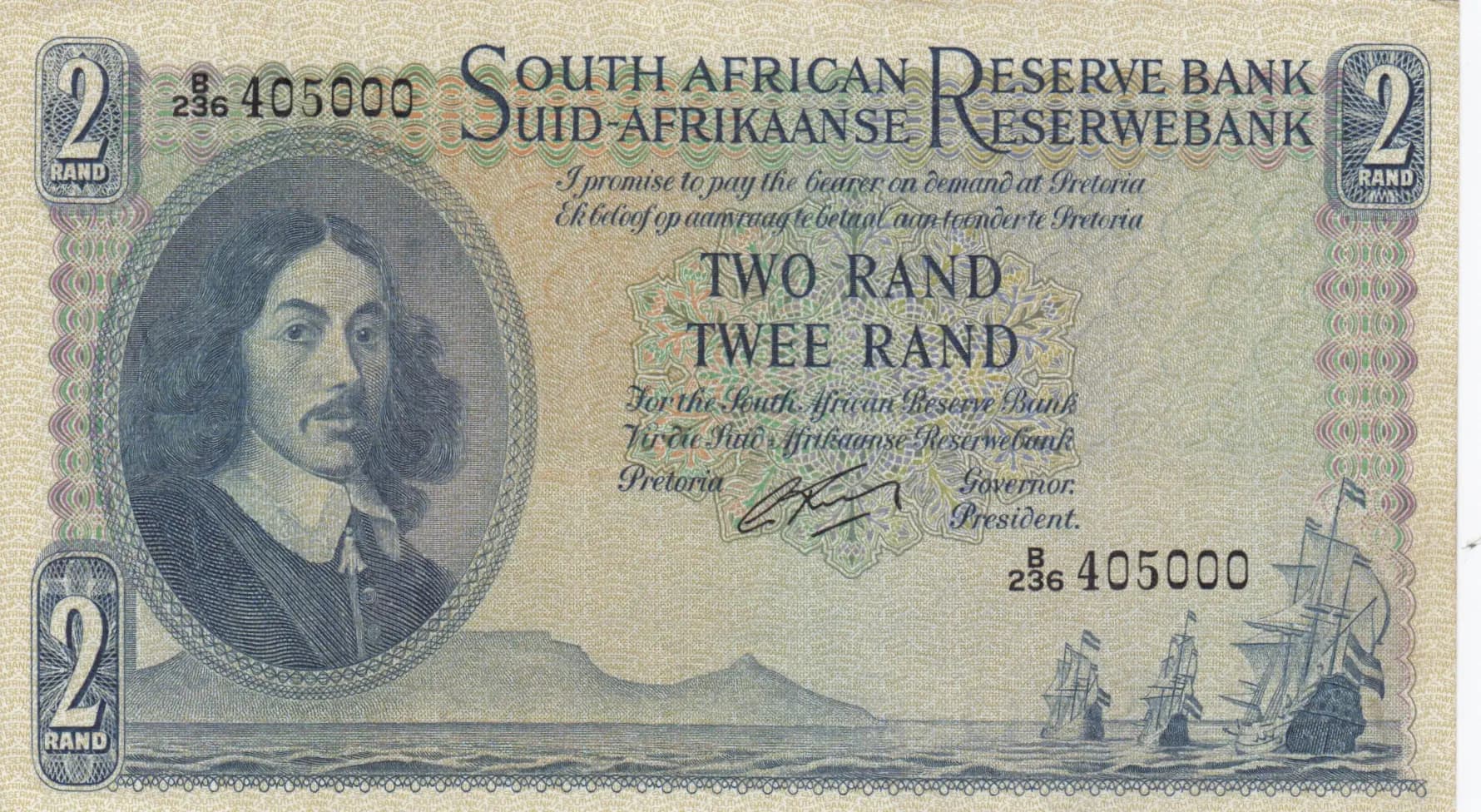
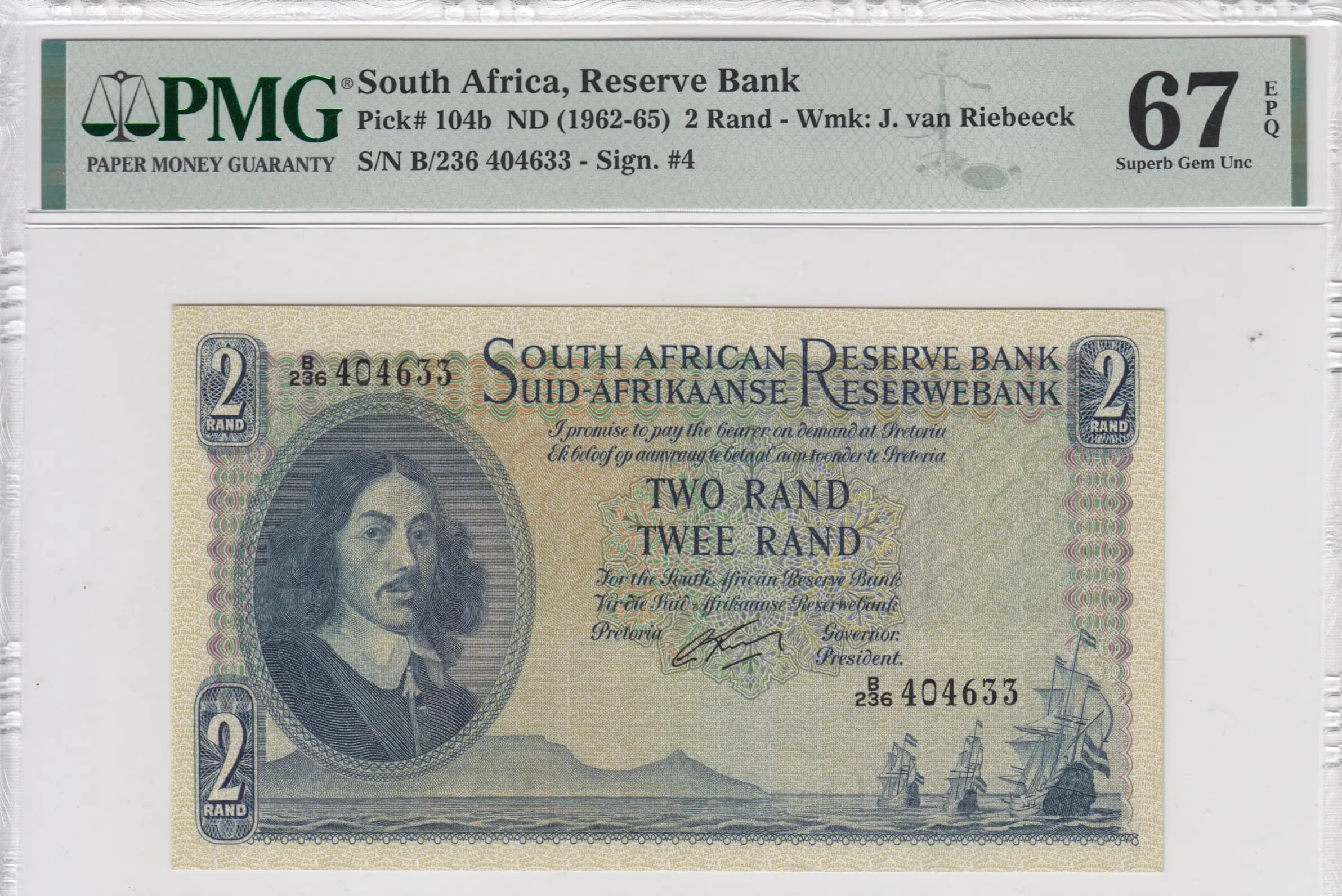
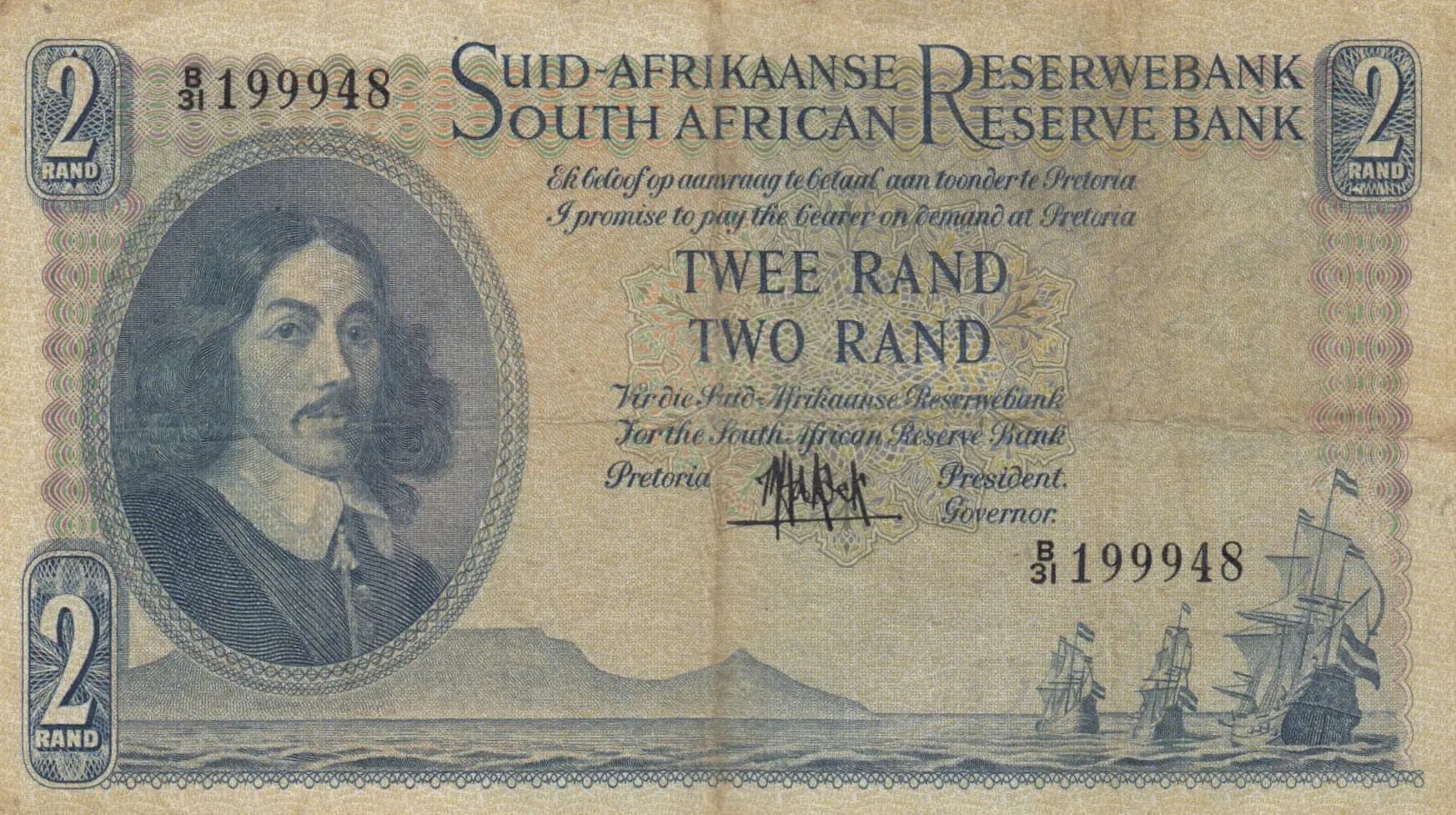
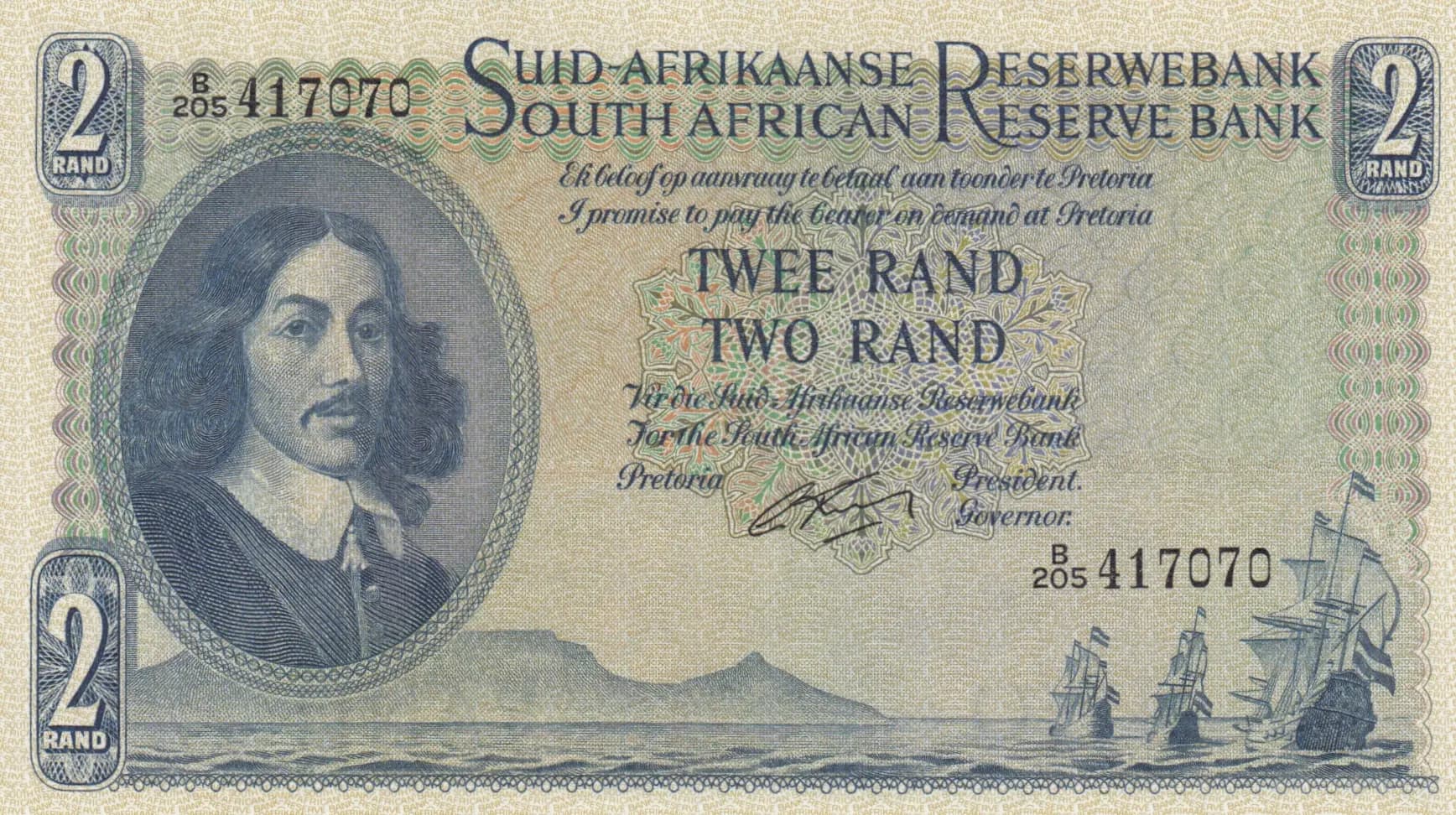
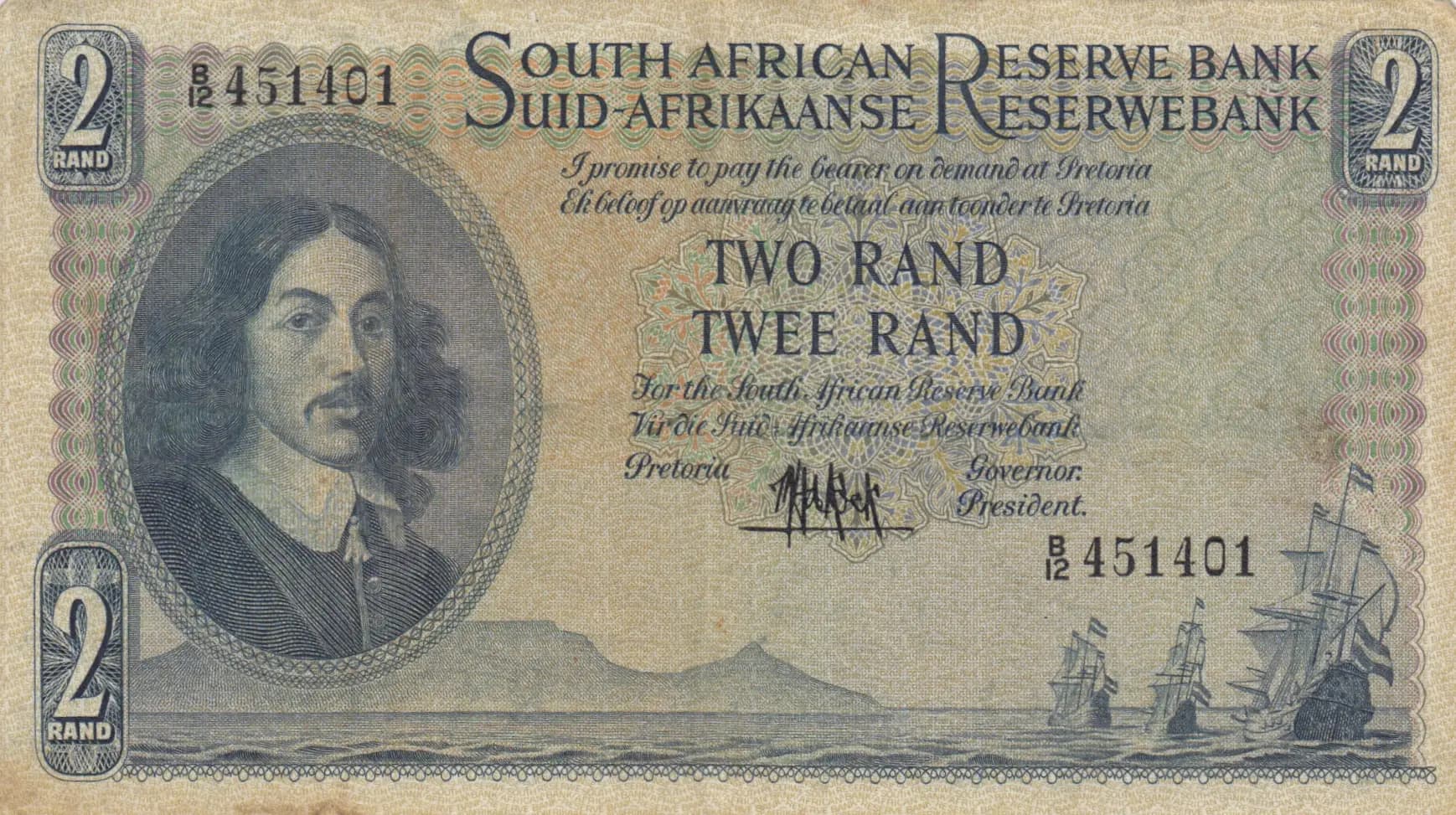
This is a South African 2 Rand note from 1961 (Pick P-104a), featuring the iconic portrait of Jan van Riebeeck on the obverse with historical sailing ships depicted at the bottom right. The note exhibits the characteristic beige/tan and blue-gray intaglio printing of early South African currency. In Fair condition, it shows visible creasing, fading, and general wear consistent with extended circulation, making it a genuinely used example from the early post-Union period of South African Reserve Bank note issuance.
Common. This is a regular issue note from the 1961-1965 series with substantial print runs typical of core denomination currency in active circulation. eBay market data confirms accessibility, with recent sales ranging from $6.50 to $28.68 depending on condition grade (VF specimens at $8-12 according to 2019 catalog values). Fair condition examples like this note are particularly common as they represent typical circulated survivors from this high-volume issuance. No print run restrictions, recall events, or short-lived issuing circumstances apply to this variety.
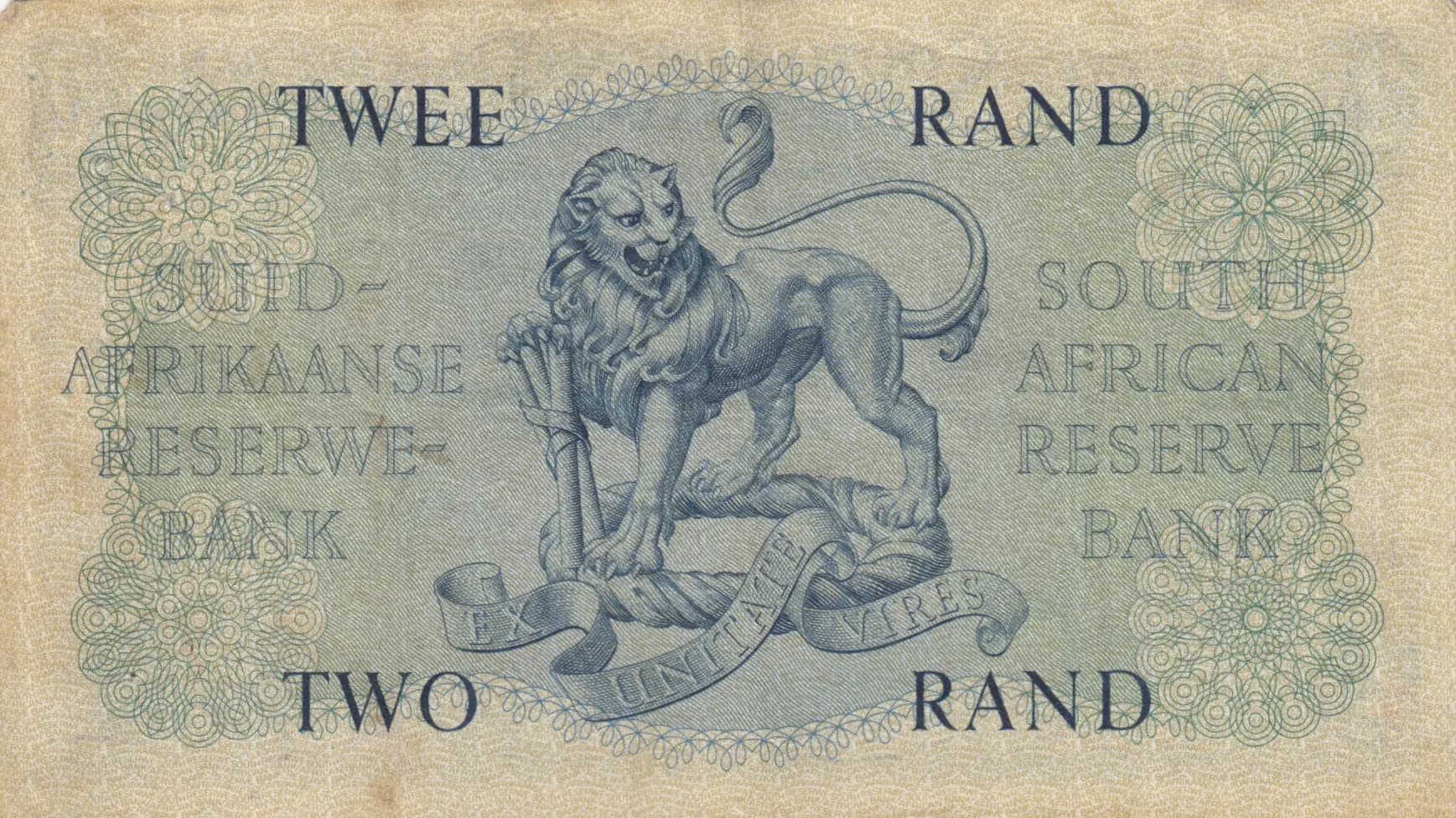
Issued in 1961, this note commemorates Jan van Riebeeck, the Dutch East India Company official who established the Cape Colony in 1652, represented in a bearded profile within an ornamental oval frame. The reverse features a coat of arms with a lion, symbolizing South African sovereignty during a period of significant political transition—1961 marked South Africa's departure from the British Commonwealth and its declaration as a Republic. The bilingual English-Afrikaans inscriptions reflect the nation's official languages during the apartheid era, with the promise to pay 'at Pretoria' emphasizing the capital's administrative authority.
The obverse depicts Jan van Riebeeck in profile facing left, rendered from a historical painting, positioned within an ornamental circular frame on the left side. Three historical sailing vessels—representative of the Dutch East India Company fleet that brought Riebeeck to the Cape—are shown at the bottom right of the note. The reverse features the South African coat of arms incorporating a lion (representing strength and sovereignty) in a central position with decorative floral and geometric patterns in all four corners. The entire design employs symmetrical ornamental borders with repeated circular geometric patterns characteristic of early 20th-century Reserve Bank currency design. The color scheme combines a warm beige/tan background with blue-gray intaglio printing and black/dark gray accents.
FRONT: 'SOUTH AFRICAN RESERVE BANK' (English) / 'SUID-AFRIKAANSE RESERWEBANK' (Afrikaans); 'I promise to pay the bearer on demand at Pretoria' (English) / 'Ek beloof op aanvraag te betaal aan-tooneder in Pretoria' (Afrikaans); 'TWO RAND' (English) / 'TWEE RAND' (Afrikaans); 'For the South African Reserve Bank' (English) / 'Vir die Suid-Afrikaanse Reserwebank' (Afrikaans); Signatures labeled 'Governor' and 'President'; Location: 'Pretoria'; Serial number: 'B 451401'. BACK: 'TWO RAND' (English) / 'TWEE RAND' (Afrikaans); 'SOUTH AFRICAN RESERVE BANK' (English) / 'SUID-AFRIKAANSE RESERVE-BANK' (Afrikaans); Corner denominations '2 RAND'.
Intaglio (line engraving), the standard high-security printing method for banknotes of this era. The visual analysis confirms deep, crisp line work and three-color printing (blue-gray, black, and tan background). For South African Reserve Bank notes of this period (1960s), the printing was typically executed by De La Rue or similar specialized security printers, though specific attribution requires additional documentation. The watermark featuring Jan van Riebeeck and the note dimensions (150 x 85mm) are integral security features of the intaglio process.
Pick P-104a specifically denotes the English-language first line variety ('SOUTH AFRICAN RESERVE BANK') as opposed to Pick P-105, which features the Afrikaans-language first line ('SUID-AFRIKAANSE RESERWEBANK'). Serial number 'B 451401' indicates this specimen's specific printing batch. The signature block positions and denomination corner placements are consistent with the standard 1961 issue design. No notable overprints, date variations, or signature variety indicators are apparent in this specimen.