2 rand 1961
Market Prices
8 salesAbout This Note
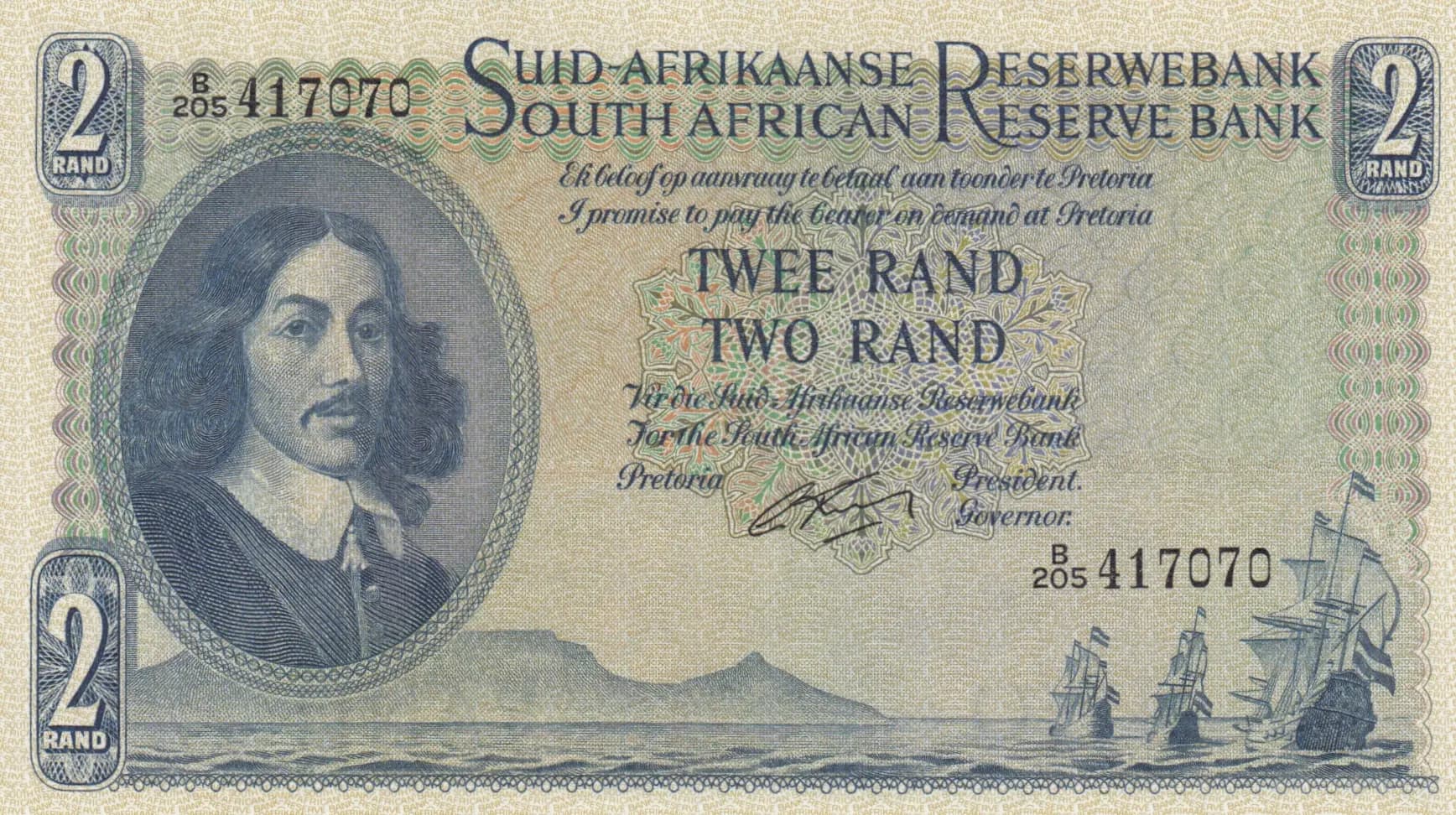
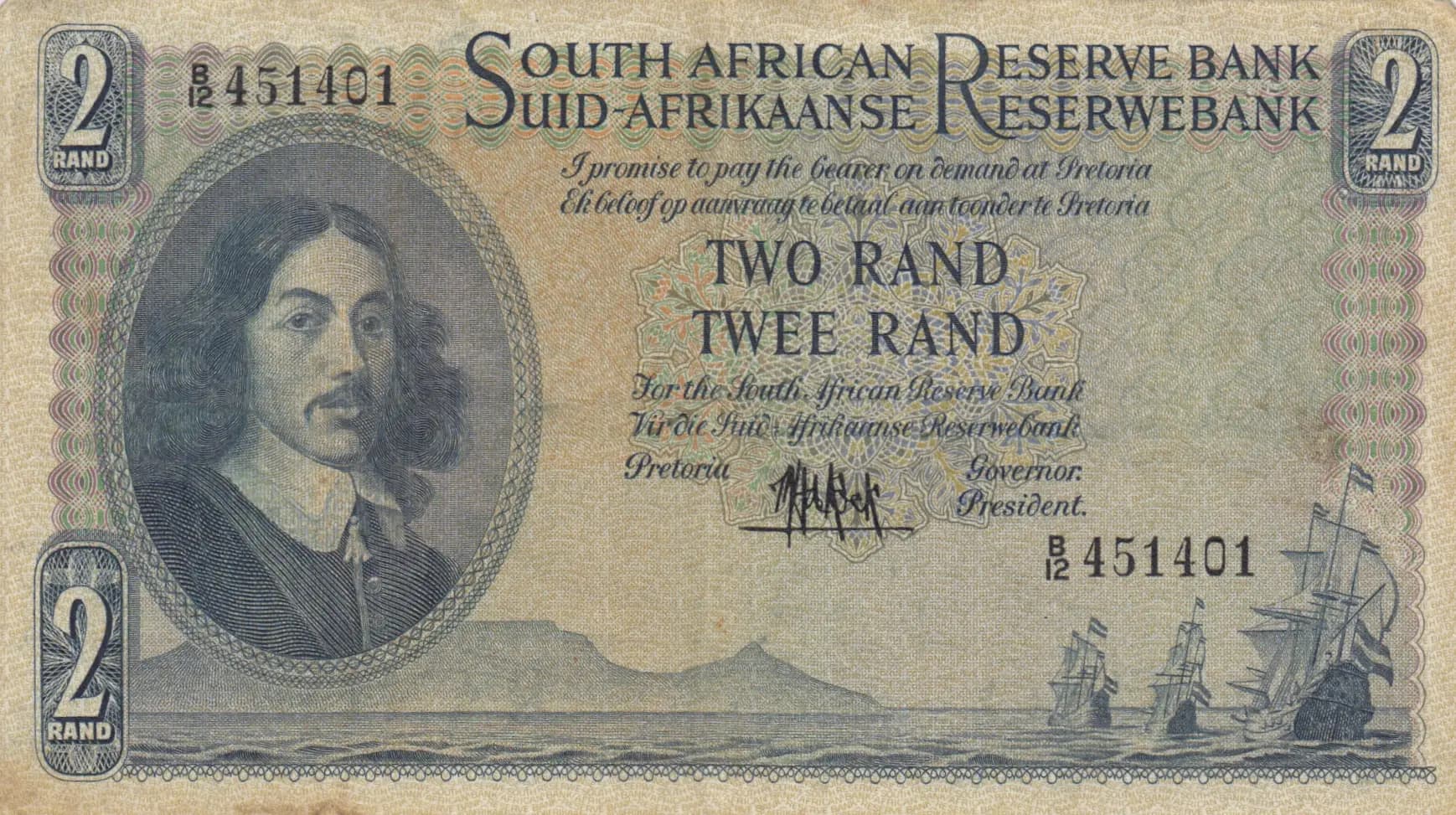
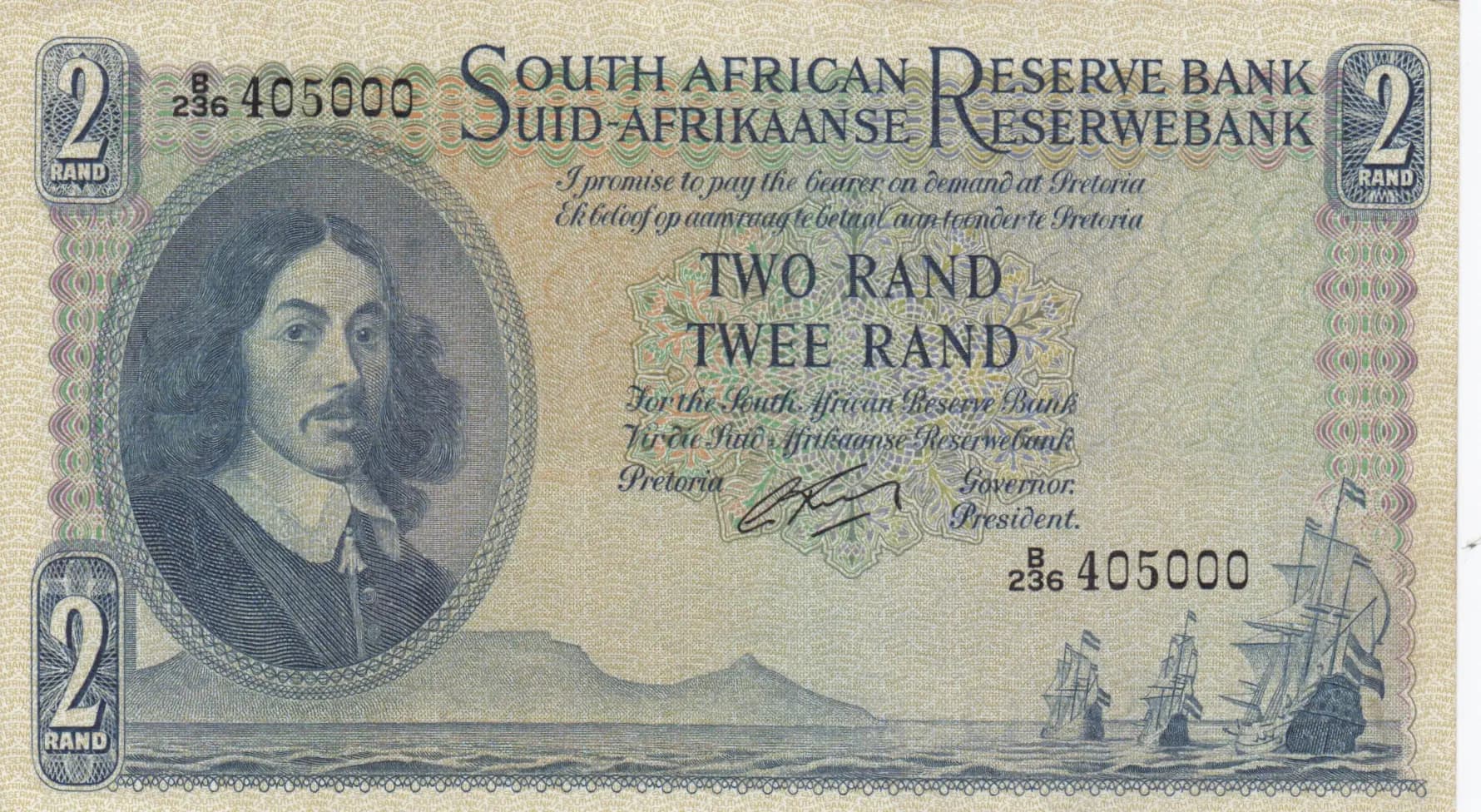
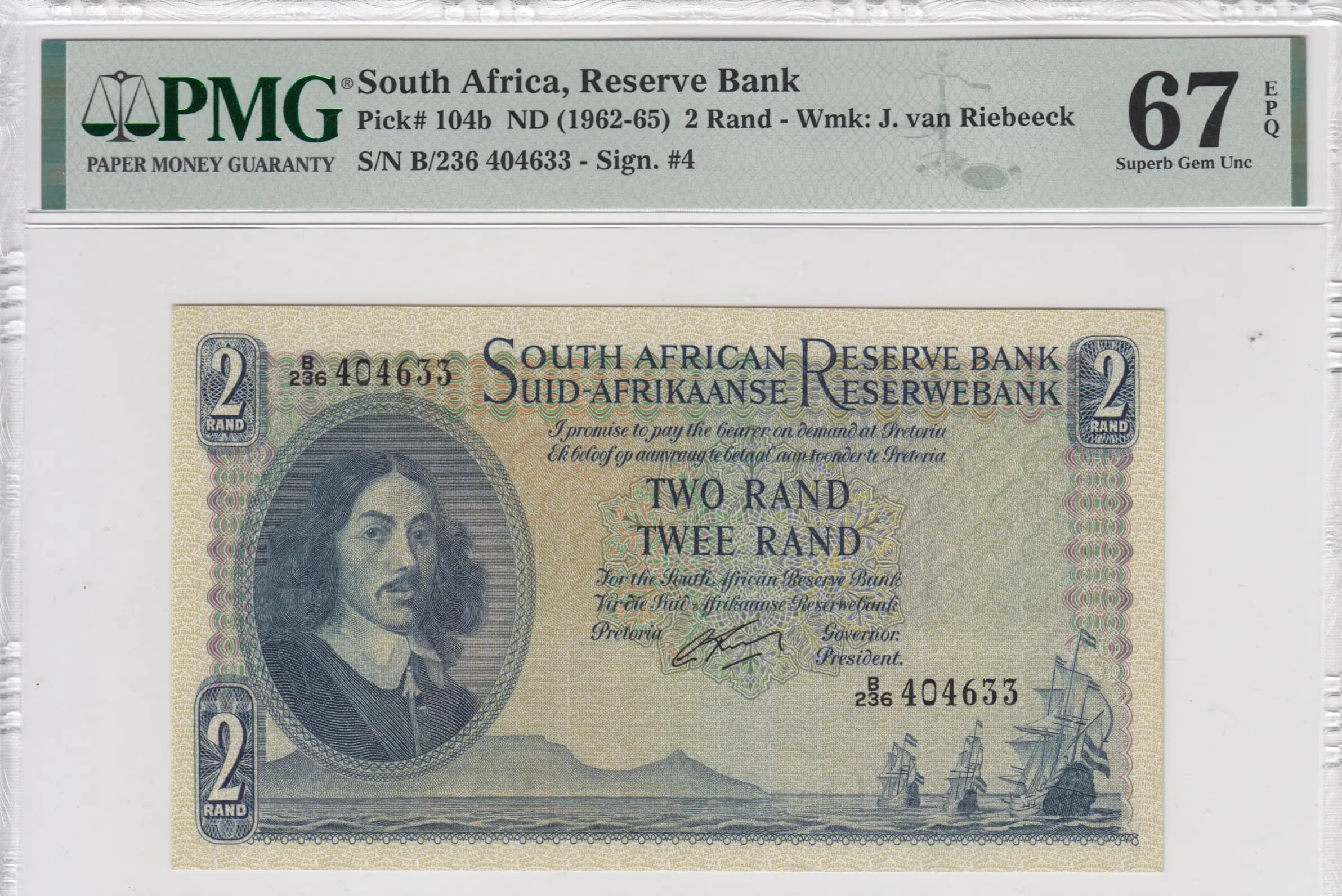
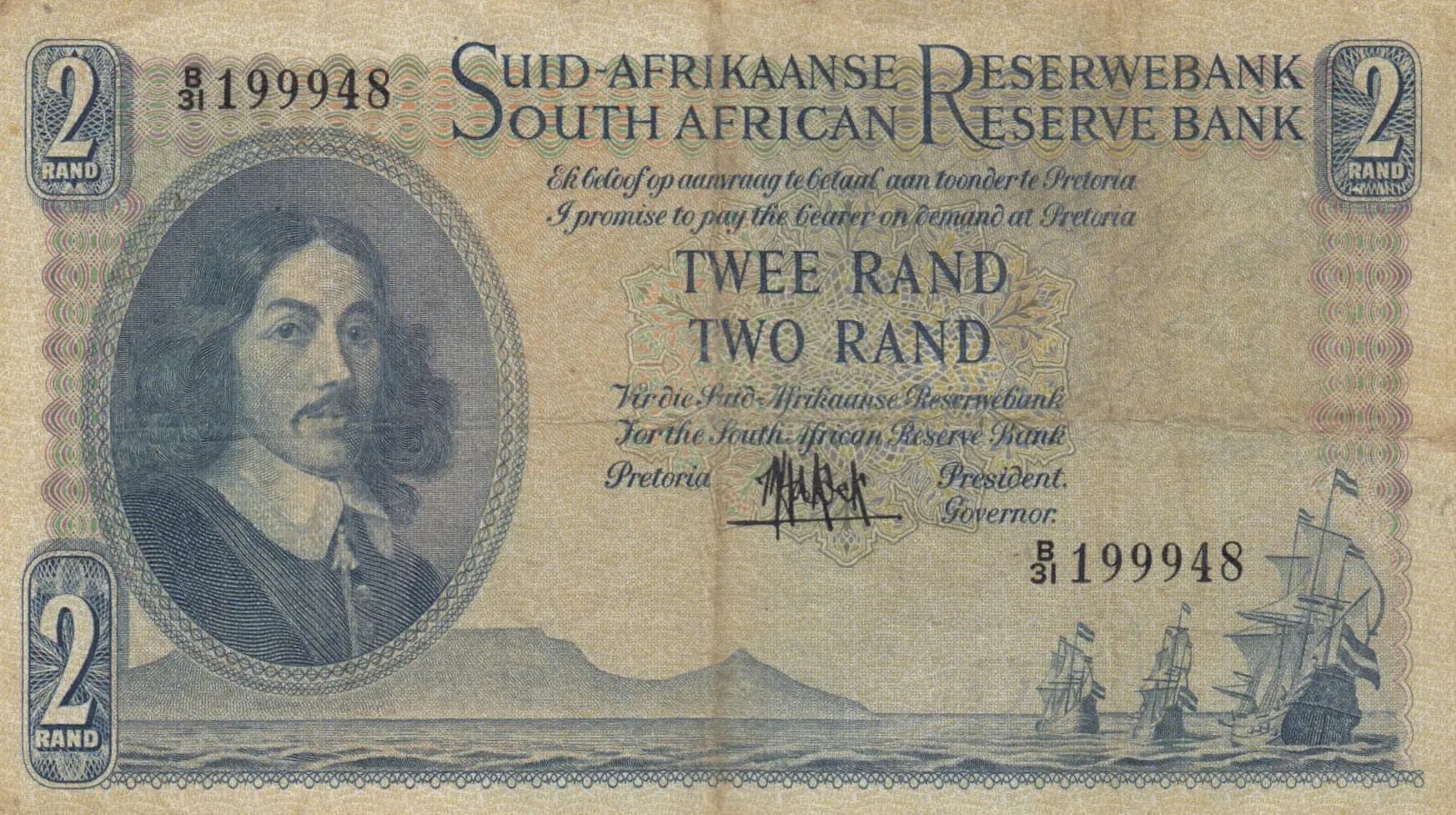
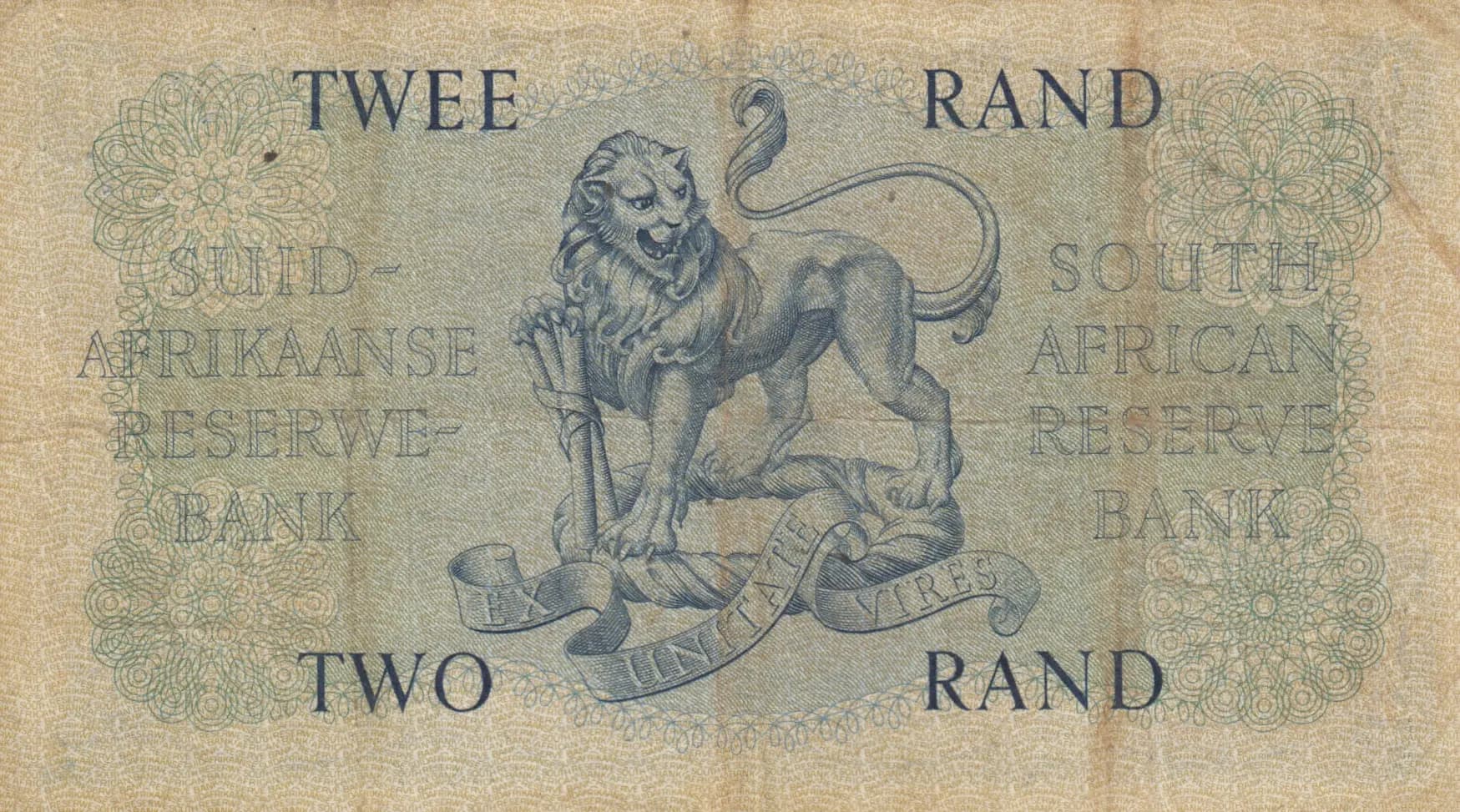
This 1961 South African 2 Rand note (Pick 105a) presents a classic example of early post-Union South African currency in Fair condition. The note displays the characteristic bilingual design in English and Afrikaans, featuring a historical portrait in an oval frame on the obverse and a heraldic springbok on the reverse, both rendered in fine line engraving. Significant age-related yellowing, creasing, and patina throughout reflect genuine circulation wear consistent with a note now over 60 years old, making it an affordable entry point for collectors of South African currency.
Common. This is a regular issue note from a 4-year circulation period (1961-1965) with presumably substantial print runs. eBay market data shows consistent sales in the $2.65-$12.05 range across multiple condition grades (F to VF) from 2013-2024, with Fair examples specifically selling for $3.10-$9.50. Catalog valuations at $8 (VF) and $19 (UNC) are moderate. The note remains widely available in the secondary market and poses no scarcity premium in the observed Fair condition grade.
Issued during the early years of the South African Reserve Bank's operation (1961-1965 series), this note reflects the newly independent Union of South Africa's assertion of financial sovereignty. The imagery—featuring a historical figure (Bartholomeus Vermuyden/Jan van Riebeeck) associated with European settlement, Table Mountain, sailing ships, and the national springbok symbol—encapsulates the nation's colonial heritage and nascent republican identity during a transitional political period.
The obverse features a portrait in profile facing left of Bartholomeus Vermuyden (historically attributed as Jan van Riebeeck by earlier cataloging), rendered within an ornate oval decorative frame with fine line engraving detail. The composition includes landscape elements at the lower portion depicting Table Mountain with three historical sailing vessels, evoking the maritime heritage of European settlement at the Cape. Bilingual text appears throughout with denomination markings ('2' in circles) at all four corners, surrounded by ornate geometric and floral decorative borders in blue-gray and tan coloring. The reverse presents a heraldic springbok (South Africa's national antelope symbol) in stylized pose holding a staff or spear, centered within ornate floral medallion patterns in all four corners. The springbok serves as a nationalist emblem distinct from the colonial imagery of the obverse, representing the nation's African identity. All design elements employ fine line engraving with multiple denomination indicators reinforcing the 2 Rand value.
FRONT: 'SUID-AFRIKAANSE RESERWEBANK' (South African Reserve Bank in Afrikaans) / 'SOUTH AFRICAN RESERVE BANK' (English) / 'TWEE RAND' (Two Rand in Afrikaans) / 'TWO RAND' (English) / 'ek beloof op aanvraag te betaald aan toonder te Pretoria' (I promise to pay the bearer on demand at Pretoria in Afrikaans) / 'I promise to pay the bearer on demand at Pretoria' (English) / 'voor die Suid-Afrikaanse Reserwebank' (for the South African Reserve Bank in Afrikaans) / 'for the South-African Reserve Bank' (English) / Signature titles: 'President' / 'Governor' / Serial number: B31199948. BACK: 'TWEE RAND' (Two Rand in Afrikaans) / 'TWO RAND' (English) / 'SUID-AFRIKAANSE RESERWE BANK' (South African Reserve Bank in Afrikaans) / 'SOUTH AFRICAN RESERVE BANK' (English).
Line engraving and letterpress printing, typical of banknote production in the 1960s. The fine detail work evident in the portrait, landscape, heraldic springbok, and ornate decorative borders indicates engraved plate work. The bilingual text layout and corner denomination circles reflect skilled composition typical of De La Rue or similar security printers servicing Commonwealth nations during this period. No specific security printer attribution is visible in the inscriptions observed.
Pick 105a represents the Afrikaans-first variety (bank name first line and denomination first in Afrikaans), distinguishing it from Pick 104 which features English text first. The observed serial number B31199948 falls within the standard range for this issue period. No specific signature varieties, date variations, or notable overprints are evident from the visual analysis. The 1961 date and bilingual design format are consistent with the standard 105a specification.