1 shilling sterling
About This Note
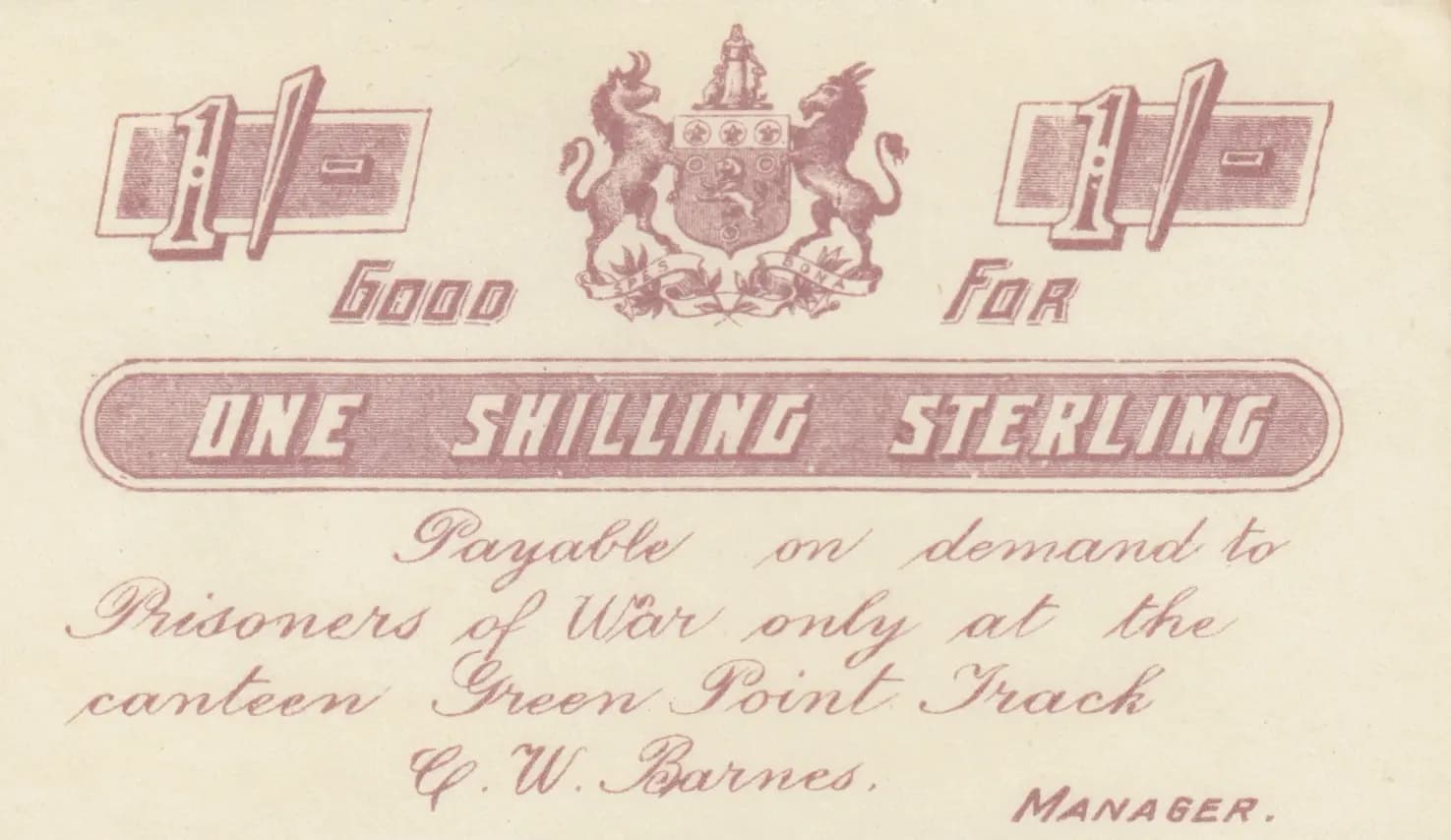
This is a highly unusual South African 1 Shilling Sterling prisoner of war camp canteen voucher from Green Point Track, featuring an ornate heraldic coat of arms with dragon supporters and a castle-topped shield rendered in mauve and purple-brown on a cream background. The note is in UNC condition with crisp, clear printing on the obverse and exhibits the characteristic light reverse printing typical of single-sided voucher production. This scarce institutional scrip represents a fascinating piece of South African military and social history, combining formal heraldic design with its specific restricted redemption purpose.
Scarce. This is an institutional prisoner of war camp canteen voucher of limited issuance scope, restricted to a single location (Green Point Track), and produced for a specific historical circumstance and population. Unlike regular currency, such scrip typically saw lower production volumes and faced higher attrition rates due to redemption and loss. The Pick unlisted status indicates this note has not been formally cataloged in major philatelic references, further suggesting limited collector awareness and availability. However, it is not 'very rare' as examples do appear, and the historical significance rather than numismatic rarity drives its appeal.
This voucher was issued during a period when South Africa hosted prisoners of war, likely during the Second Boer War (1899-1902) or World War II, as a controlled currency system within the prisoner camp canteen at Green Point Track. The formal heraldic coat of arms with dragon supporters reflects the authority and legitimacy the camp administration sought to convey through classical heraldic symbolism. The restriction of redemption 'to Prisoners of War only' at the specific canteen location demonstrates the careful segregation and control of prisoner economic activity within the camp system.
The note features a symmetrical design centered on a coat of arms displaying two dragons as heraldic supporters flanking a shield with internal heraldic divisions, surmounted by a castle or fortified tower. Decorative flags or heraldic banners are positioned on the left and right sides of the design. The entire composition is rendered in mauve and purple-brown pigments on a cream or off-white base stock, creating a formal, institutional appearance appropriate to official camp documentation. The rounded rectangular banner beneath the coat of arms contains the primary denomination text, while the lower portion contains the specific redemption instructions in smaller typography.
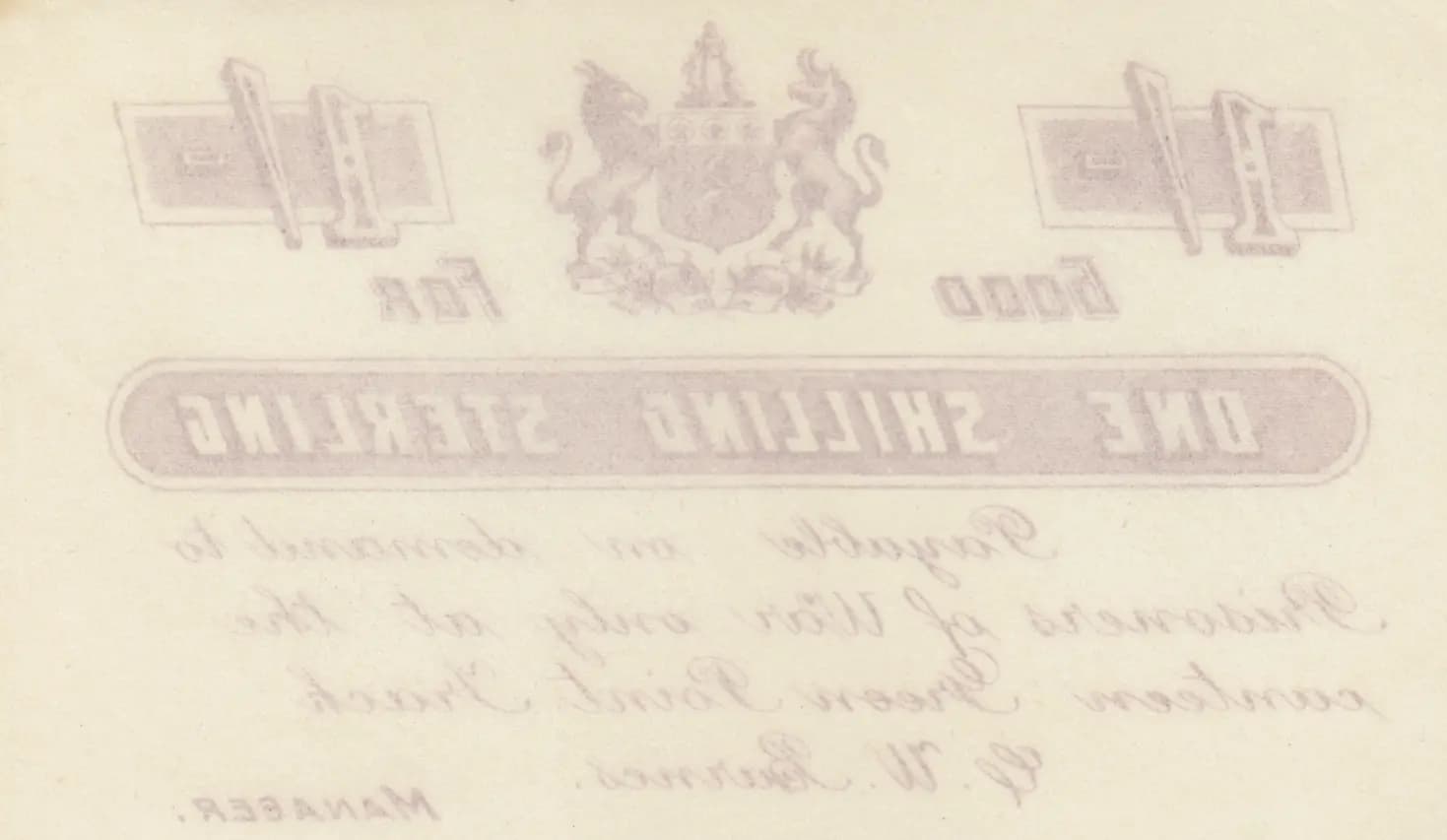
Front side: 'GOOD FOR / ONE SHILLING STERLING' - indicating the voucher's face value and denomination equivalent. Additional text reads: 'Payable on demand to Prisoners of War only at the canteen Green Point Track C.W. Burnes, MANAGER.' - specifying the restricted redemption location, authorized prisoner population, and the canteen manager responsible. Back side: The reverse bears the same 'GOOD FOR / ONE SHILLING STERLING' text and corresponding redemption text, though printed much more lightly, likely as a security or production feature.
This voucher was produced using letterpress or typography printing, evident from the crisp, well-defined impression of text and heraldic elements on the obverse. The significantly lighter reverse-side printing suggests either a single-pass or carefully controlled two-pass printing process, with the reverse receiving much lighter impression pressure—a common practice for institutional scrip where reverses were often left blank or minimally printed. The quality of impression and registration indicates professional printing, likely by a South African government or contract commercial printer of the period.
This specific voucher is attributable to the Green Point Track prisoner of war canteen under manager C.W. Burnes. The lack of date, serial number, or signature variants visible in the present example suggests this may represent a standard issue without tracked varieties, though variants may exist with different manager names or camp designations. The Pick unlisted status indicates this specific note type has not been formally classified into a standard catalog variety system, making attribution primarily historical and institutional rather than numismatic.