1 rand 1961
Market Prices
13 salesAbout This Note
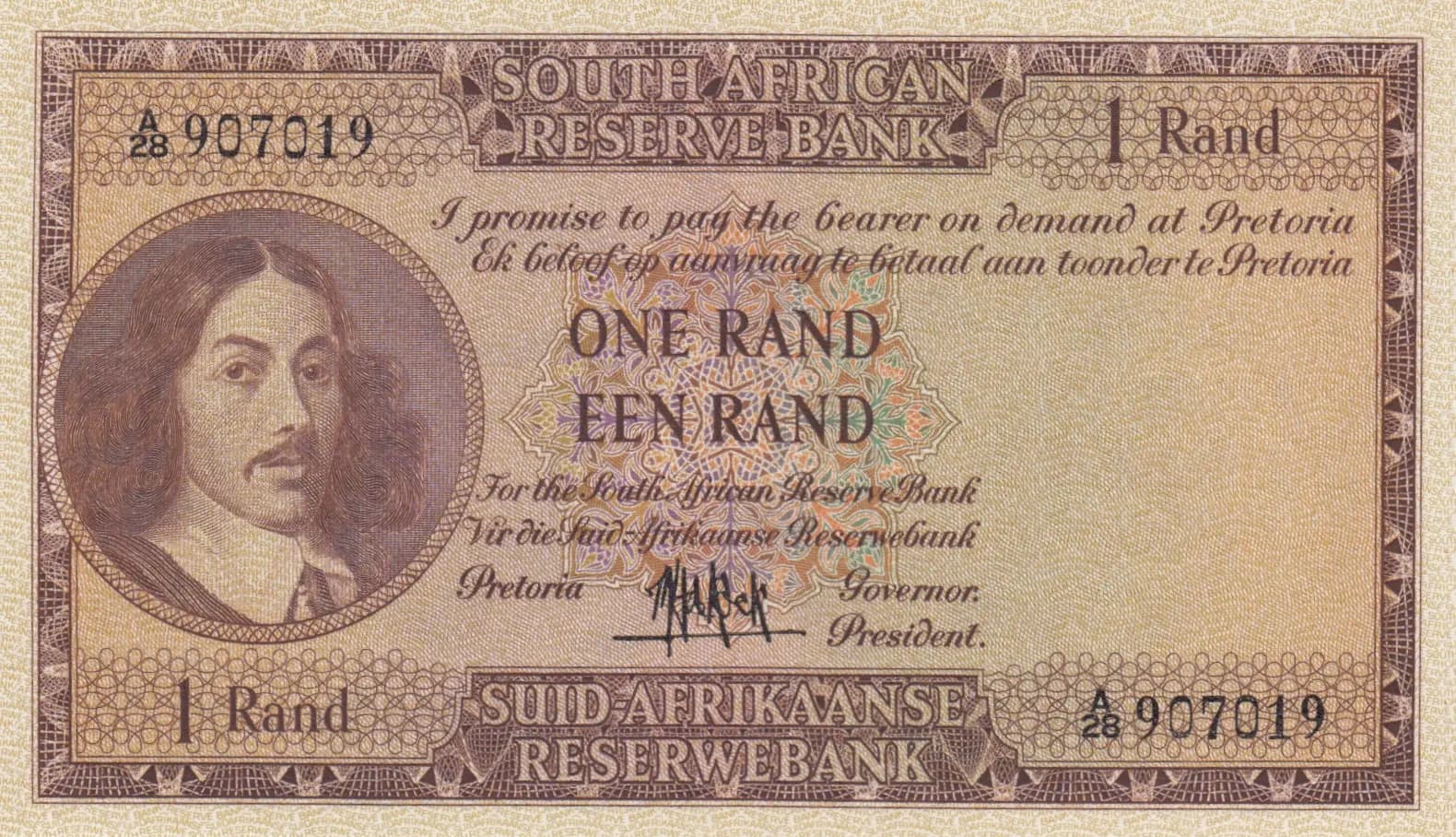
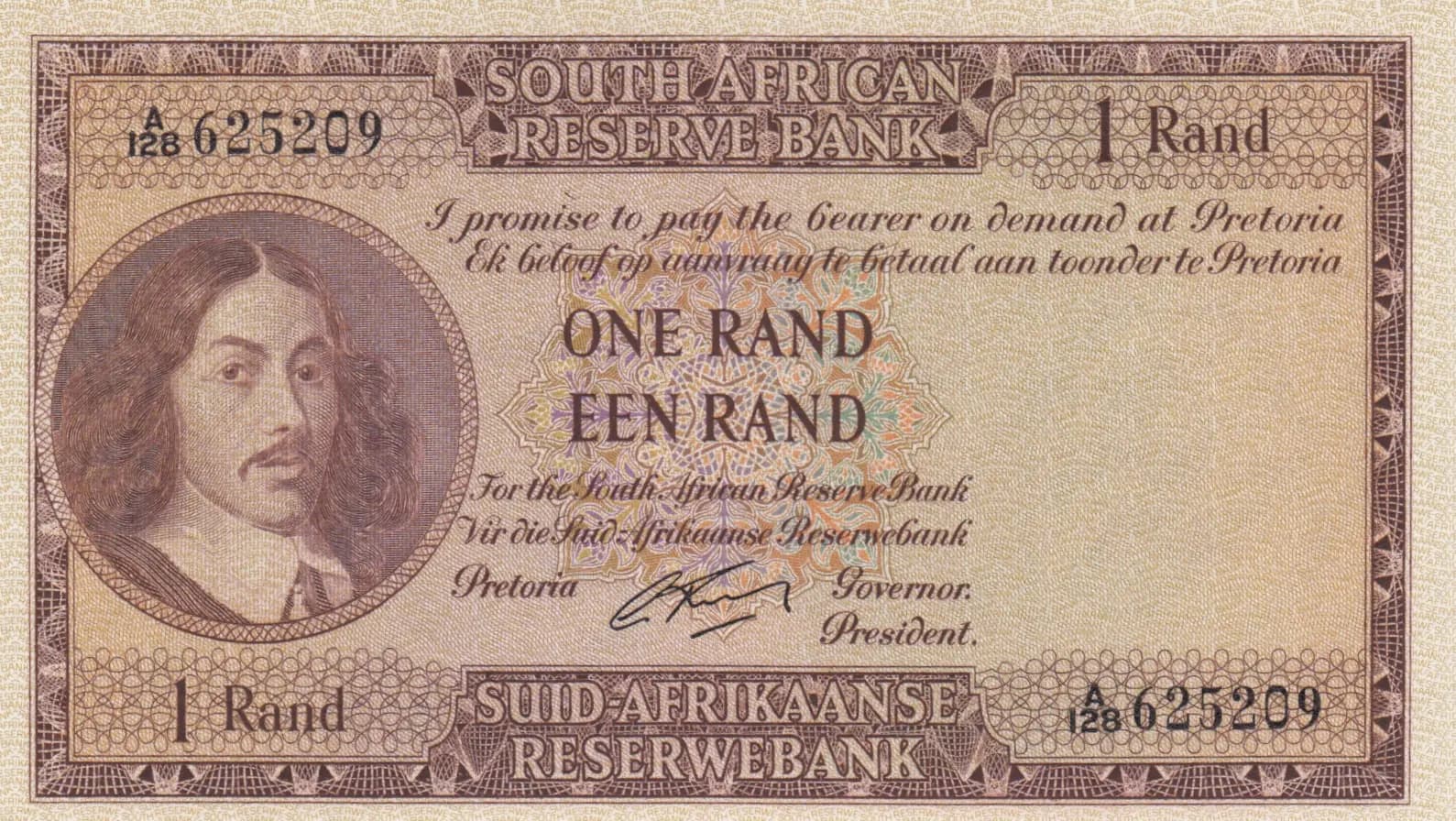
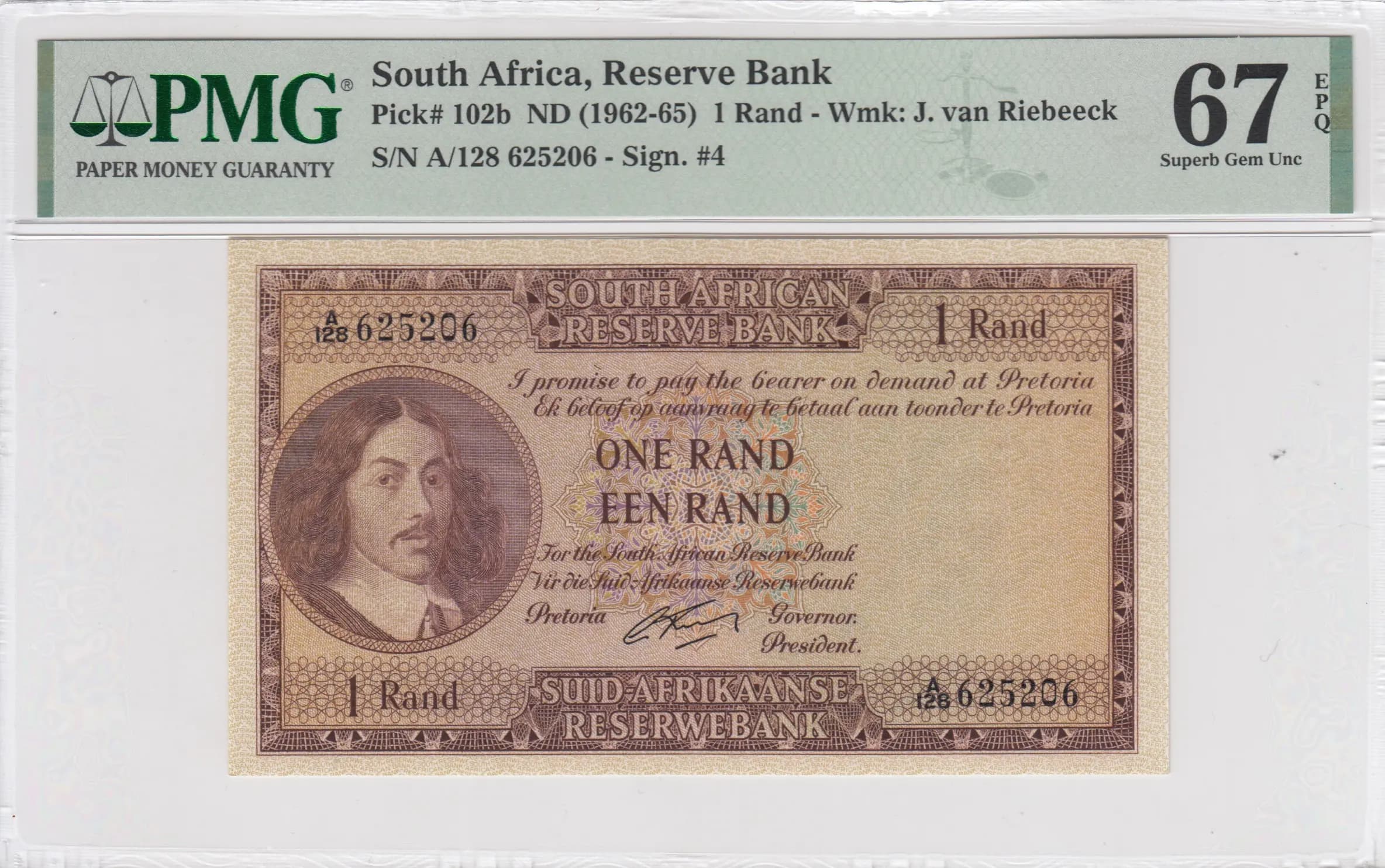
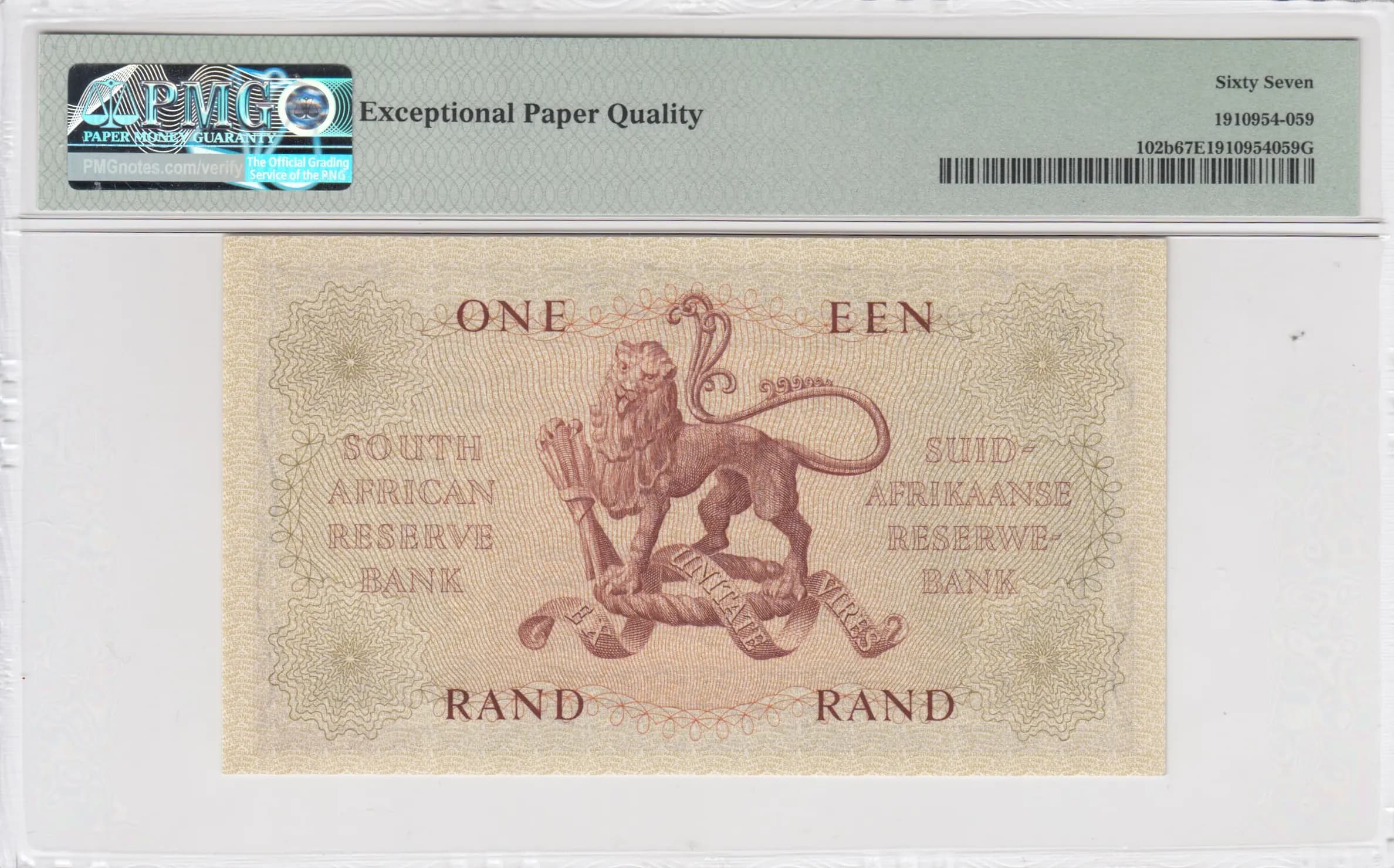
This is an exceptional example of South Africa's first decimal currency issue—the 1961-1965 1 Rand note (Pick P-102b) in PMG 67 EPQ condition. The note displays pristine uncirculated quality with sharp printing, vibrant brown and cream coloring, and no visible wear or handling marks. The English-language first line and bilingual inscriptions reflect South Africa's post-1961 linguistic policy, making this variant a significant piece of the nation's early Republican era coinage.
Common. This note was issued in substantial quantities during the 1961-1965 period as the primary circulating 1 Rand denomination. eBay market data shows consistent sales ranging from $4.75 to $43 USD depending on condition, with most examples in VF-EF condition selling for $15-20. PMG 67 EPQ examples command higher prices ($39-43 in recent sales) but remain attainable for collectors. The large print run and survival of numerous examples in various grades confirms this as a standard, readily available issue for South African currency collectors.
Issued following South Africa's transition to a republic in 1961, this banknote represents the country's shift to decimal currency from the pound sterling system. The portrait depicts Jan van Riebeeck (though historically misidentified as Bartholomeus Vermuyden for years), the Dutch founder of the Cape Colony, symbolizing the nation's Dutch colonial heritage. The heraldic lion on the reverse reflects South African heraldic tradition and national identity during the early apartheid-era government.
The obverse features a portrait of Jan van Riebeeck in profile facing left, rendered in an oval frame with detailed engraving work. The portrait is positioned at left center against a beige and cream background with brown and maroon design elements. Decorative borders with geometric patterns and ornamental flourishes frame the portrait. The reverse displays a heraldic lion rampant (standing on hind legs) rendered in brown and maroon, centered on the note as a symbol of South African national heraldry. Both sides employ fine line security patterns, geometric designs, and ornate border work executed in the classical intaglio engraving style characteristic of Reserve Bank currency production. The bilingual English/Afrikaans design reflects post-1961 Republican South Africa's official language policy.
FRONT: 'South African Reserve Bank' (English) / 'Suid-Afrikaanse Reserwebank' (Afrikaans); '1 Rand' (English) / 'Een Rand' (Afrikaans); 'I promise to pay the bearer on demand at Pretoria' (English) / 'Ek beloof op aanvraag te betaal aan die toonder te Pretoria' (Afrikaans); 'For the South African Reserve Bank' (English) / 'Vir die Suid-Afrikaanse Reserwebank' (Afrikaans); Signature lines for Governor and President; Serial number: A/128 625206. BACK: 'One' (English) / 'Een' (Afrikaans); 'South African' (English) / 'Suid-Afrikaanse' (Afrikaans); 'Reserve Bank' (English) / 'Reserwebank' (Afrikaans); 'Rand'.
Intaglio engraving (steel plate gravure printing), the standard security printing method for the South African Reserve Bank during this period. The fine line work, intricate geometric patterns, ornamental borders, and sharp portrait detail observable in the high-grade example are characteristic of skilled intaglio production. The printer was the South African Reserve Bank's in-house printing operations or contracted security printers; the De La Rue Company is known to have produced South African banknotes during this era, though specific printer attribution requires additional documentation.
This note is cataloged as Pick P-102b, with the primary distinguishing feature being the English-language first line of the bank name and denomination. The variant P-102a is identical but with the first line in Afrikaans. P-102s represents a specimen note. The visual analysis confirms English text in the first line ('SOUTH AFRICAN RESERVE BANK') and English denomination designation, confirming this as the P-102b variety. The watermark is Jan van Riebeeck (135 x 77mm format). Serial number A/128 625206 with the A/128 prefix is consistent with regular circulation issues of this period.