1 rand 1961
Market Prices
1 saleAbout This Note
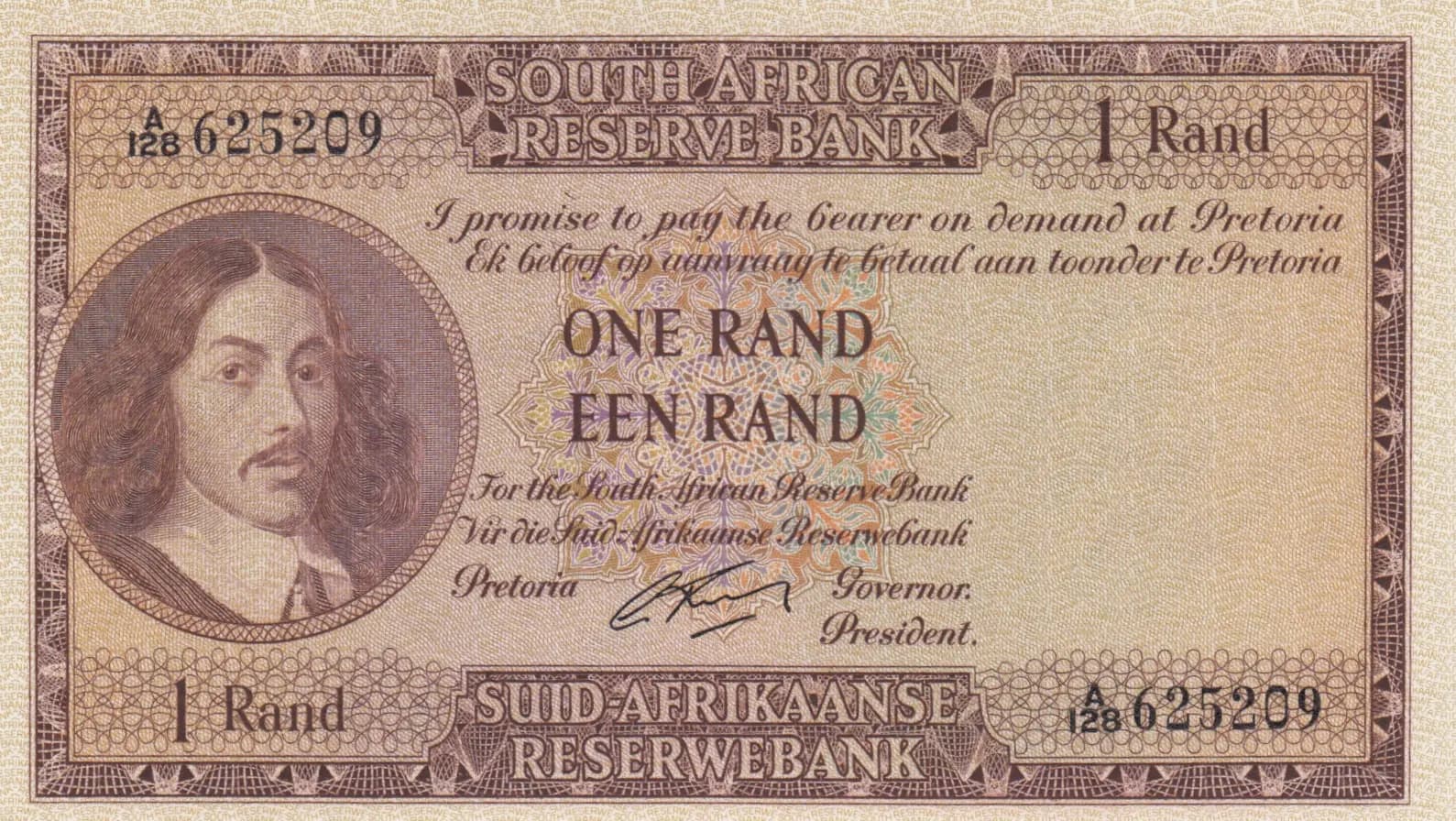
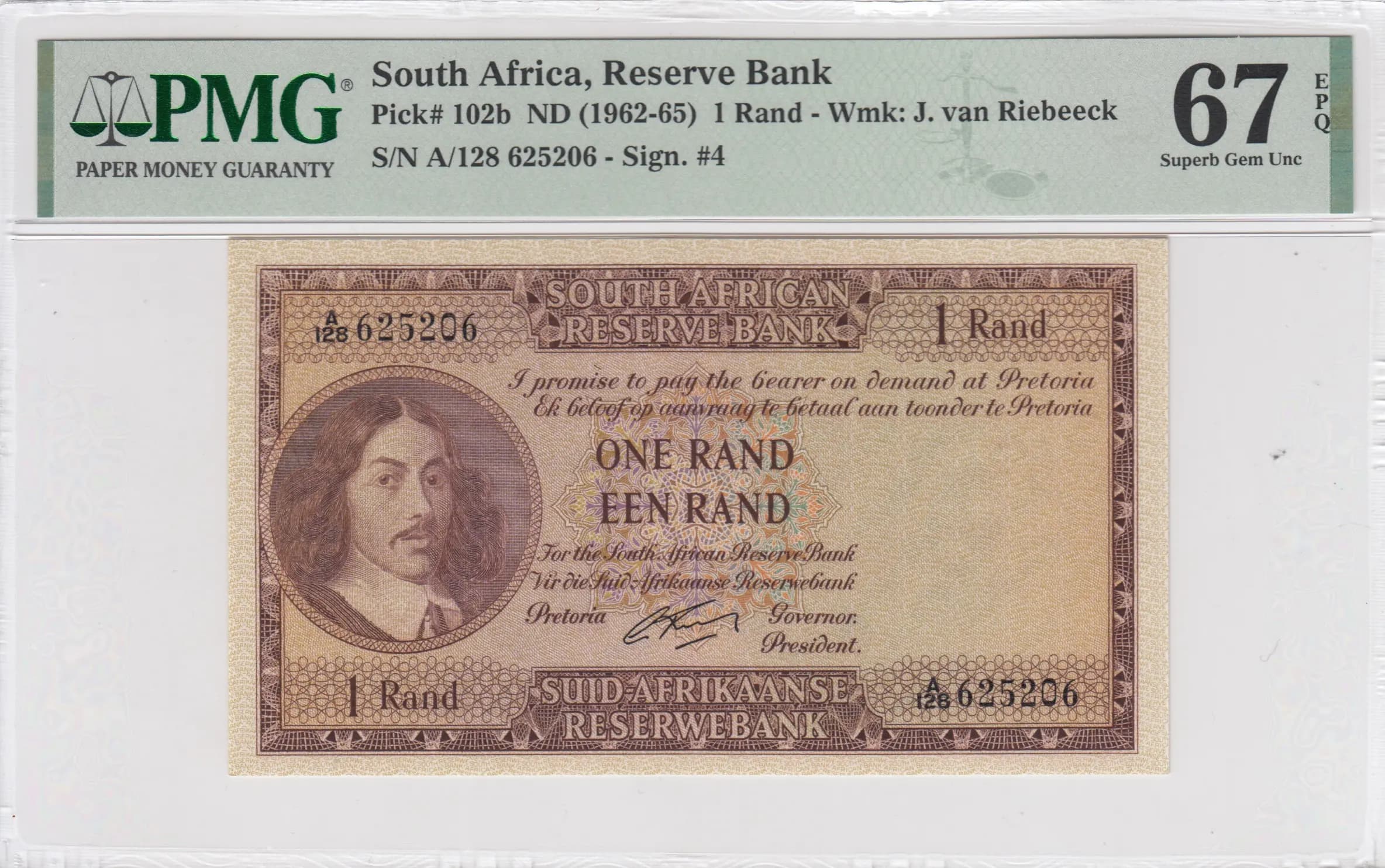
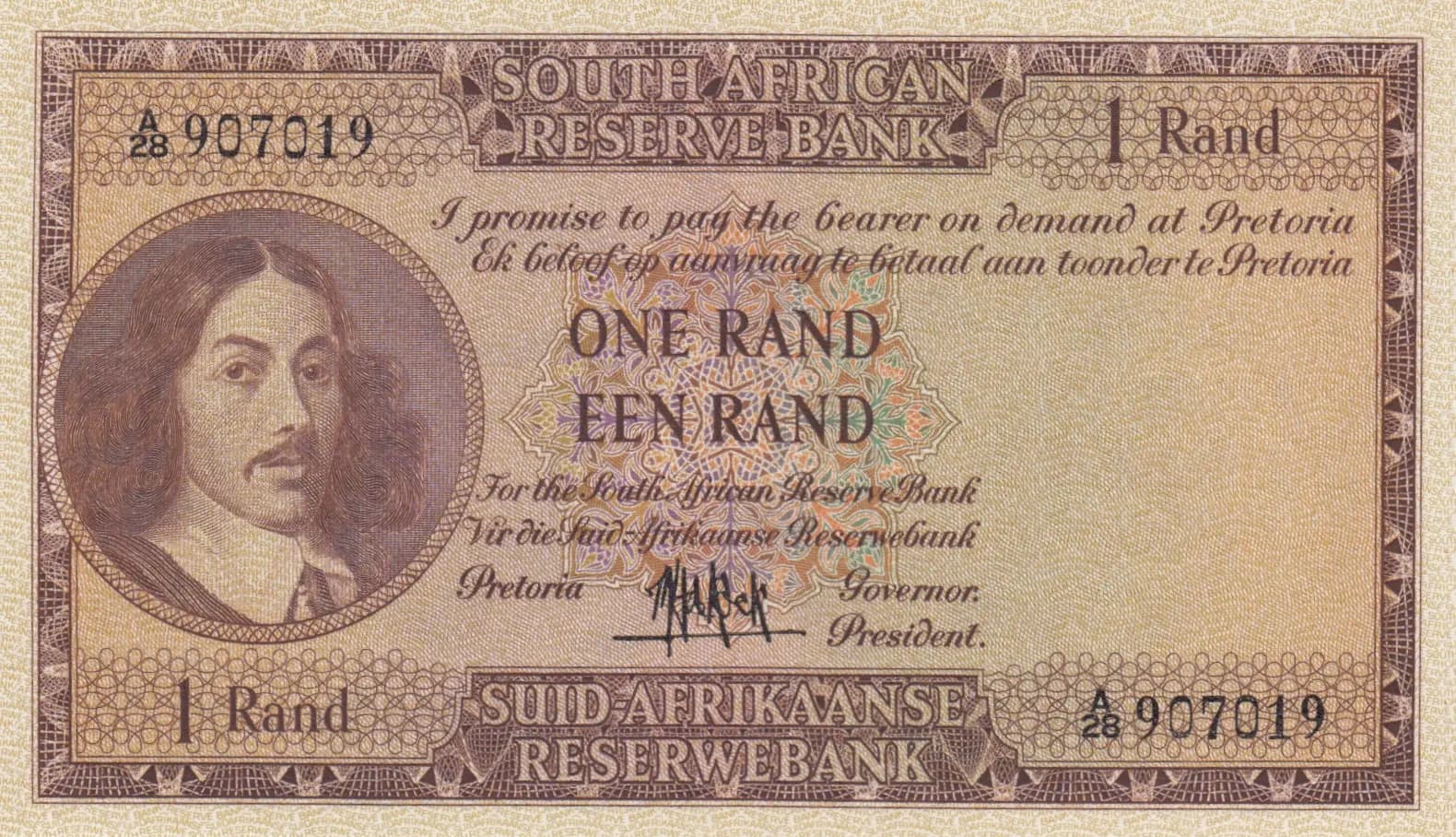
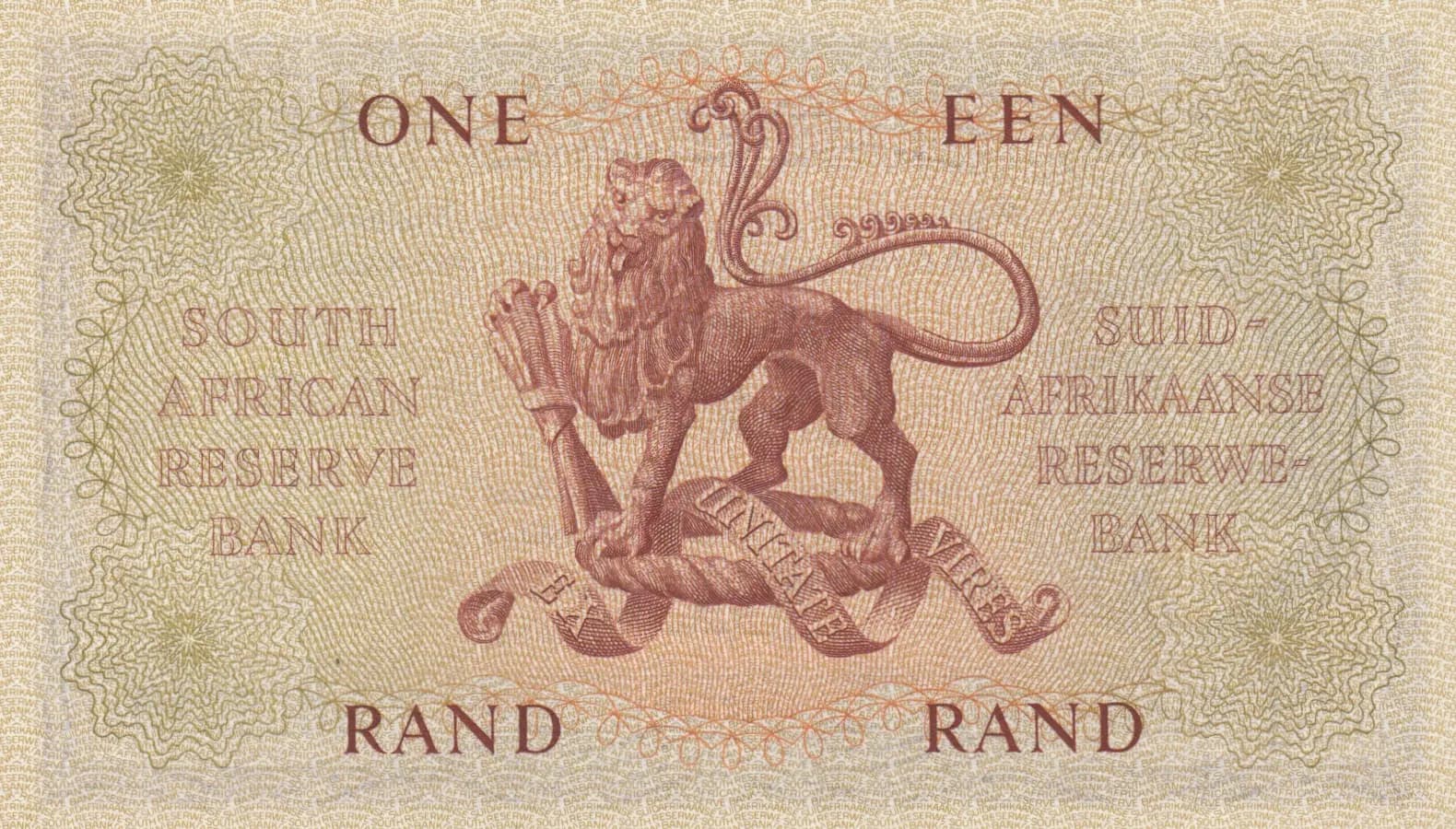
This is an exceptionally well-preserved uncirculated example of the South African 1 Rand banknote from 1961, the first denomination issued by the newly independent South African Reserve Bank. The note displays crisp, vibrant printing with rust-brown coloration on a multicolor underprint, featuring a striking portrait medallion on the obverse and a heraldic lion on the reverse—both rendered in fine detail through advanced engraving techniques. This Pick-102a variant represents an important early issue in South African currency history, with the English-language first line distinguishing it from the Afrikaans variant (P-103).
Common. The 1961 1 Rand denomination was a regular, large-scale issue by the newly established South African Reserve Bank. Catalog reference prices from 2019 show UNC specimens valued at approximately $38, with VF examples trading around $7.50-$17, indicating robust market availability. The serial number prefix 'A' and bilingual English-first format (P-102a) represent the standard issue variant. No evidence of restricted print runs, recalls, or scarcity exists for this Pick number. The uncirculated condition enhances appeal to collectors but does not make the note rare, as many examples survive in pristine condition from the original distribution.
Issued in 1961, this banknote commemorates a pivotal moment in South African history: the transition from British colonial currency to an independent nation's monetary system following the declaration of the Republic of South Africa. The portrait traditionally identified as Jan van Riebeeck (the founder of the Cape Colony in 1652) appears on the obverse, symbolizing the nation's historical roots, while the heraldic lion on the reverse represents national pride and sovereignty. The bilingual English-Afrikaans text reflects the dual official languages of the apartheid-era nation, making this note a significant artifact of mid-20th-century South African identity.
The obverse features a circular engraved medallion containing a bearded male portrait in left-facing profile, traditionally identified as Jan van Riebeeck, founder of the Cape Colony. The portrait is framed by an ornate circular border and surrounded by intricate decorative patterns of floral and geometric design. The reverse displays a heraldic lion figure standing upright in the center, rendered as a coat of arms element typical of national heraldry, positioned above a decorative banner or scroll. Both sides employ extensive bilingual inscriptions in English and Afrikaans, with the denomination prominently displayed. The overall color scheme is dominated by rust-brown tones on a multicolor underprint, with cream and tan accents throughout. The note measures 135 x 77 mm and incorporates the watermark of Jan van Riebeeck visible in the paper.
FRONT SIDE: 'SOUTH AFRICAN RESERVE BANK' (English) / 'SUID-AFRIKAANSE RESERWEBANK' (Afrikaans) — the issuing authority; '1 Rand' / 'EENRAND' — denomination in both languages; 'I promise to pay the bearer on demand at Pretoria' (English) / 'Ek beloof aanvaardig betaal aan toonder te Pretoria' (Afrikaans) — promise clause; 'For the South African Reserve Bank' (English) / 'Vir die Suid-Afrikaanse Reserwebank' (Afrikaans) — issuer attribution; 'Governor' and 'President' — signature lines; Serial number: 'A 907019'. BACK SIDE: 'SOUTH AFRICAN RESERVE BANK' (English) / 'SUID AFRIKAANSE RESERWE BANK' (Afrikaans) — issuer identification; 'ONE EEN' — denomination in both languages; 'RAND RAND' — currency unit in both languages.
Intaglio engraving (line engraving) on banknote paper, evidenced by the fine, crisp line work visible throughout the design, the radiating line patterns in the background, and the detailed portraiture. The note exhibits professional security printing characteristics typical of central bank currency production in the early 1960s, with intricate geometric and floral patterns employed as anti-counterfeiting measures. Based on South African Reserve Bank practices of this era, the note was likely produced by the Bank's designated security printer, with production standards consistent with De La Rue or similar international banknote printing firms contracted by SARB during this period.
This is identified as Pick-102a variant, characterized by the English-language first line of the bank name and denomination ('SOUTH AFRICAN RESERVE BANK' / '1 Rand'), distinguishing it from the P-102b variant (also with English first line) and the P-103 variant (Afrikaans first line). All variants share the Jan van Riebeeck watermark. The serial number prefix 'A' and the complete bilingual inscription structure are consistent with standard 1961-1965 issue specifications. No overprints, experimental markings, or unusual signature combinations are evident on this specimen.