100 francs 1974 specimen
Market Prices
6 salesAbout This Note
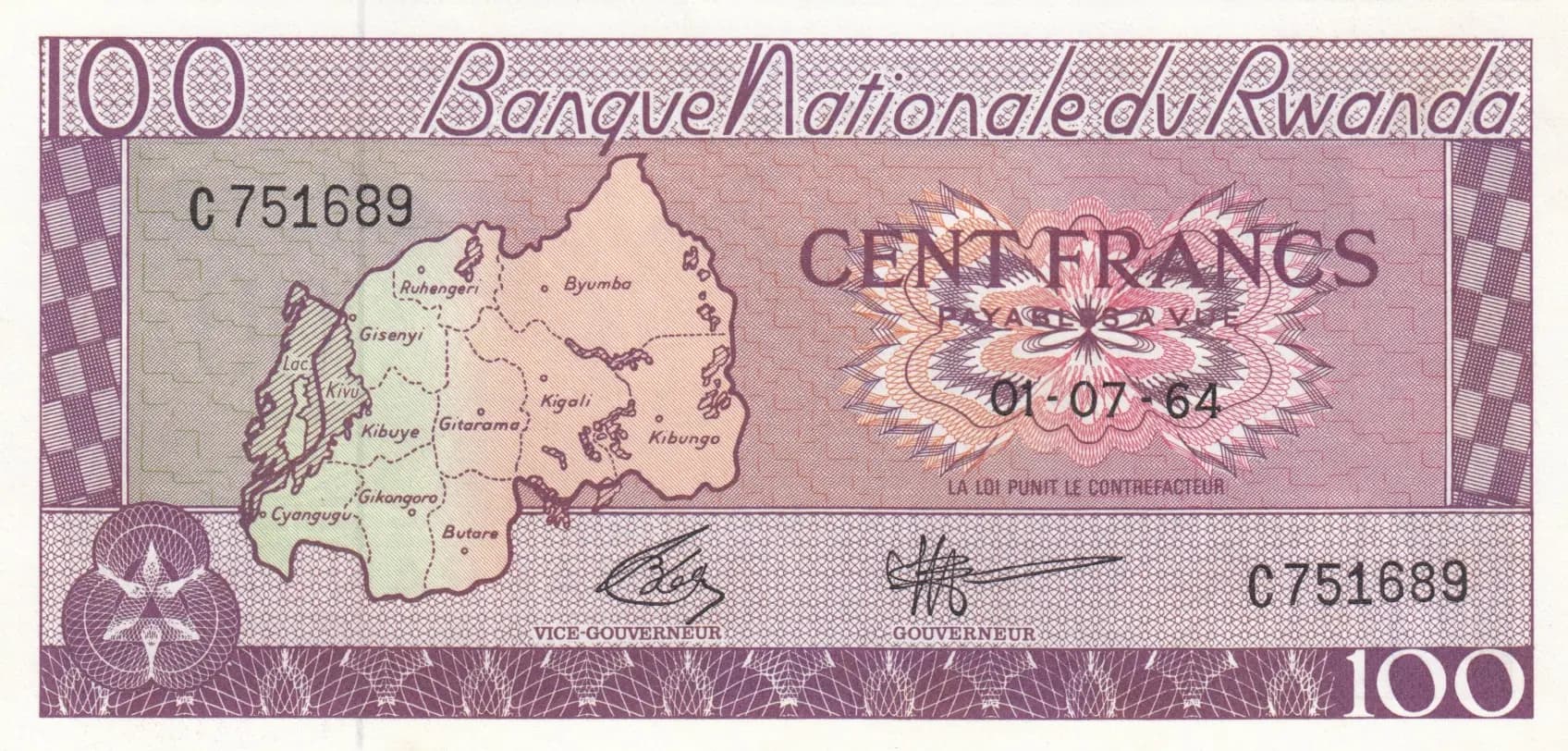
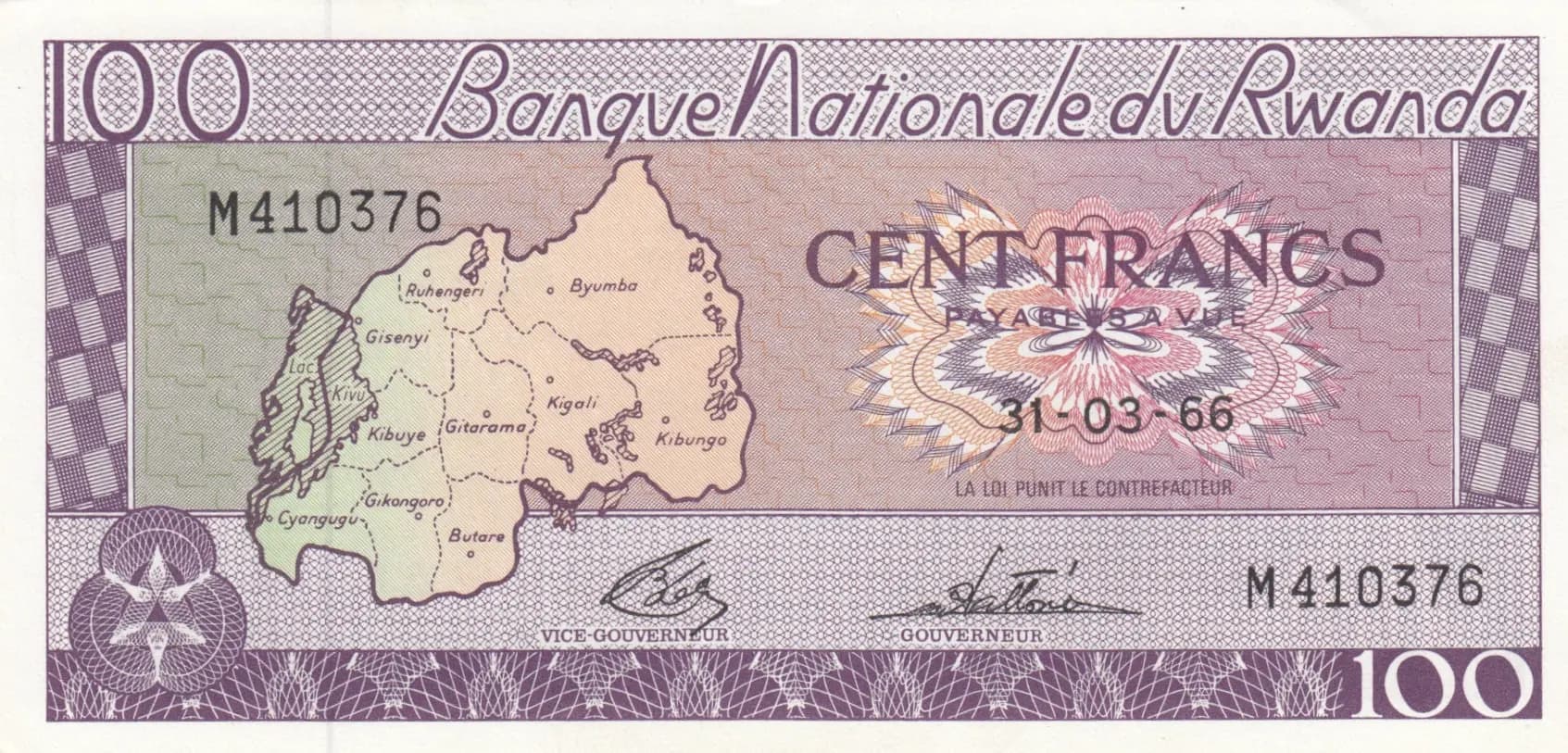
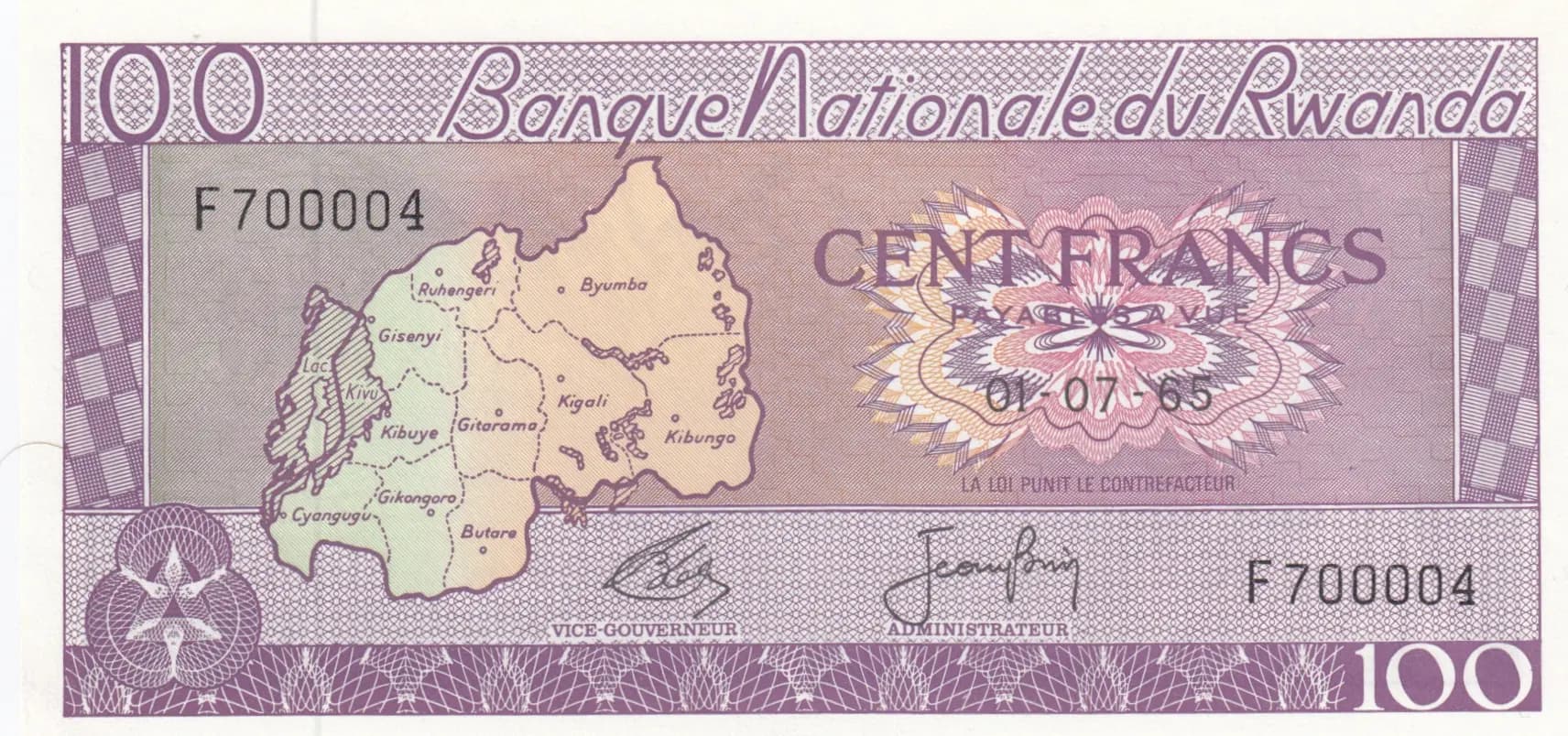
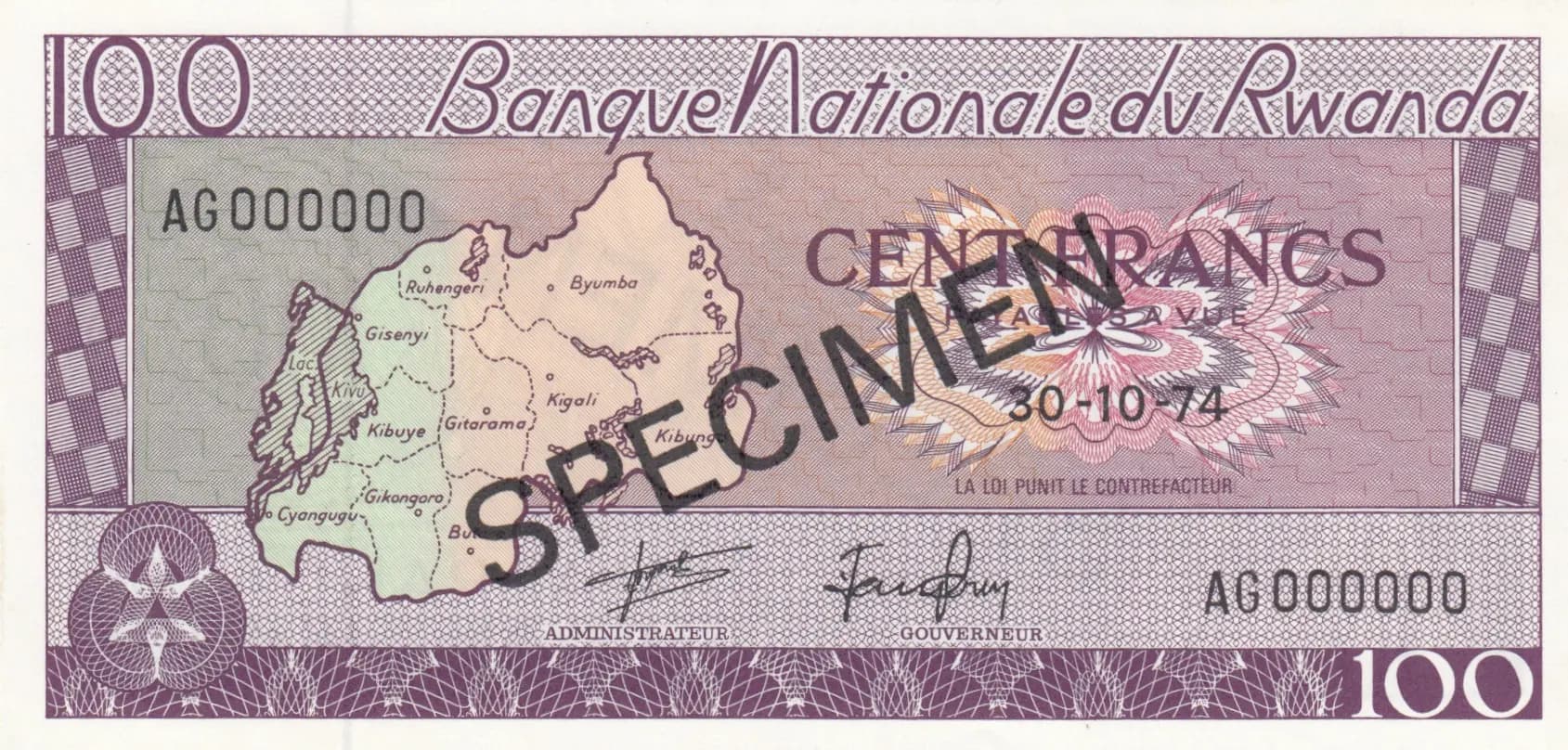
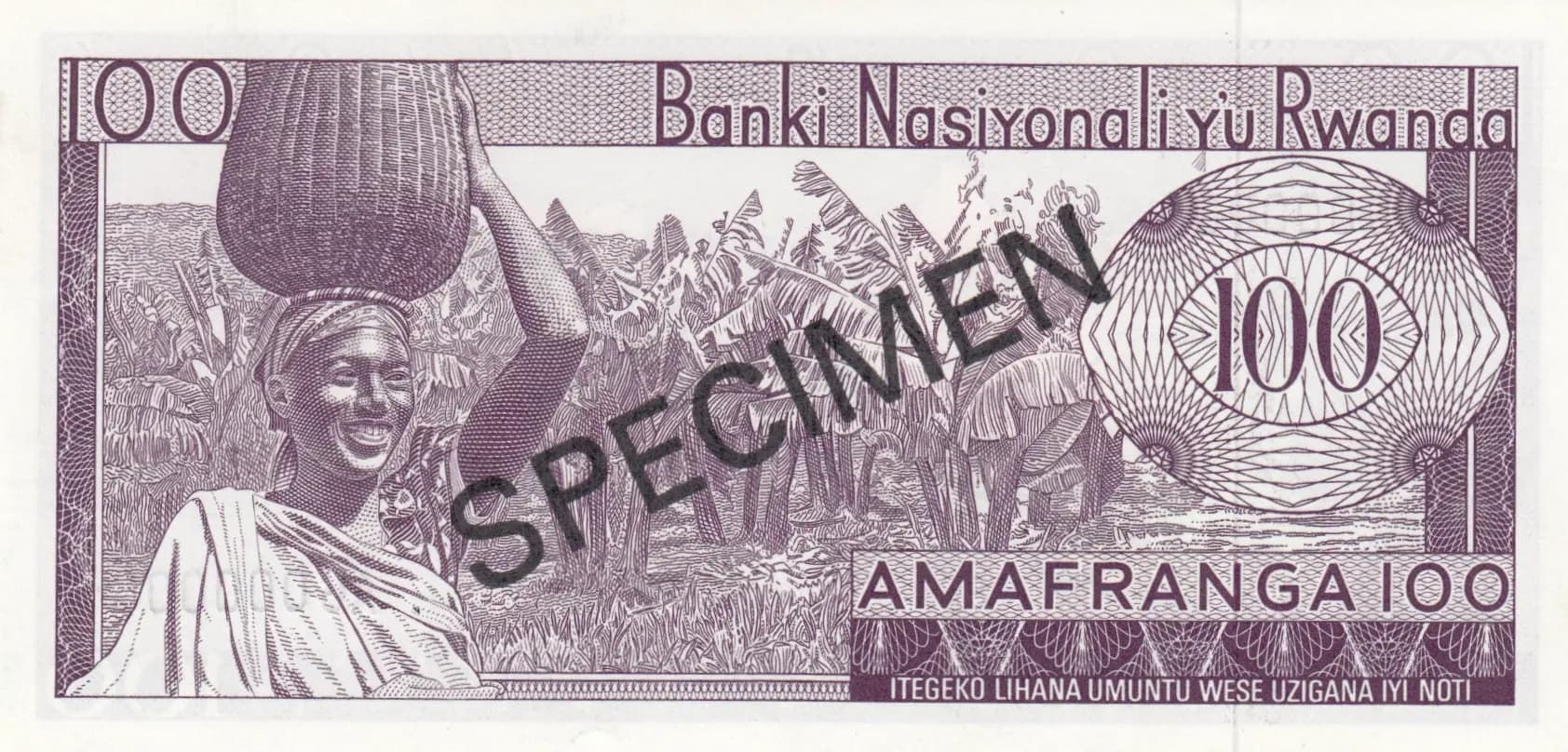
This is a 1974 specimen note from the Banque Nationale du Rwanda, graded UNC, representing an important early post-independence Rwandan banknote. The note displays the characteristic purple/mauve color scheme of this series and features a detailed map of Rwanda on the obverse and a culturally significant scene of a woman in traditional dress amid a banana harvest on the reverse. As a specimen note with the diagonal 'SPECIMEN' overprint and serial number AG000000, this example represents a presentation or archival piece rather than currency intended for circulation, making it a notable item for collectors of African banknotes and post-colonial Rwandan numismatics.
Common. The eBay price tracking data shows consistent sales of UNC examples ranging from $15.50 to $52.50 (with a 2019 catalogue value of $50 for UNC), indicating strong but not exceptional collector demand. These notes are widely available in the secondary market, with multiple transactions over several years demonstrating regular, predictable pricing. The specimen overprint may add slight collectibility compared to regular circulation notes, but specimen notes from this series do not command premium prices. The regular issue date range of 1964-1976 with a 12-year production window suggests substantial print runs. Specimens are standard presentation pieces and do not significantly impact rarity assessment.
Issued in 1974 by Rwanda's central bank during the early years following the 1962 independence from Belgian colonial rule, this banknote reflects the nation's focus on its agricultural heritage and geographical identity. The prominent map of Rwanda with clearly marked provinces (Ruhengeri, Byumba, Gisenyi, Kibuye, Gitarama, Kigali, Kibungo, Cyangugu, and Gikongoro) emphasizes national sovereignty and territorial definition, while the reverse's depiction of a woman in traditional dress harvesting bananas celebrates the country's primary agricultural sector and cultural continuity. The bilingual inscriptions in French and Kinyarwanda reflect Rwanda's post-colonial linguistic landscape and the nation's attempt to balance colonial administrative languages with indigenous identity.
The obverse features a detailed cartographic representation of Rwanda showing all nine provinces with their names clearly labeled (Ruhengeri, Byumba, Gisenyi, Kibuye, Gitarama, Kigali, Kibungo, Cyangugu, and Gikongoro), positioned at the left side of the note. A coat of arms or national emblem appears in the upper right area, flanked by a decorative floral motif that provides heraldic balance to the composition. The denomination '100' appears in opposite corners. The reverse depicts a scene of cultural and economic significance: a woman in traditional Rwandan dress (white wrapped garment) is shown in the lower left with raised arm, positioned before a crowd of laborers and prominent banana or plantain plants, symbolizing both rural life and the nation's agricultural foundation. The reverse denomination is presented within an ornamental circular frame on the right side. Both sides employ the same purple/mauve palette with cream/beige highlights and black engraving lines.
OBVERSE: 'Banque Nationale du Rwanda' (National Bank of Rwanda) / '100' (denomination) / 'Centnerangs' (100 Francs, partially visible) / '30-10-74' (Issue date: October 30, 1974) / 'LA LOI PUNIT LE CONTREFACTEUR' (The law punishes the counterfeiter) / 'ADMINISTRATEUR' (Administrator - signature title) / 'GOUVERNEUR' (Governor - signature title) / 'AG000000' (Serial number) / 'SPECIMEN' (Specimen overprint). REVERSE: 'Bank Nasiyonali Yu Rwanda' (National Bank of Rwanda in Kinyarwanda) / 'AMAFRANGA 100' (100 Francs in Kinyarwanda) / 'ITEGEKO LIHANA UMUNTU WESE UZIGANA YI NOTI' (The law applies to everyone regarding notes - legal warning in Kinyarwanda) / '100' (denomination in decorative frame) / 'SPECIMEN' (Specimen overprint).
This note was produced using intaglio engraving (copperplate engraving), evident from the fine line work, intricate guilloche patterns in the borders, complex geometric decorative elements, and the precise detail visible in both the map rendering and the harvest scene on the reverse. The security features include fine-line engraving throughout the design and elaborate decorative borders typical of high-security banknote production of the 1960s-1970s era. The printer for Pick P-8cs was Giesecke & Devrient (G&D), the renowned German security printer that produced many African banknotes during this period, though this specimen status may indicate archival or presentation production.
This specific example is dated 30-10-74 (October 30, 1974) and bears the 'SPECIMEN' overprint with serial number AG000000, identifying it as a specimen note rather than a regular issue. Per the catalog reference, signature title varieties exist on this Pick number, with both 'VICE-GOUVERNEUR' and 'GOUVERNEUR' signature titles documented on different printings. Regular circulation replacements notes are identified by serial number prefix 'ZZ'. This specimen appears to be from the later portion of the 1964-1976 issue range. The visual inspection reveals signature titles 'ADMINISTRATEUR' and 'GOUVERNEUR' on the obverse, consistent with known varieties of this denomination.