100 francs 1965
Market Prices
About This Note
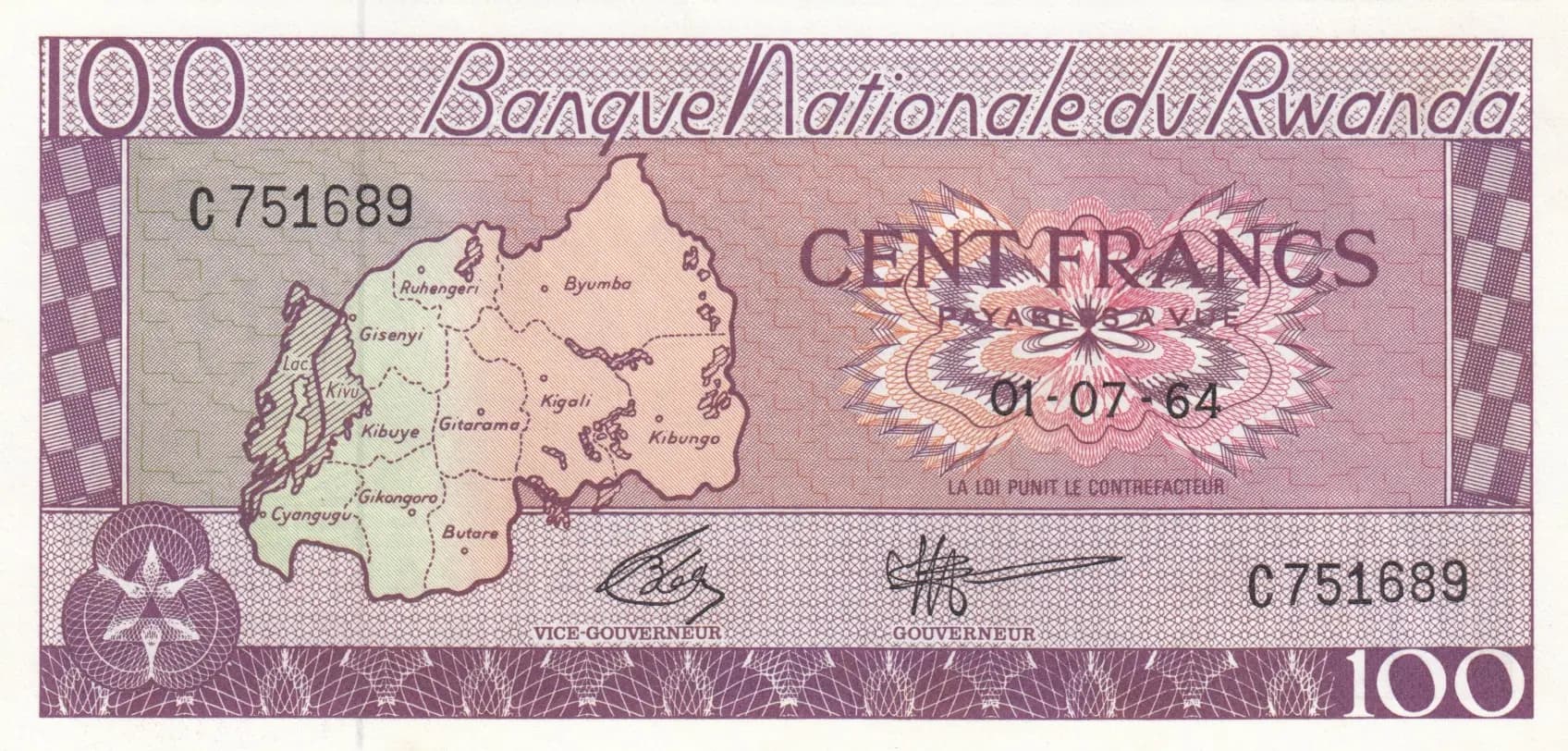
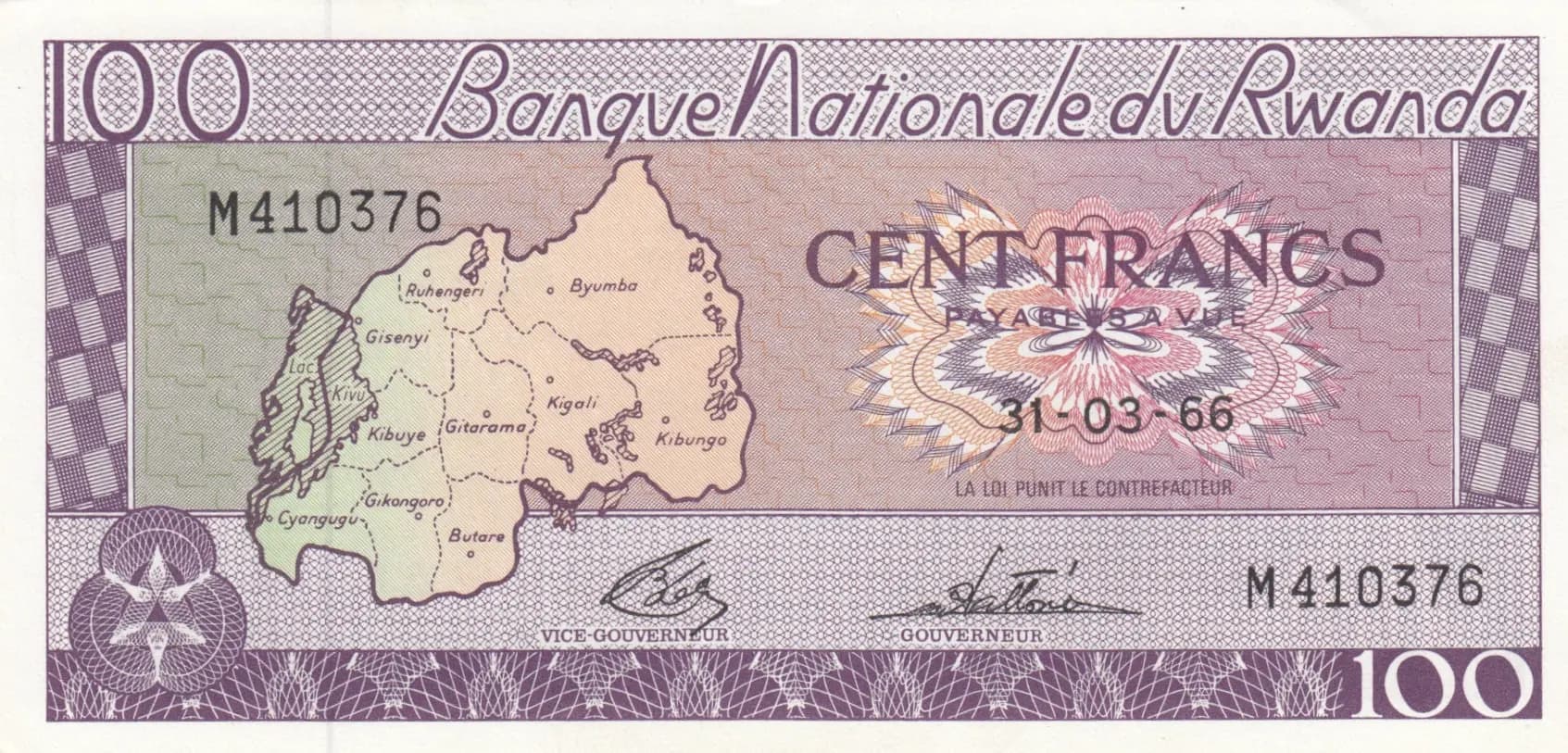
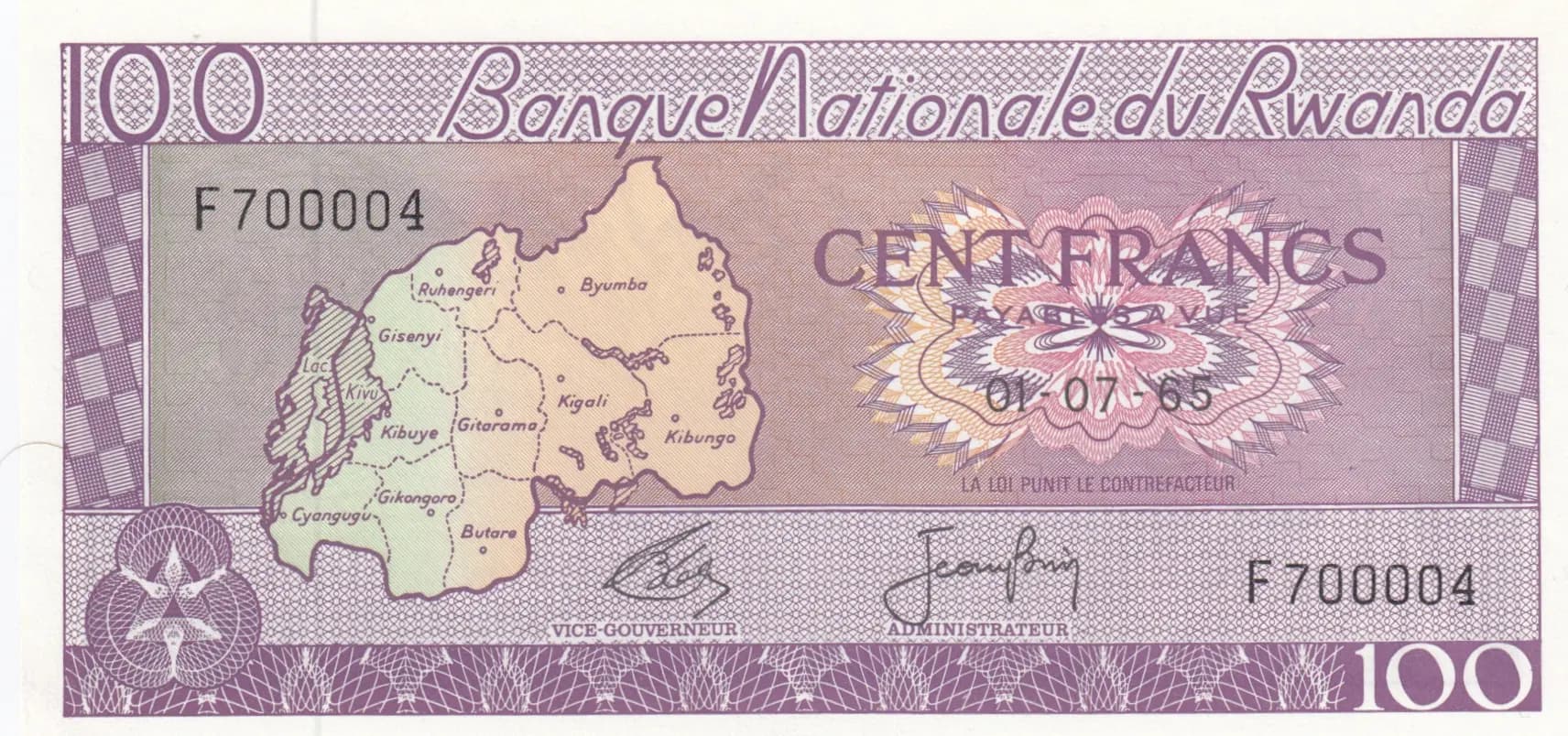
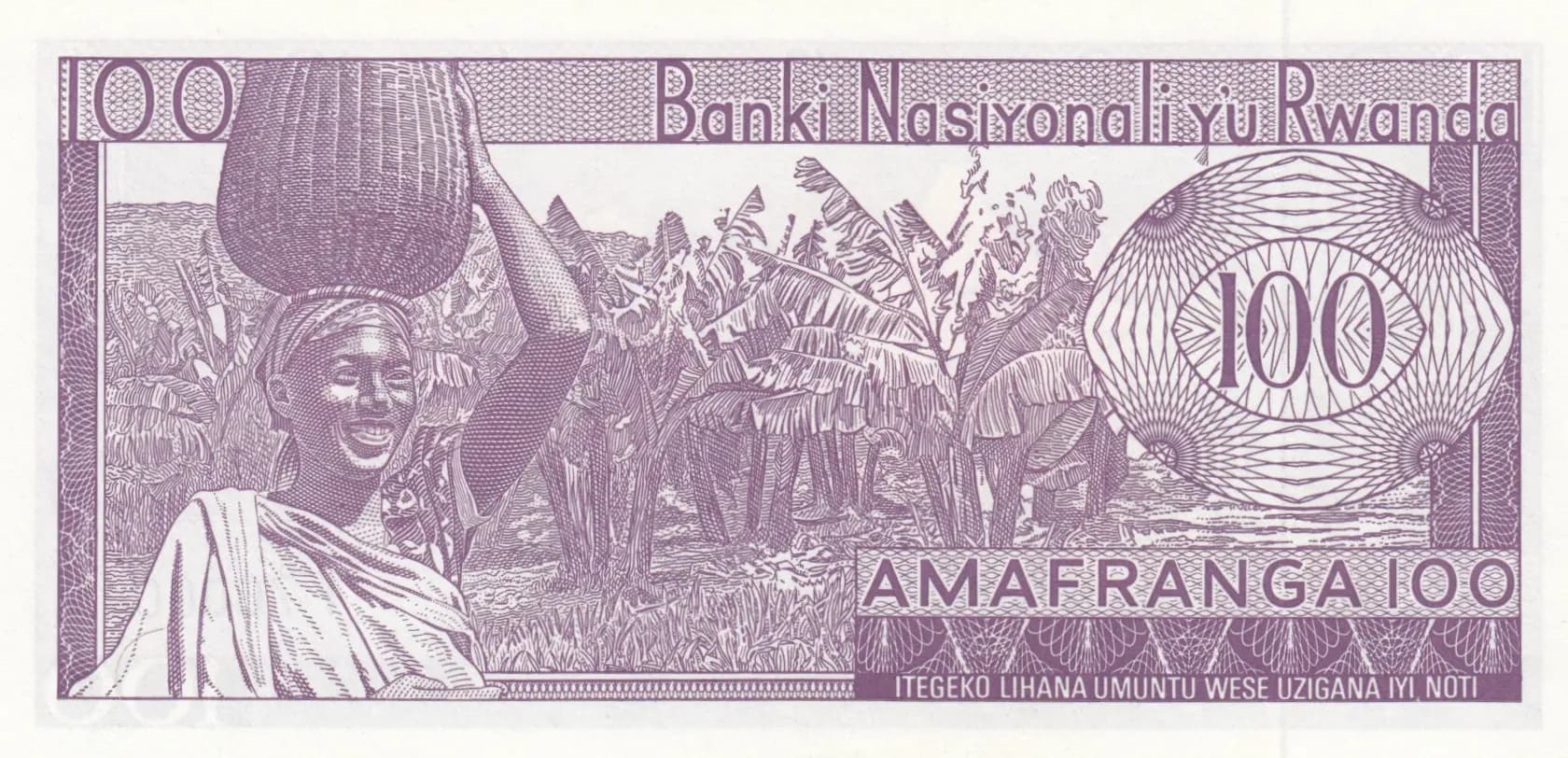
An exceptional example of Rwanda's early post-independence currency: the 100 Francs note from 1965, graded UNC. This purple-hued banknote features a detailed map of Rwanda with provincial boundaries on the obverse and an evocative scene of agricultural workers harvesting bananas on the reverse, reflecting the nation's economic foundation. The note exhibits pristine condition with no visible wear, intact security printing, and clear impressions throughout, making it a desirable specimen for collectors of African currency and post-colonial numismatic material.
Common. The 100 Francs 1965 (P-8b) is a standard regular-issue note from Rwanda's early monetary period. Market data from realbanknotes.com shows consistent UNC pricing in the $1.79–$9.99 range for most examples, with a 2019 catalog value of $30 UNC. The presence of multiple examples in circulation and modest eBay pricing indicates healthy supply. While numerically worth preserving, it is not scarce or rare in the collector market.
Issued in 1965 by the Banque Nationale du Rwanda, this note commemorates Rwanda's early years of independence (1962) and the establishment of its national monetary authority. The deliberate emphasis on agricultural labor and banana cultivation in the reverse design reflects Rwanda's agrarian economy and cultural identity during this formative period. The bilingual inscriptions in French and Kinyarwanda underscore the nation's linguistic and administrative heritage in the immediate post-colonial era.
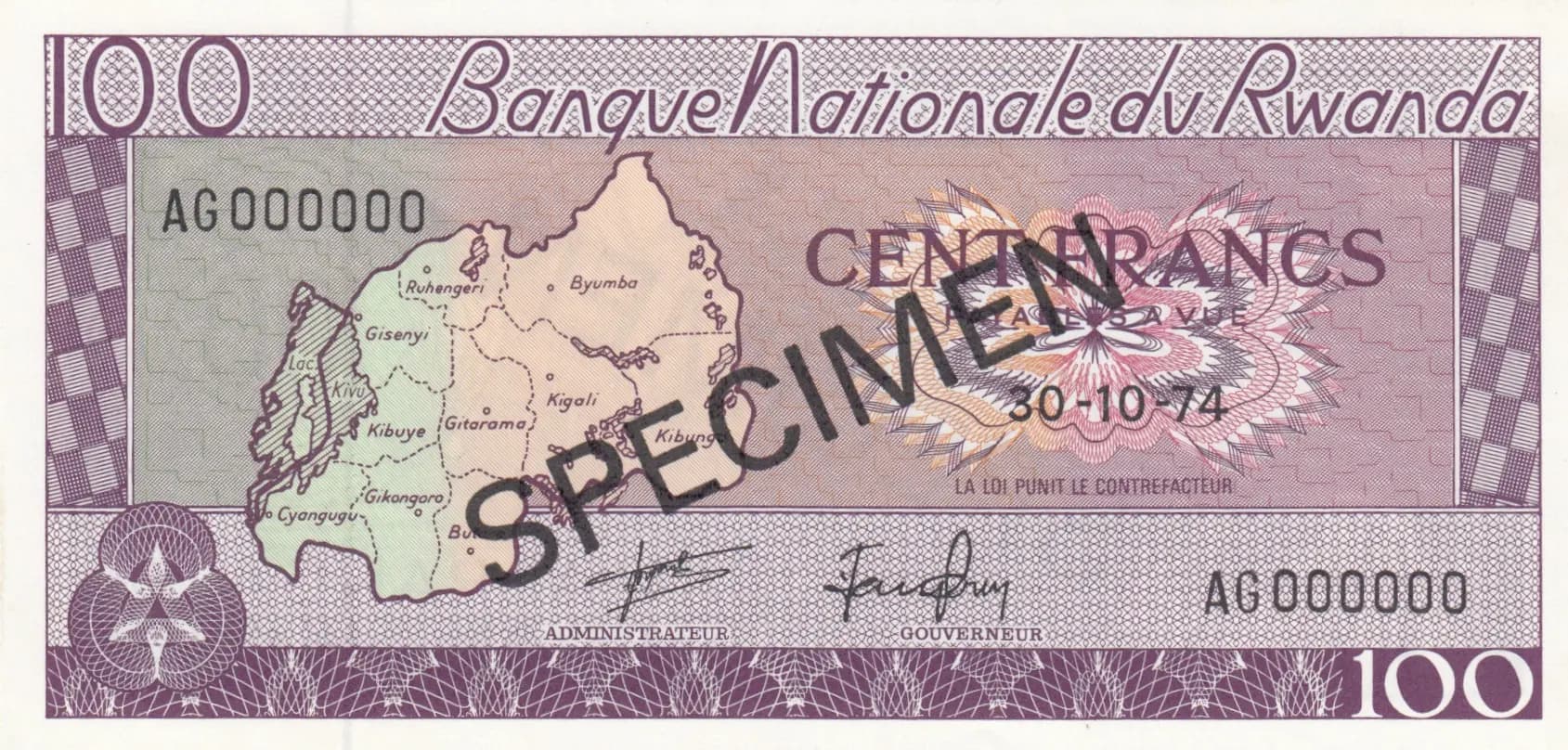
The obverse features a detailed cartographic representation of Rwanda prominently positioned in the upper left, delineating provincial boundaries and marking major cities including Ruhengeri, Byumbo, Gisenyi, Kigali, Gitaramo, Kibungo, Gikongoro, Cyangugu, and Butare—a symbolic assertion of national territorial identity. An ornate circular geometric design with radiating patterns in purple and gold occupies the upper right, serving as a security and decorative element. The reverse depicts a dynamic agricultural scene with multiple figures in traditional dress engaged in banana harvesting, emphasizing Rwanda's subsistence and cash crop economy. The Rwandan national coat of arms appears in the lower left of the obverse. Borders feature intricate guilloche patterns characteristic of fine currency engraving.
FRONT SIDE: 'Banque Nationale du Rwanda' (National Bank of Rwanda) | 'PAYABLE A VUE' (Payable on Demand) | 'LA LOI PUNIT LE CONTREFACTEUR' (The Law Punishes the Counterfeiter) | 'VICE-GOUVERNEUR' (Vice-Governor) | 'ADMINISTRATEUR' (Administrator) | Date: '01/07/65' (July 1, 1965) | Denomination: '100' | Serial number: 'F700004' | BACK SIDE: 'Banki Nasiyonal'yu Rwanda' (National Bank of Rwanda in Kinyarwanda) | 'AMAFRANGA 100' (100 Francs in Kinyarwanda) | 'ITEGEKO LIHANA UMUNTU WESE UZIGANA IYI NOTI' (The Law Punishes Anyone Counterfeiting This Note in Kinyarwanda) | Denomination: '100'
Intaglio engraving (line engraving) with fine detail work and cross-hatching throughout, evidenced by the precise linework visible in the map, portrait figures, and geometric designs. The note incorporates guilloche security patterns in the borders and background. This is consistent with professional currency production standards of the period, likely produced by an established security printer—possibly Waterlow & Sons or De La Rue, though specific attribution for this Pick number would require archival research. The multi-color effect (purple on multicolor underprint) was achieved through sequential plate printing.
Serial number observed: F700004 (regular prefix). The catalog notes date varieties (1964–1976 date range on banknote.ws) and signature title varieties across the series. Replacement notes are identified by serial number prefix 'ZZ'. The specific specimen examined carries a standard 'F' prefix with the date '01/07/65' printed on the obverse. Varieties within P-8b may include different signature combinations and date ranges, but all fall under the same catalog number and represent a single standard type rather than distinct varieties.