25 rublei 1909
“Sig.Bogatyryov”
About This Note
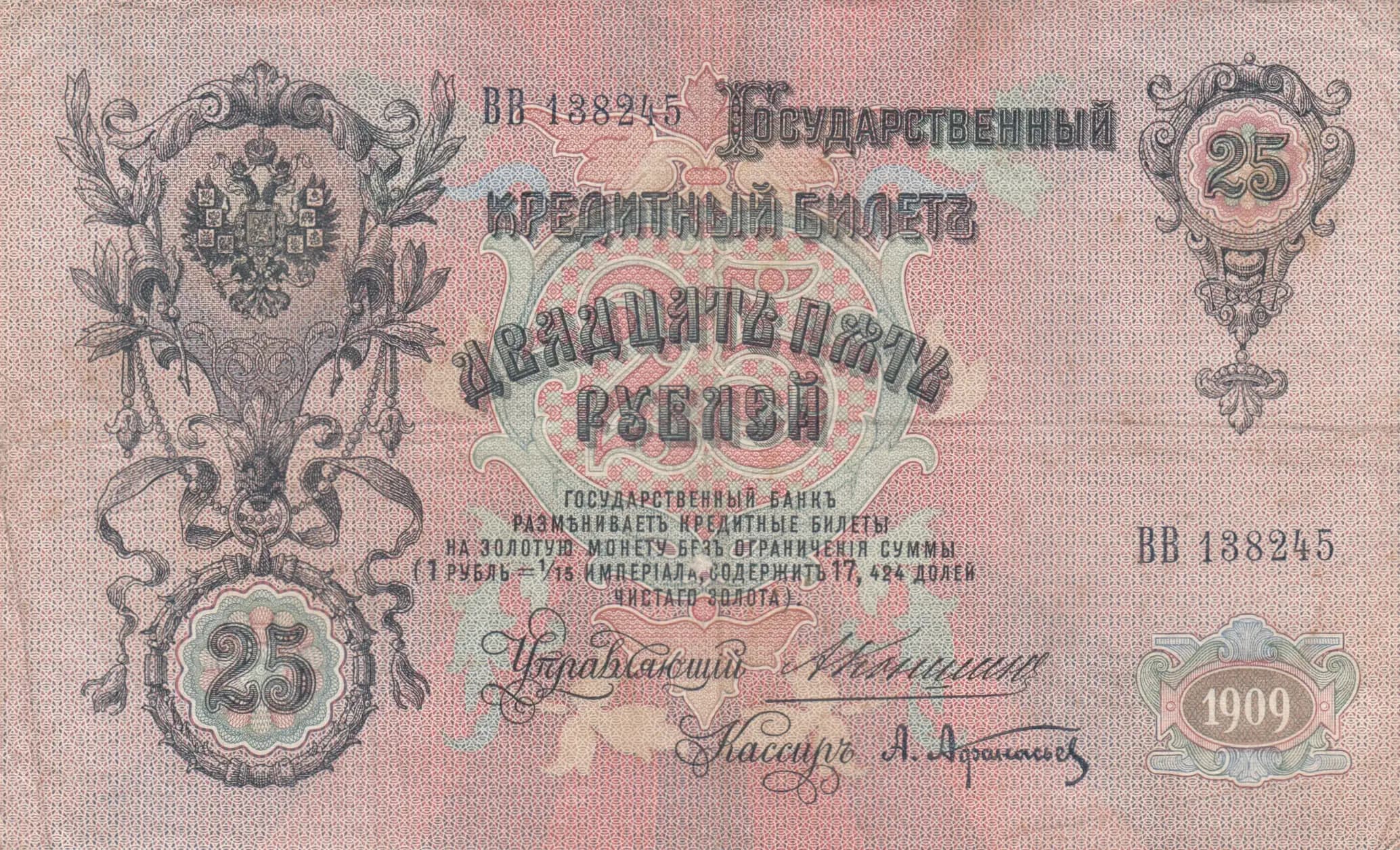
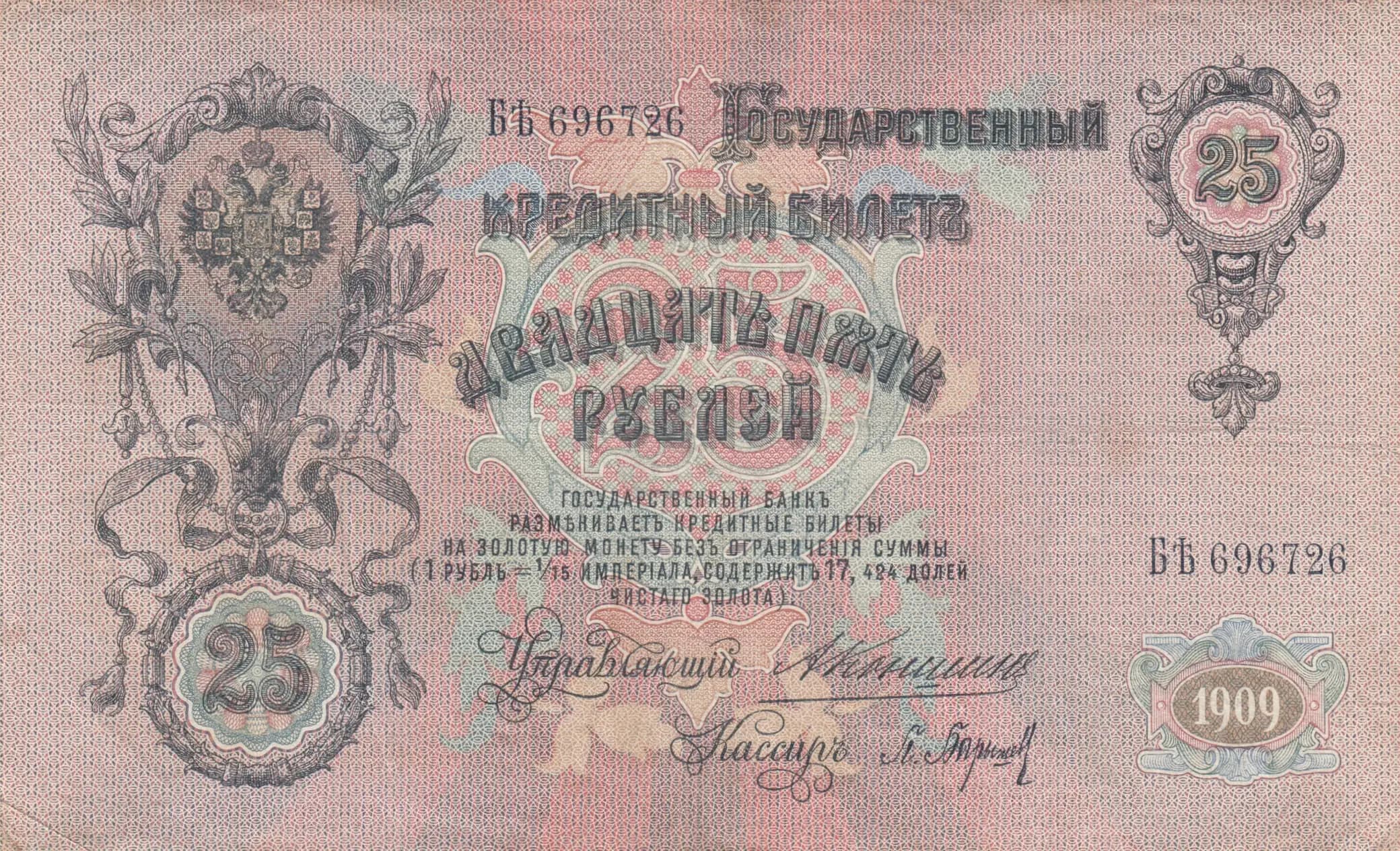
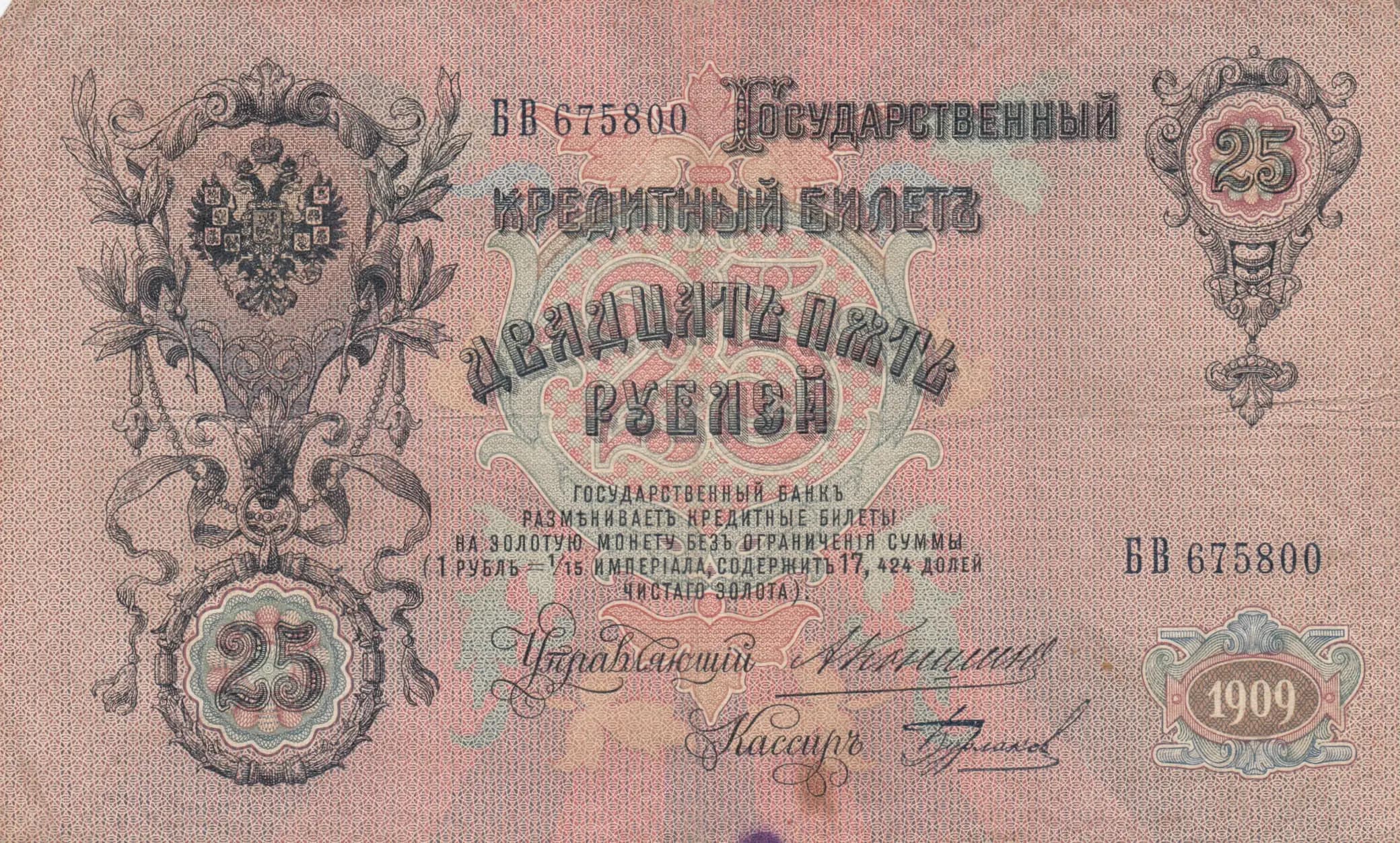
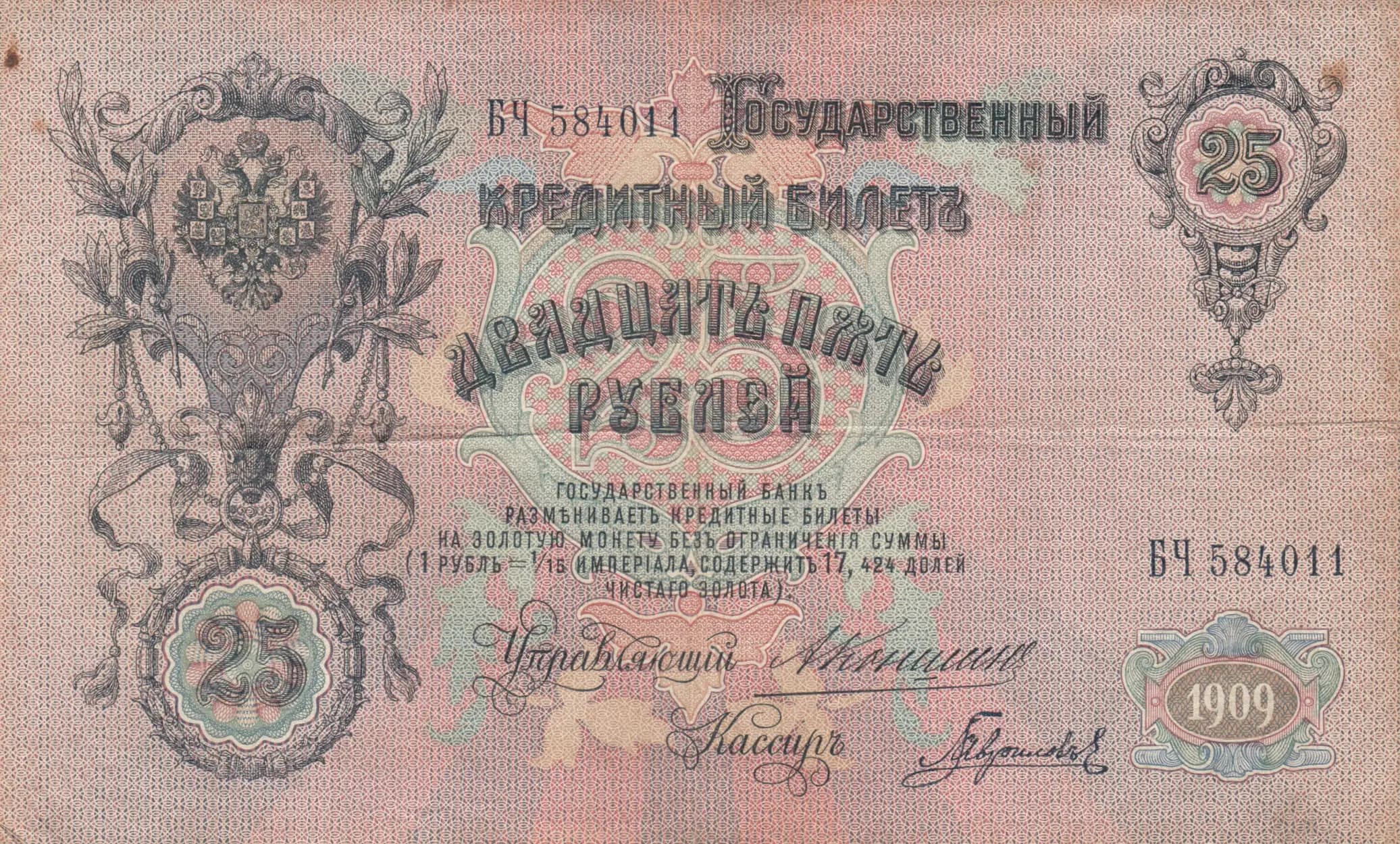
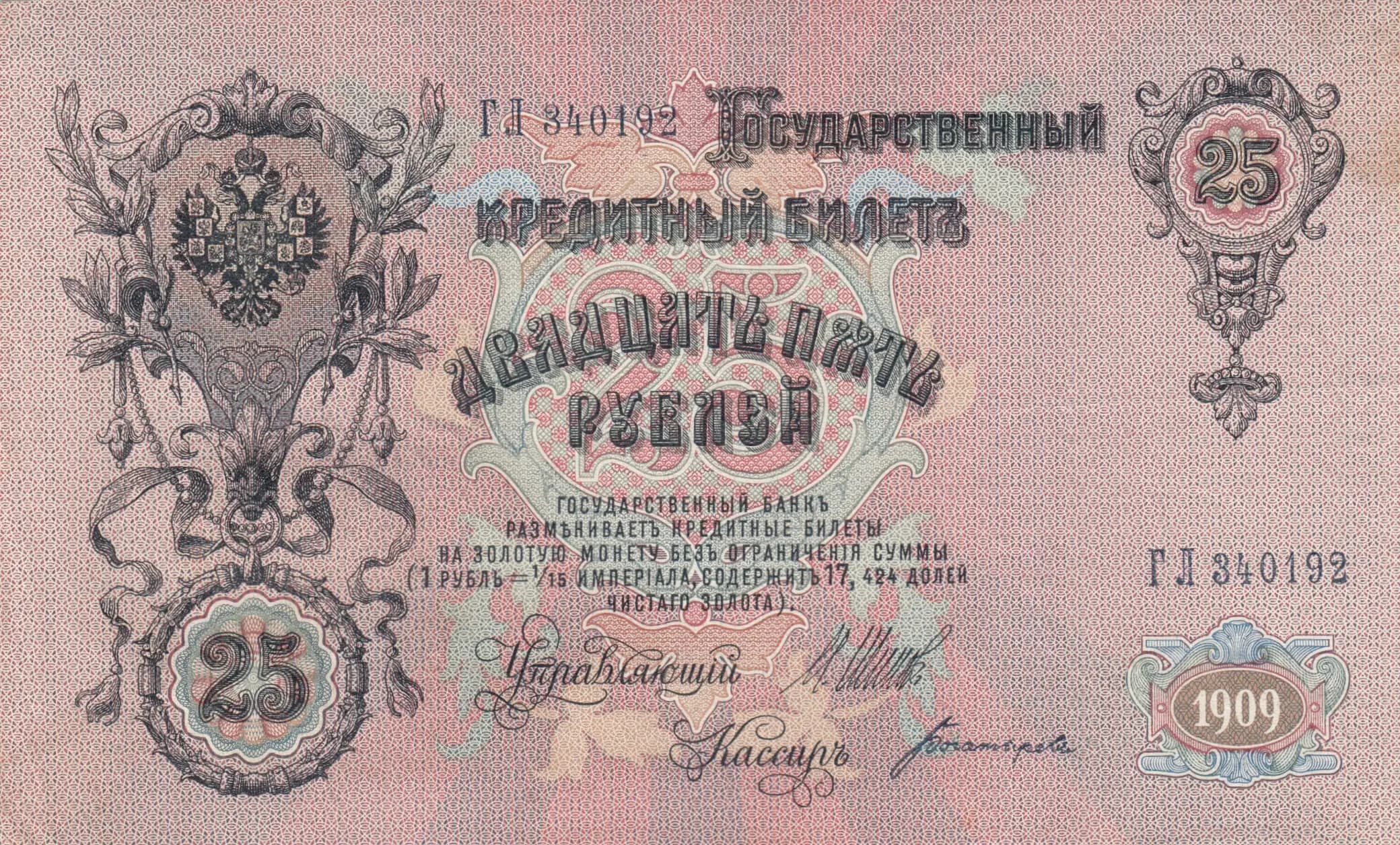
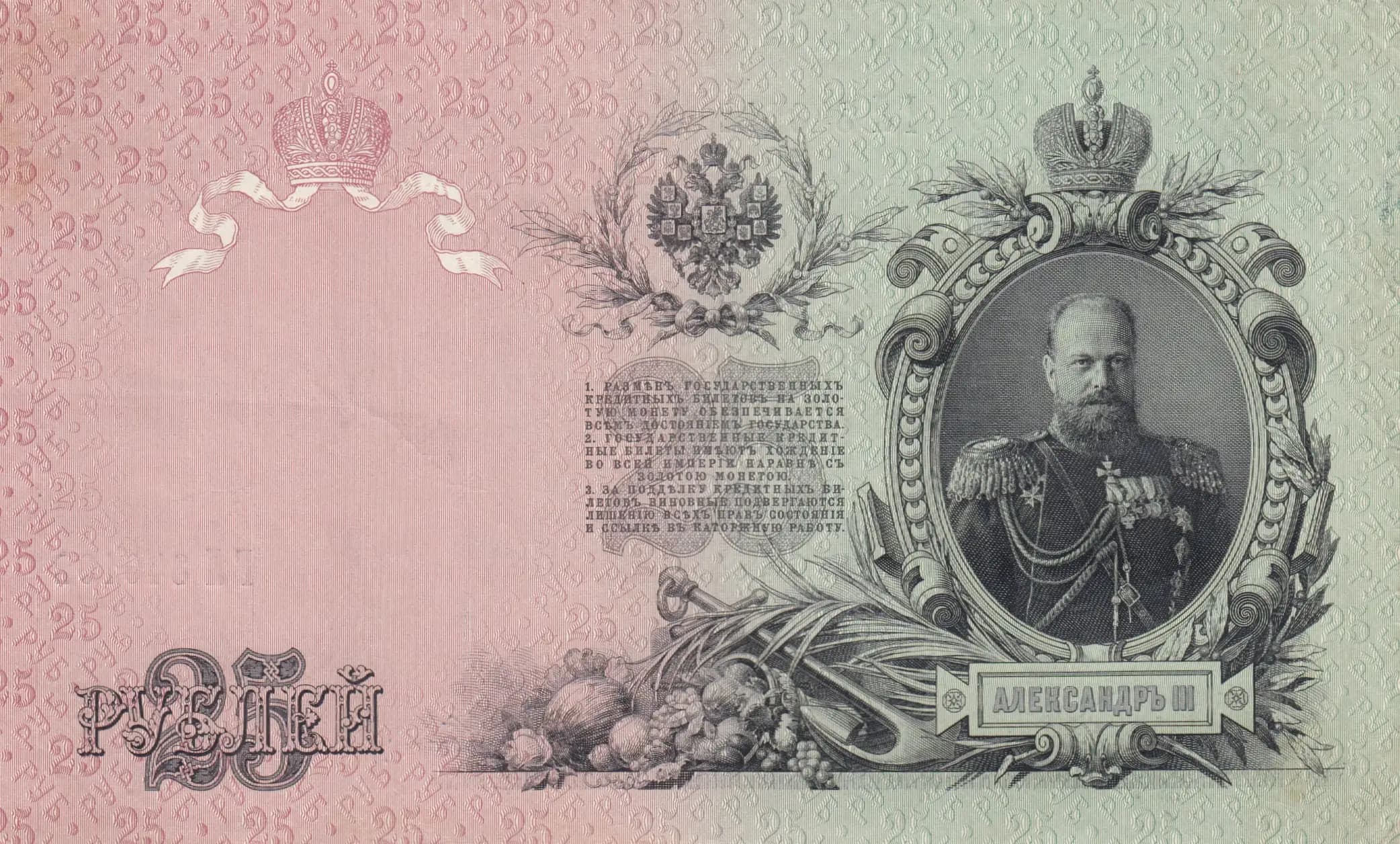
This is an AU-grade 25 ruble banknote from the 1909 Russian Imperial issue, featuring exceptional preservation with crisp, sharp printing throughout. The note displays the characteristic pink/rose and cream color palette of this series, with elaborate imperial heraldry including a double-headed eagle on the obverse and a finely engraved portrait of Alexander III on the reverse. The pristine condition, intricate guilloche work, and historical significance of this late Imperial Russian currency make it a notable example for serious collectors of Russian numismatics.
Common. The 1909 25 ruble denomination was part of a standard circulation series issued in substantial quantities throughout the Russian Empire prior to the 1917 Revolution. While notes from this period have survived in varying conditions due to the political upheaval that followed, the 25 ruble denomination itself was not produced in limited quantities. AU condition examples are more desirable than heavily circulated notes, but this Pick number remains common in the market. The signature variant (Bogatyryov) does not represent a particularly scarce combination for this issue.
This 25 ruble note was issued during the reign of Nicholas II as part of the Russian Imperial State Credit Note system, which remained on the gold standard throughout this period. The prominent depiction of Alexander III (Nicholas II's predecessor) on the reverse reflects the continuity of Imperial authority and the importance placed on dynastic succession in Russian monetary policy. The inscriptions reference the gold backing and conversion rates (1 ruble = 1/15 imperial, containing 17.424 parts pure gold), documenting Russia's commitment to gold-backed currency in the years immediately preceding World War I and the subsequent revolutionary upheaval.
The obverse features an ornate imperial coat of arms (the double-headed eagle with imperial crown) positioned on the left side, surrounded by laurel wreaths and elaborate scrollwork typical of late 19th-century Russian security printing. The center displays the denomination in both words and numerals (25), while a secondary decorative circular cartouche appears on the right. The reverse is dominated by a skillfully engraved portrait of Alexander III in right profile, depicted in military uniform with epaulettes and imperial decorations, contained within an ornate circular frame adorned with crowns, double-headed eagles, and heraldic florals. The background of both sides employs a two-tone color scheme (pink and light green/sage) with repeating geometric and floral guilloche patterns characteristic of Imperial Russian State Bank notes.
FRONT SIDE: 'Государственный кредитный билет' (State Credit Note) / 'Двадцать пять рублей' (Twenty-five rubles) / 'Государственный банк' (State Bank) / Serial number: ГД 840192 / 'Разрешивается кредитные билеты на золото...' (Authorized for credit notes in gold, with gold coins redeemable at the bank; 1 ruble = 1/15 imperial, contains 17.424 parts pure gold) / Date: 1909 / BACK SIDE: 'Александръ III' (Alexander III) - using pre-1918 orthography with the hard sign / 'Рубли' (Rubles) / Regulatory text regarding state credit notes in gold and their legal tender status throughout the Russian Empire.
This note was produced using intaglio/engraving techniques, evidenced by the fine line work, depth of detail in the portrait, and the complex guilloche background patterns visible in the visual analysis. The multiple color printing (pink, light green, cream, black) suggests the use of separate printing plates for each color. Russian Imperial State Bank notes of this period were typically produced by the State Printing Works in St. Petersburg, with security printing overseen under direct government control.
Pick 12b(3) indicates this is the third signature variety of the Type B issue. The signature of Bogatyryov (noted in the collector notes) represents one of the official signatory variants authorized during the 1909 emission period. Serial number ГД 840192 with the 'ГД' prefix falls within the standard serial number ranges for this issue. No overprints or special markings are evident, indicating this is a standard circulation note rather than a special issue or emergency emission.