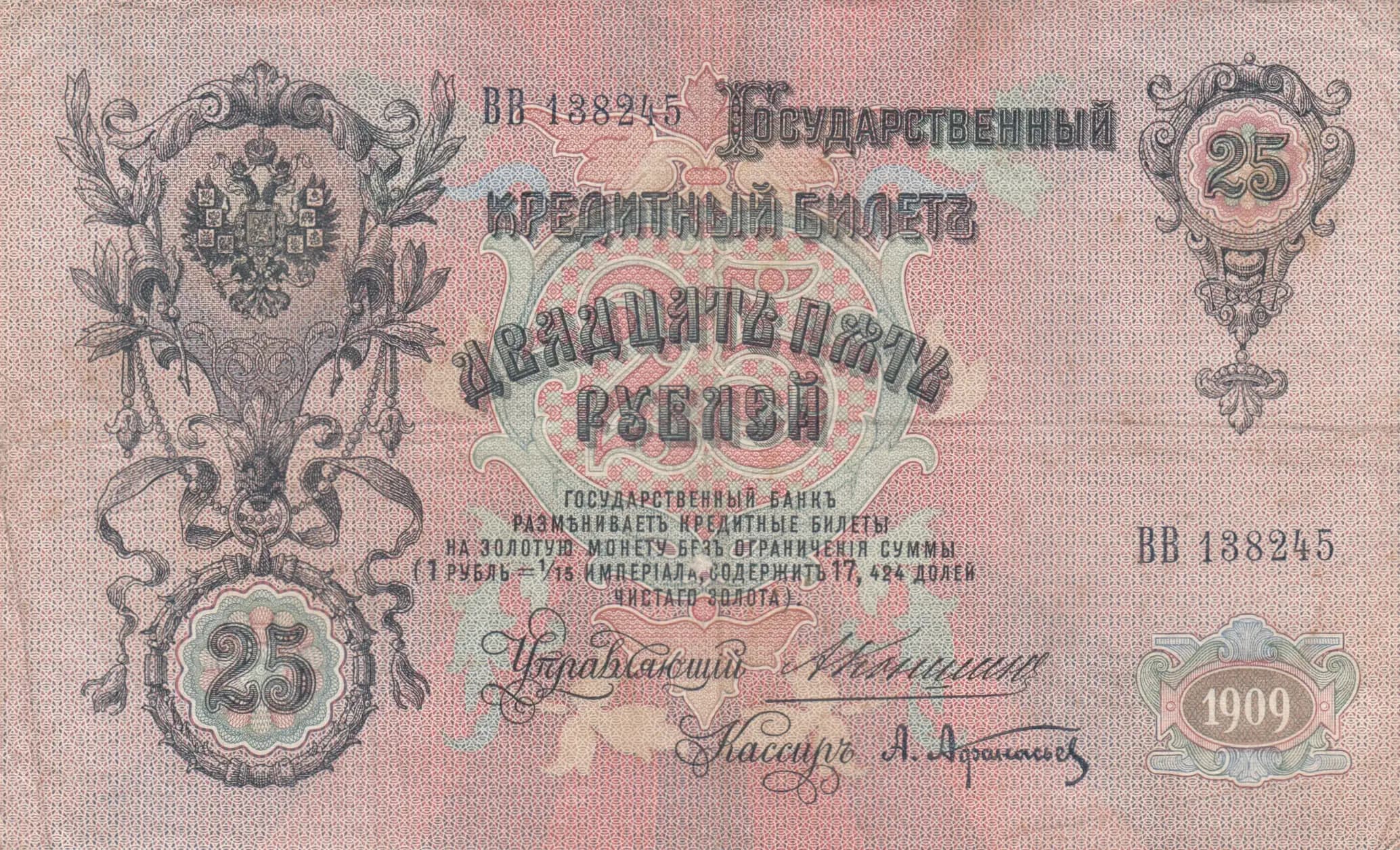
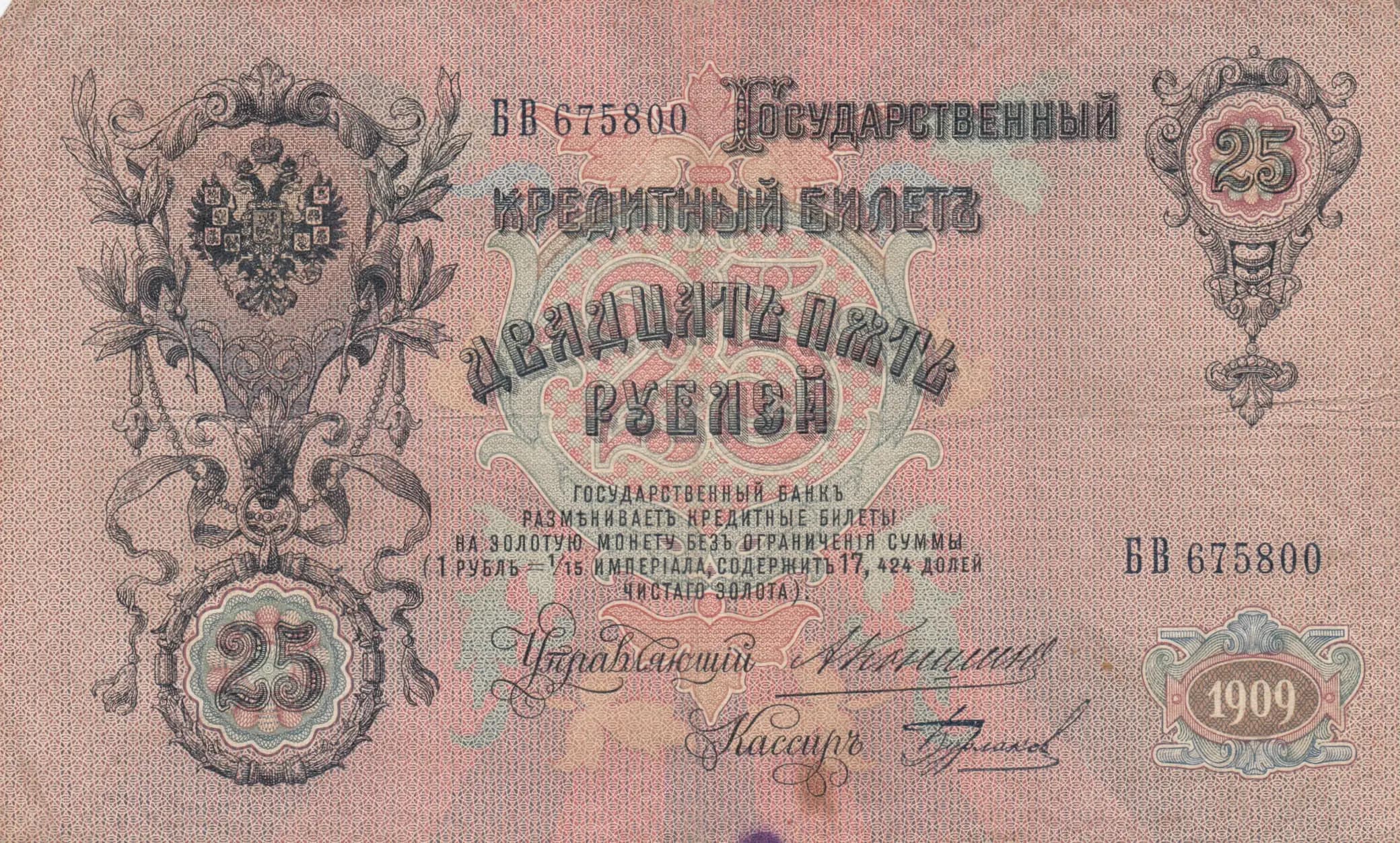
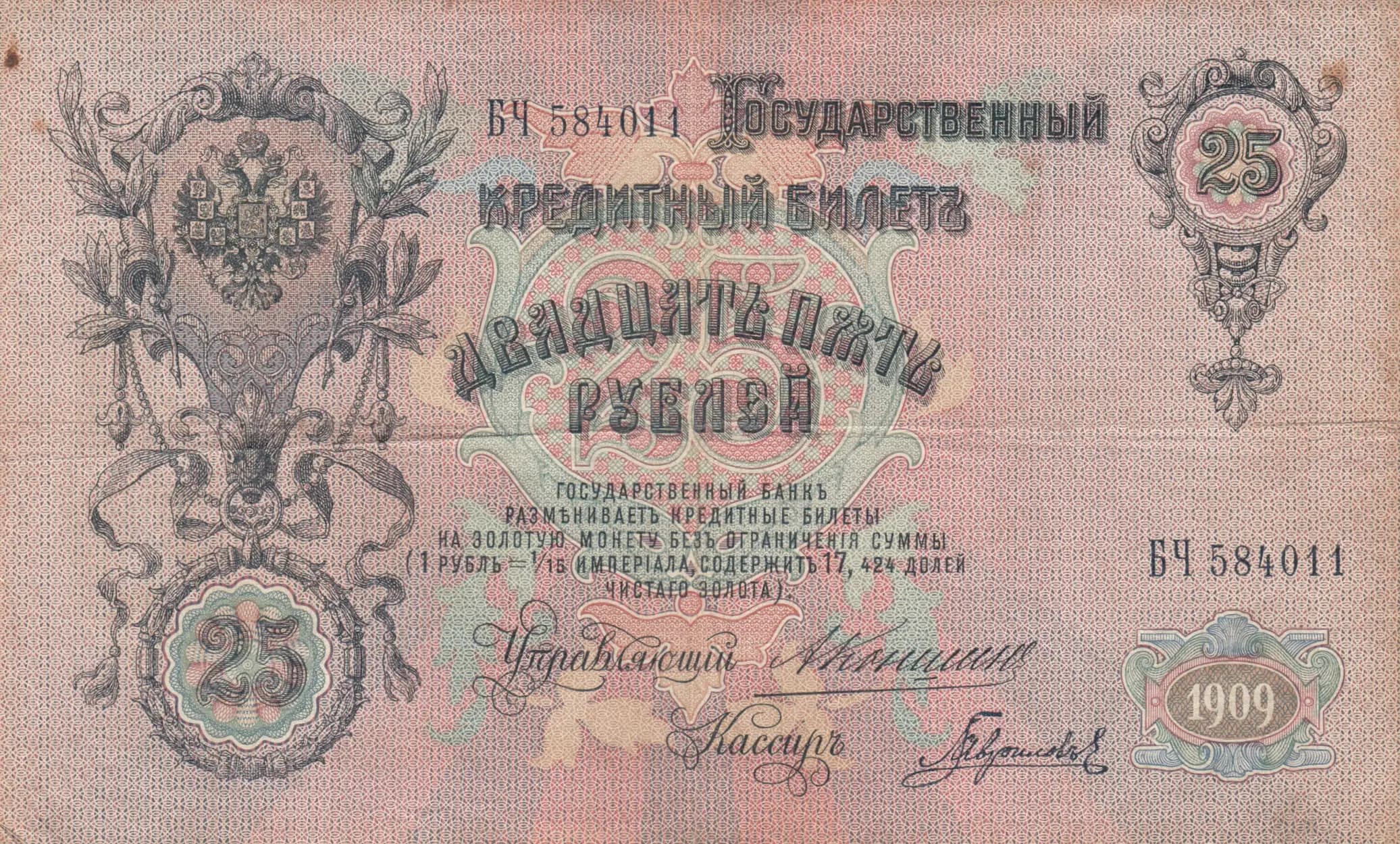
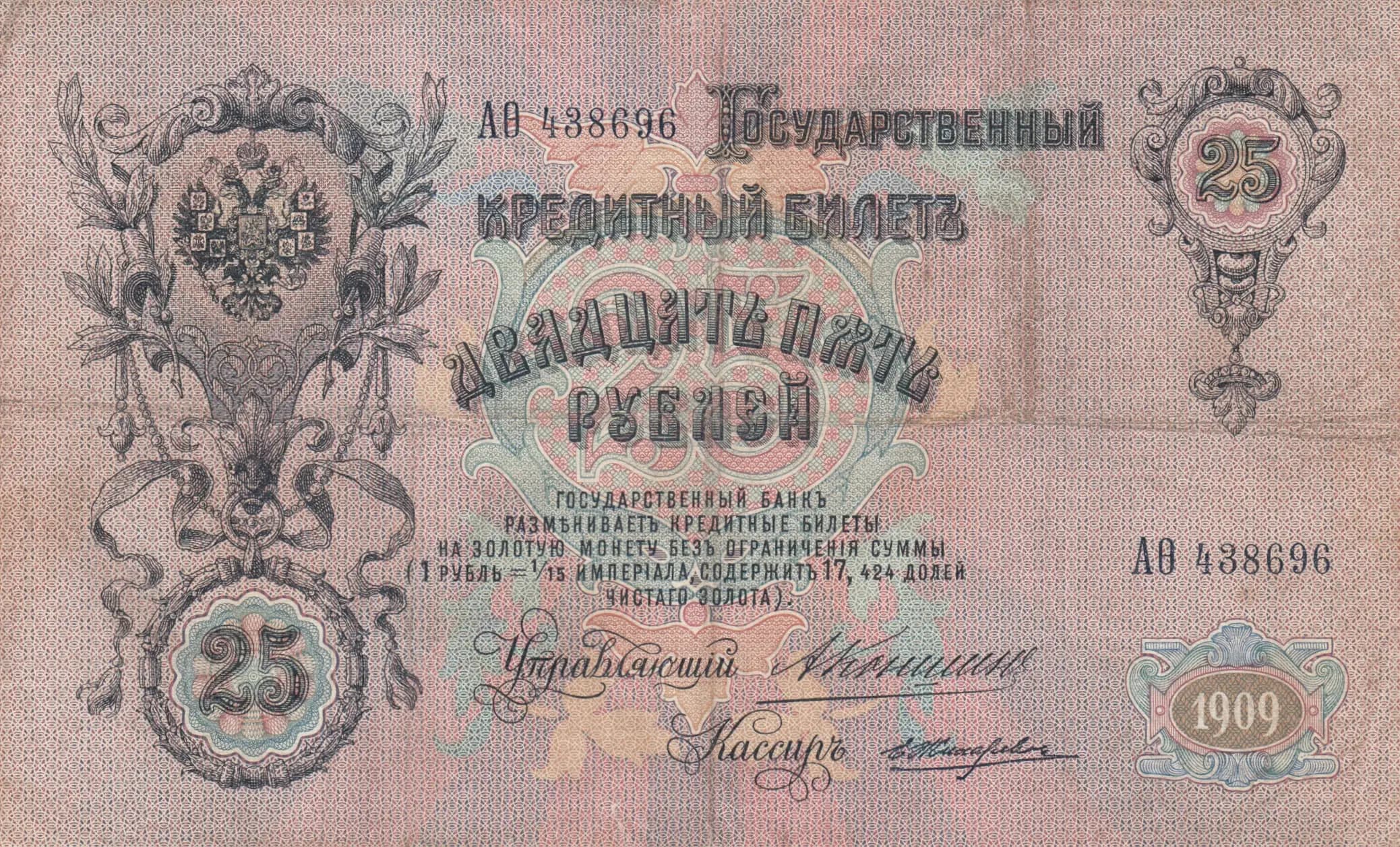
25 rublei 1909
“Sig.Baryshev”
About This Note
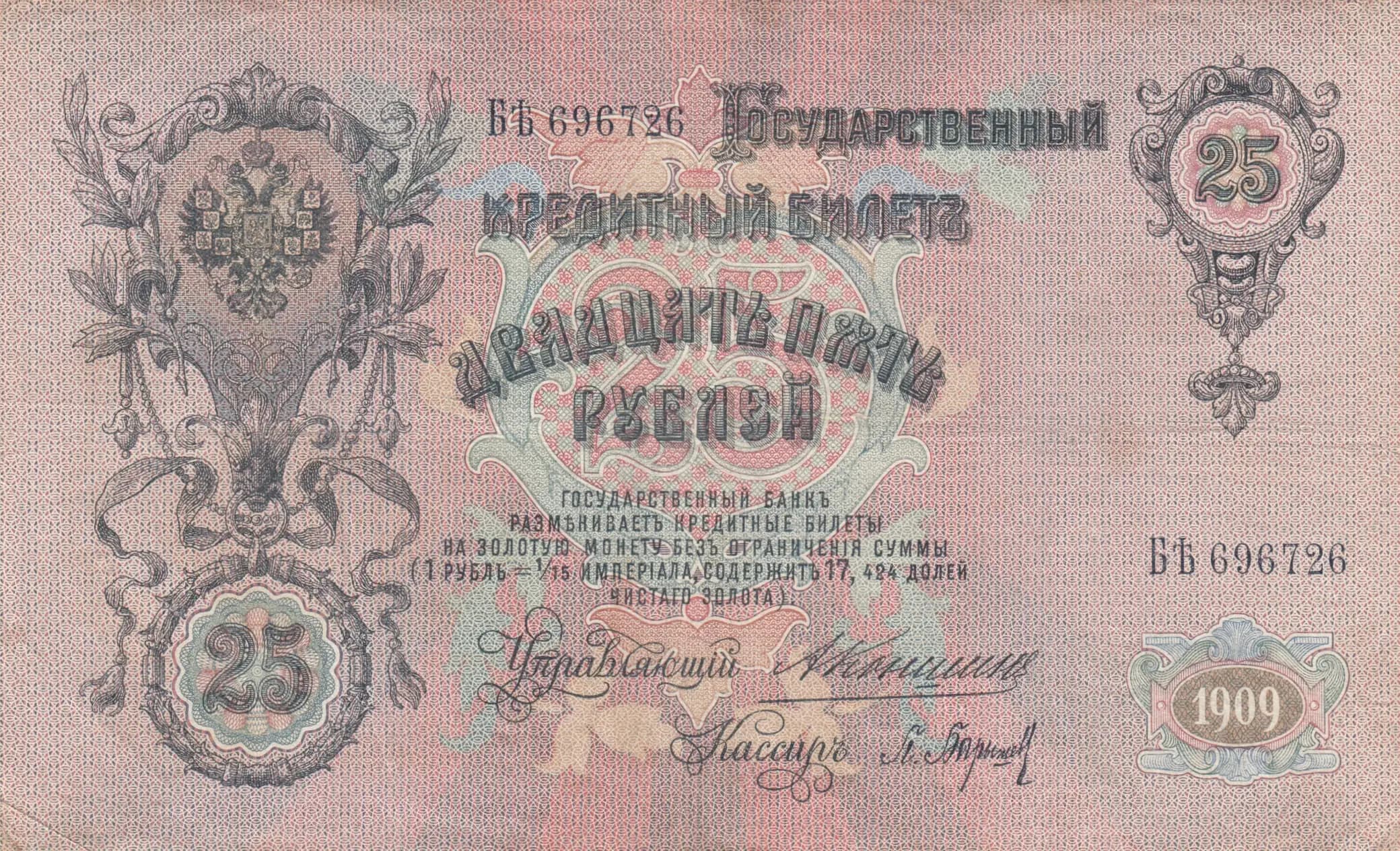
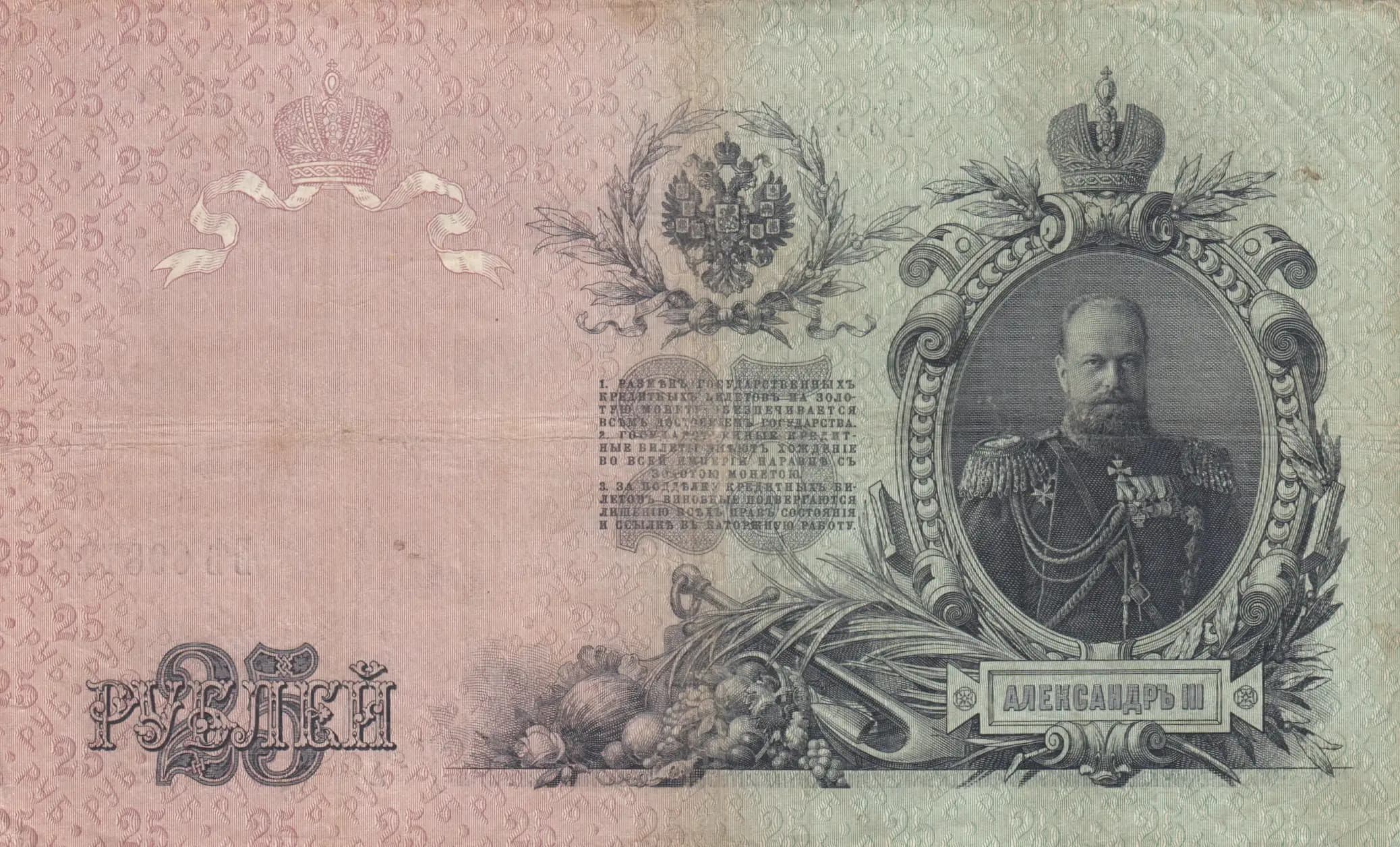
An exceptional example of the 1909 Russian Imperial 25 ruble State Credit Note (Pick P-12a(2)), presented in VF condition with crisp, vibrant printing and well-preserved detail throughout. The note features the iconic double-headed eagle on the obverse and a dignified portrait of Alexander II on the reverse, both rendered in the finest line-engraving technique characteristic of Imperial Russian currency. This particular specimen with serial number BB 696726 and signature of Baryshev represents a significant piece of pre-Revolutionary Russian monetary history, notable for its declaration of gold convertibility and the exceptional quality of its engraving.
common. The 1909 25 ruble note was issued in substantial quantities as a standard denomination of the Russian Imperial monetary system during the final years before the Revolution. While all pre-1917 Russian banknotes have collector interest, this Pick number and denomination combination remains readily available in the numismatic market. VF condition examples are neither scarce nor particularly commanding high premiums, indicating normal circulation survival rates for an Imperial-era note.
Issued during the final years of Tsarist Russia, this 1909 note exemplifies the Imperial monetary system under the gold standard established by Minister of Finance Sergei Witte. The prominent inscriptions declaring that 'The State Bank exchanges credit notes for gold coins without limit' and specifying the gold content (17.424 grains per ruble) reflect Russia's commitment to the gold standard during this period. The portrait of Alexander II honors the Tsar who emancipated the serfs in 1861, while the double-headed eagle and elaborate ornamentation reinforce Imperial authority—imagery that would disappear within a decade following the Revolution of 1917.
The obverse features an elaborately framed double-headed eagle with crown—the coat of arms of the Russian Empire—positioned within an ornate oval medallion surrounded by scrollwork and floral elements. Large denomination numerals '25' appear in ornamental circular frames in the center and right portions. The reverse showcases a finely engraved portrait of Tsar Alexander II in three-quarter military dress with decorations, enclosed in an elaborate oval frame topped with the Imperial crown and flanked by scrollwork and laurel wreaths symbolizing honor and achievement. The overall composition reflects the formal dignity of Imperial numismatic design, with pink/rose and green coloring providing visual distinction and security through color variation. The fine line pattern background throughout both sides serves dual purposes of aesthetic elegance and forgery deterrence.
FRONT SIDE: 'ГОСУДАРСТВЕННЫЙ КРЕДИТНЫЙ БИЛЕТ' (State Credit Note) / 'ДВАДЦАТЬ ПЯТЬ РУБЛЕЙ' (Twenty-five Rubles) / 'ГОСУДАРСТВЕННЫЙ БАНК РАЗМЕНИВАЕТЬ КРЕДИТНЫЕ БИЛЕТЫ НА ЗОЛОТУЮ МОНЕТУ БЕЗ ОГРАНИЧЕНИЯ СУММЫ (1 РУБЛЬ = УИК. ИМПЕРИАЛА СОДЕРЖИТЬ 17,424 ДОЛЕЙ ЧИСТАГО ЗОЛОТА)' (The State Bank exchanges credit notes for gold coins without limit on amount: 1 ruble equals one Imperial containing 17.424 parts of pure gold) / '1909' (date) / 'ББ 696726' (serial number BB 696726, appears twice) BACK SIDE: 'АЛЕКСАНДРЪ II' (Alexander II) / 'РУБЛЯ' (Ruble) / Regulatory text regarding Imperial decrees on credit note issuance
Intaglio engraving (line engraving/steel plate engraving), the primary security printing method for Imperial Russian banknotes of this era. The exceptional clarity of fine lines, the crisp detail in the portrait and ornamental elements, and the precision of the serial numbering all indicate professional security printing by the Russian Imperial State Printing House (Государственная типография / Gosudarstvennaya tipografiya). The multiple color application and fine background patterns are characteristic of high-security production standards of the period.
Pick P-12a(2) designation indicates this is a specific variety within the 1909 25 ruble series. Serial number BB 696726 with signature of Baryshev is characteristic of notes from this printing period. The note exhibits standard features consistent with the later Imperial printings. Signature varieties and serial number prefix variations exist within this type, making individual notes distinguishable by these security features, though the fundamental design remains constant for the P-12a(2) classification.