25 rublei 1909
“Sig.Sofronov”
About This Note
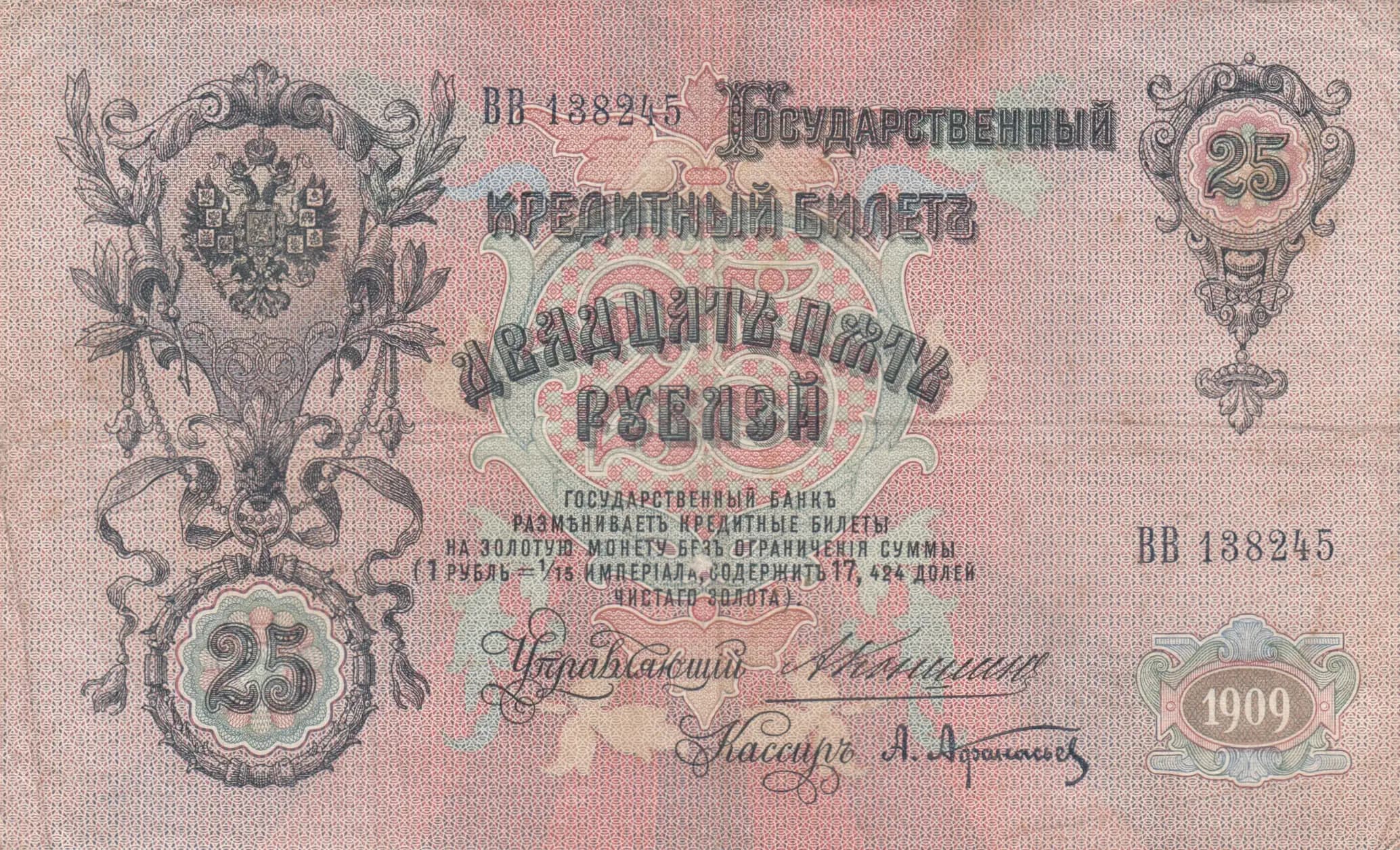
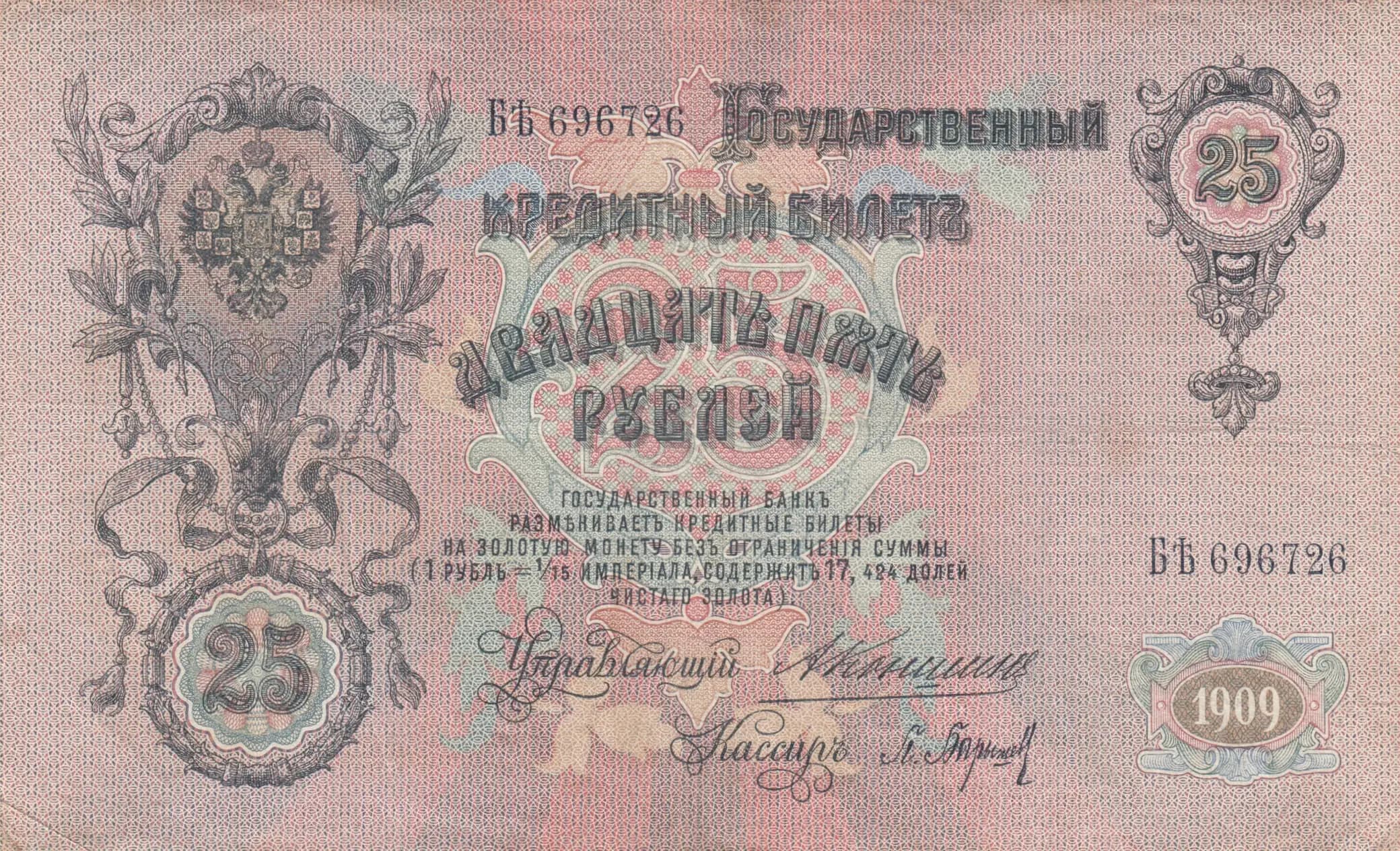
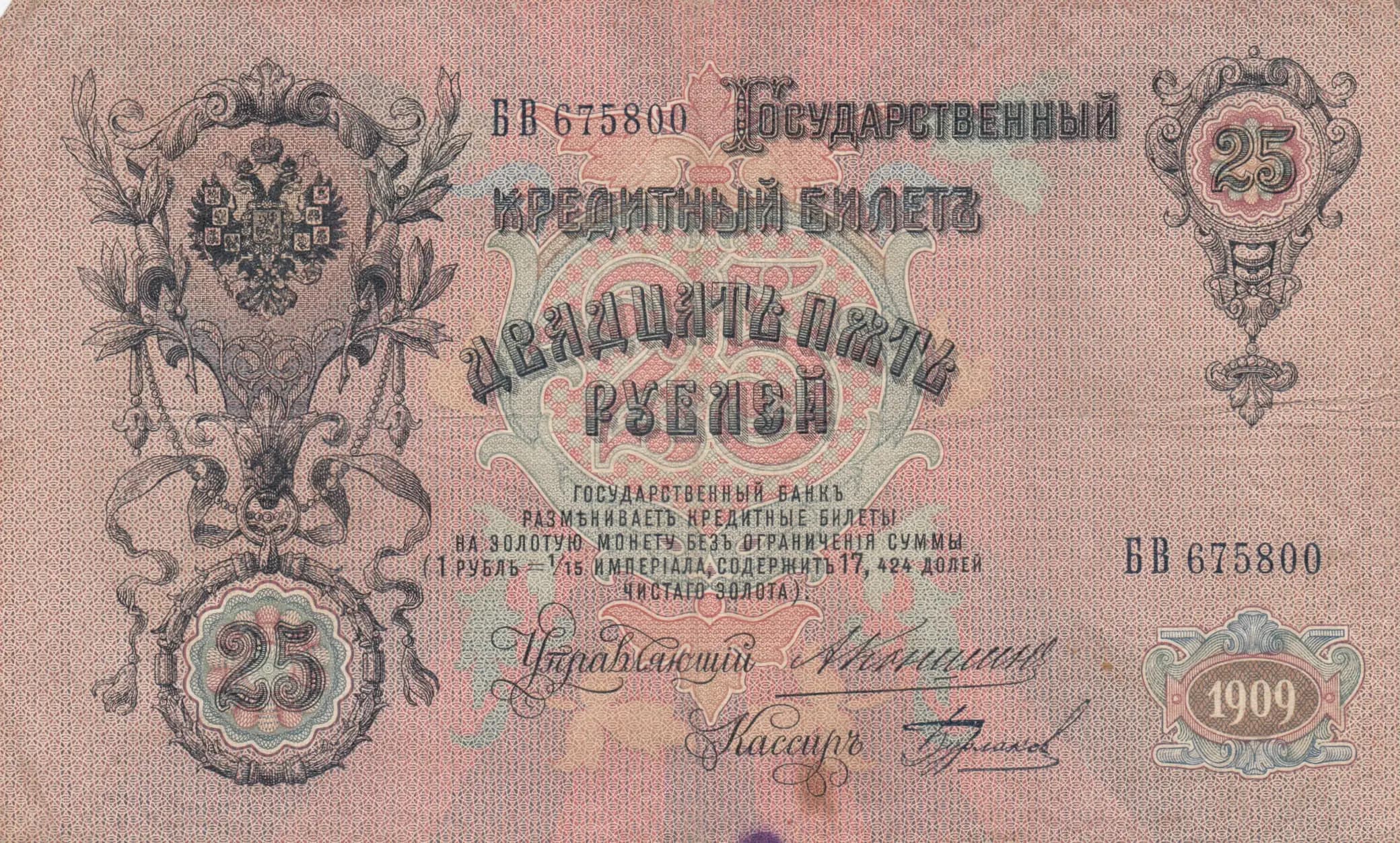
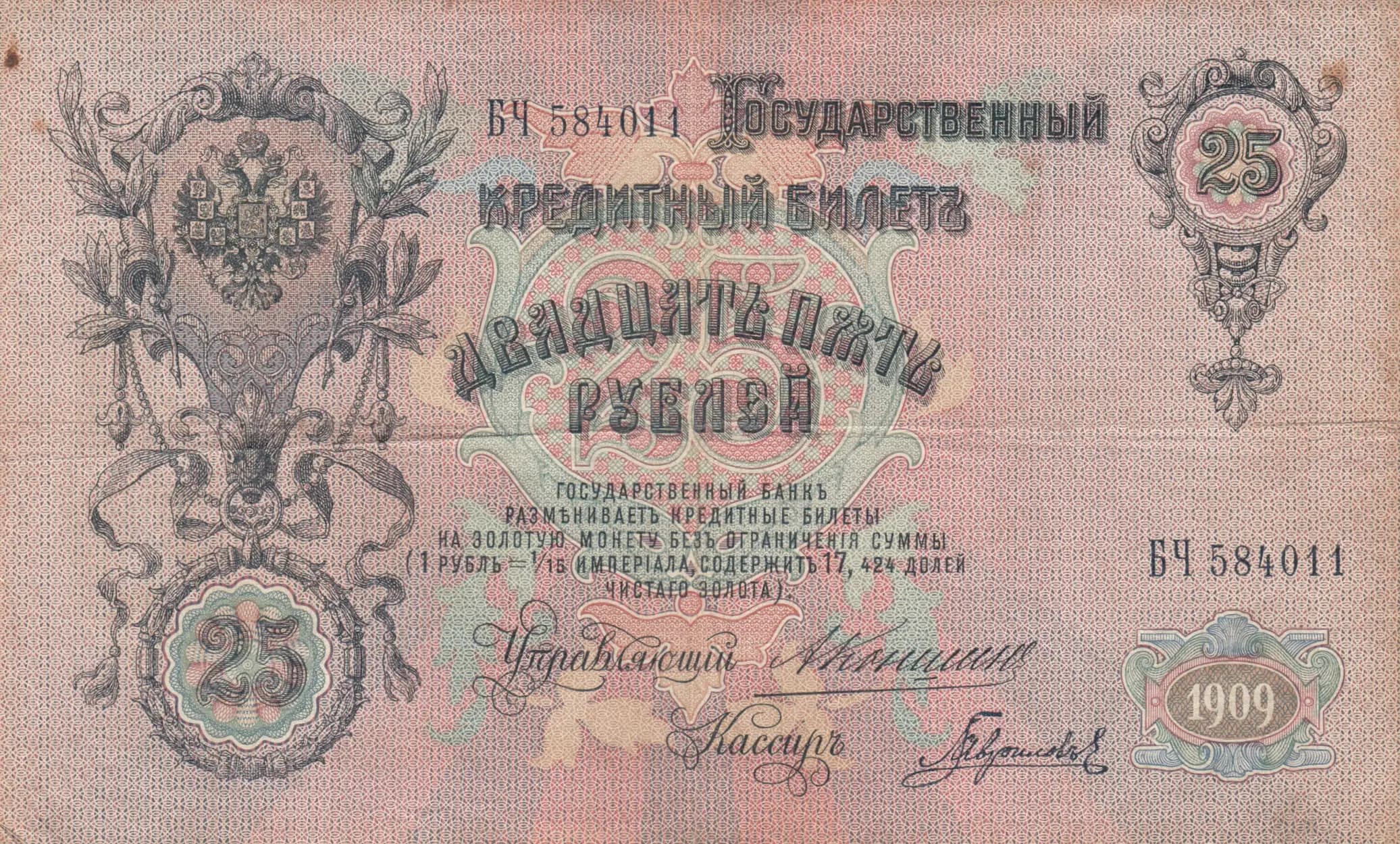
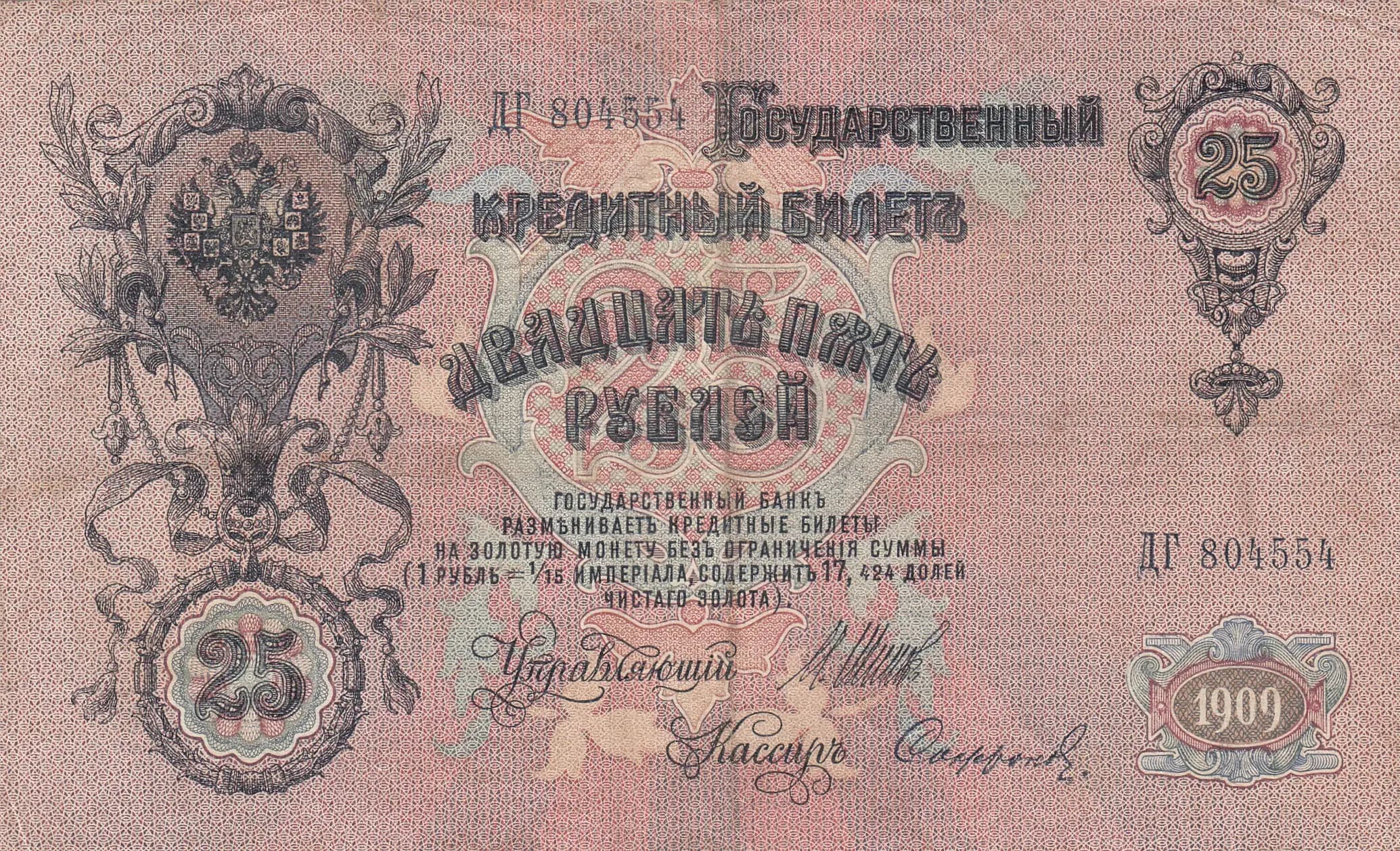
A splendid example of the Russian Imperial 25 Ruble State Credit Note from the 1909 series, featuring the distinctive pink/rose color scheme and elaborate ornamental design characteristic of early 20th-century Russian banknotes. The note presents in VF condition with sharp, clear printing throughout and no visible wear, creases, or damage, displaying the fine guilloche patterns and heraldic vignettes that exemplify the security printing standards of the Russian Empire. This note is signed by Sofronov and represents an important piece of Russian monetary history from the final decades of Imperial rule.
Common. The 25 Ruble notes from the 1909 series were issued in substantial quantities as part of the routine monetary circulation of the Russian Empire during the final years before the 1917 Revolution. While the condition grade of VF is respectable and the Sofronov signature may have numismatic interest for Russian banknote specialists, this denomination and series does not have documented evidence of limited print runs or specific scarcity. These notes, though historically important, remain relatively available in the collector market.
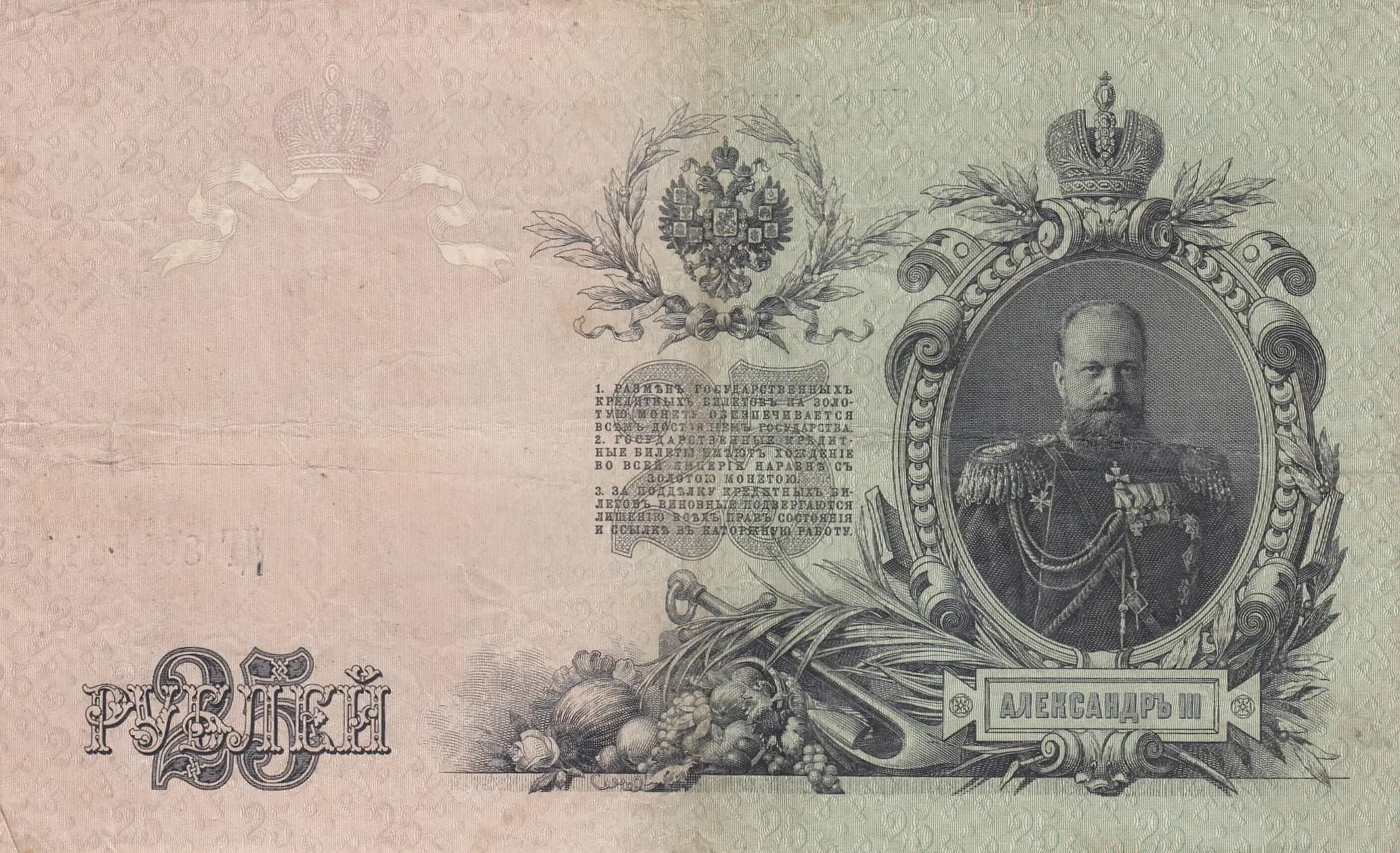
Issued during the reign of Tsar Nicholas II, this 25 Ruble note reflects the Russian Empire's State Credit Note system established in the 19th century as a cornerstone of imperial monetary policy. The design prominently features the imperial double-headed eagle and baroque ornamentation characteristic of official Russian state documents, while the portrait on the reverse commemorates Alexander III, Nicholas II's predecessor, symbolizing the continuity of imperial authority during a period of significant social and economic change in Russia.
The front of this note showcases the classic Russian Imperial design aesthetic with an ornate pink/rose background dominated by intricate geometric and floral filigree patterns. Denomination cartouches displaying '25' in Cyrillic numerals occupy the upper corners in elaborate circular frames. The reverse features a formal portrait of Alexander III (Emperor of Russia 1881-1894), depicted as a bearded gentleman in full military dress uniform adorned with imperial medals and decorations, enclosed within an ornate oval baroque frame crowned with imperial regalia. Laurel wreaths and heraldic crests frame the portrait. The Russian imperial double-headed eagle appears prominently on both sides, serving as the primary symbol of state authority. Complex guilloche background patterns, fine line work, and ornamental borders throughout provide both aesthetic and security functions.
Front side: 'ГОСУДАРСТВЕННЫЙ КРЕДИТНЫЙ БИЛЕТ' (State Credit Note/State Credit Ticket), 'ДВАДЦАТЬ ПЯТЬ РУБЛЕЙ' (Twenty-Five Rubles), denomination markers '25' in circular cartouches, serial number 'ПГ 804554', and date '1901'. Back side: 'РУБЛЕЙ' (Rubles), 'АЛЕКСАНДРЪ III' (Alexander III), and date '1901'. The inscriptions identify this as an official State Credit Note denominated in 25 rubles, issued under imperial authority.
Steel engraving (intaglio printing), a premium security printing method employed by the Russian Imperial State for all high-denomination banknotes. The visual analysis confirms the characteristic fine line work, guilloche patterns, and detailed engraving typical of intaglio production. Russian Imperial banknotes of this period were produced by the State Security Printing Works (Государственный Экспедиция Заготовления Государственных Бумаг) under strict government control.
This note is identified as Pick 12b(13), which represents a specific cataloging designation within the 25 Ruble notes of the 1909 series. The signature of Sofronov is noted in the collector's information and may indicate a specific signing official variant. The serial number ПГ 804554 indicates this is from a standard production run. The date discrepancy noted in visual analysis (1901 inscribed on a note cataloged as 1909) likely reflects the design date versus the issue date — a common practice in Russian imperial banknotes where the design date of the engraved plates differed from the actual year of circulation. No significant overprints or alterations are evident.