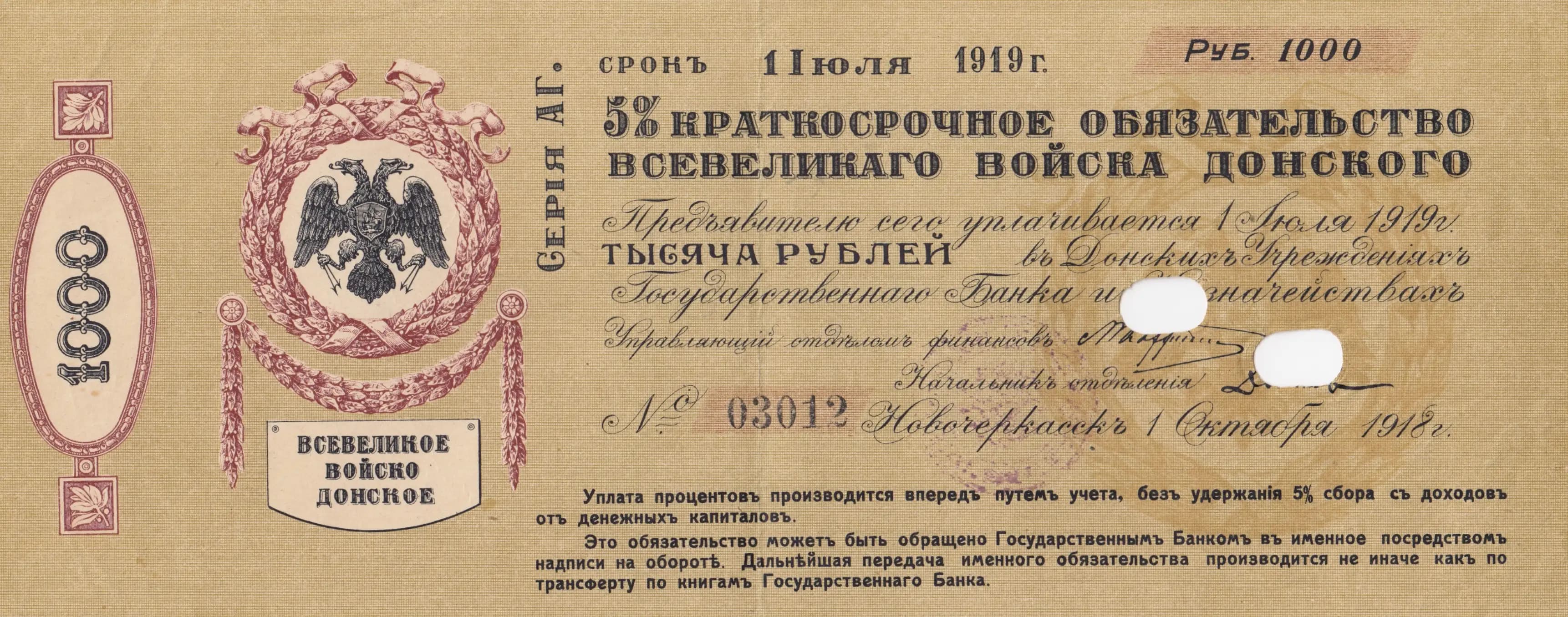
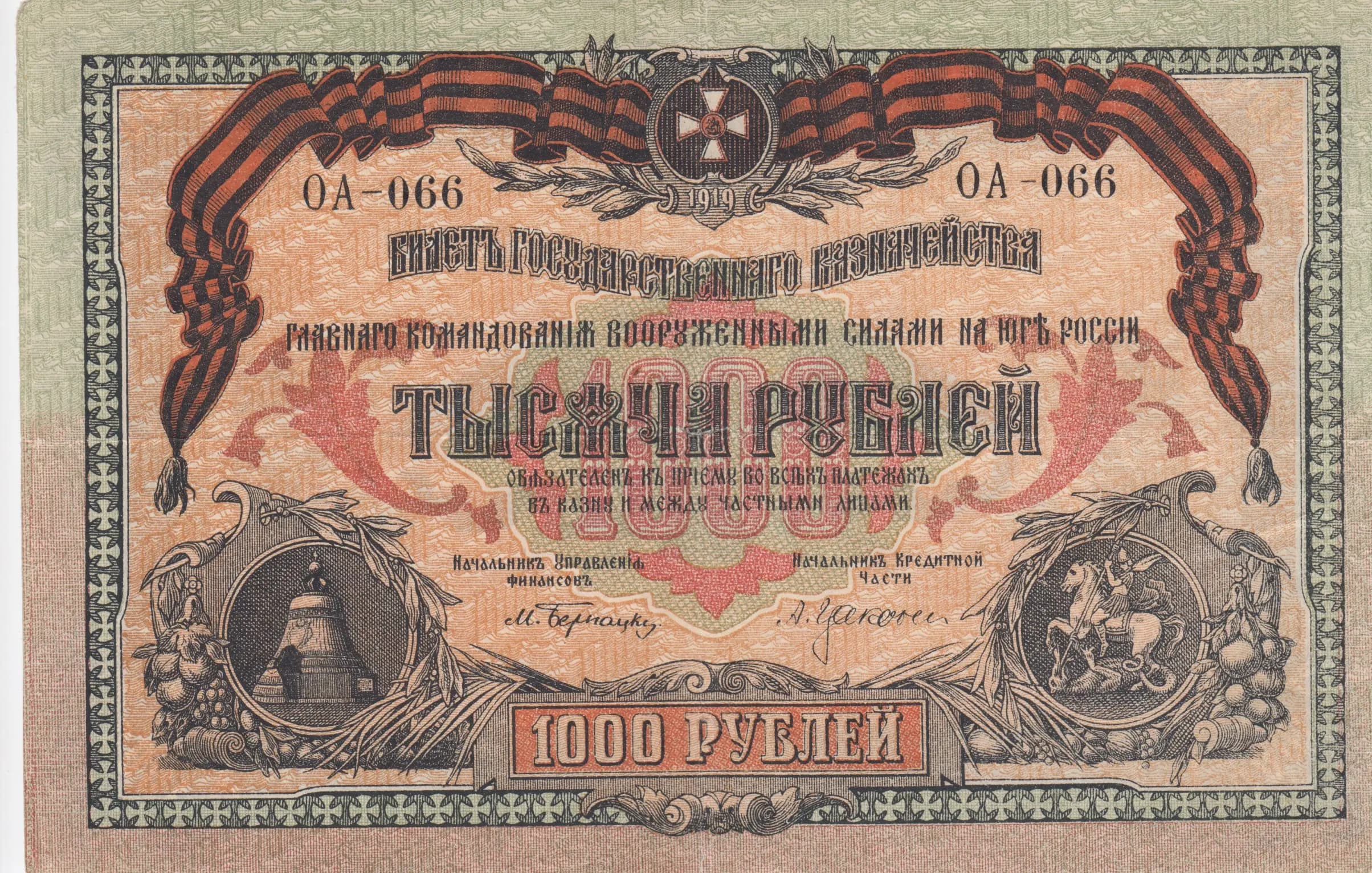
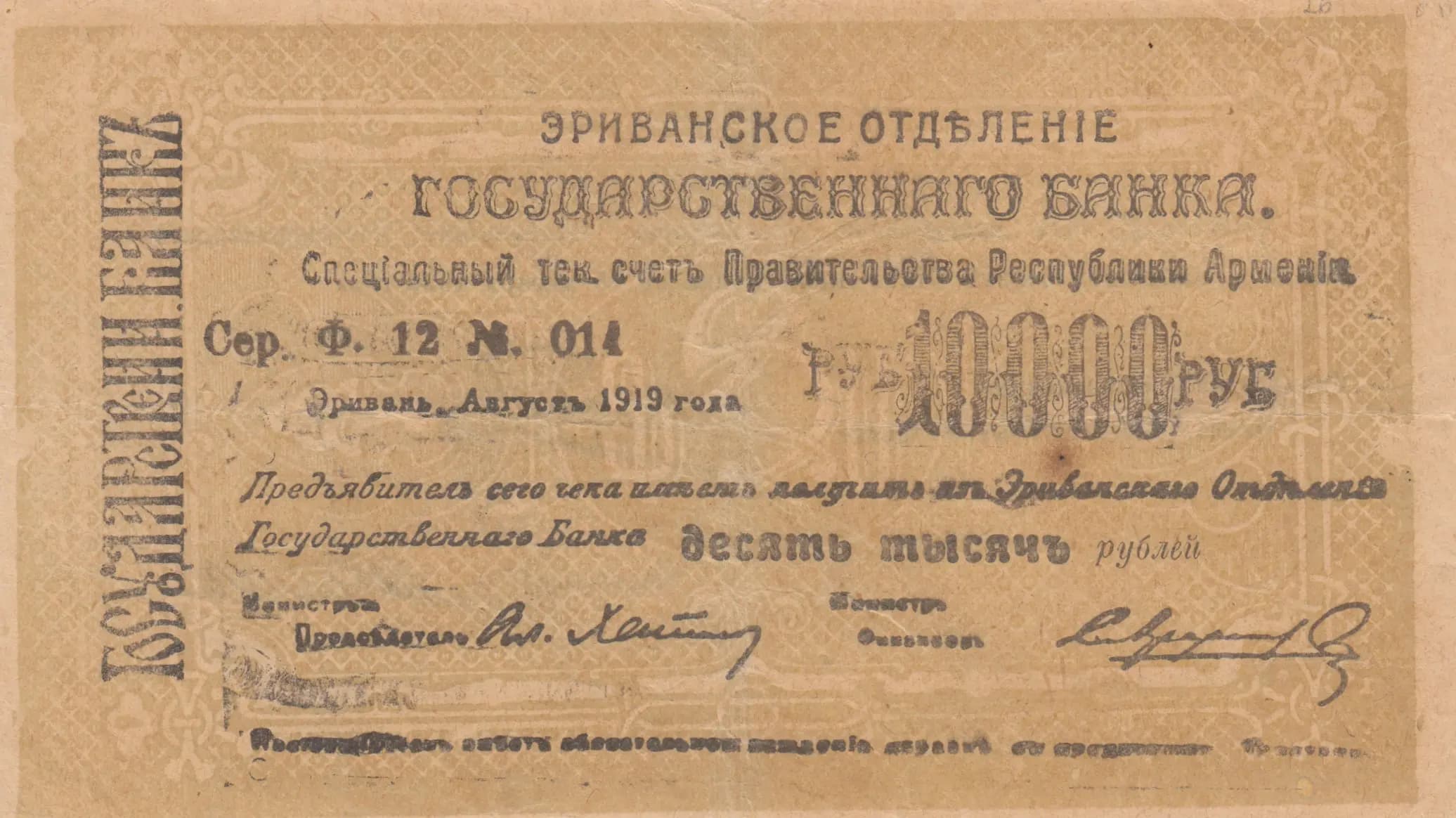
1000 rublei 1919
“Rostov”
About This Note
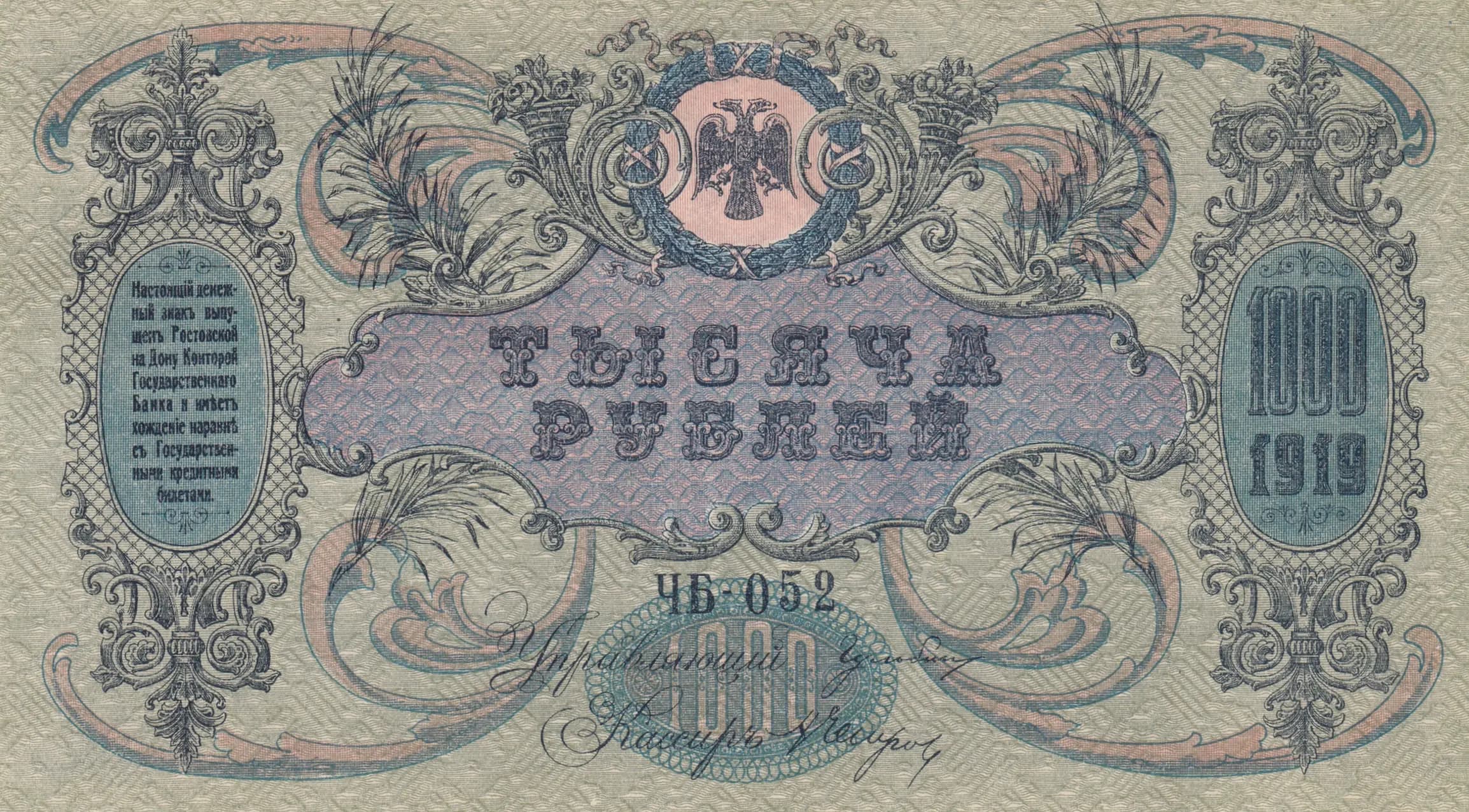
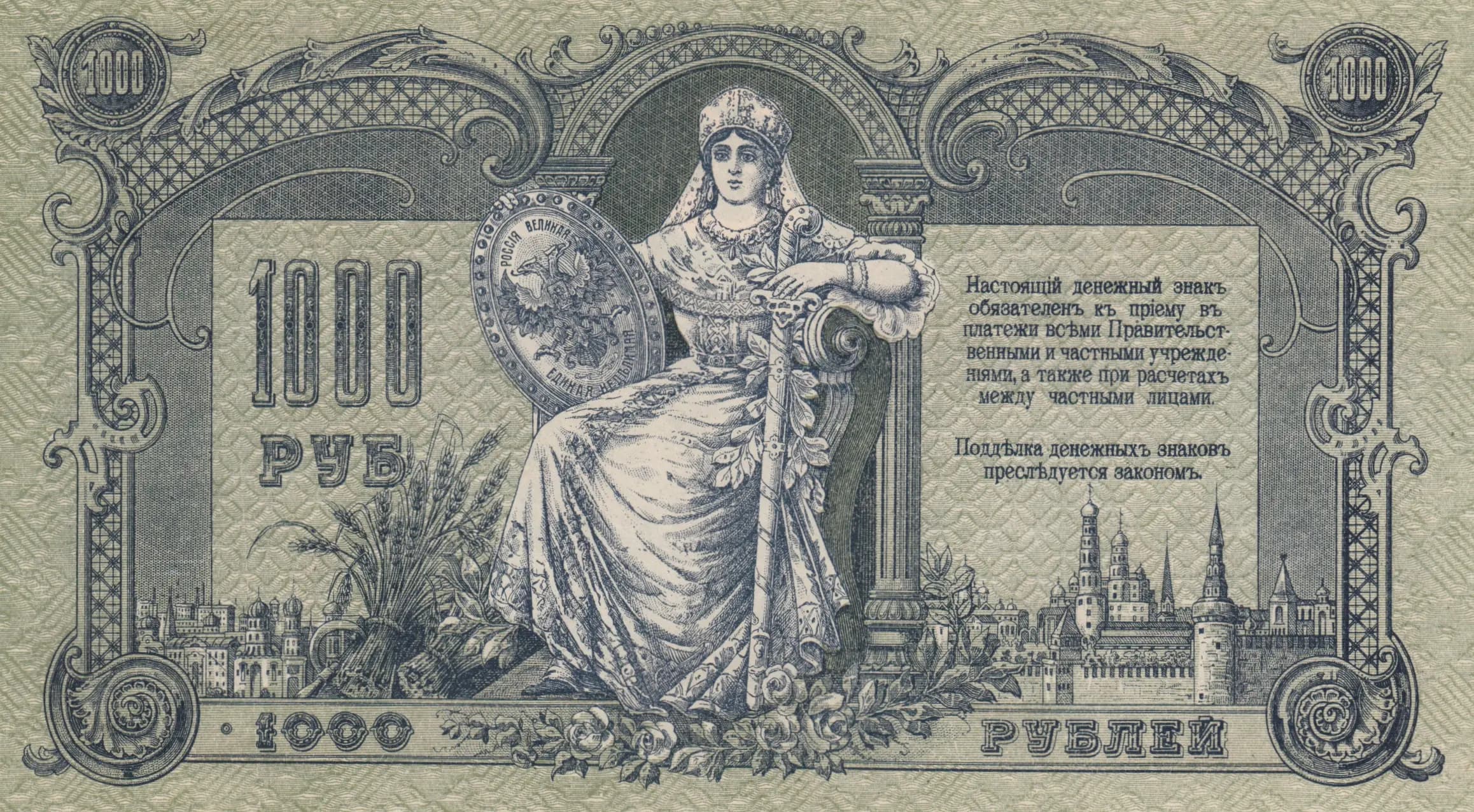
This is a striking 1000 Ruble note from 1919 issued by the Rostov State Bank Branch during the Russian Civil War period, displaying the characteristic elaborate baroque design typical of Imperial Russian currency. The obverse features an ornate double-headed eagle imperial emblem surrounded by complex decorative frames in blue, pink, and black, while the reverse presents a detailed engraved portrait of a woman in imperial Russian dress with kokoshnik headdress holding an imperial seal, set against a cityscape with Orthodox church domes. Despite over a century of age, the note retains excellent detail in its fine engraving work, though it displays expected age-related patina with visible creasing, foxing, and discoloration consistent with its UNC grade and historical provenance.
Common. While this is a regional branch issue from the civil war period, 1000 Ruble notes from 1919 appear in the market with reasonable frequency. The Rostov branch maintained operations and issued notes in quantities sufficient to meet regional economic needs during the White-controlled period. The Pick catalog listing (P-S418a) and straightforward availability in collector markets indicate this is not a scarce issue. Civil war-era Russian currency, particularly from major cities like Rostov, was produced in substantial quantities and surviving examples are relatively abundant compared to notes from shorter-lived or more remote issuing authorities.
This note was issued during the tumultuous Russian Civil War (1918-1922) by the Rostov branch of the State Bank, representing a transitional period in Russian monetary history following the 1917 Revolution. The imperial imagery—the double-headed eagle and the formal portrait of a figure in imperial regalia—reflects the conservative monetary policies of White Russian territories, as Rostov was under White Army control during this period and maintained semi-independent banking operations. The 1919 date places this note squarely in the height of civil conflict, making regional branch issues from this time particularly significant to collectors of Russian revolutionary-era currency.
The obverse presents a classically Imperial Russian design centered on the double-headed eagle with crown—the traditional symbol of Russian state authority—rendered in a pink-background circular medallion and surrounded by elaborate baroque-style scrollwork and ornamental flourishes in navy blue, teal, and black. The denomination '1000' appears in large numerals within decorative oval cartouches on both lateral sides against teal/blue-green backgrounds. The reverse features an allegorical engraved portrait of Russia or Justice as a woman seated in formal imperial dress, wearing the traditional kokoshnik (elaborate embroidered headdress) and holding an imperial seal displaying the double-headed eagle. Behind this central figure is a cityscape incorporating Russian Orthodox architecture—distinctive onion-domed churches and spires characteristic of Russian cities—representing the territorial and cultural scope of the Russian state. The entire composition is framed by ornate baroque borders with circular denomination markers at all four corners. The fine engraved linework throughout suggests security printing with multiple layered design elements.
FRONT SIDE: 'ТЫСЯЧА РУБЛЕЙ' (One Thousand Rubles) — the principal denomination text in large archaic Cyrillic; '1000' appears in Arabic numerals on both left and right sides within ornate oval frames; '1919' marks the year of issue; 'ЧБ 052' appears to be a serial designation; 'Настоящий денежный знак выпущен Государской Государственного Банка в честь юбилейного торжества' translates to 'This monetary note was issued by the State Bank in honor of an anniversary celebration.' BACK SIDE: '1000 РУБЛЕЙ' (One Thousand Rubles) with 'РУБ' (Rubles abbreviated) in denomination markers at four corners; 'Настоящий денежный знак обязателен к приему в платежи всеми Правительств казенными и частными учреждениями, а также при расчетах между частными лицами' translates to 'This monetary note is obligatory for acceptance in payment by all Government offices, state and private institutions, as well as in settlements between private individuals'; 'Подделка денежных знаков преследуется законом' translates to 'Counterfeiting of monetary notes is prosecuted by law.'
This note was produced using engraved intaglio printing, the predominant security printing method for Russian Imperial and early Soviet currency. The fine detailed linework visible in both the ornamental borders and the portrait, combined with the complex background patterns and multiple color separations (navy, pink, teal, and black on cream stock), indicates professional security printing characteristic of State Bank production facilities. The level of detail in the allegorical figure and cityscape background, along with the intricate baroque ornamental work, required skilled engravers and multiple printing plates. This printing technique was standard for high-denomination notes of this era and provided built-in security features through the complexity of reproduction.
This example bears the serial designation 'ЧБ 052' visible on the obverse. The P-S418a designation in the Pick catalog system suggests this may be one of several varieties for 1000 Ruble Rostov notes from 1919. Variations in serial number prefixes, signature authorities, and minor design elements are known for notes from this issuer during this period. The specific serial prefix 'ЧБ' may indicate a particular printing run or administrative batch. Collectors should note any variations in signature blocks (if present) and serial number prefixes when cataloging examples, as these details help establish printing chronologies for this regional issue.