1 rubel 1898
“Sig.Morozov”
About This Note
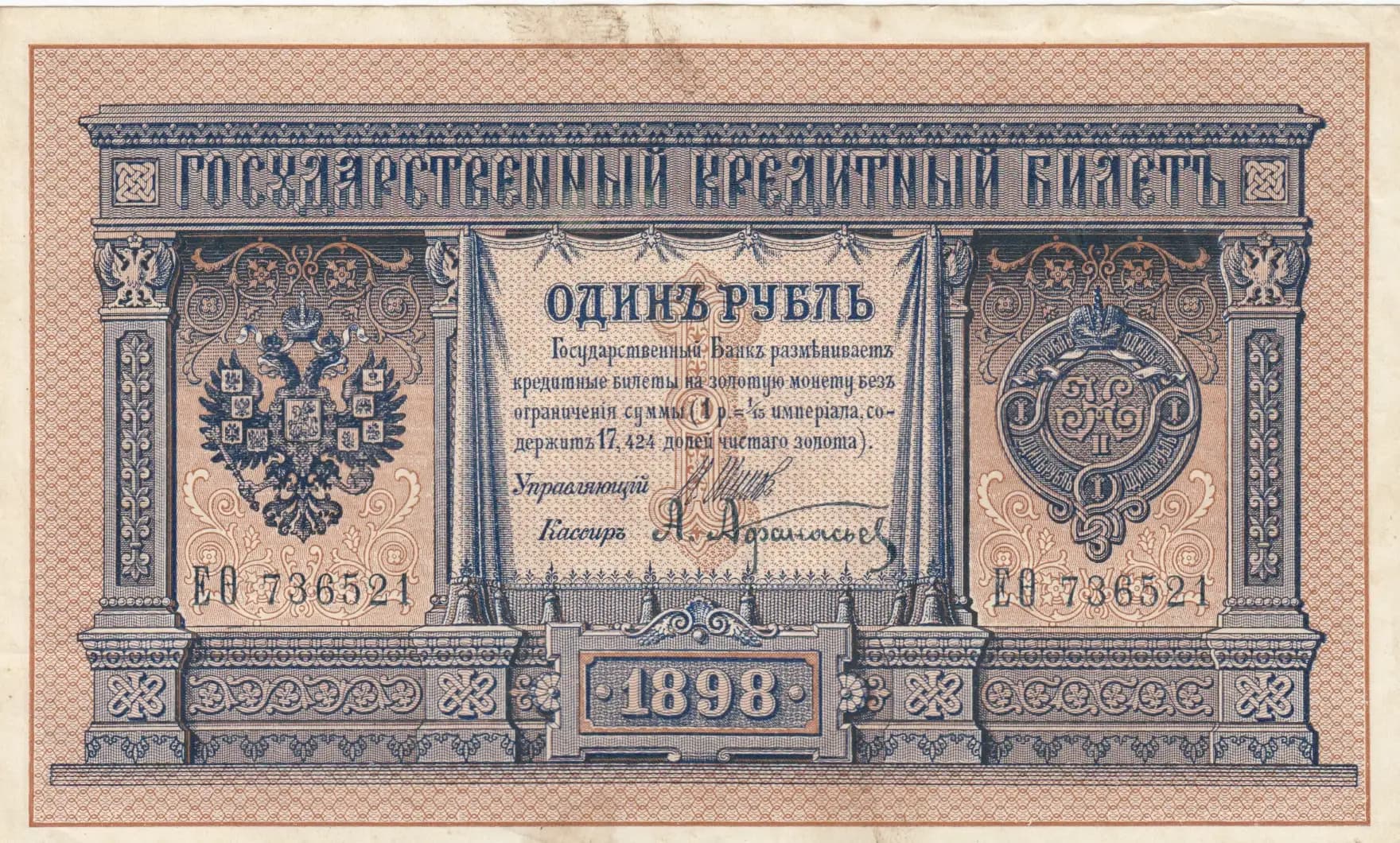
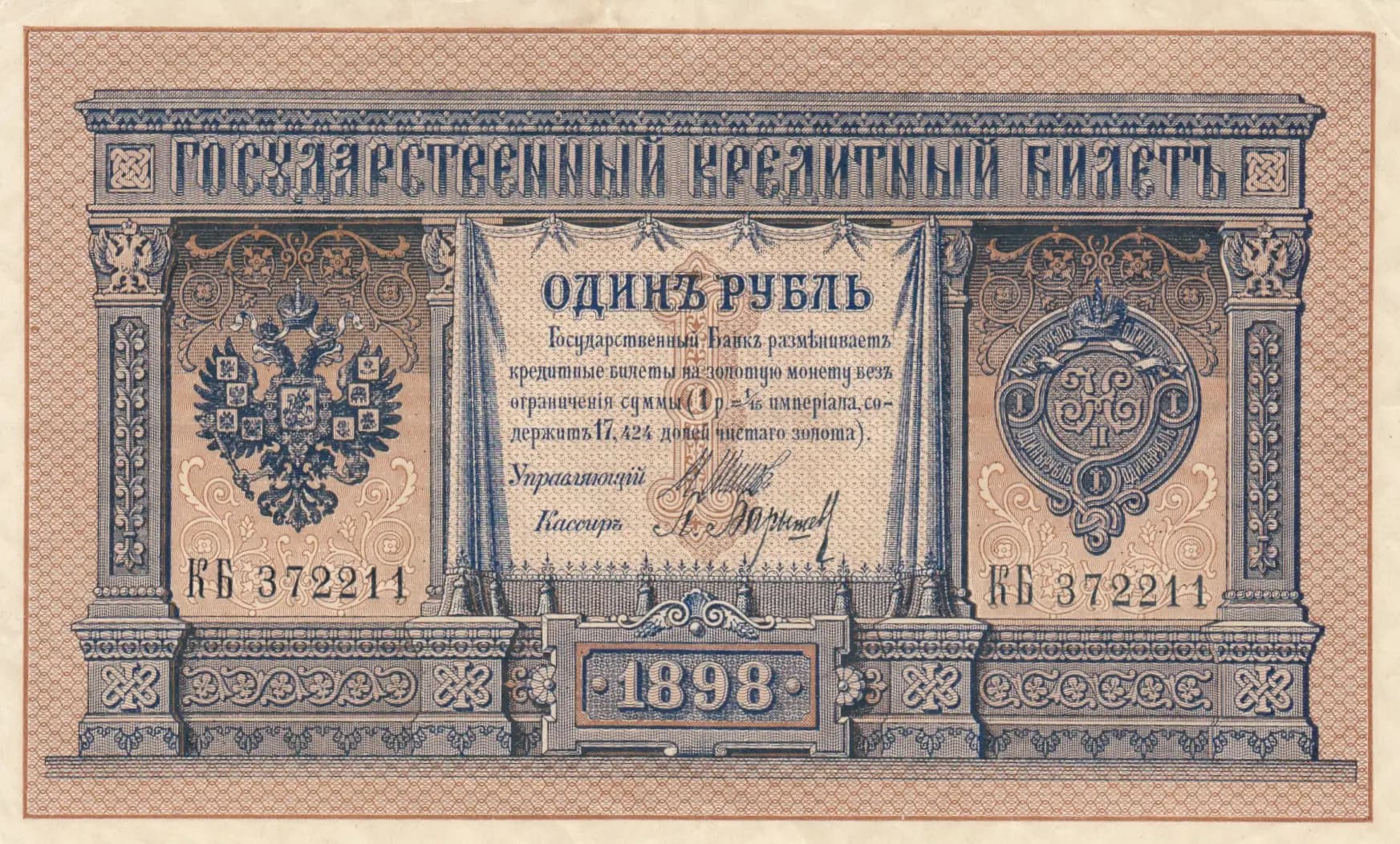
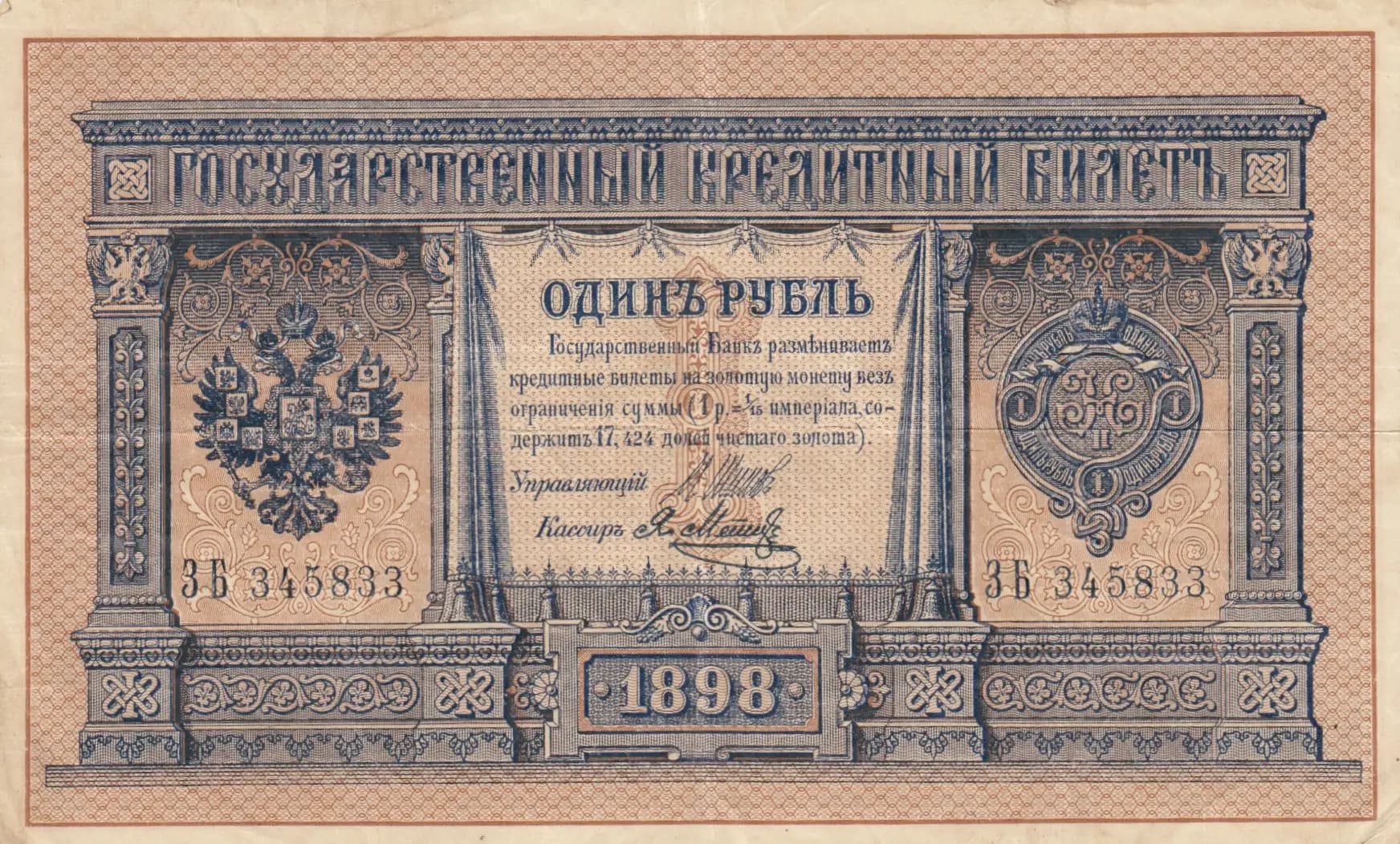
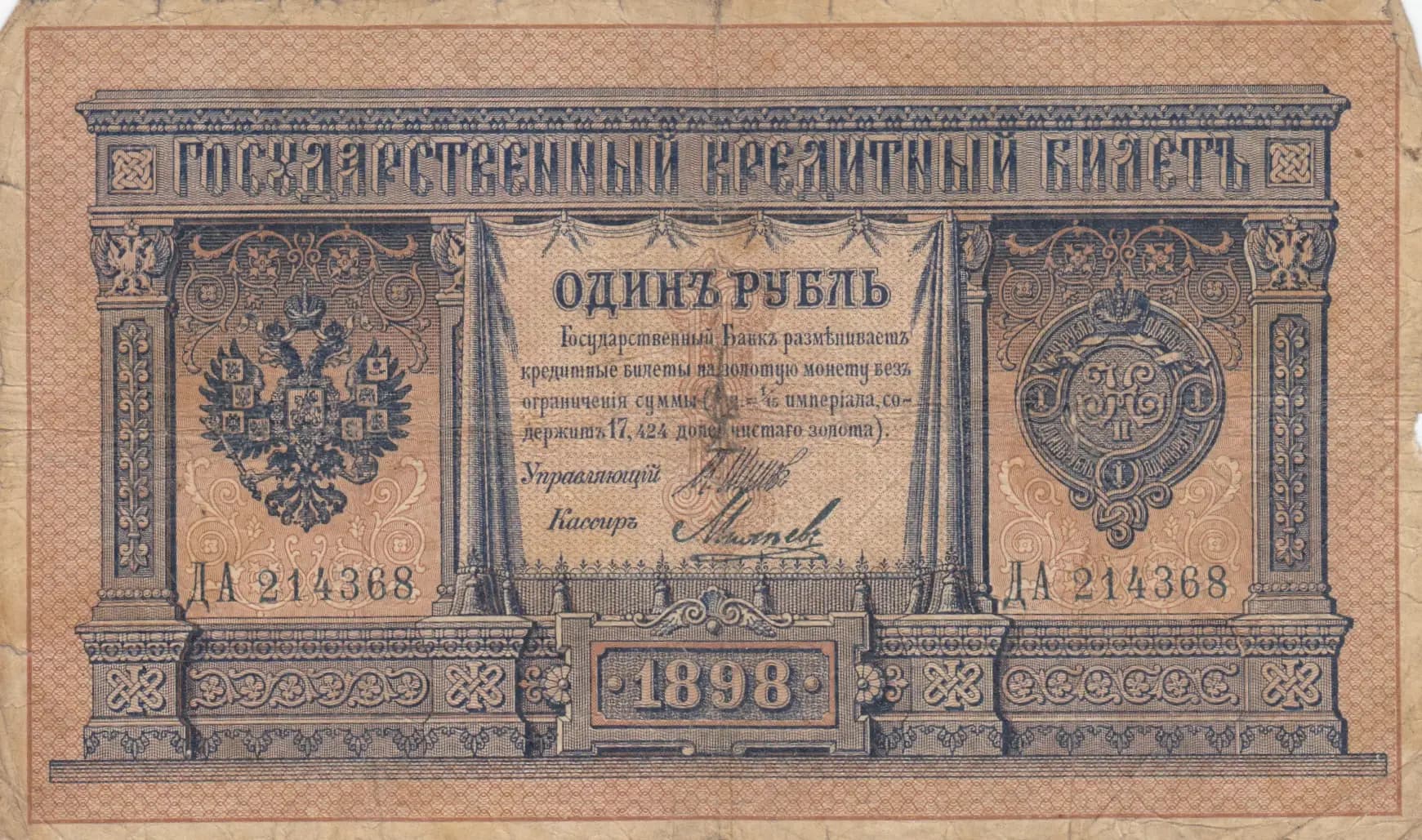
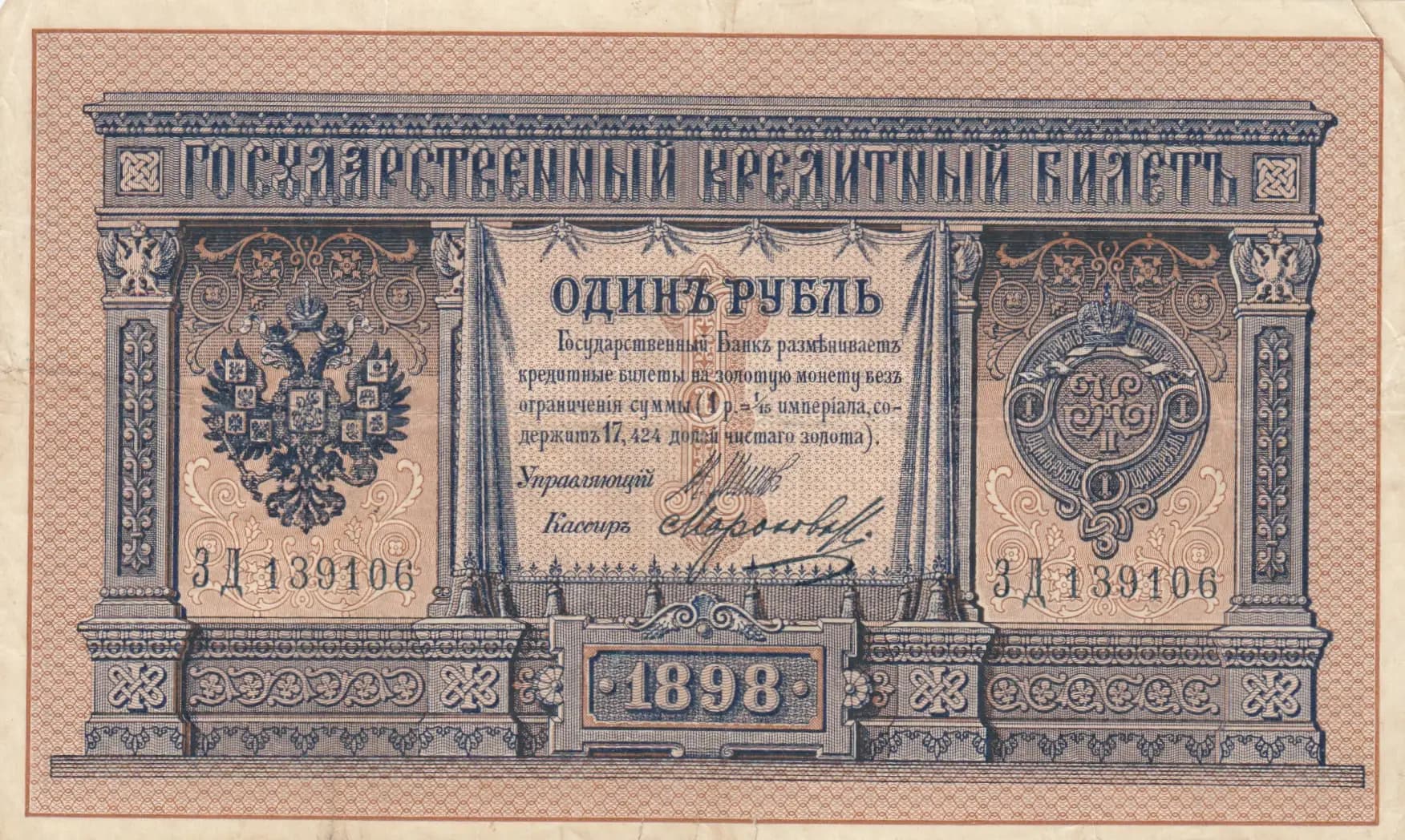
An attractive Very Fine example of the Russian Empire's 1898 one ruble State Credit Note (Pick P-1d(6)), featuring the characteristic ornate architectural frame design with imperial double-headed eagles flanking the central text panel. The note displays the typical aging patina expected of a 126-year-old banknote, with moderate foxing and creasing, yet maintains excellent structural integrity and clear legibility of all inscriptions. This example is notable for bearing the signature of Morozov (likely the Managing Director or Cashier), making it of particular interest to collectors of Russian Imperial currency and signed variants.
Common. The 1898 one ruble State Credit Notes (P-1d series) were issued in substantial quantities as part of the standard circulating currency of the Russian Empire during the Witte reform period. Multiple varieties exist within this series (distinguishable by signature combinations and serial number prefixes), and VF examples remain readily available to collectors at moderate prices. No evidence suggests this particular variety or Pick number had a restricted print run or was subject to large-scale recalls. The condition grade of VF is typical rather than exceptional for surviving examples of this denomination from this era.
This 1898 issue represents the Russian Empire's State Credit Note system during the final years of the 19th century, issued under the gold standard monetary reforms. The prominent inscriptions referencing gold exchangeability (specifically mentioning 1/6 of an imperial containing 17.424 parts of pure gold) and the double-headed imperial eagle symbol reflect Russia's commitment to the gold standard during this period. The note's emphasis on the State Bank's authority and the empire-wide circulation of the credit notes reflects the modernization of Russian monetary policy in the 1890s under Finance Minister Sergei Witte.
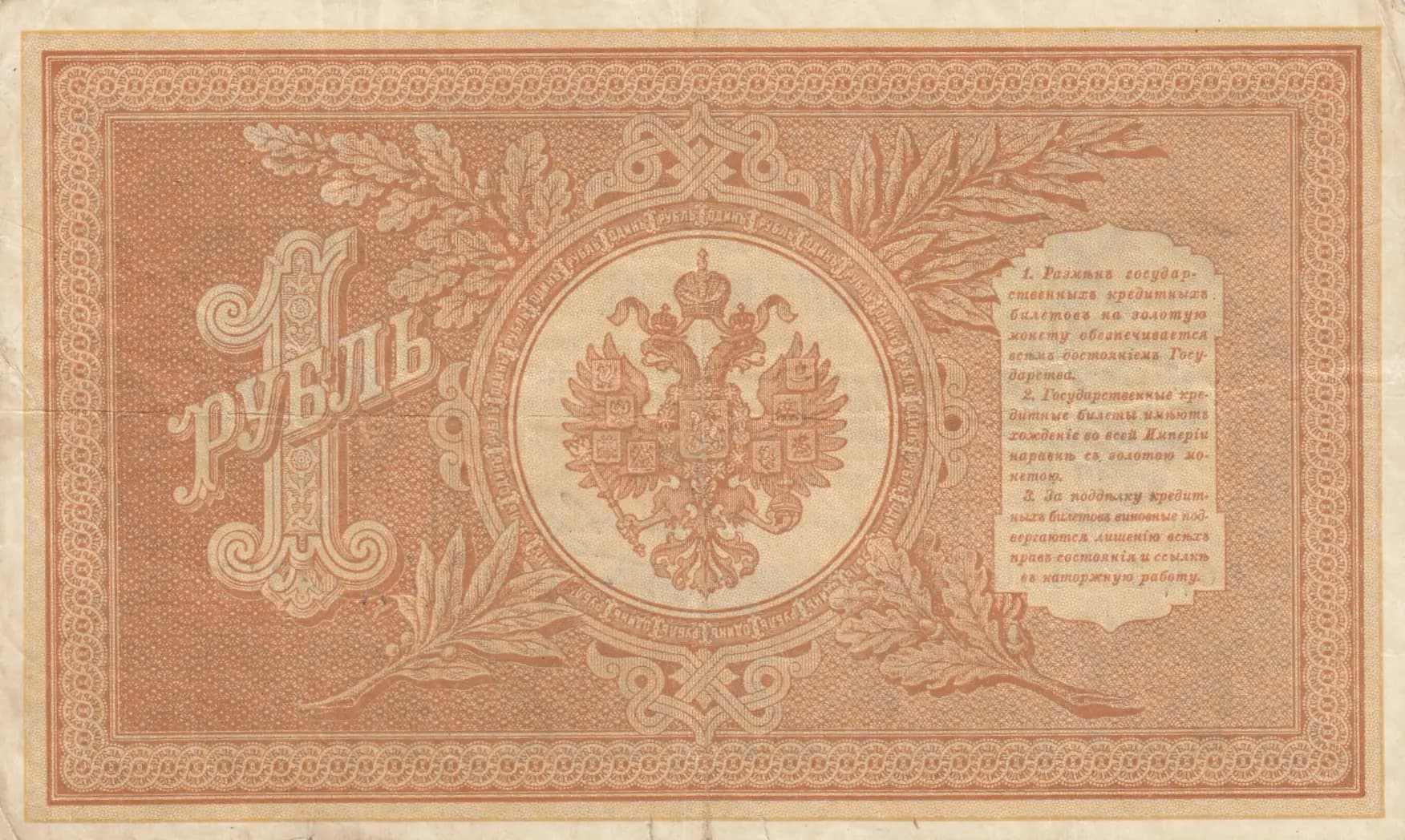
The note employs a formal, architecturally-inspired design typical of late 19th-century Russian Imperial currency. The obverse features a symmetrical composition with ornate neoclassical columns flanking a central rectangular panel containing the denomination and legal text. The Russian Imperial coat of arms—the double-headed eagle—appears prominently on either side of the central section, symbolizing state authority. The reverse presents a more unified design with a large circular medallion centered on the page, containing the double-headed eagle surrounded by elaborate wreath-like ornamental framing with floral and botanical motifs. Both sides employ an intricate geometric and floral decorative border system. The color scheme consists of blue, brown, tan, and cream tones, creating a sophisticated appearance befitting an official state financial instrument. The entire composition reflects the design standards of Russian Imperial banknotes issued during the Witte monetary reforms period.
FRONT SIDE: 'ГОСУДАРСТВЕННЫЙ КРЕДИТНЫЙ БИЛЕТ' (State Credit Note); 'ОДИН РУБЛЬ' (One Ruble); 'Государственный Банк размывает кредитные билеты в допущую монету без ограничения суммы (i) = 1/6 империала, содержишь 17,424 доли чистаго золота)' (The State Bank exchanges credit notes for current coins without sum limitation [equals] 1/6 of an imperial, containing 17.424 parts of pure gold); 'Управляющий' (Managing Director); 'Кассир' (Cashier); '1898' (date); Serial number 'ЗД 189106' (appears on both left and right sides). BACK SIDE: 'РУБЛЬ' (Ruble); 'Резолюция государственного кредитного билета на золотую монету обеспечивается всеми постоянными государством' (1. The exchange of state credit notes for gold coins is ensured by all permanent resources of the state); 'Государственные кредитные билеты имеют хождение во всей Империи наравне с золотою монетою' (2. State credit notes circulate throughout the entire Empire on equal footing with gold coins); 'За поддержку кредитного билетов именные подерживаются лицными всеми правами гражданских и ссуды на недвижимую работу' (3. For the support of credit notes, named supporters are supported with all rights of civil rights and loans for immovable work).
The note was produced using intaglio engraving (copperplate/steel engraving), the standard security printing method for high-value Russian Imperial banknotes of this era. The fine line work, intricate geometric patterns, ornamental flourishes, and detailed border designs are characteristic of intaglio production. The depth and clarity of the engraved details visible in both the architectural elements and the floral ornamentations confirm this technique. Russian Imperial notes of the 1898 period were typically printed by the State Printing Works (Государственная Типография) in St. Petersburg, though specific attribution for this particular Pick number would require access to printer's marks or documentation.
The visual analysis identifies the signature of Morozov on this note, which represents a specific signatory variety within the P-1d(6) Pick designation. The P-1d designation itself indicates this is part of the main series with specific signature combinations; the '(6)' suffix in the Pick catalog typically denotes a particular signature variety or printing variant. The serial number 'ЗД 189106' (Cyrillic ЗД prefix with numeric suffix) provides additional specificity. Collectors of Russian Imperial notes typically differentiate these 1898 issues by the signature pairs (Managing Director and Cashier combinations), making the Morozov signature variant notable for specialized collectors of Russian signatures, though not necessarily scarce in absolute terms.