1 rubel 1898
“Sig.Metz”
About This Note
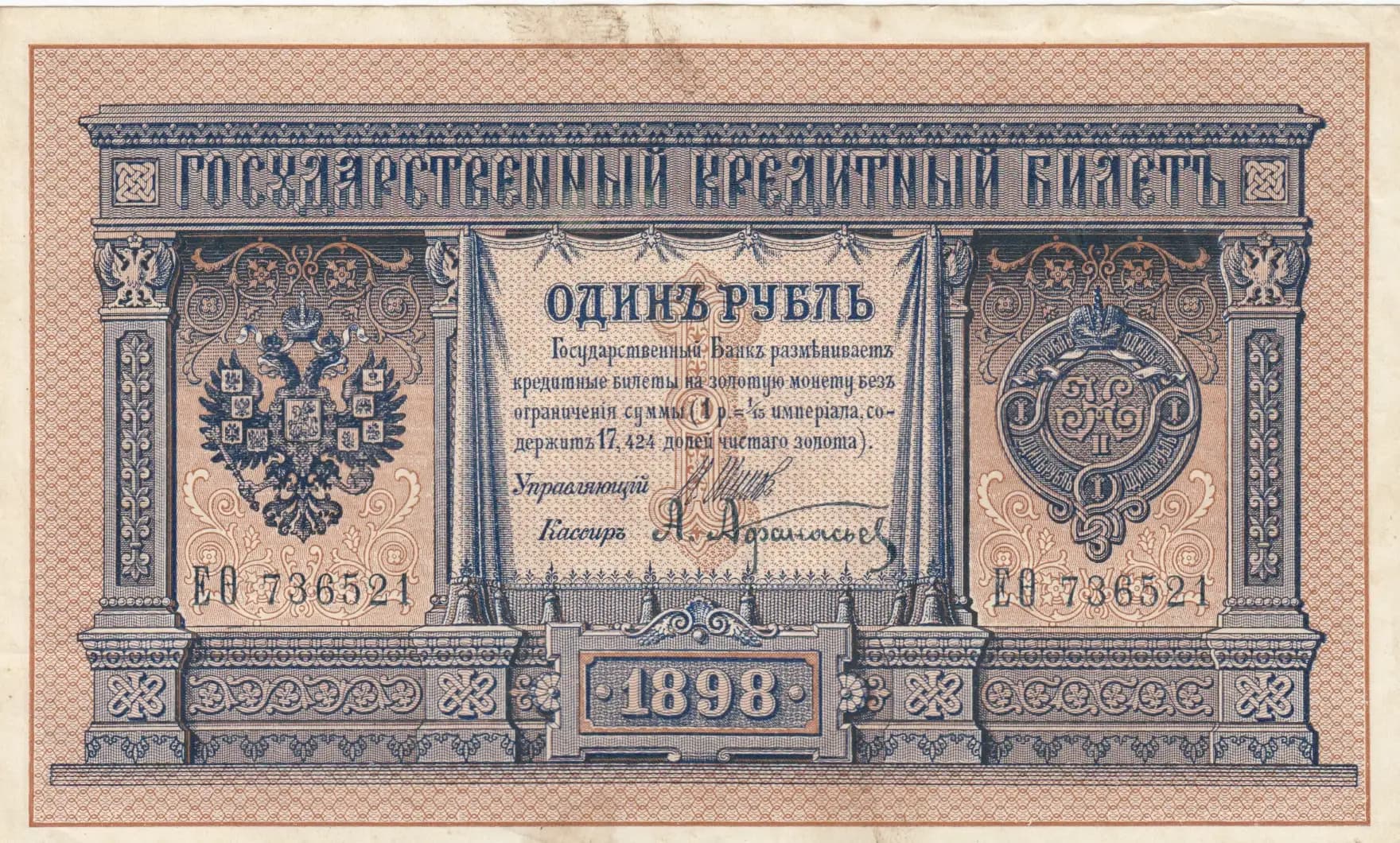
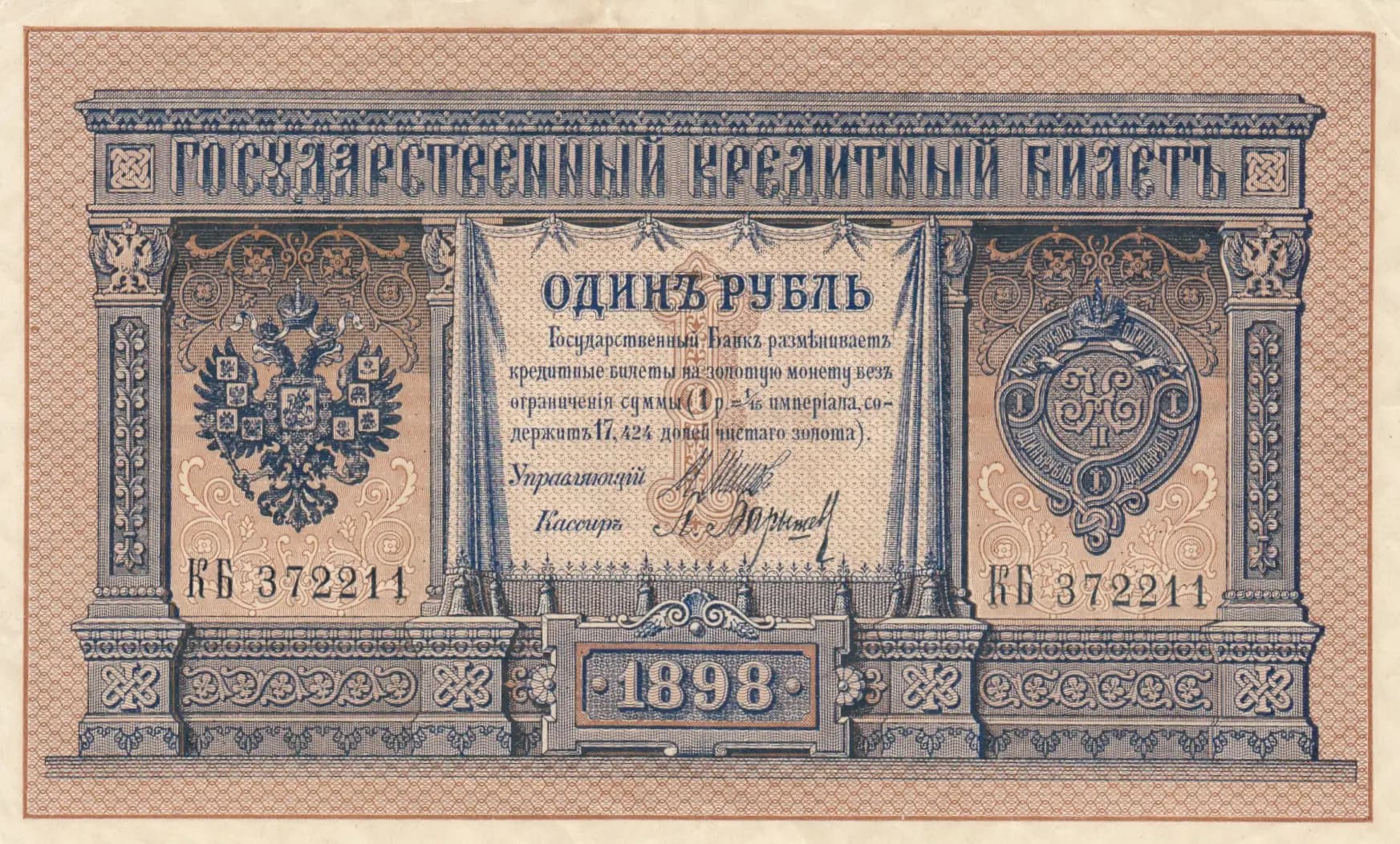
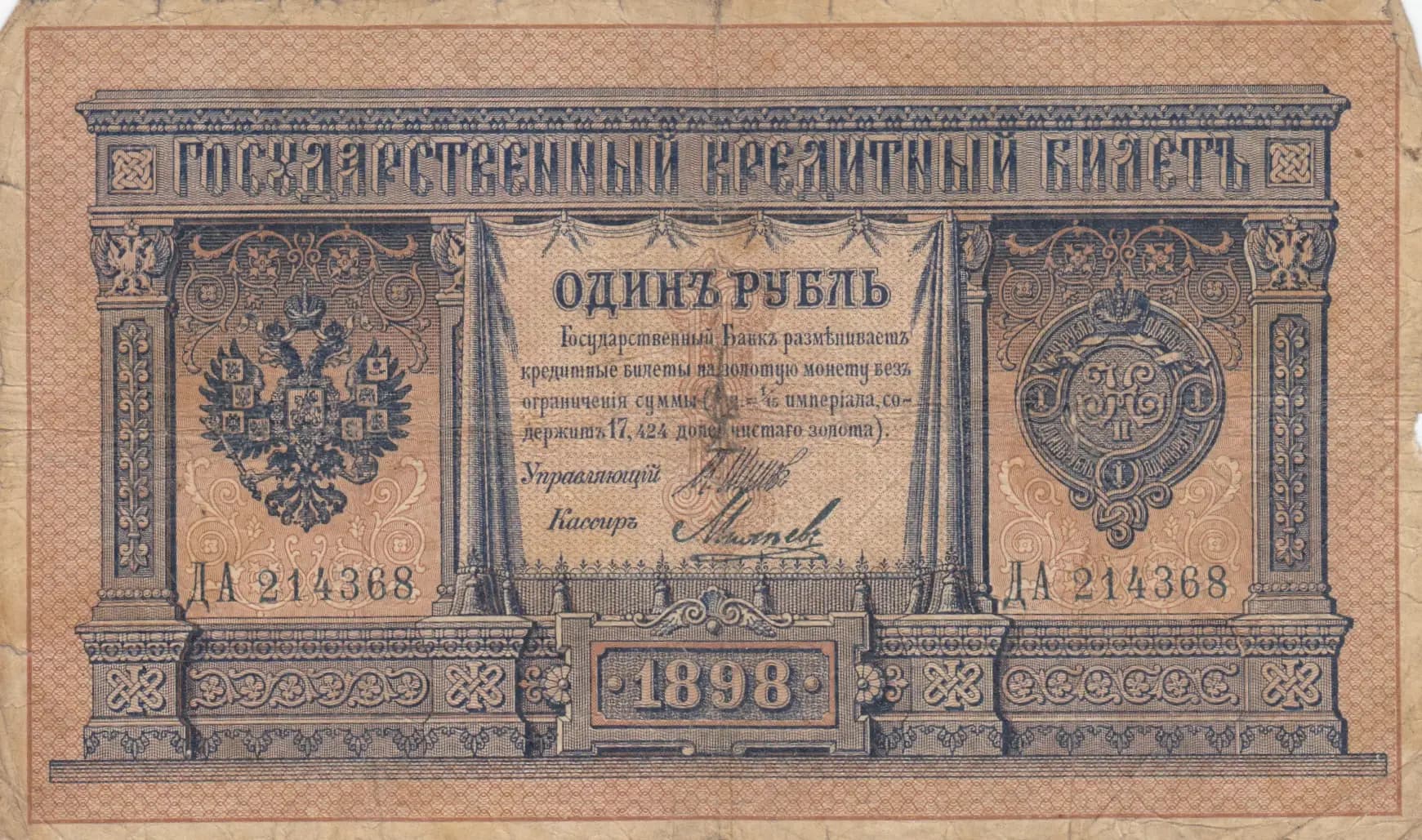
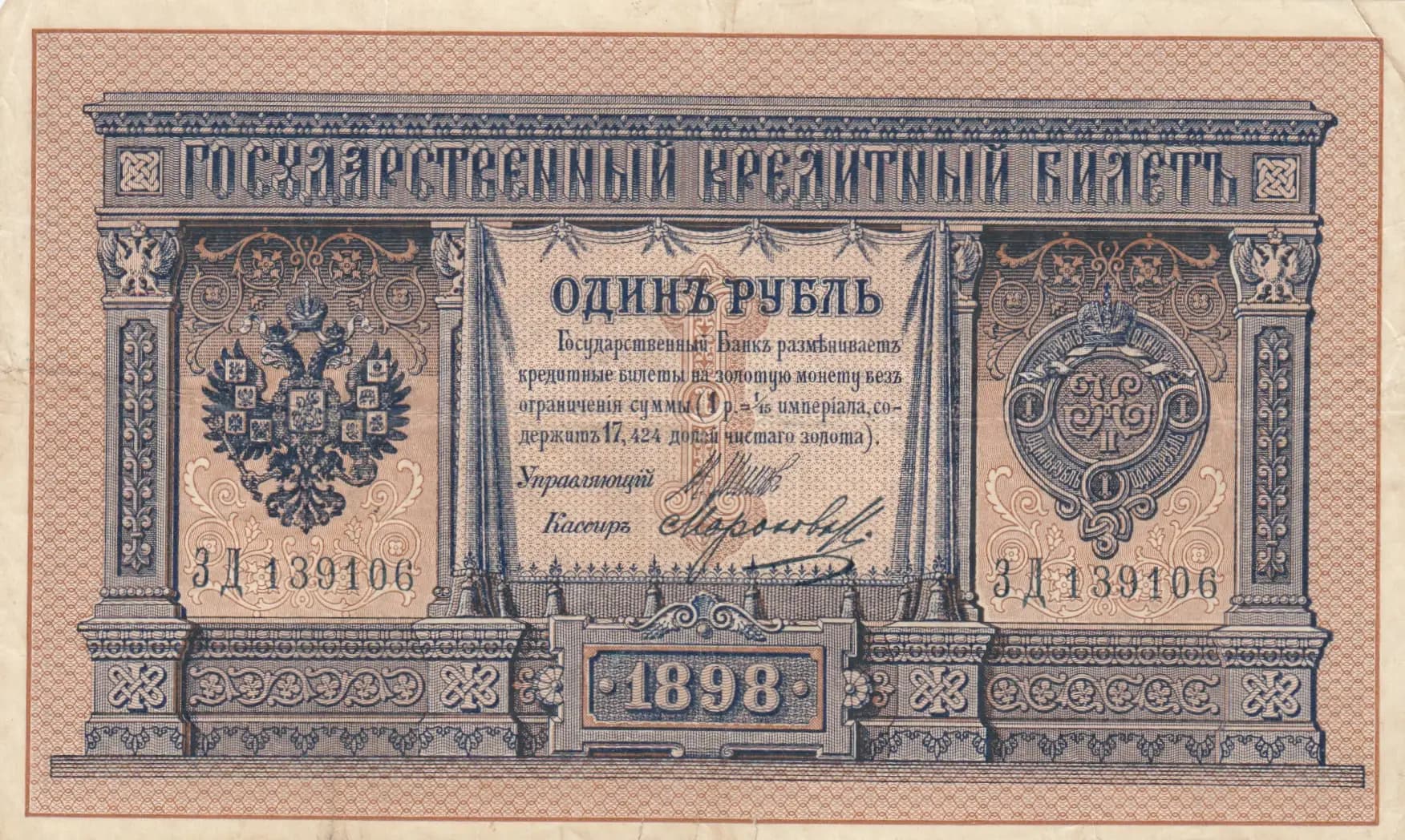
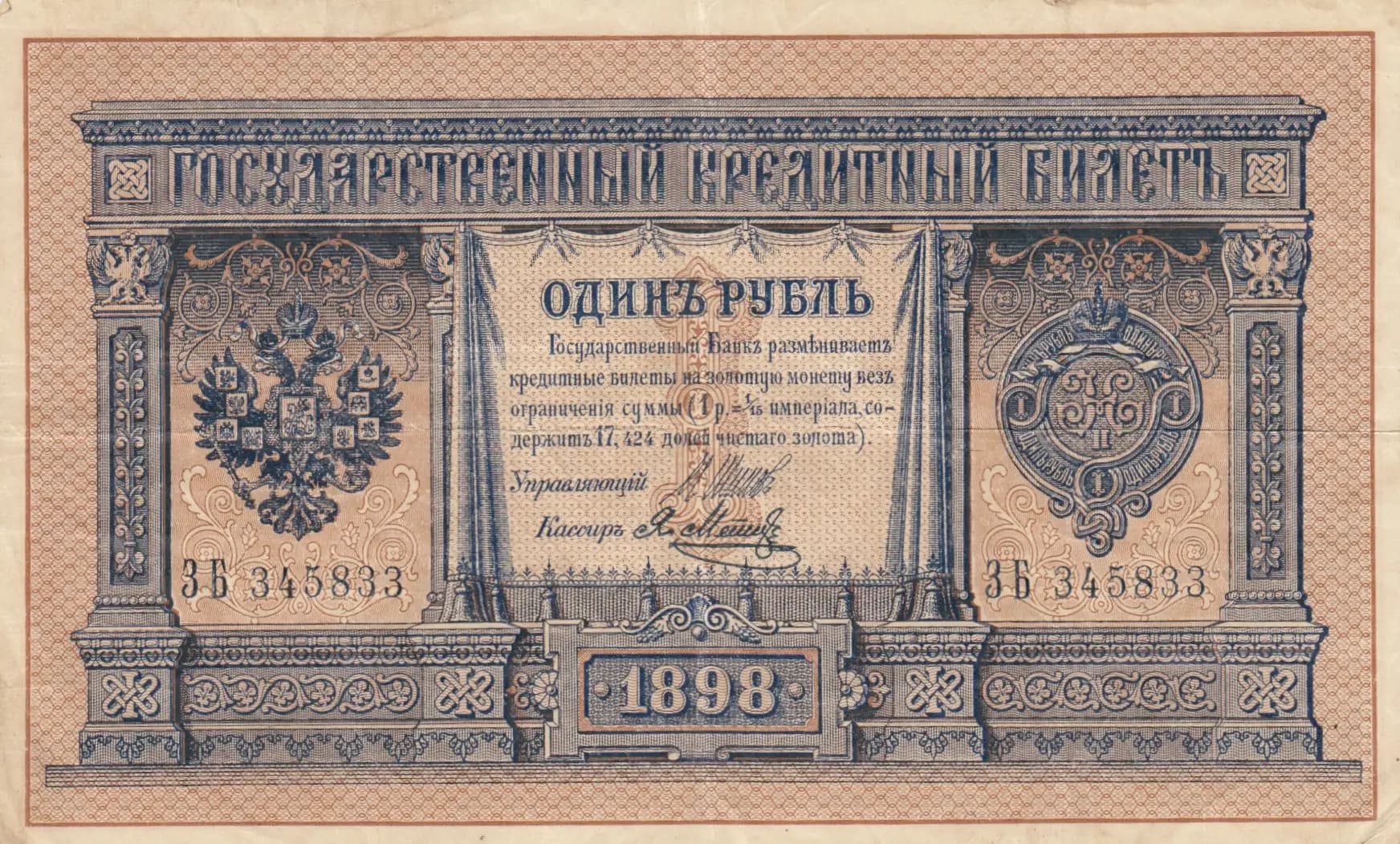
A Russian Empire 1 Ruble State Credit Ticket from 1898, Pick P-1d(4), graded VF with signature Metz. This note exemplifies the ornate Imperial Russian banking currency design, featuring an elaborate architectural pavilion with classical columns framed by intricate heraldic and decorative elements. The note shows appropriate aging patina with foxing and discoloration consistent with 125+ years of preservation, displaying no major tears and maintaining excellent structural integrity for its age.
common. The 1898 Russian 1 Ruble State Credit Ticket (Pick P-1d) was issued in substantial quantities as the foundational denomination of the reformed Imperial currency system. Notes from this series remain readily available in the collector market in various condition grades. VF examples represent moderately circulated specimens that were common to moderately available; the signature Metz variant noted in the catalog does not indicate a particularly scarce printing. Without evidence of restricted print runs, recall, or significant historical scarcity, this note should be classified as common.
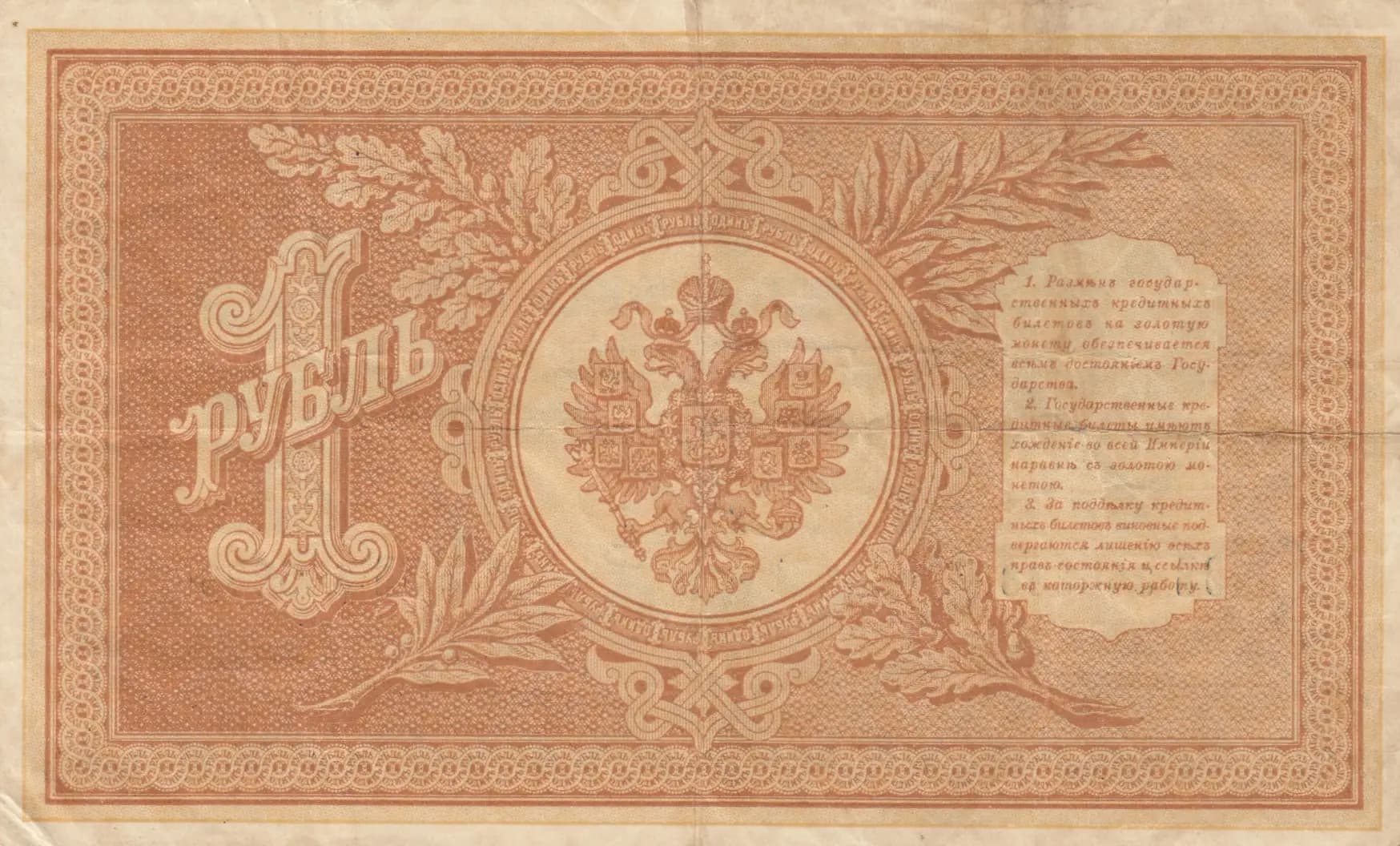
Issued during the reign of Tsar Nicholas II, this 1898 State Credit Ticket represents the Russian Empire's transition to a gold-backed currency system following the monetary reforms of Finance Minister Sergei Witte. The note's prominent gold redemption clause (1 ruble = 1/3 imperial, containing 17.424 parts pure gold) and dual imperial double-headed eagles on both obverse and reverse emphasize the state's commitment to the gold standard and the legitimacy of the Romanov dynasty's financial authority during a period of modernization.
The obverse features a classical architectural pavilion with Corinthian columns and a pediment, symbolizing the permanence and authority of the Russian state banking system. The left side displays the Imperial Russian double-headed eagle coat of arms, while the right side bears a circular emblem. Both sides employ elaborate ornamental borders incorporating floral motifs, geometric patterns, and heraldic designs characteristic of late 19th-century Russian security printing. The reverse presents a dominant Cyrillic 'РУБЛЬ' inscription flanked by ornamental wreaths and botanical flourishes, with the Imperial double-headed eagle in a central circular medallion surrounded by decorative borders. This design emphasizes the note's status as backed by Imperial authority and precious metal reserves.
FRONT: 'ГОСУДАРСТВЕННЫЙ КРЕДИТНЫЙ БИЛЕТ' (State Credit Ticket) | 'ОДИН РУБЛЬ' (One Ruble) | 'Государственный Банк разменивает кредитные билеты на золото монету без ограничения суммы (1р. = 1/3 империала, содержит 17. 424 доли чистого золота).' (The State Bank exchanges credit tickets for gold coins without limit on amount—1 ruble equals 1/3 of an imperial, containing 17.424 parts pure gold) | 'Управляющий' (Manager) and 'Кассир' (Cashier) signature lines | Serial number: 3Б345833 | Date: 1898 | BACK: 'РУБЛЬ' (Ruble) | Three numbered conditions regarding state credit notes and their legal equivalence to gold coinage and redemption procedures.
Intaglio engraving (steel plate/copperplate), the standard security printing method for Russian Imperial banknotes of this era. The fine line work, intricate geometric patterns, elaborate ornamental designs, and detailed architectural imagery visible throughout both sides are characteristic of high-security engraved banknote production. The Russian State Bank employed leading European security printers for these notes; the specific printer for this 1898 series would be confirmed by archival records, though Russian Imperial notes of this period were often produced by state printing facilities in St. Petersburg under strict government control.
Pick P-1d(4) designates a specific signature variety within the broader 1 Ruble State Credit Ticket series, with the catalog notation indicating the signature of Metz (likely a manager or cashier of the State Bank). The serial number 3Б345833 and the 1898 date are consistent with mainstream production. Additional varieties within the P-1d series are identified by different authorized signatures; collectors should note signature combinations when cataloging examples. No known overprints or special markings are visible on this specimen.