1 rubel 1898
“Sig.Baryshev”
About This Note
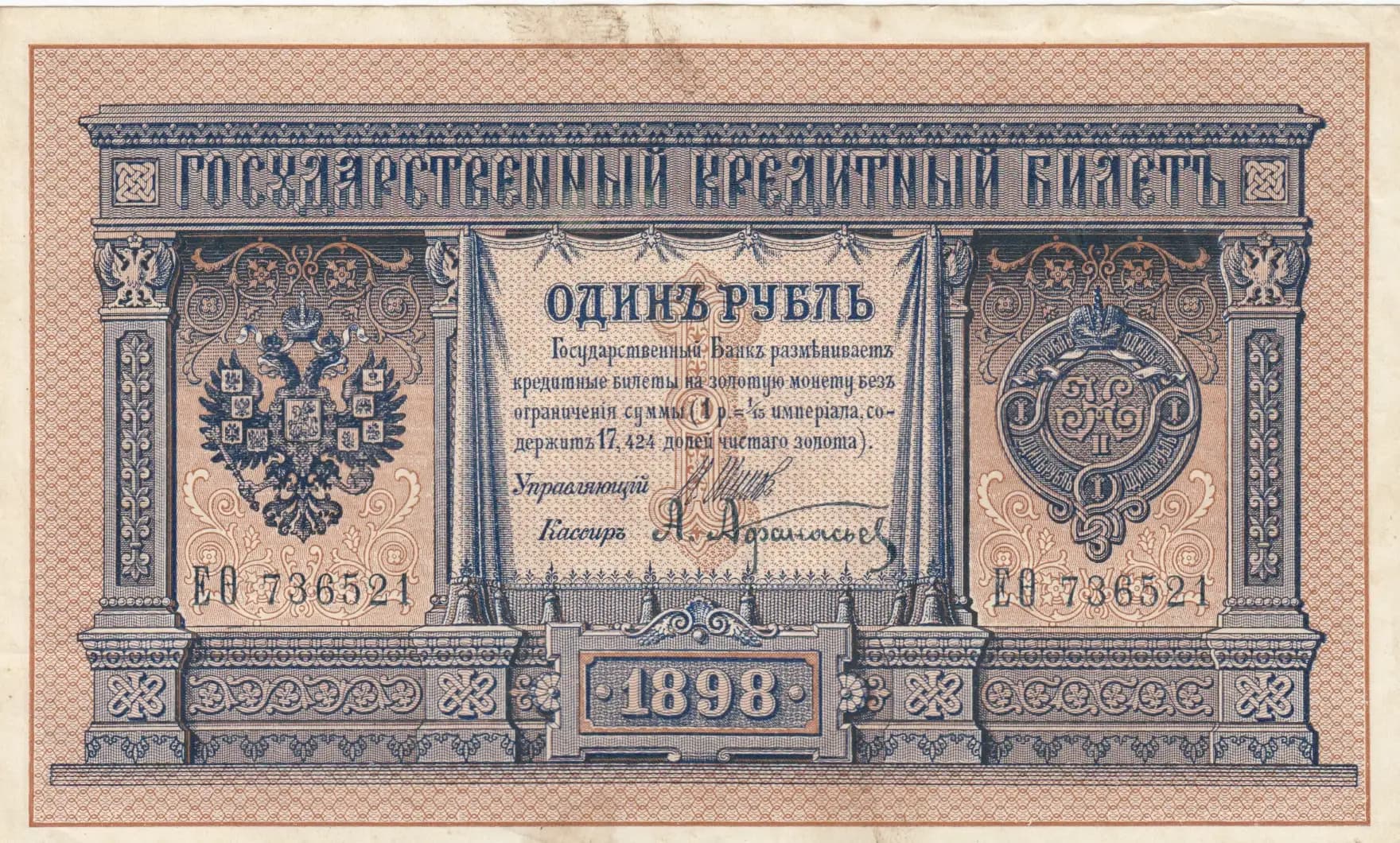
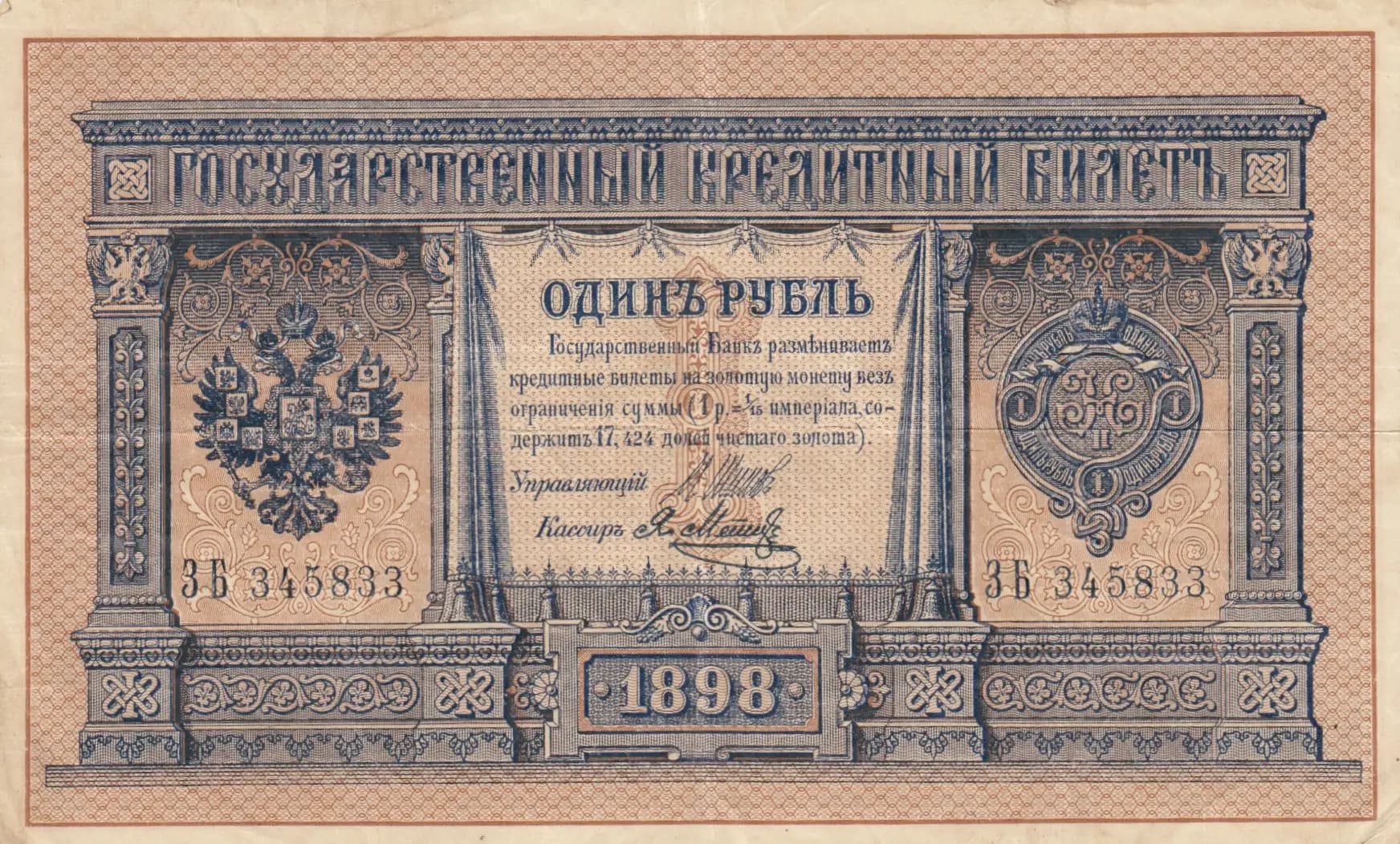
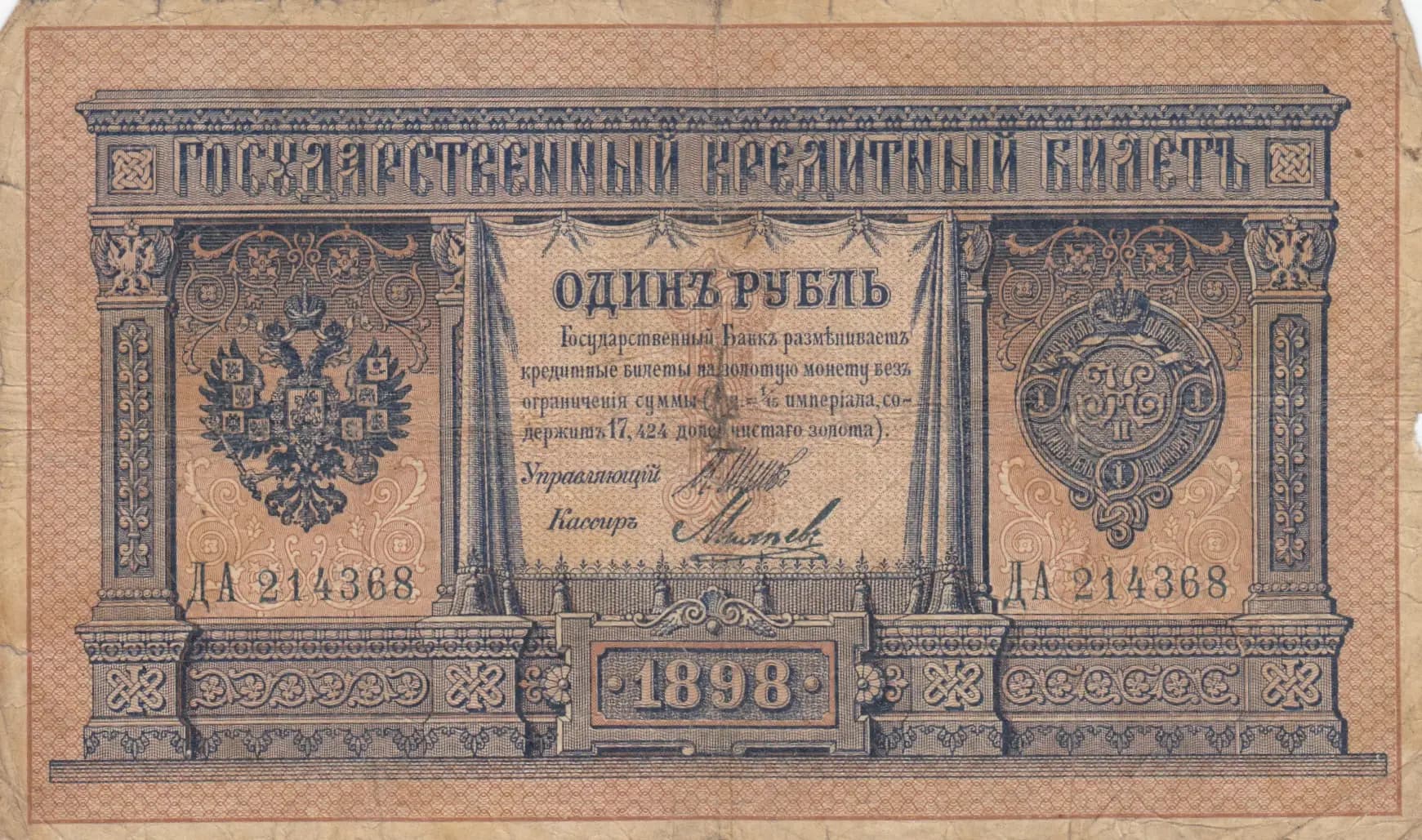
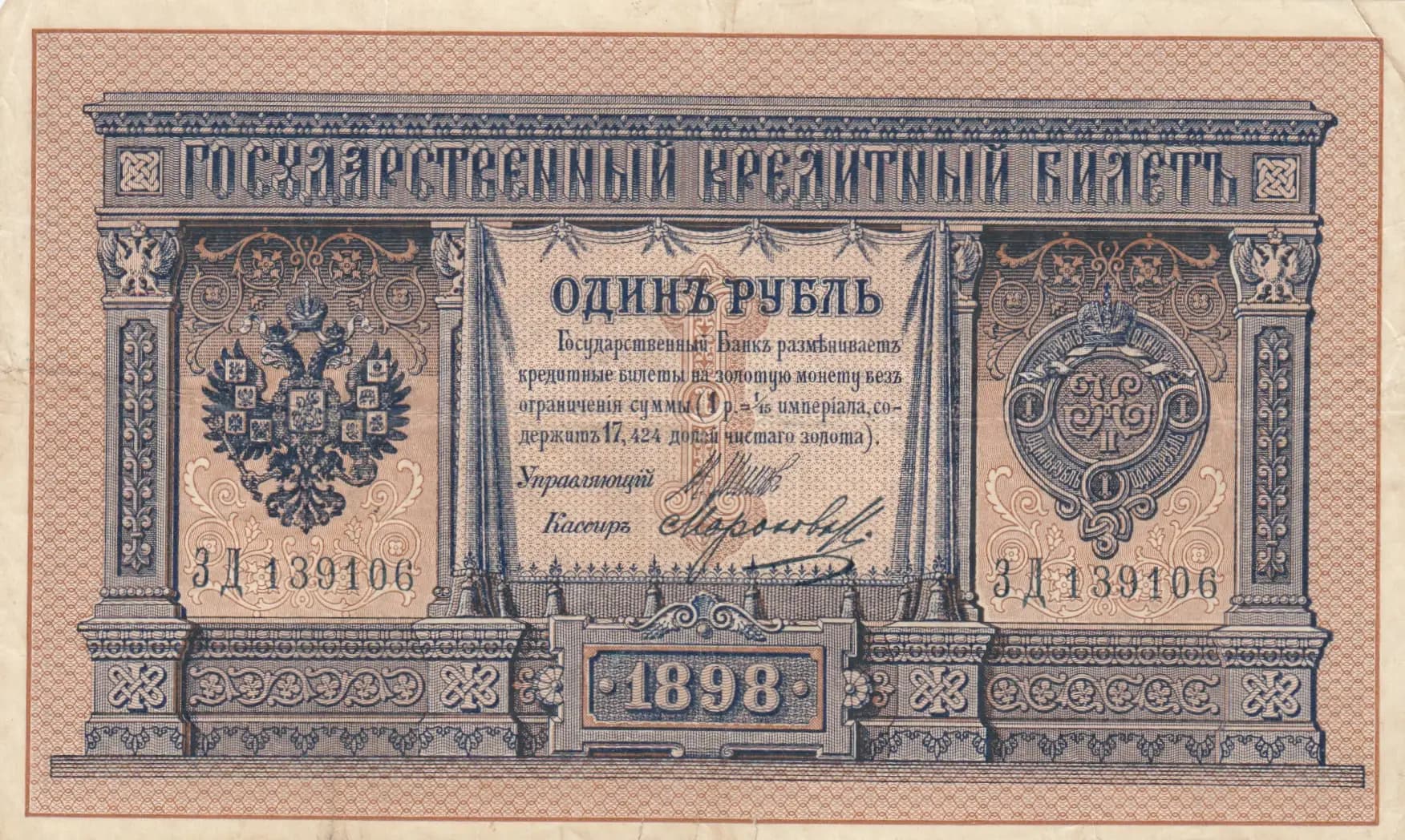
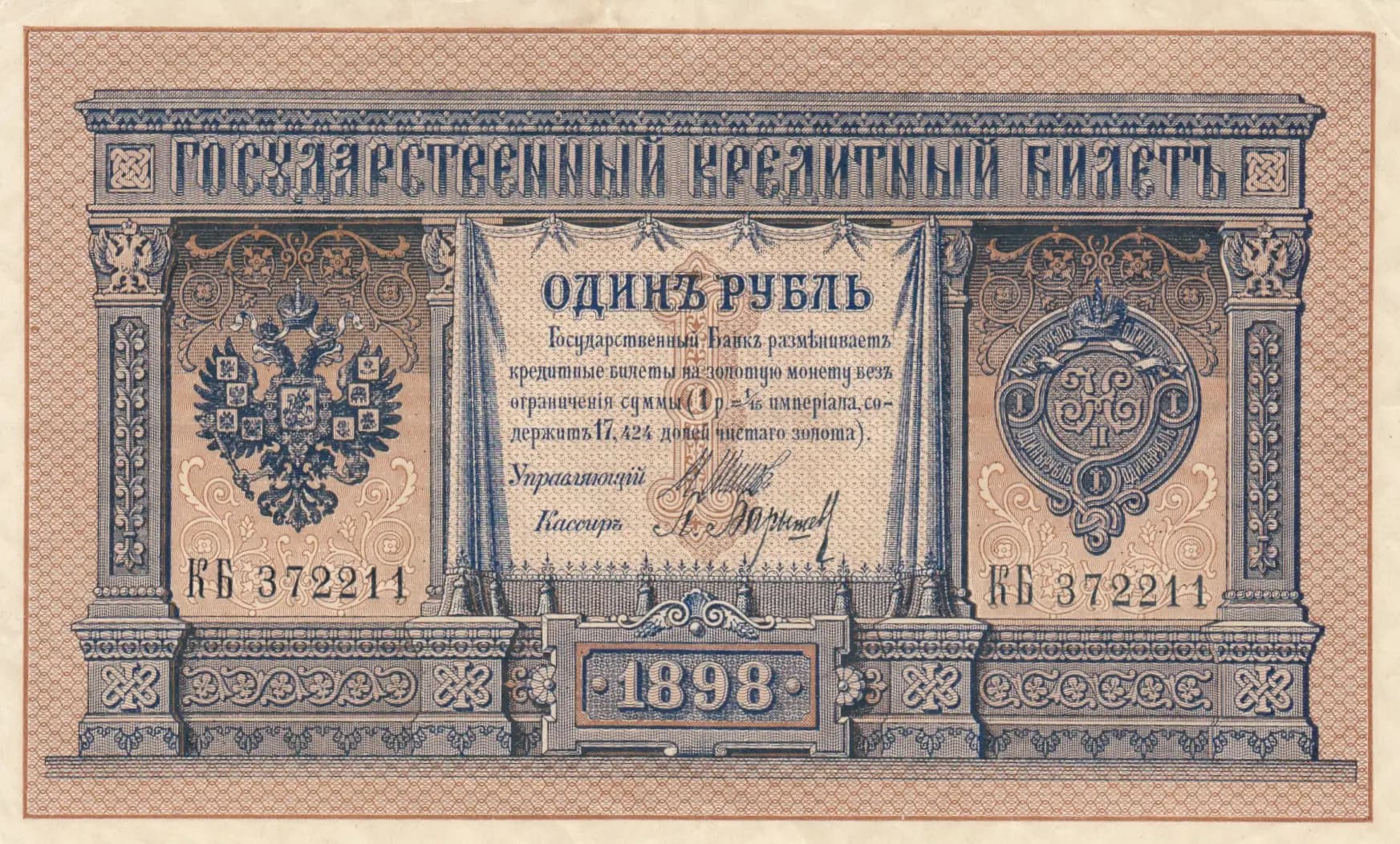
A handsome example of the 1898 Russian Imperial 1 Ruble credit note (Pick P-1d(2)), graded VF with excellent preservation showing minimal wear and uniform aging patina. The note showcases the characteristic ornate design of late 19th-century Russian currency, featuring imperial double-headed eagles in decorative shields and intricate engraved borders in blue-grey and tan tones. This denominated note from the Baryshev signature series represents an important transitional period in Russian monetary policy under the gold standard.
Common. The 1898 1 Ruble note was part of a large-scale issuance during the implementation of Russia's gold standard reforms, and the P-1d(2) variety (identified by the Baryshev signature and the specific serial number prefix 'КБ') represents a standard production run from this period. No evidence of limited production, recall, or shortage of surviving examples indicates this note should be considered common in the collector market. VF examples are readily available to collectors at modest valuations.
This 1898 credit note was issued during the reign of Tsar Nicholas II, following Finance Minister Sergei Witte's monetary reforms that established the gold standard and stabilized the Russian ruble. The inscriptions on the note explicitly reference the gold backing ('1 ruble = 1/15 of an imperial, containing 17.424 parts of pure gold'), reflecting Russia's commitment to hard currency reserves. The prominence of the Imperial Russian double-headed eagles throughout the design—appearing in ornamental shields on both obverse and reverse—symbolizes the autocratic state's guarantee of the note's value.
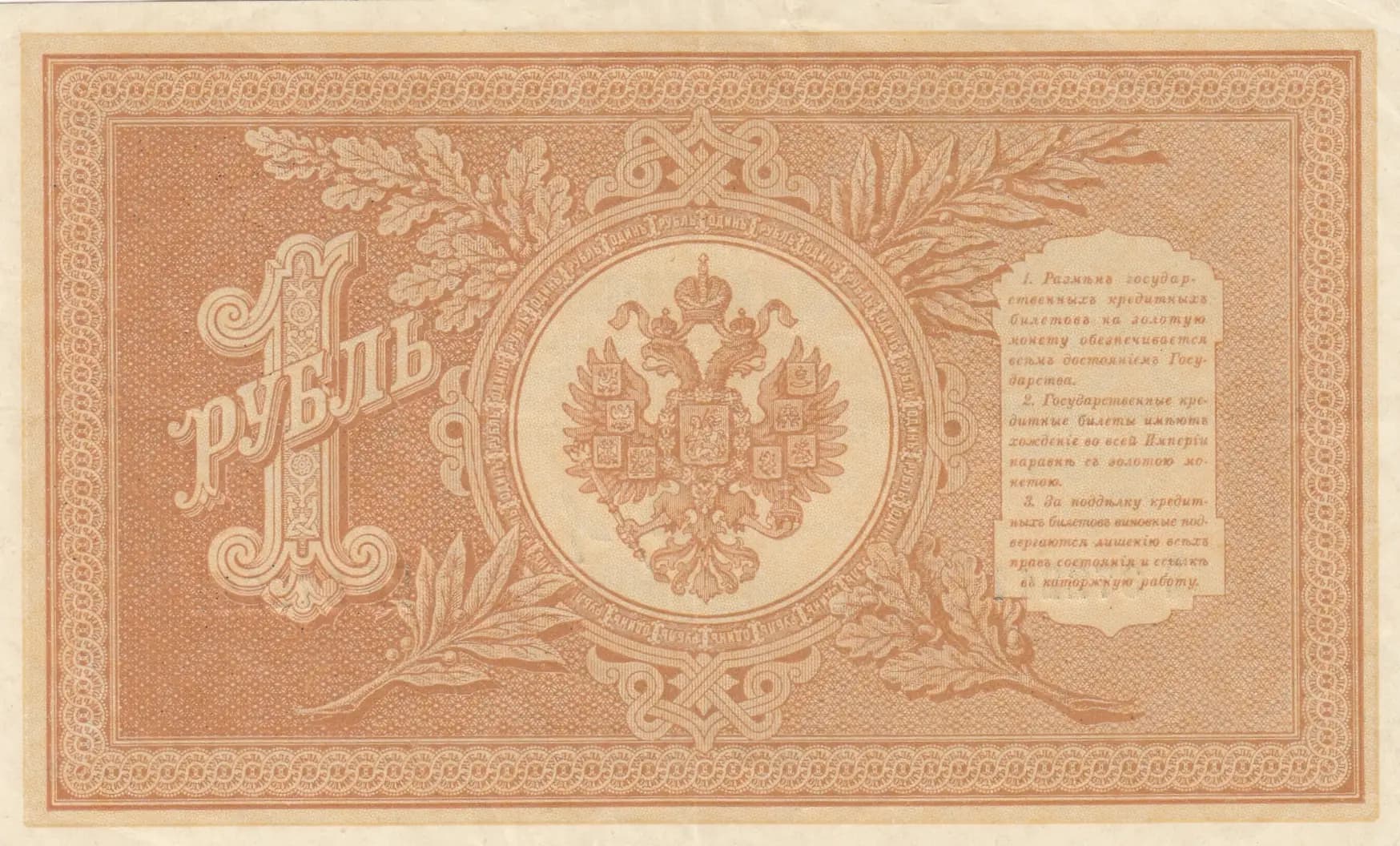
The obverse features a formal architectural composition with ornate columns flanking a central cartouche containing draped fabric symbolizing prosperity. Imperial Russian double-headed eagles appear in ornamental shields positioned in the upper left and right corners, representing state authority. The reverse centers on a large circular medallion containing a precisely engraved Imperial Russian double-headed eagle surrounded by decorative laurel wreaths and baroque scrollwork, symbolizing victory and imperial prestige. Geometric and floral border patterns frame both sides. The color scheme—predominantly blue-grey and tan with rust-brown accents—is typical of Russian imperial credit notes of this period. The overall design reflects the formal, classical aesthetic favored by the Russian Empire for its highest denomination currency.
FRONT SIDE: 'ГОСУДАРСТВЕННЫЙ КРЕДИТНЫЙ БИЛЕТ' (State Credit Note) | 'ОДИН РУБЛЬ' (One Ruble) | 'Государственный Банк размещивает кредитные билеты на доме монету без ограничений суммы (1р = 1/15 империала, содержит 17.424 доли чистого золота).' (The State Bank issues credit notes backed by hard currency without limit to the total amount; 1 ruble = 1/15 of an imperial, containing 17.424 parts of pure gold) | 'КБ 372241' (Serial number KB 372241) | '1898' (date) | 'Управляющий' (Managing Director) | 'Кассир' (Cashier) | BACK SIDE: 'РУБЛЬ' (Ruble) | Legal text regarding credit note backing and circulation throughout Europe secured by gold reserves.
Steel engraving (intaglio printing), which was the standard security printing method for Russian imperial banknotes. The intricate fine-line engraving visible throughout—particularly in the border patterns, architectural elements, and decorative cartouches—is characteristic of security printing by the Imperial Russian State Printing Works (Печатня государственных бумаг). The detailed rendering of the double-headed eagles and the complex geometric patterns demonstrate the high level of craftsmanship employed to prevent counterfeiting.
This note is identified as Pick P-1d(2), which categorizes it within the 1898 issue with the Baryshev signature in the Managing Director and Cashier signature blocks. The serial number 'КБ 372241' indicates this is from the Cyrillic serial number series employed during this period. Signature varieties of the 1898 1 Ruble are cataloged as P-1d(1) through P-1d(3) based on different signature combinations, making this specifically P-1d(2) variant. No overprints or unusual production varieties are evident from the visual analysis.