1 rubel 1898
“Sig.Schmidt”
About This Note
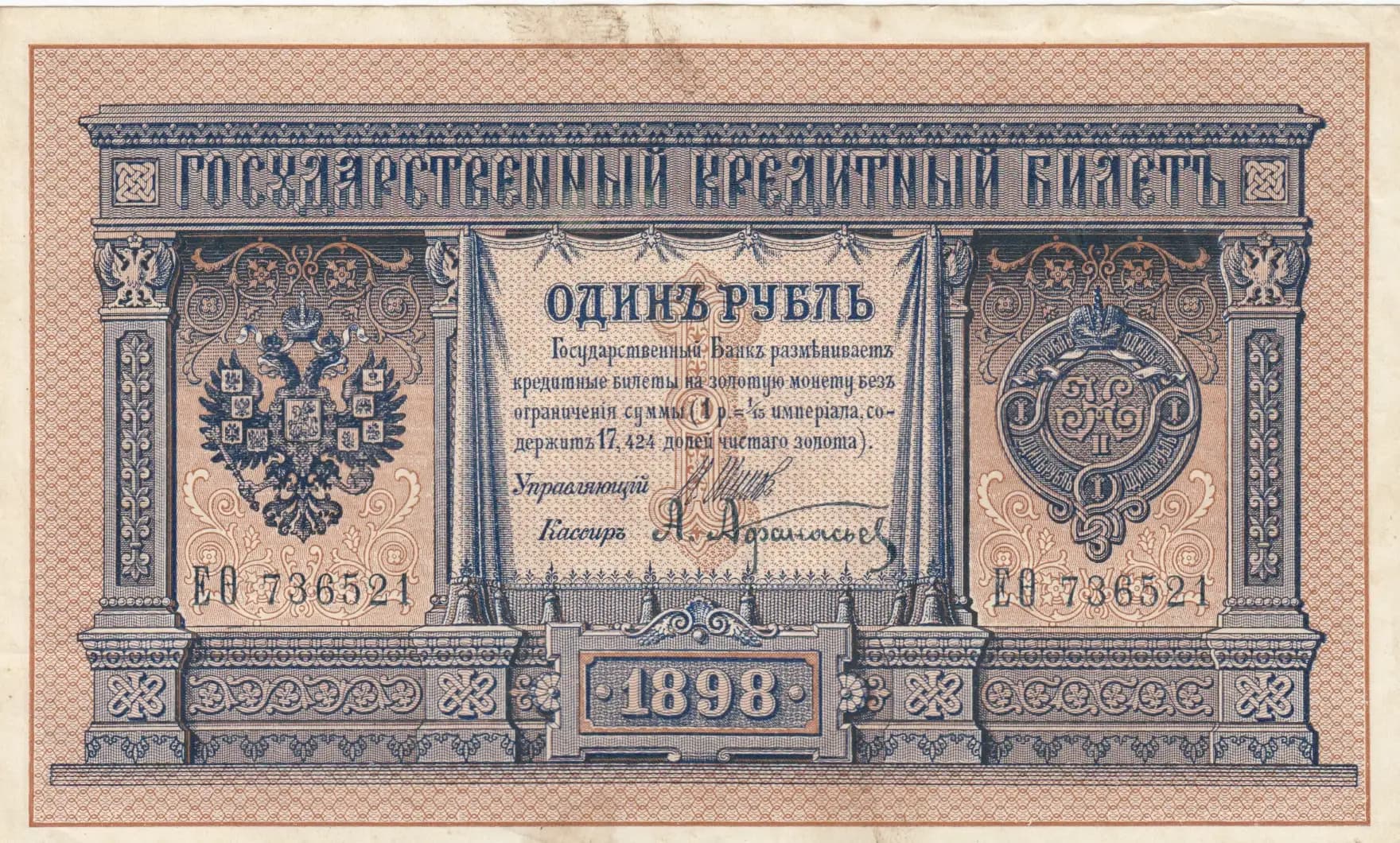
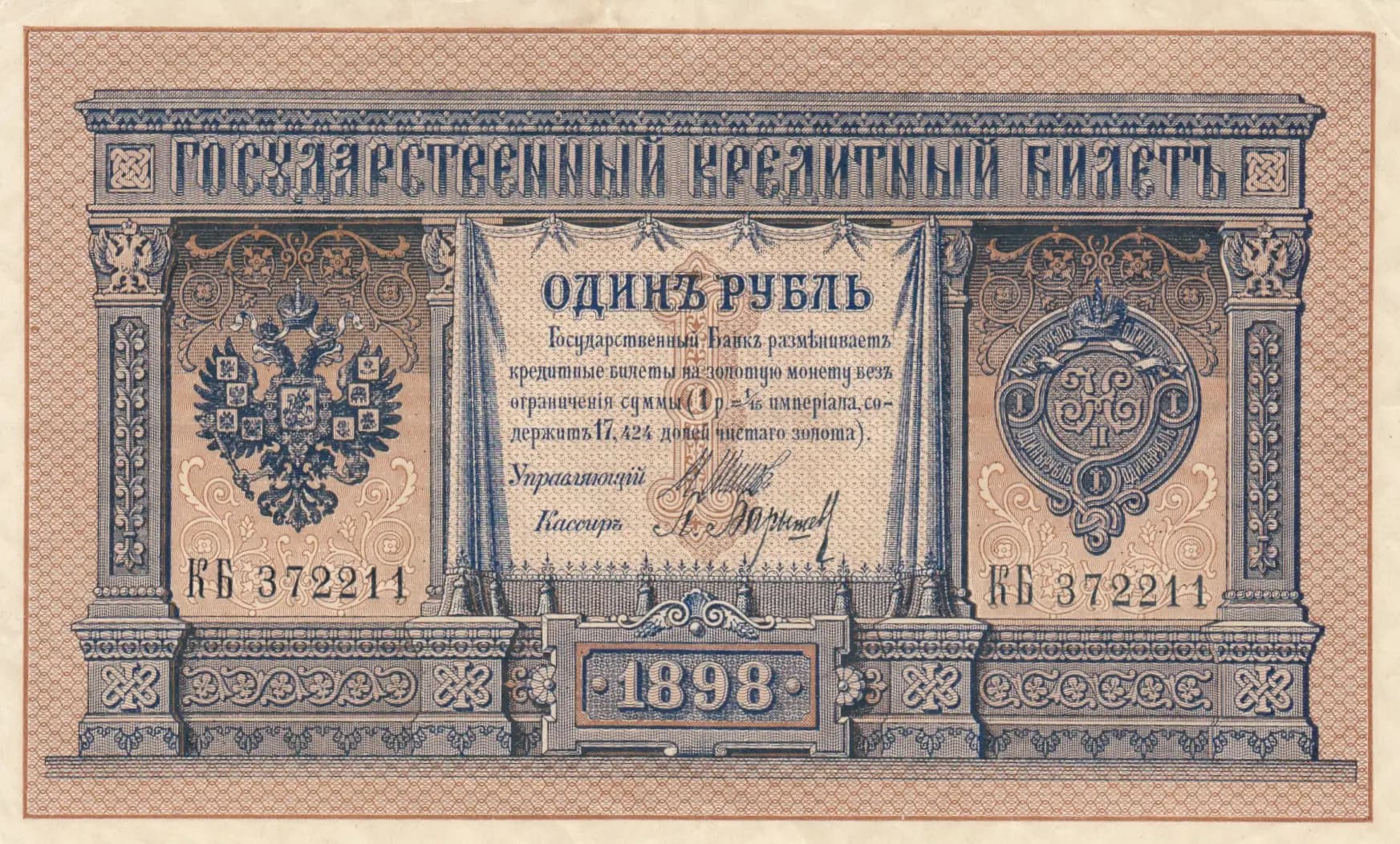
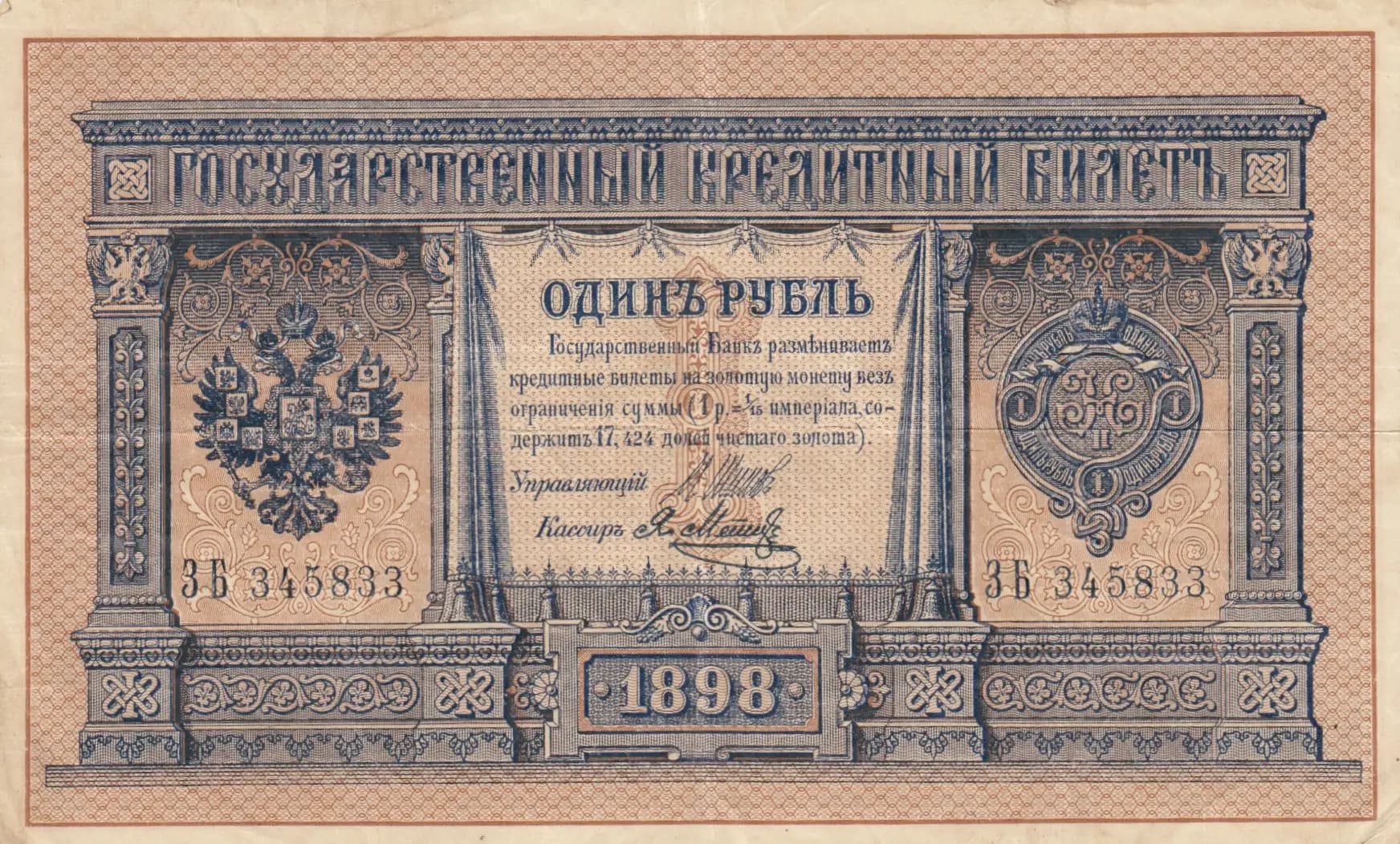
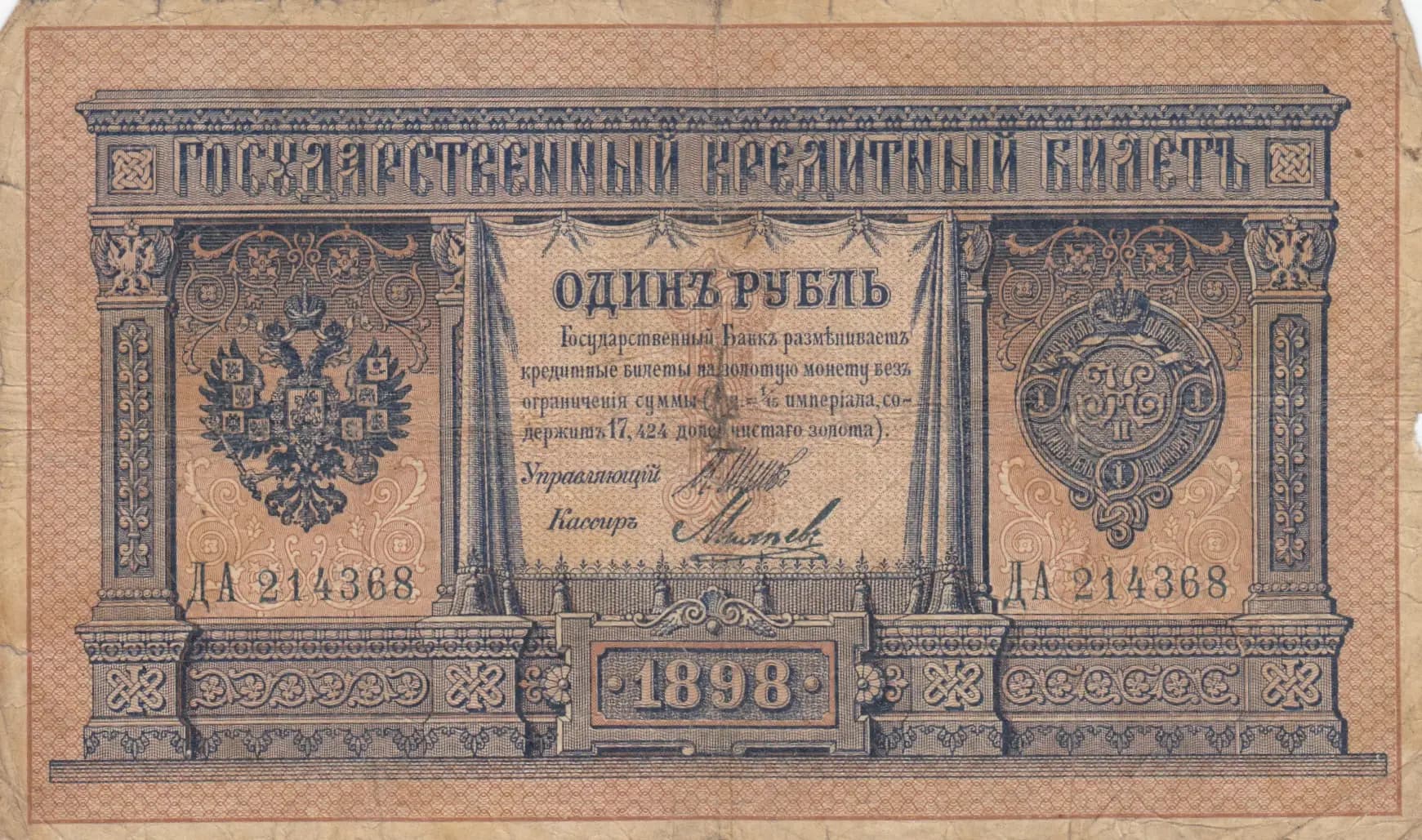
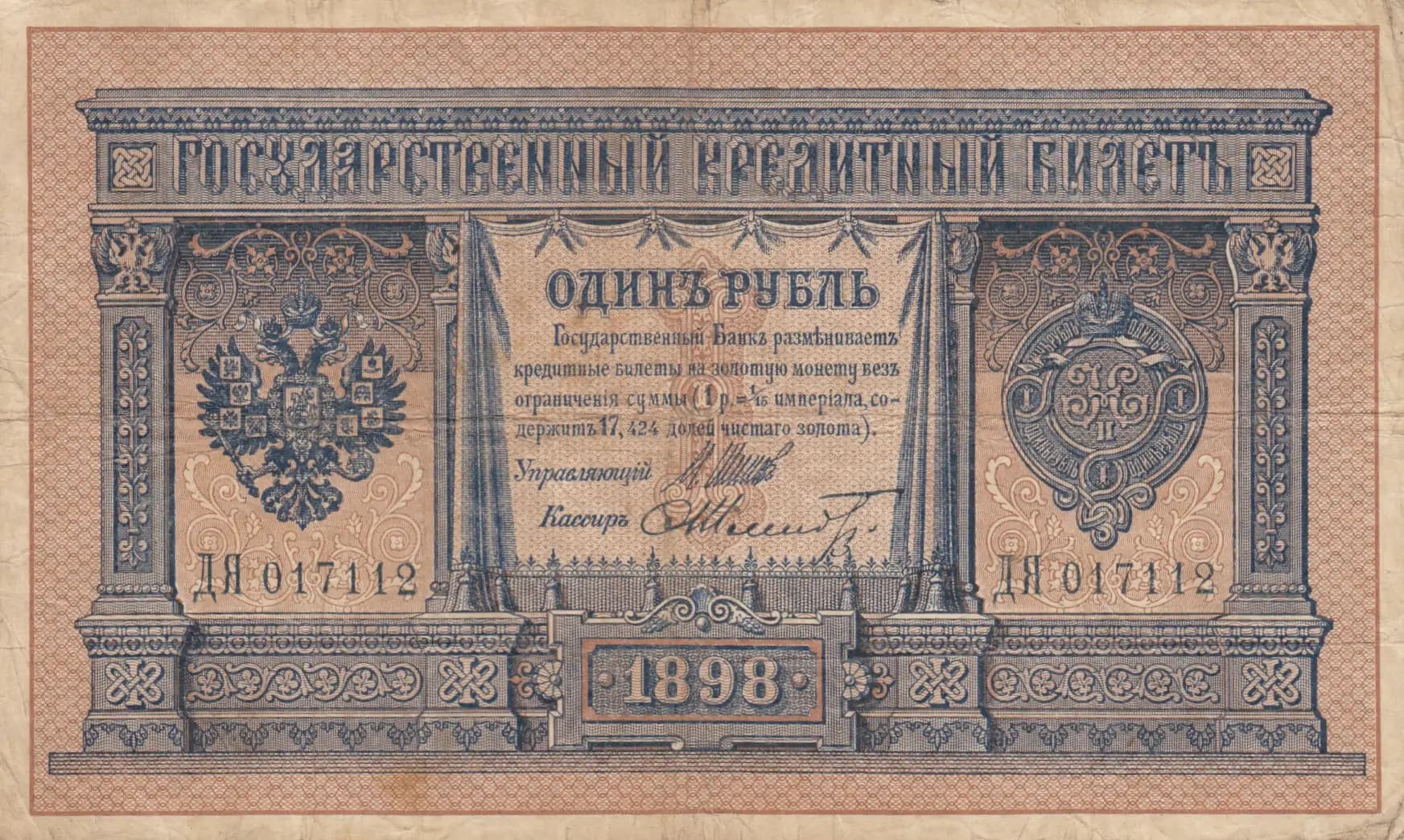
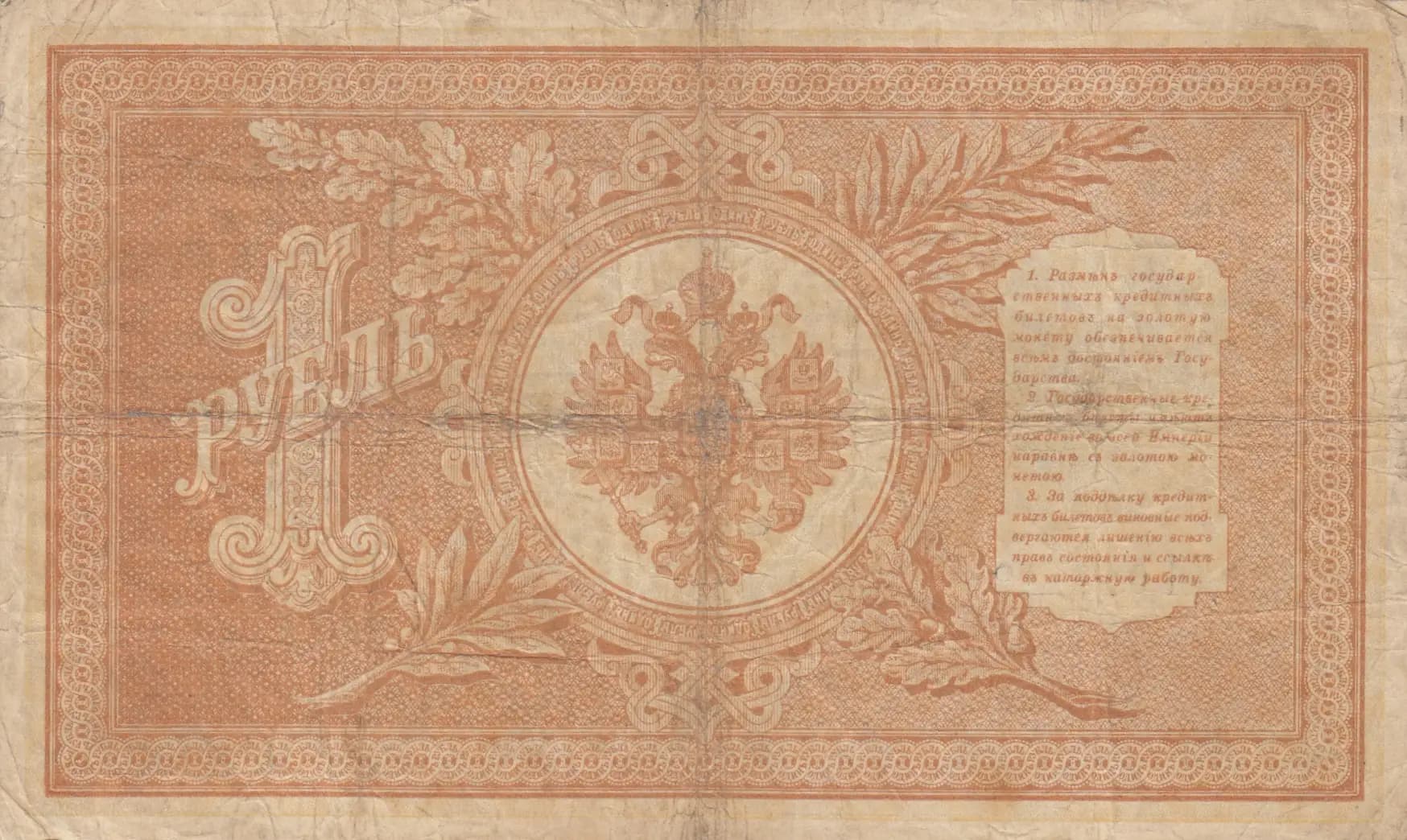
This 1898 Russian Imperial 1 Ruble credit note (Pick P-1d(10)) displays the formal grandeur characteristic of late Tsarist currency, featuring elaborate neoclassical design with symmetrical columns, heraldic eagles, and ornamental wreaths in blue and cream tones. The note shows substantial age-related wear including foxing, discoloration, and creasing consistent with its Fair grade, with darkened paper and faint inscriptions in places, yet the complex engraved detail remains visible throughout both sides. The signature of Schmidt and serial number ДЭ 017112 are notable collector points for this circulated example of Russia's pre-revolutionary monetary system.
Common. The 1 Ruble note of 1898 from the Imperial Russian series was issued in substantial quantities for general circulation and remains relatively available in modern collector markets. While notes from this period command higher prices than modern currency, the 1898 1 Ruble denomination was not part of a limited run or short-lived series. The Fair condition grade and presence of a signed example (Schmidt) may add minor collector interest, but this represents a standard issue note from one of Russia's largest denominations by print volume during the late Imperial period.
Issued during the reign of Tsar Nicholas II, this 1898 credit note represents the Russian Imperial banking system's commitment to gold-standard backing, as evidenced by the prominent inscription stating the State Bank's obligation to exchange notes for gold coins. The elaborate Imperial Double-headed Eagle and heraldic symbols adorning both sides reinforce the autocratic authority and legitimacy of the Russian state, while the formal neoclassical design with columns and draped fabric motifs reflects the aesthetic standards of late 19th-century European currency design. This note predates the revolutionary upheavals of 1905 and 1917 that would eventually render Imperial credit instruments obsolete.
This Imperial Russian credit note exhibits a highly symmetrical neoclassical design anchored by the Russian Imperial Double-headed Eagle and associated heraldic symbols positioned prominently on both the obverse and reverse. The front side features elaborate architectural framing with fluted columns flanking the central text area, draped fabric motifs suggesting classical drapery, and ornamental wreaths and medallions. The reverse presents an even more elaborate centerpiece: a large oval medallion containing the crowned Double-headed Eagle surrounded by concentric ornamental wreaths, scrollwork, and floral motifs rendered in fine filigree. The color palette employs blues and browns against cream/tan backgrounds, creating visual contrast while maintaining formal dignity. The design's symmetry and repetitive ornamental patterns served both aesthetic and security functions in this period of currency design.
FRONT SIDE: Main heading: 'ГОСУДАРСТВЕННЫЙ КРЕДИТНЫЙ БИЛЕТ' (State Credit Ticket/Note). Denomination: 'ОДИНЪ РУБЛЬ' (One Ruble). Exchange guarantee text: 'Государственный Банк разрывчивает кредитные билеты на золотую монету вездъ отграничения суммы (0 [?] части империала, содержит 17,424 долей чистаго золота)' (The State Bank exchanges credit notes for gold coins without restriction of sum ([amount] of the imperial, containing 17.424 grains of pure gold)). Signature lines: 'Управляющий' (Managing Director) and 'Кассир' (Cashier). Serial number: 'ДЭ 017112'. Date: '1898'. BACK SIDE: Denomination: 'Рубль' (Ruble). Regulatory text (partially legible): 'Разрядъ готовой, отвѣчаетъ кредитами филетого на золотую монету между обмѣниваемъ' [Text concerning gold redemption and credit terms]. Additional regulatory text block on right side concerning terms of exchange and credit conditions (not fully legible in provided images).
Intaglio engraving (copperplate/steel-plate engraving), the standard security printing method for Russian Imperial credit notes of this period. The complex line work, fine filigree details, ornamental patterns, and multiple layers of engraved detail visible throughout both sides are characteristic of high-quality intaglio production. The Russian State Security Printing works (Гохран/State Printing House) produced Imperial credit notes during this era using advanced intaglio processes combined with multiple color printing to achieve the observed tan, blue, and brown color scheme. The difficulty of reproducing the intricate engraved patterns served as the primary security feature.
The Pick number P-1d(10) designation indicates this is variety 1d, signature type 10, corresponding to the signature of director Schmidt in the 'Управляющий' (Managing Director) position. The serial number ДЭ 017112 suggests this specific note's production batch and position within the print run. Collectors should note variations in signature combinations (different directors and cashiers served during 1898) and serial number prefixes as distinguishing varieties within this Pick classification. The condition, foxing patterns, and specific ink tones may vary among surviving examples due to storage and handling history.