10 bani 1917
Market Prices
15 salesAbout This Note
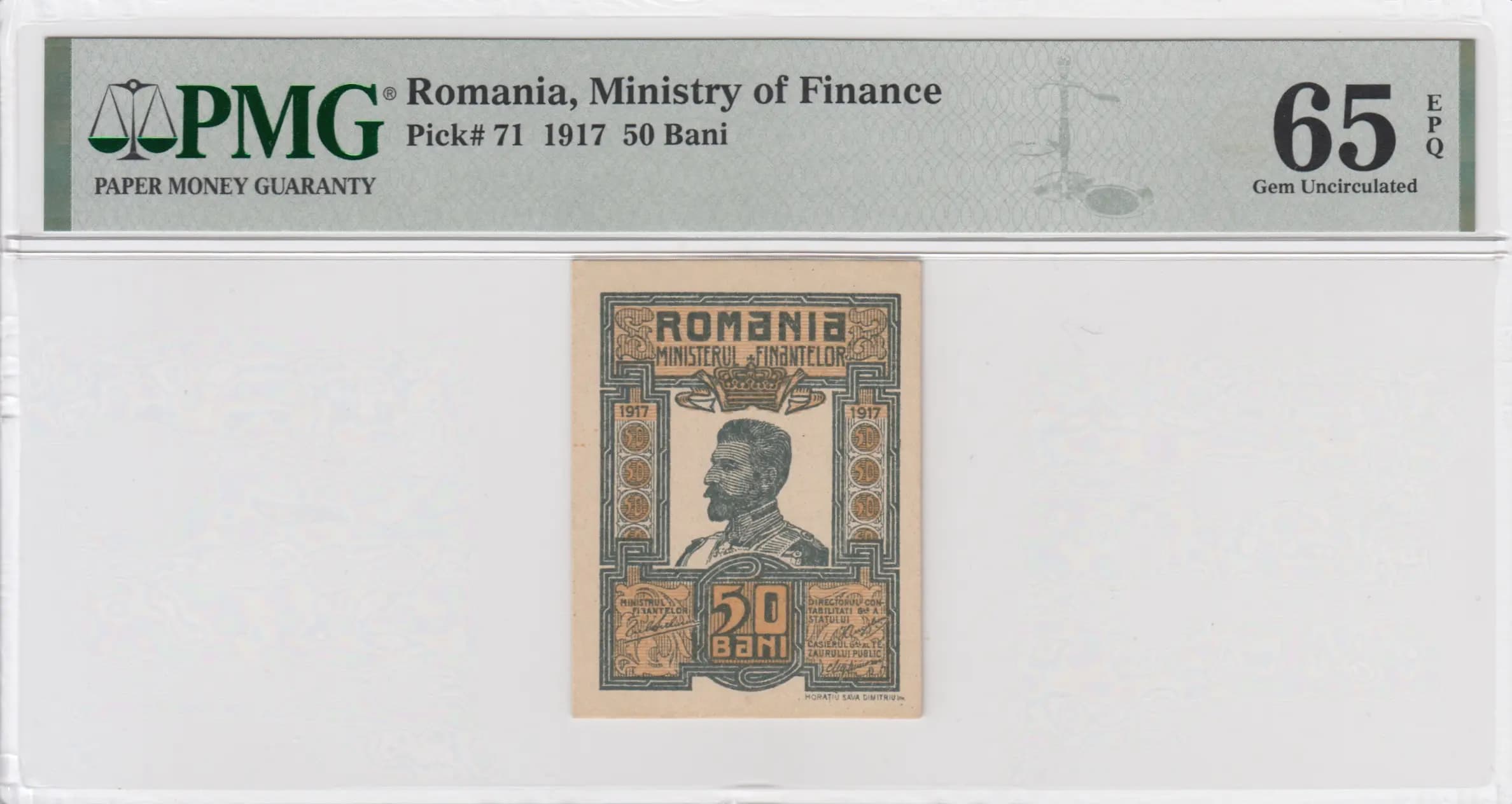
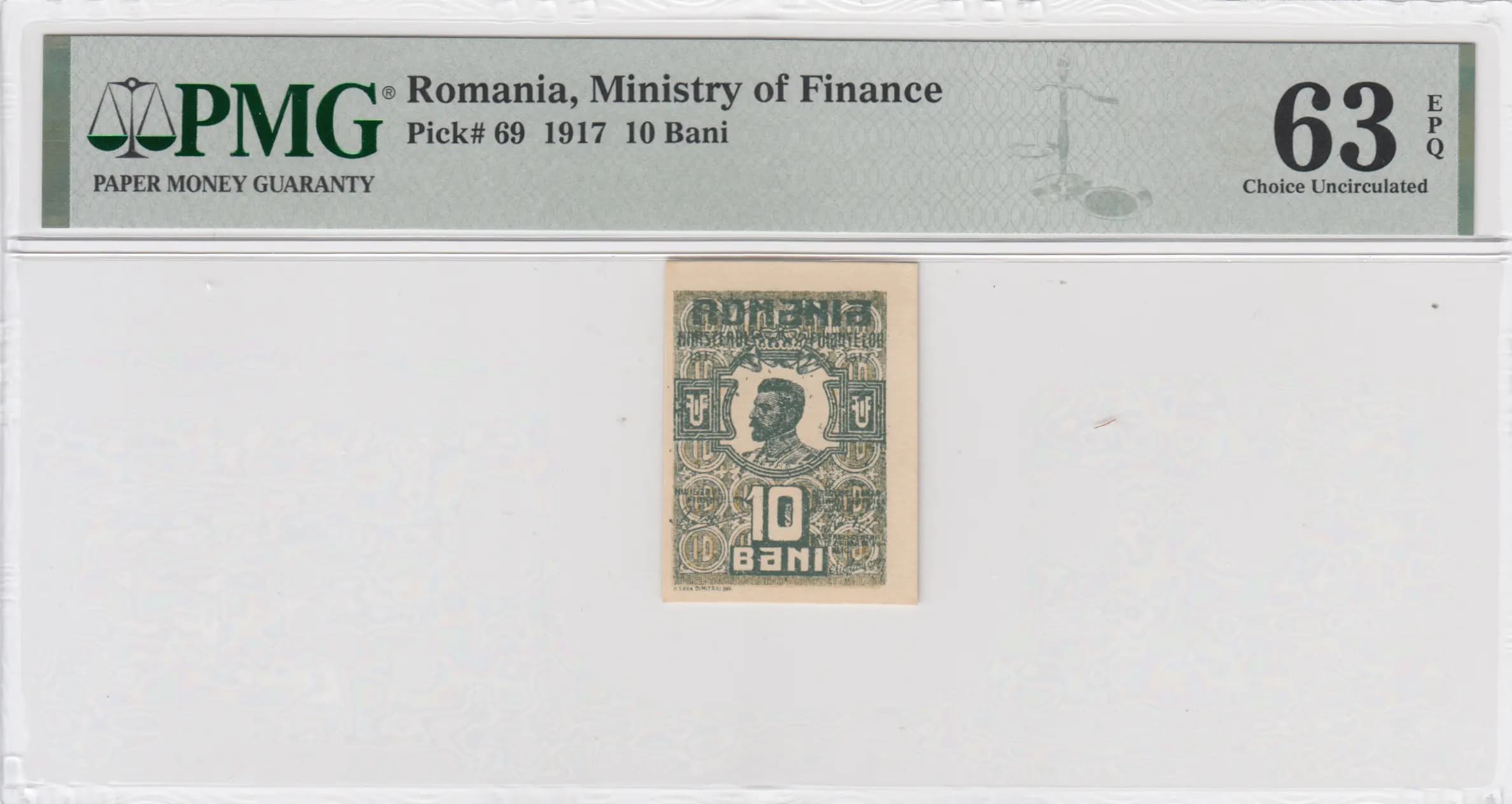
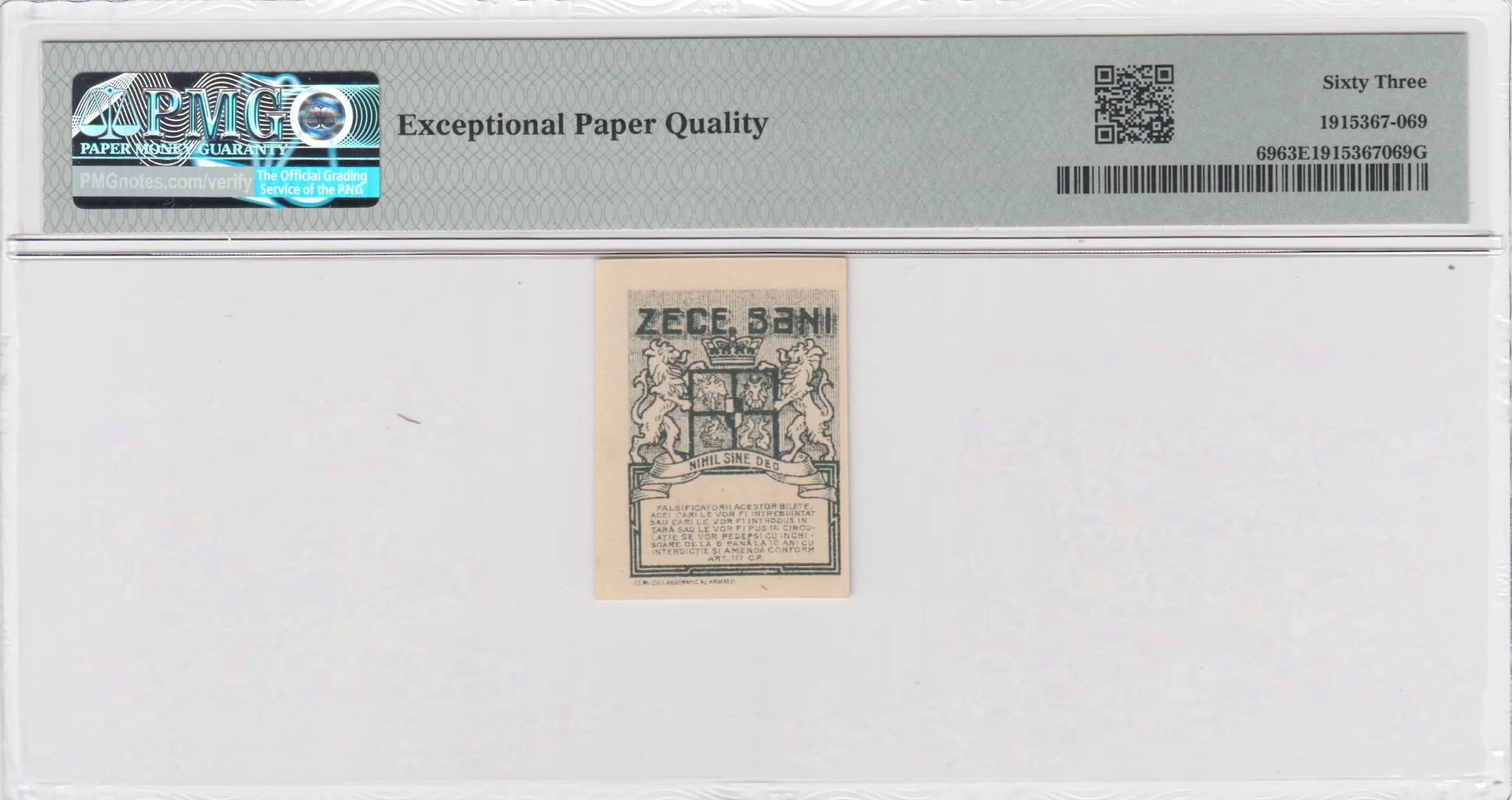
This Romanian 10 Bani banknote from 1917 is an excellent example of early 20th-century Balkan currency, featuring a portrait of King Ferdinand I in profile on the obverse and the Romanian coat of arms supported by lions on the reverse. The note is graded PMG 63 EPQ (Choice Uncirculated), indicating outstanding preservation with crisp green and black printing on cream paper stock. The fine line engraving and ornate geometric borders demonstrate the sophisticated security printing techniques employed by the Geographical Service of the Army.
Common. This is a regular-issue banknote from a major denomination with substantial print runs typical of WWI-era circulation currency. eBay market data shows consistent sales across multiple condition grades (VF, EF, AUNC, UNC) ranging from $5 to $67, with the PMG 63 EPQ grade in the $25-40 range based on historical transaction prices. The note is readily available in all grades, indicating no scarcity in this or lower grades.
Issued in 1917 by the Ministerul Finanţelor during World War I, this banknote represents Romania's monetary authority during a critical period of the nation's history. King Ferdinand I's portrait on the obverse reflects the monarchy's role as the symbol of national continuity, while the crowned coat of arms and the Latin motto 'Nihil Sine Deo' (Nothing without God) on the reverse reinforce the legitimacy of the Romanian state. The use of the Geographical Service of the Army as printer underscores the military's involvement in wartime economic administration.
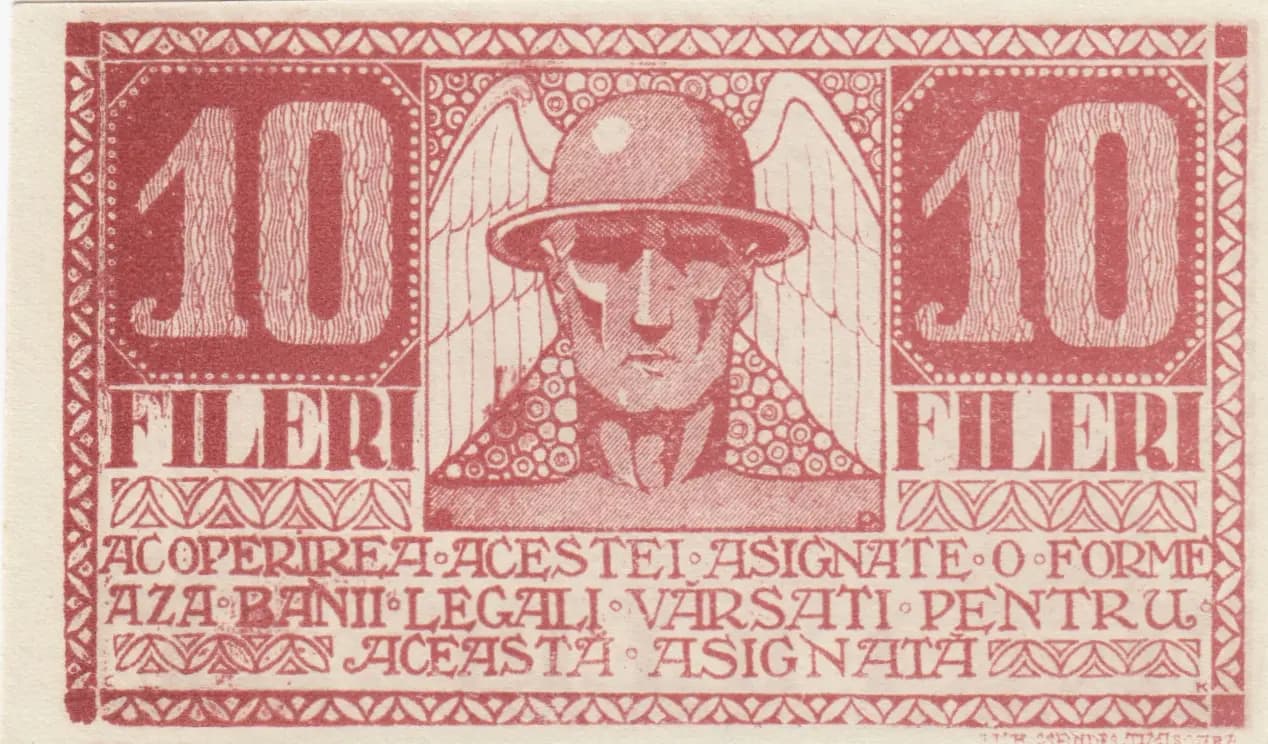
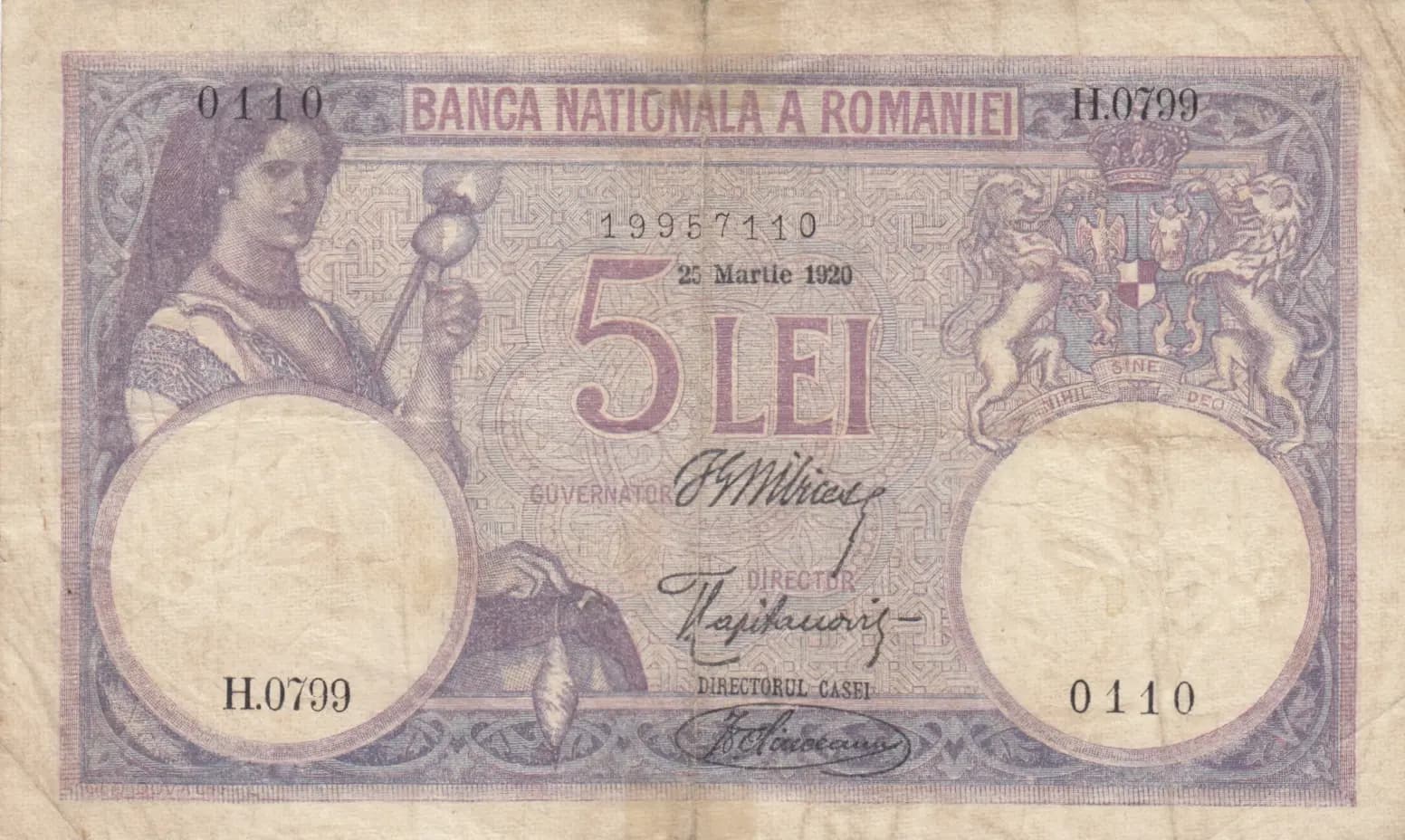
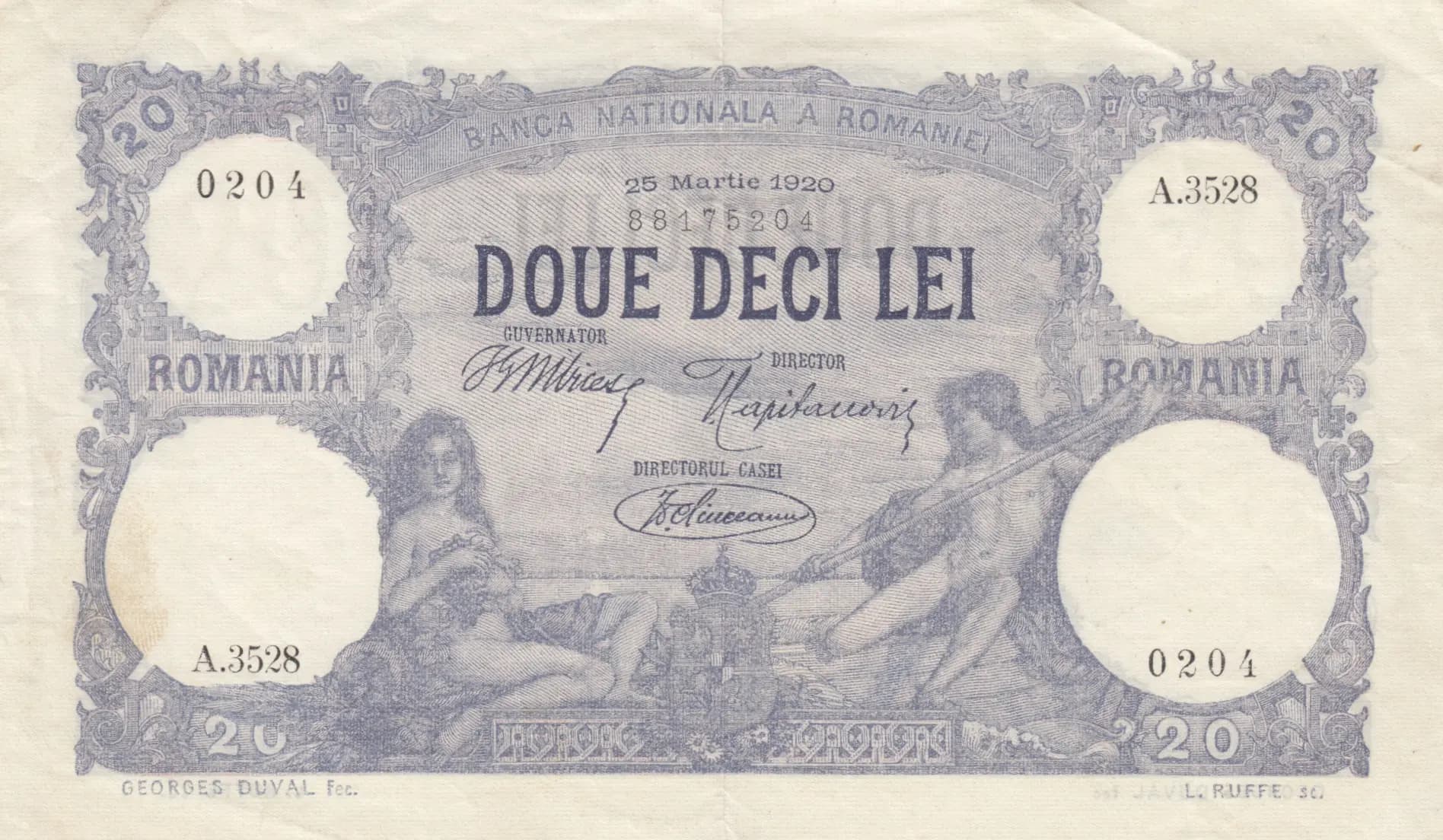
The obverse features a left-facing profile portrait of King Ferdinand I of Romania, centered in the upper portion of the note and surrounded by ornate geometric border frames with circular corner elements. The design employs dark green ink on an olive underprint with cream/off-white background. The reverse displays the crowned Romanian coat of arms—a heraldic shield divided into multiple sections—supported by two lions rampant positioned on either side. The design is rendered in black ink with fine line engraving. Both sides incorporate elaborate decorative patterns that serve both aesthetic and security purposes, with denomination numerals positioned in the corners.
Front side: '10' (denomination in Arabic numerals), 'BANI' (Romanian currency unit). Back side: 'ZECE BANI' (Ten Bani in Romanian), 'NIHIL SINE DEO' (Latin motto meaning 'Nothing without God'), plus a rectangular text block containing legal/regulatory text in Romanian (not clearly legible in reproduction).
The note employs fine line engraving (also called intaglio printing), executed by the Serviciul Geografic al Armatei (Geographical Service of the Army). The crisp, detailed rendering of the portrait, the intricate border patterns, and the precise heraldic design are characteristic of intaglio production. The layered color printing (green on olive underprint for the obverse, black for the reverse) suggests multiple passes through the press.
The PMG population report indicates a single catalogued variant for Pick P-69. No significant varieties are noted (such as signature variants, date varieties, or serial number prefix differences) in the available data. The note graded here as PMG 63 EPQ represents the standard version of the 1917 10 Bani issue.