8 tangas 1917
About This Note
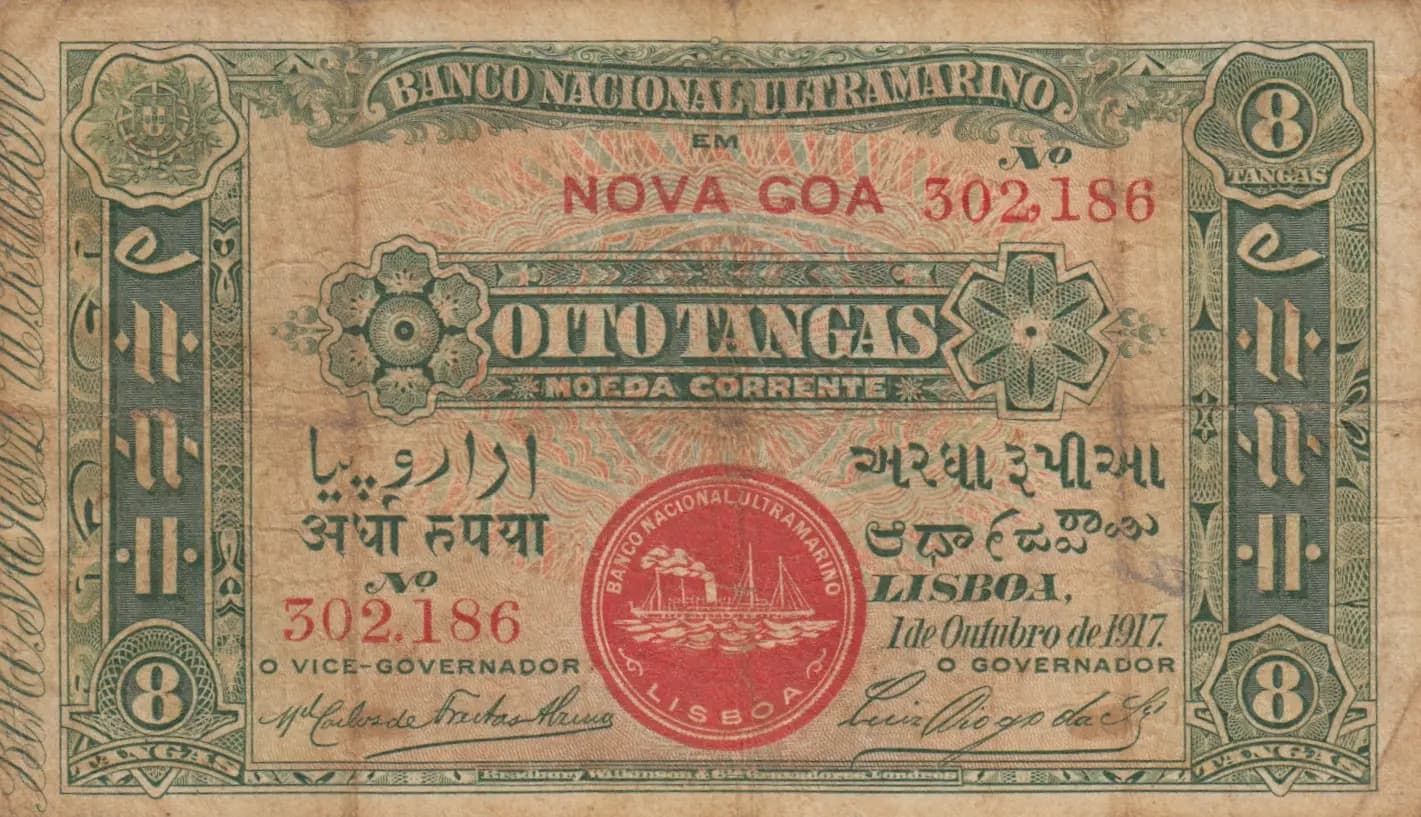
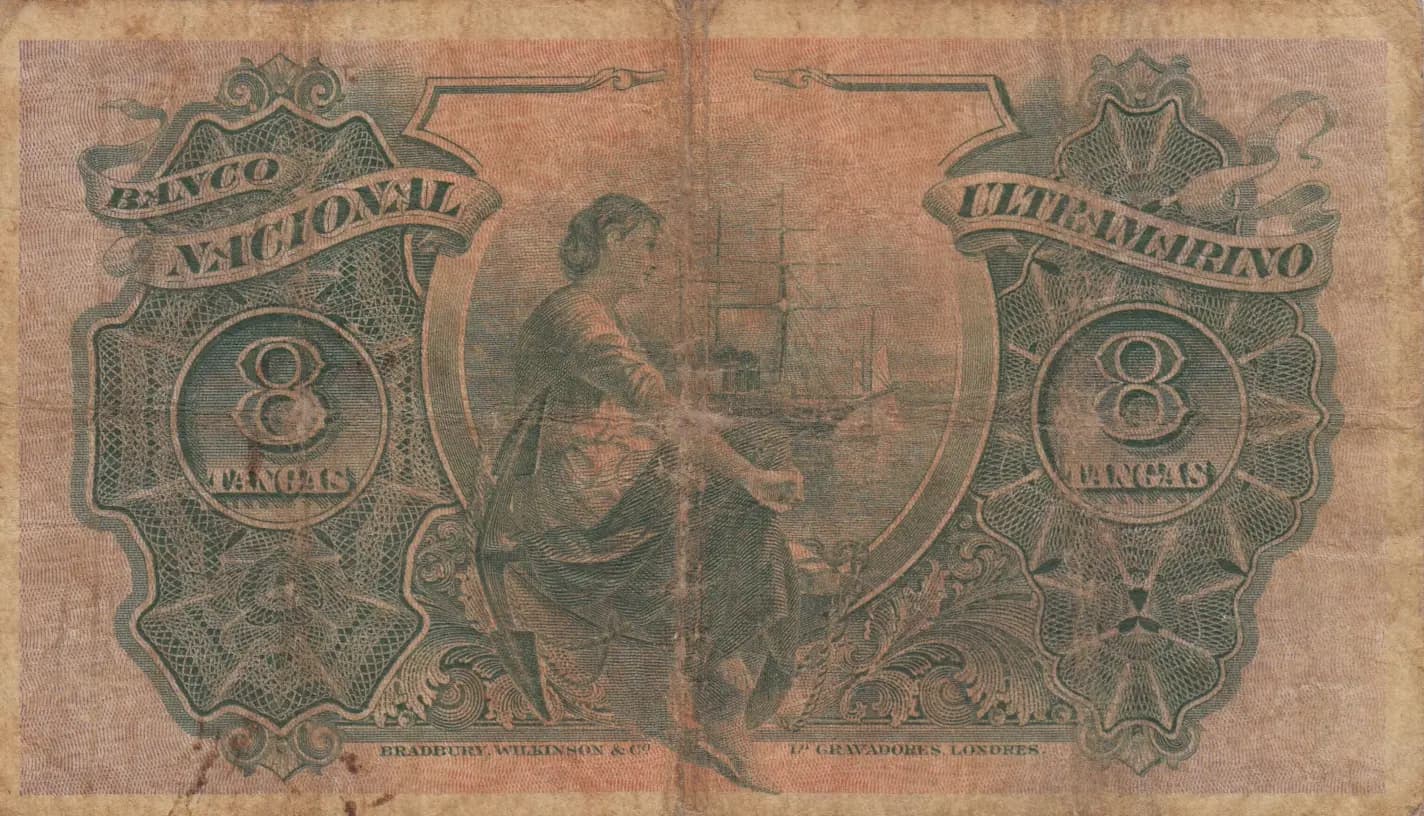
This is an 8 tangas banknote from Banco Nacional Ultramarino dated 11 October 1917, representing a rare example of Portuguese India's early 20th-century currency system. The note displays exceptional artistry with an ornate front design featuring a red seal with a Portuguese sailing ship and multilingual text in Portuguese, Hindi, Gujarati, and Kannada, while the reverse showcases a classical allegorical female figure representing commerce overlooking a harbor scene. In Fair condition, the note exhibits heavy circulation wear consistent with its century-old age, including multiple creases and age-related discoloration, yet the engraved details remain identifiable and demonstrate the high-quality intaglio printing executed by renowned London printers Bradbury, Wilkinson & Co.
Uncommon. While Portuguese India banknotes from the 1917 period are not exceptionally rare in absolute terms, the 8 tangas denomination represents a specific intermediate value within a limited colonial currency system that ceased circulation after Portuguese India's integration into India in 1961. The Pick P-20 catalog listing indicates this is a recognized standard type. In Fair condition with significant wear, this particular specimen is more commonly encountered than pristine examples, reducing its premium value. The relatively modest print runs typical of colonial-era denominations and the note's 100+ year age result in a scarcity relative to modern currency, but not to a degree justifying a 'rare' classification among serious collectors of Indian or Portuguese colonial numismatics.
This note commemorates a critical period in Portuguese India's monetary history, issued when Goa remained under Portuguese colonial administration and before India's independence in 1947. The 1917 date places it during World War I, a period of significant economic activity in the colonial port of Nova Goa (Velha Goa region), reflected in the note's emphasis on maritime commerce through the sailing ship motif and harbor scene on the reverse. The multilingual inscriptions in four Indian languages alongside Portuguese demonstrate the colonial administration's attempt to facilitate trade and administration across the diverse linguistic regions of Portuguese India, though Portuguese remained the official language of the Banco Nacional Ultramarino.
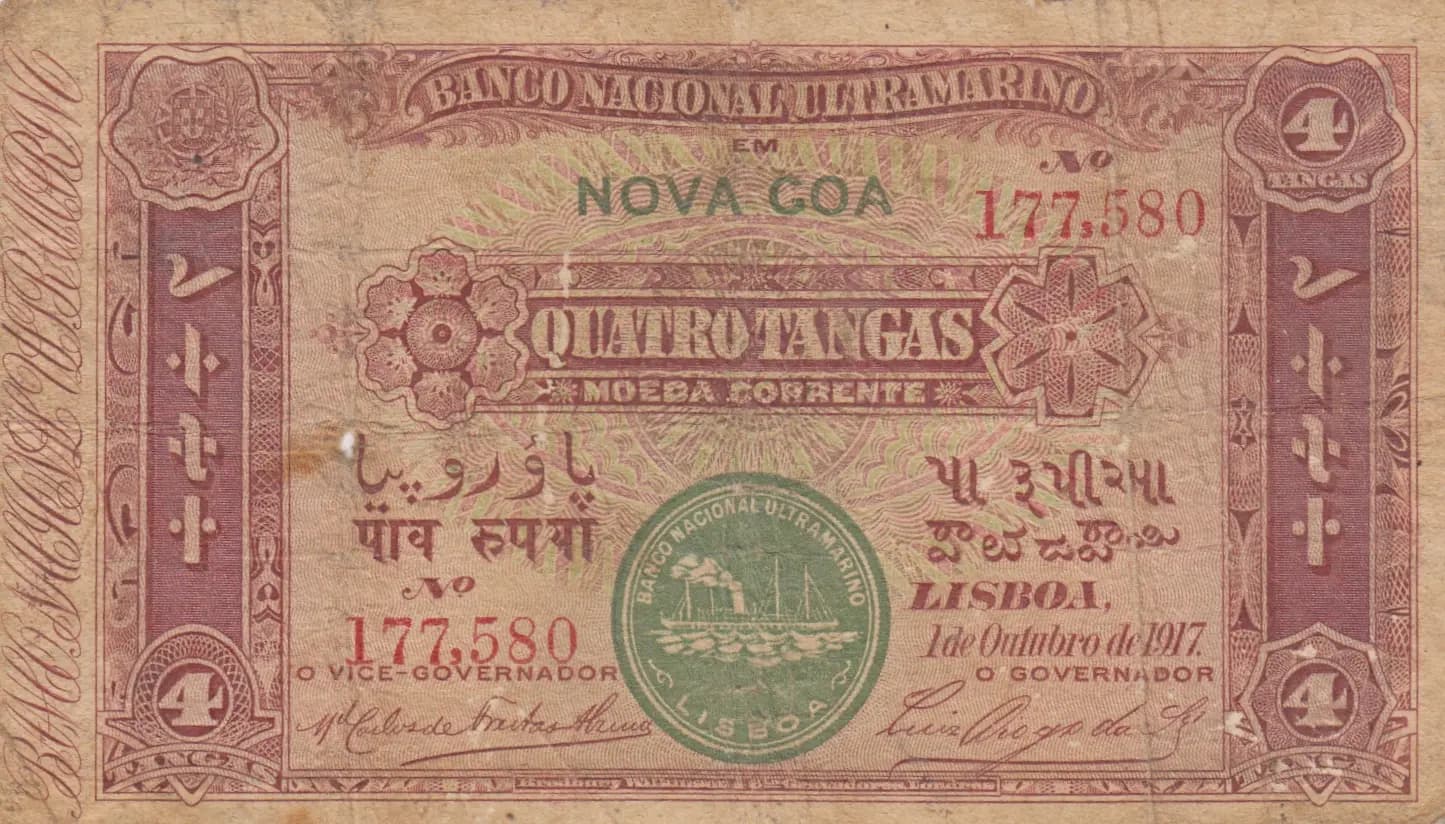
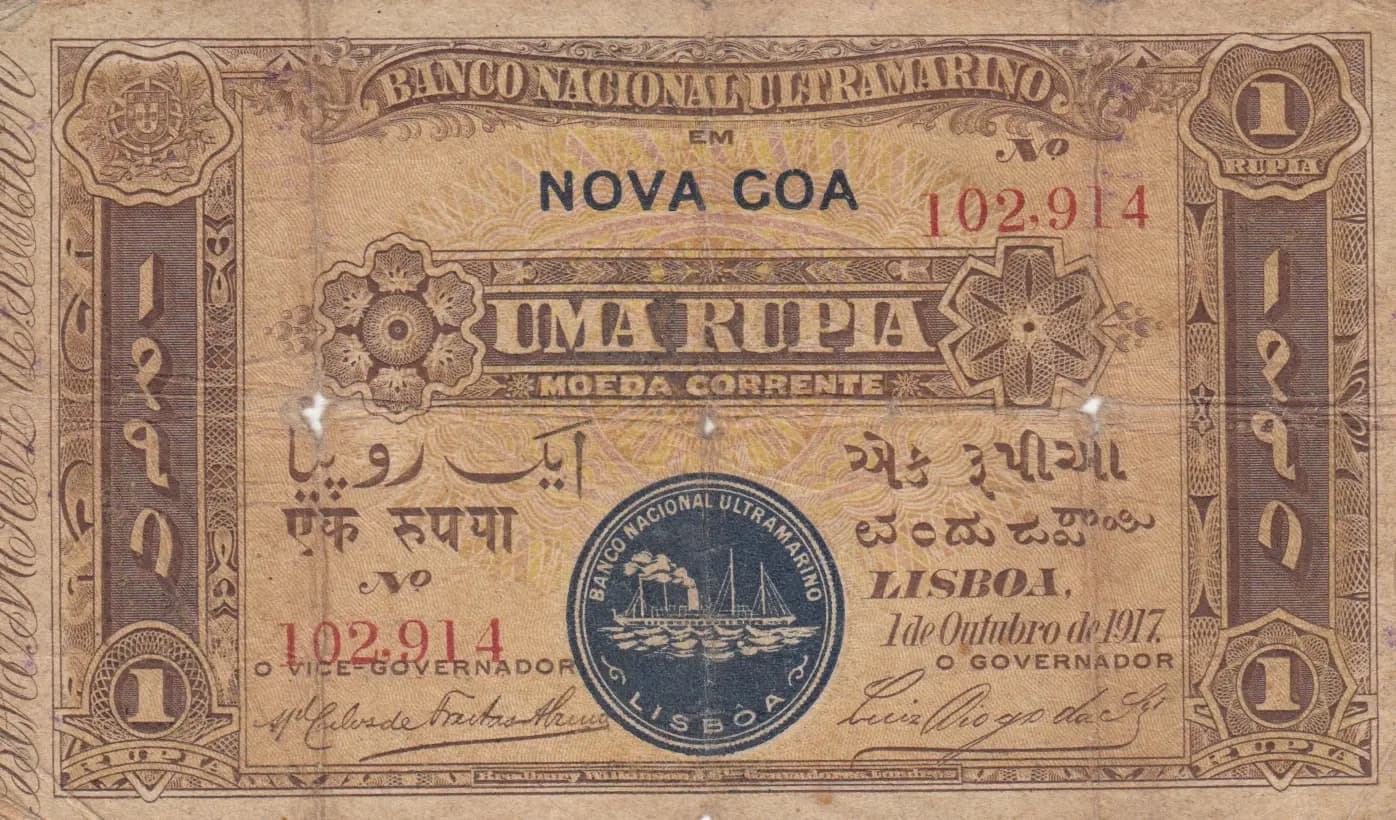
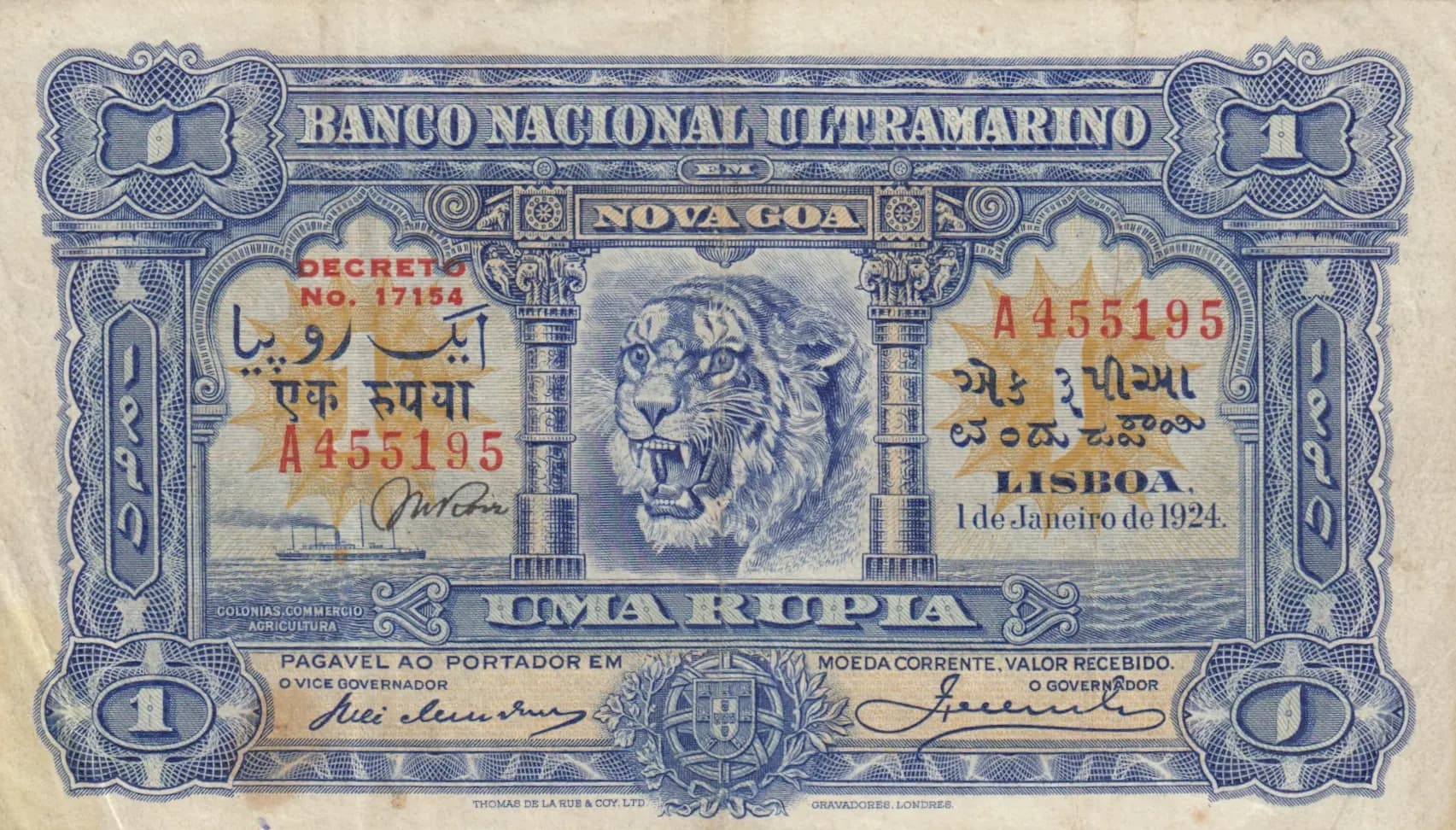
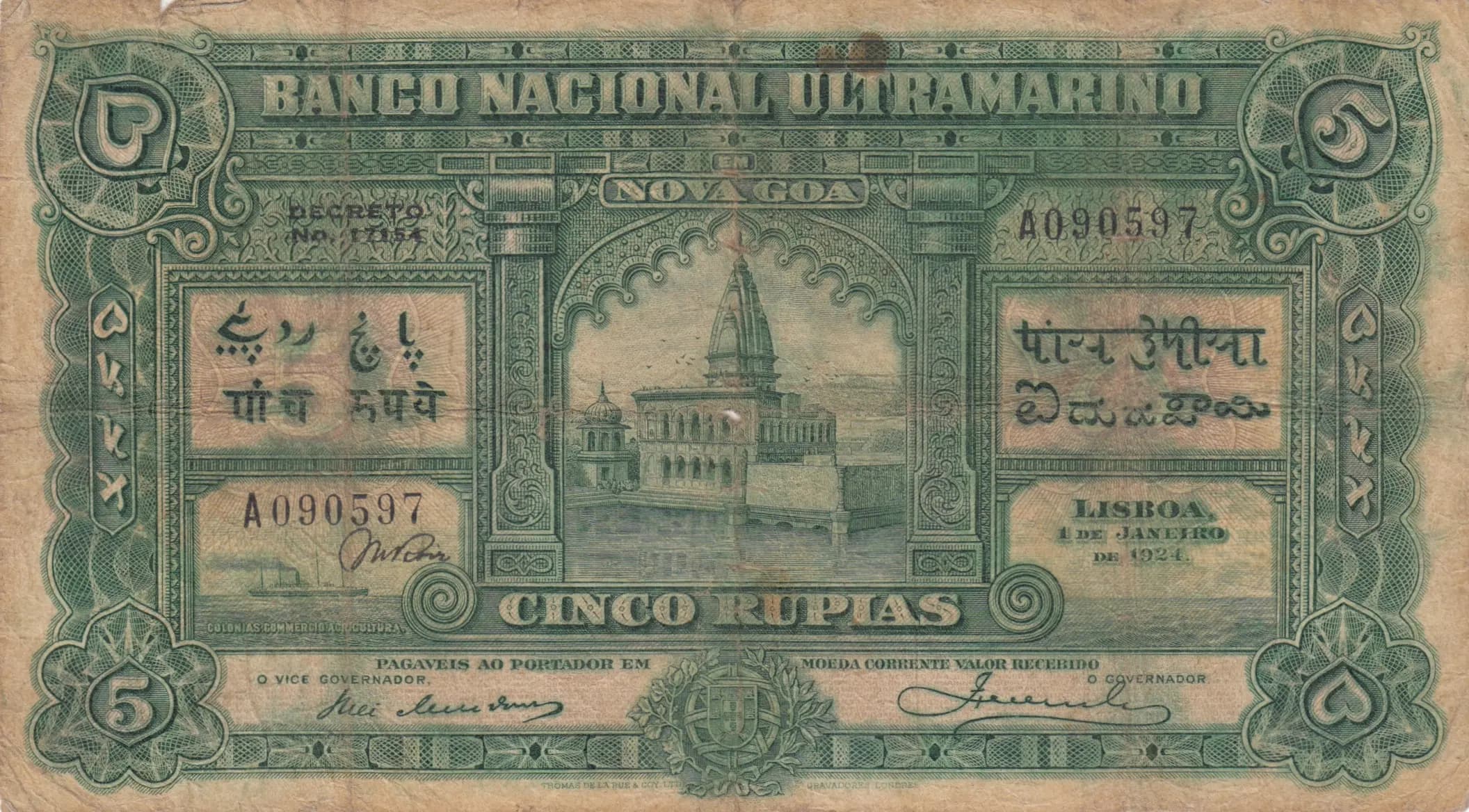
The obverse features an ornate design with the Portuguese national coat of arms in the upper left, centered by a distinctive red circular seal containing an image of a Portuguese caravel or sailing ship—symbolizing Portugal's maritime heritage and colonial trading dominion. The denomination '8' appears in ornate circular decorative frames on both the left and right margins. The note employs a sophisticated color palette of green and cream with red and brown accents. The reverse depicts Britannia or a classical allegorical female figure representing Commerce or Prosperity, depicted in neoclassical style with flowing robes, positioned centrally and gesturing toward a background harbor scene populated with multiple sailing vessels. This allegorical composition emphasizes the colonial port economy and mercantile importance of Goa. Ornamental borders, guilloche patterns, and scrollwork frame all elements throughout both sides.
FRONT SIDE: 'BANCO NACIONAL ULTRAMARINO' (National Overseas Bank), 'NOVA GOA 302,186' (New Goa 302,186 - likely a reference number or series identifier), 'OITO TANGAS' (Eight Tangas), 'MOEDA CORRENTE' (Current Currency), multilingual equivalents in Urdu/Persian script, Hindi ('अठ हजारा' - Eight Tangas), Gujarati ('આઠ તણા' - Eight Tangas), and Kannada ('ಎಂಟು ತಂಗ' - Eight Tangas), 'LISBOA' (Lisbon), '11e Outubro de 1917' (11th October 1917), 'VICE-GOVERNADOR' (Vice-Governor), 'GOVERNADOR' (Governor). BACK SIDE: 'BANCO NACIONAL' (National Bank), 'ULTRAMARINO' (Overseas), '8 BANCOS' (8 Bancos - appearing twice), 'BRADBURY, WILKINSON & CO' (printer identification), 'LONDRES' (London), 'LA GRAVADORES, LONDRES' (The Engravers, London).
Intaglio engraving (line engraving and possibly steel engraving), executed by Bradbury, Wilkinson & Co, a renowned London-based security printer and engraver. The fine detail visible in the allegorical figure, sailing ship motif, and ornamental borders demonstrates high-quality intaglio work characteristic of early 20th-century banknote production. The multi-color printing appears to have been executed through separate passes, with green, red/brown, and black inks applied to achieve the finished design. No evidence of lithographic printing is present; the work is entirely engraved.
The note is dated 11 October 1917 and includes the notation 'NOVA GOA 302,186,' which may indicate a series or lot number specific to this issue. Signature varieties for this Pick number are typical; the 'GOVERNADOR' and 'VICE-GOVERNADOR' signatures would vary by individual issuing officers during the note's printing run. The printer identification 'BRADBURY, WILKINSON & CO, LONDRES' confirms production by this established London security printer. No overprints or significant varieties are apparent from the visual analysis, suggesting this represents a standard circulation issue rather than a provisional or emergency variant.