4 tangas 1917
About This Note
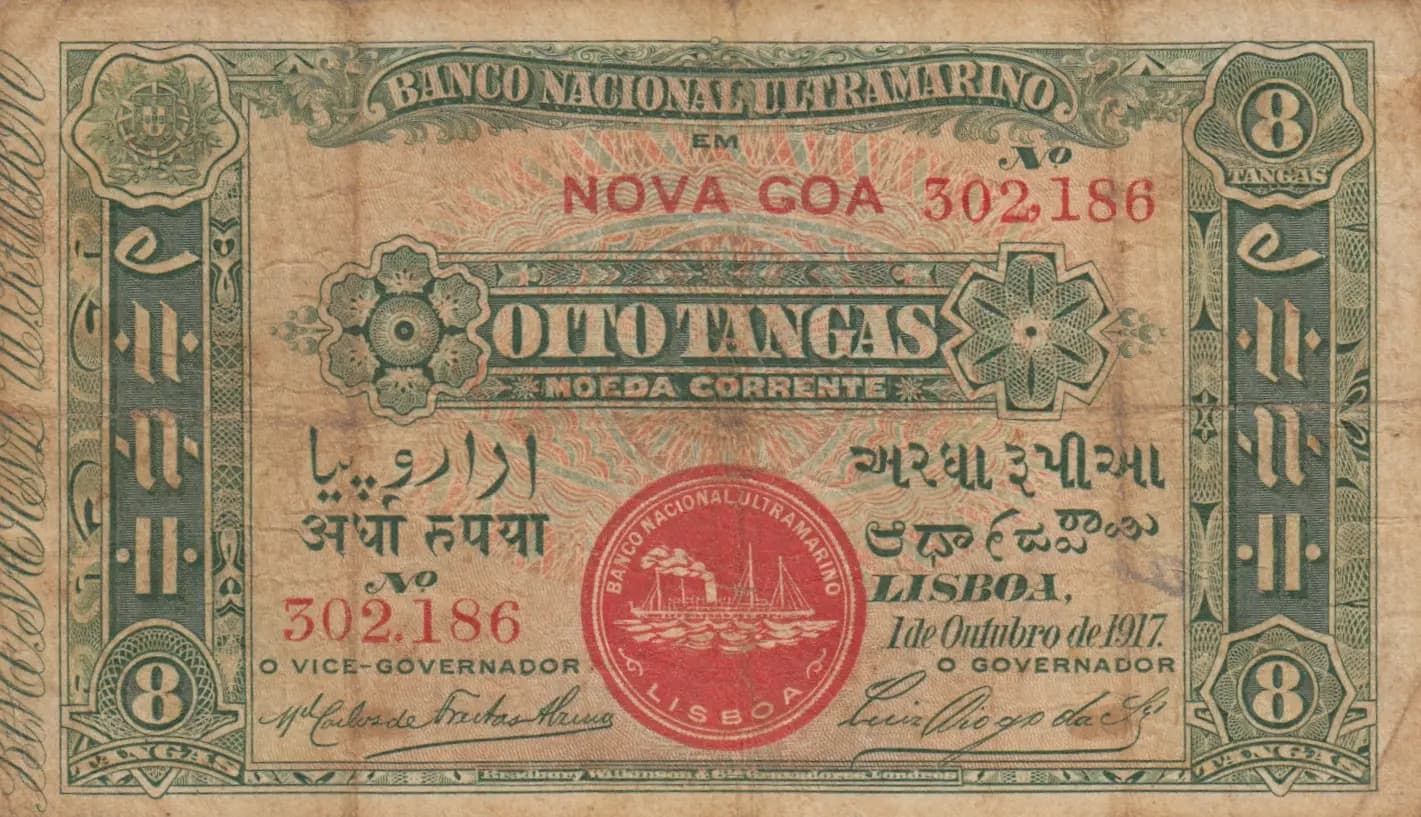
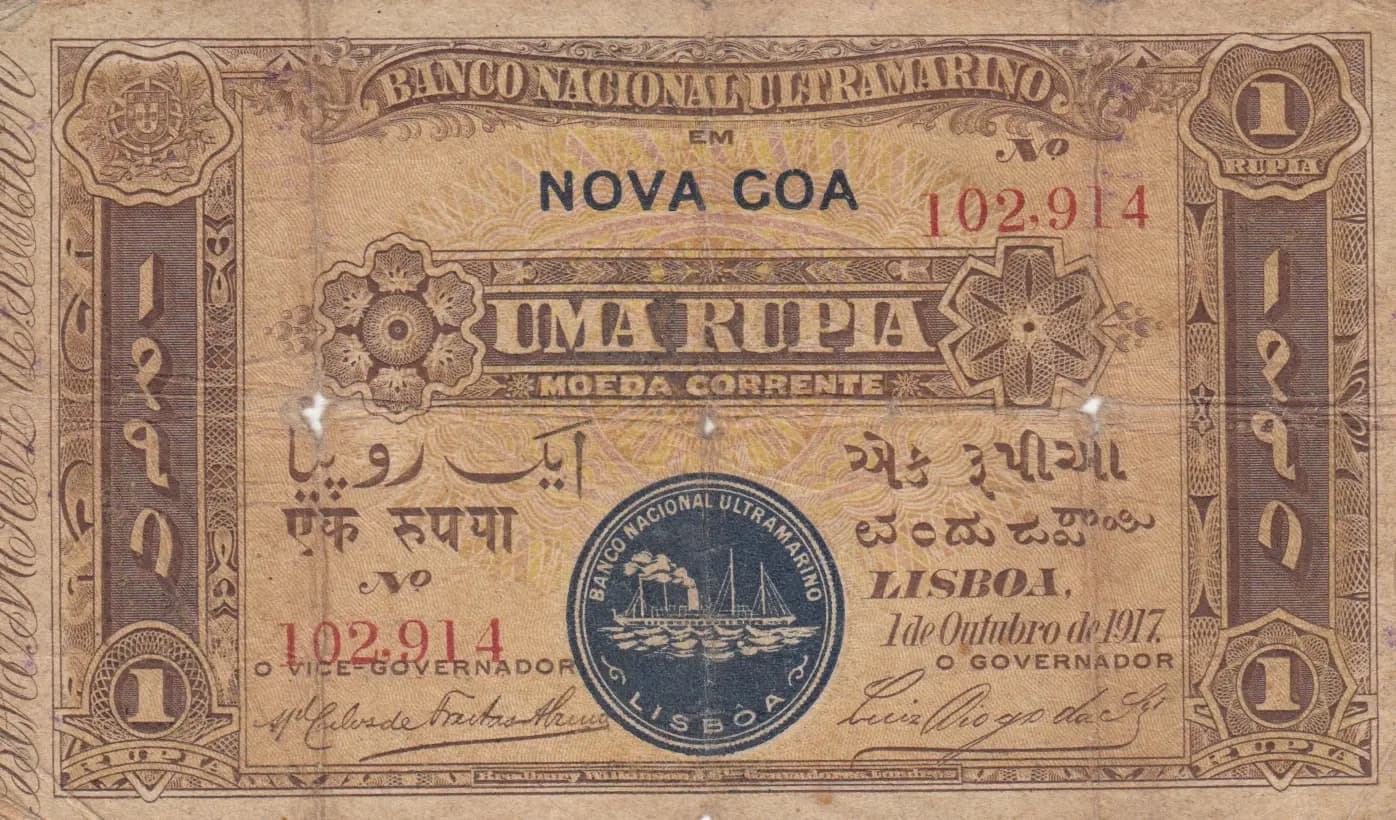
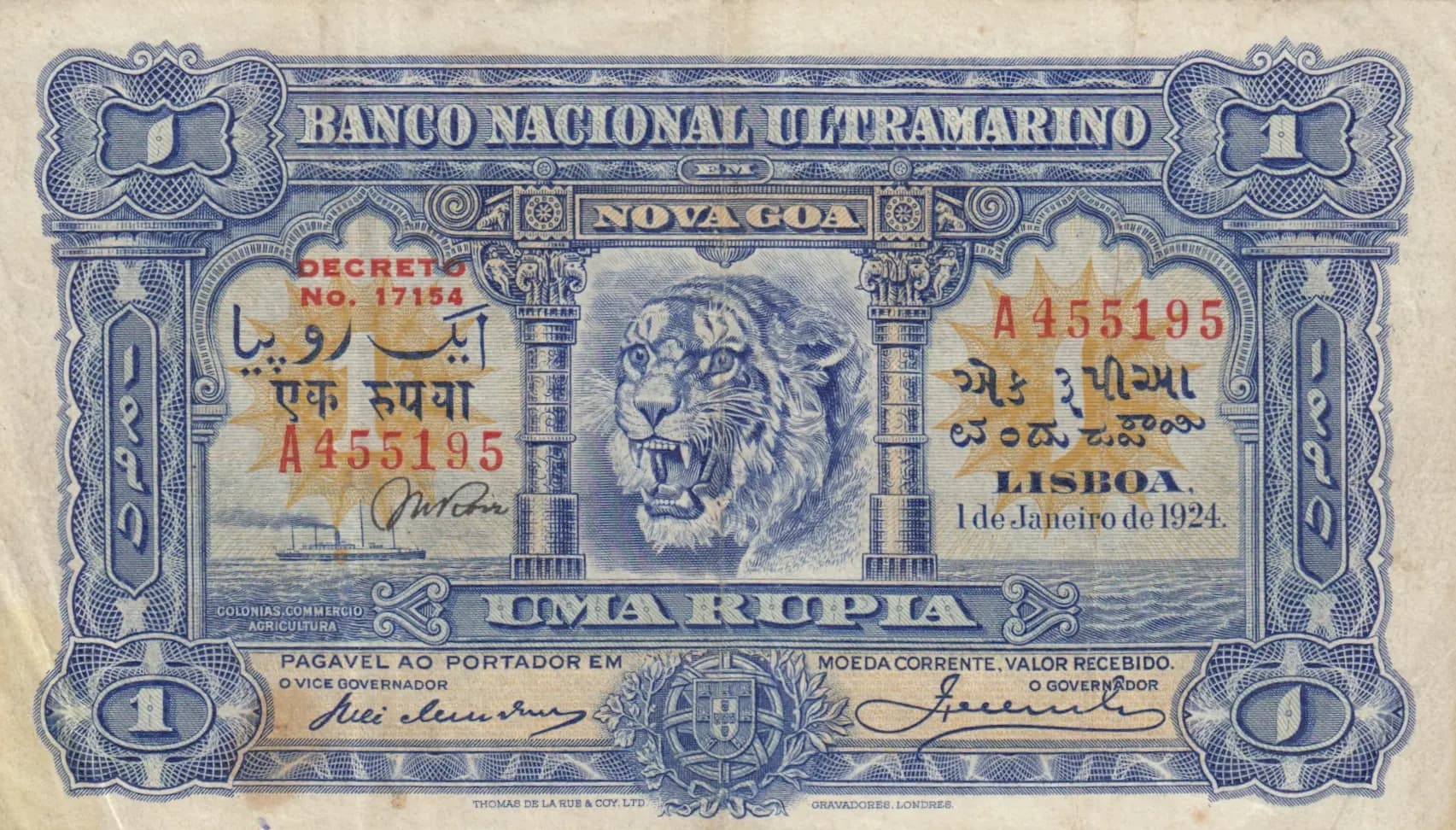
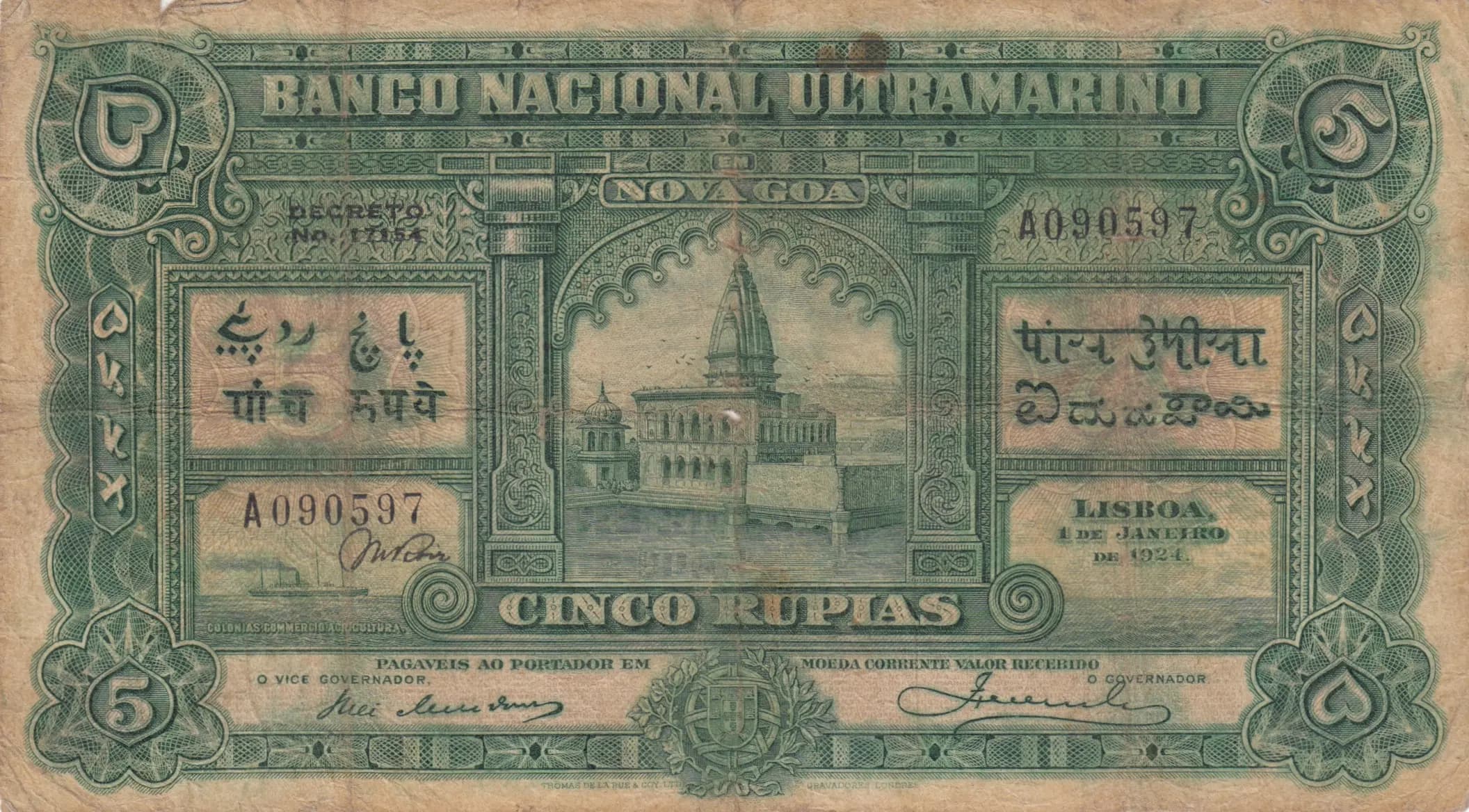
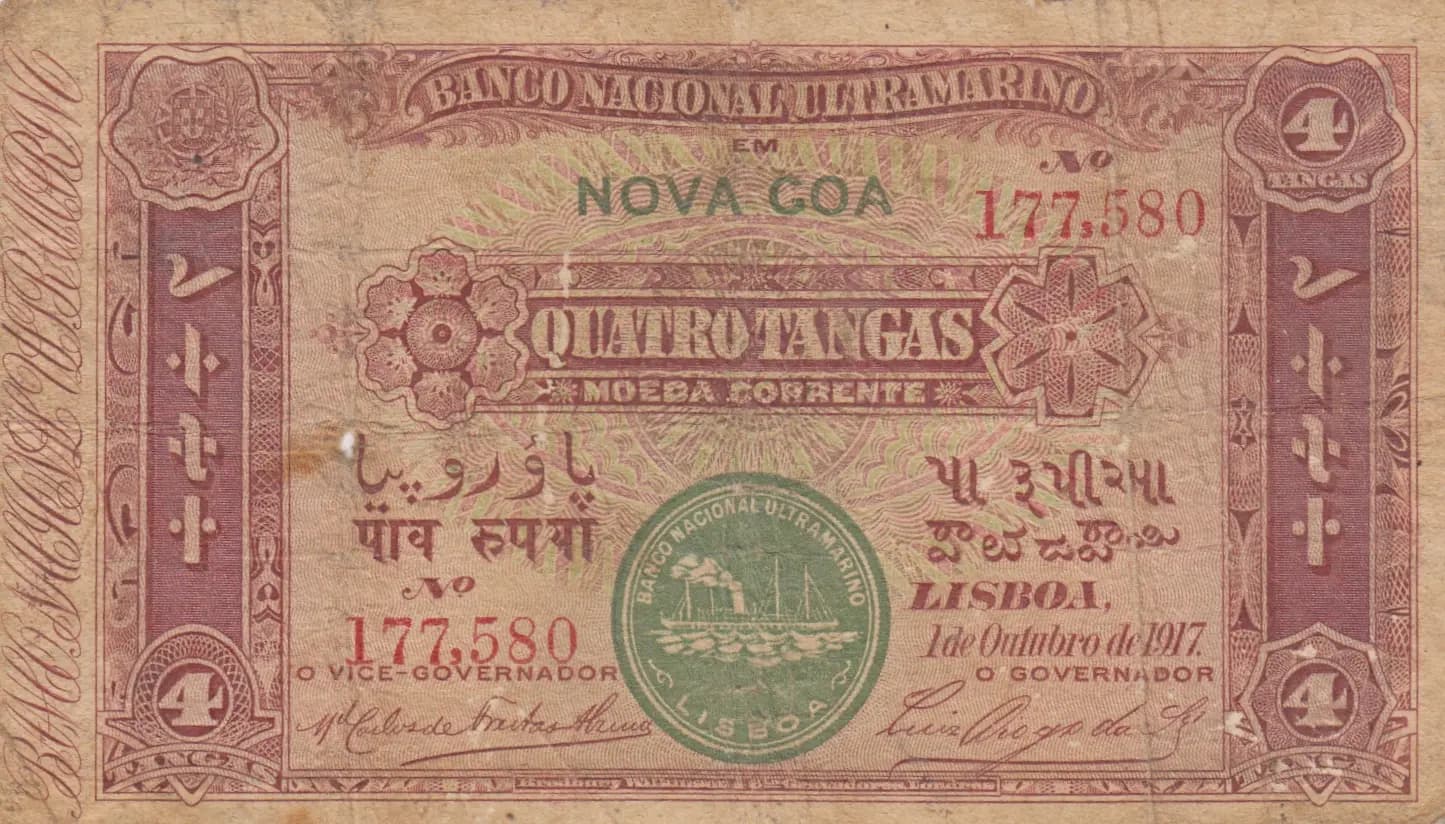
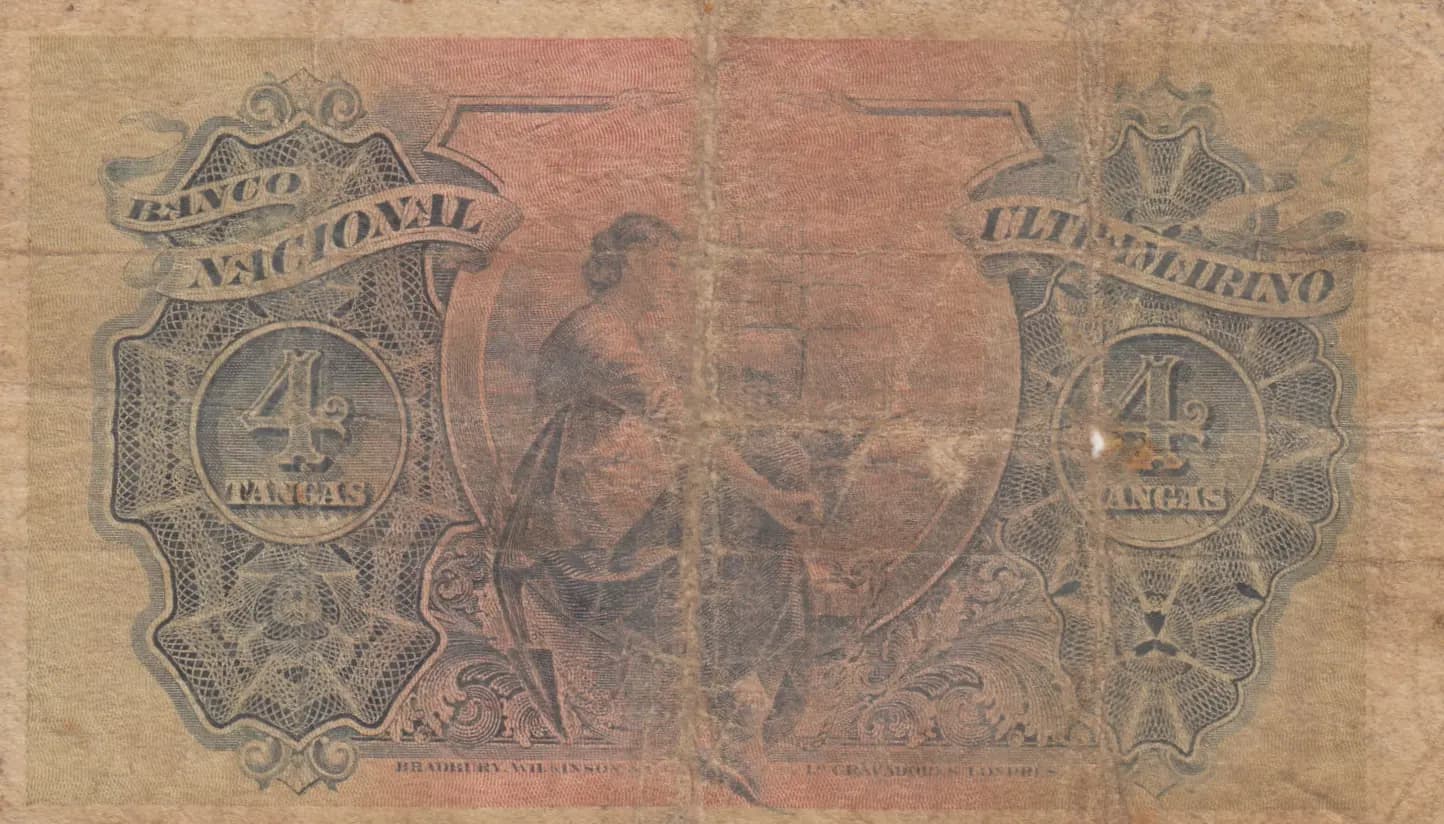
A handsome example of the 1917 Portuguese India 4 tangas from Banco Nacional Ultramarino, displaying the characteristic ornate design typical of colonial-era currency. The note features a striking central green circular seal with a sailing ship on the obverse and classical allegorical female figures on the reverse, rendered in fine line engraving. In VG condition, it shows expected signs of circulation including creasing, foxing, and discoloration, yet remains fully legible with all design elements clearly visible.
Common. Portuguese India banknotes, while no longer in circulation, were issued in substantial quantities during the colonial period. The 4 tangas denomination from 1917 does not appear in print run records as limited or recalled, and examples surface regularly in the collector market at modest valuations. VG condition specimens are neither exceptionally scarce nor highly sought, indicating healthy availability.
This note was issued by Banco Nacional Ultramarino during Portugal's colonial administration of Goa and Portuguese India, issued on October 1, 1917, during the final years of Portuguese colonial rule in the subcontinent. The multilingual inscriptions in Portuguese, Hindi, Marathi, and Arabic reflect the diverse linguistic landscape of the territory and the bank's need to communicate across its subject population. The classical allegorical figures adorning the reverse evoke European artistic traditions imported into the colonial sphere, while the sailing ship in the central seal represents maritime commerce and Portuguese naval heritage.
The obverse presents an ornate reddish-brown border with elaborate corner medallions featuring the denomination '4'. The central focal point is a green circular seal containing a sailing ship, symbolizing maritime trade and Portuguese nautical dominance. The reverse features two classical allegorical female figures in draped Greco-Roman style, positioned symmetrically and rendered through fine stippled engraving. Upper corners contain ornate cartouches with shield designs incorporating the bank's name and denomination. The color palette shifts to gray-blue and reddish-pink tones on the reverse, with intricate decorative scrollwork and geometric patterns filling the background. Multiple languages and scripts (Portuguese, Hindi, Marathi, Arabic) appear throughout, underscoring the cosmopolitan nature of the colonial administration.
FRONT SIDE: 'Banco Nacional Ultramarino' (Overseas National Bank) / 'Nova Goa' (New Goa) / 'Quatro Tangais' (Four Tangas) / 'Moeda Corrente' (Current Currency) / '1 de Outubro de 1917' (1st October 1917) / 'Lisboa' (Lisbon) / 'Vice-Governador' (Vice-Governor) / 'Governador' (Governor) / 'पाँच रुपये' (Five Rupees in Hindi/Marathi) / 'باورو' (Bauro/Tanga in Arabic) / Serial number '177,580'. BACK SIDE: 'Banco' (Bank) / 'Nacional' (National) / 'Ultramarino' (Overseas) / '4 Tangais' (4 Tangas) displayed in ornate corner cartouches.
Intaglio engraving (line engraving) with multiple color printing. The fine detail evident in the decorative borders, the allegorical figures' stippled shading, and the intricate background patterns are characteristic of steel plate engraving combined with multi-color lithographic overlay. Banco Nacional Ultramarino notes of this era were typically produced by established security printers in Lisbon, though specific attribution requires archival documentation.
This example is dated October 1, 1917, the standard issue date for this series. The serial number 177,580 falls within the expected range for this emission. No overprints, countermarks, or signatures are visible in the images, suggesting this is the regular circulation issue without known varieties such as color variants or signature varieties that would distinguish it from the standard cataloged type.