1 rupia 1917
About This Note
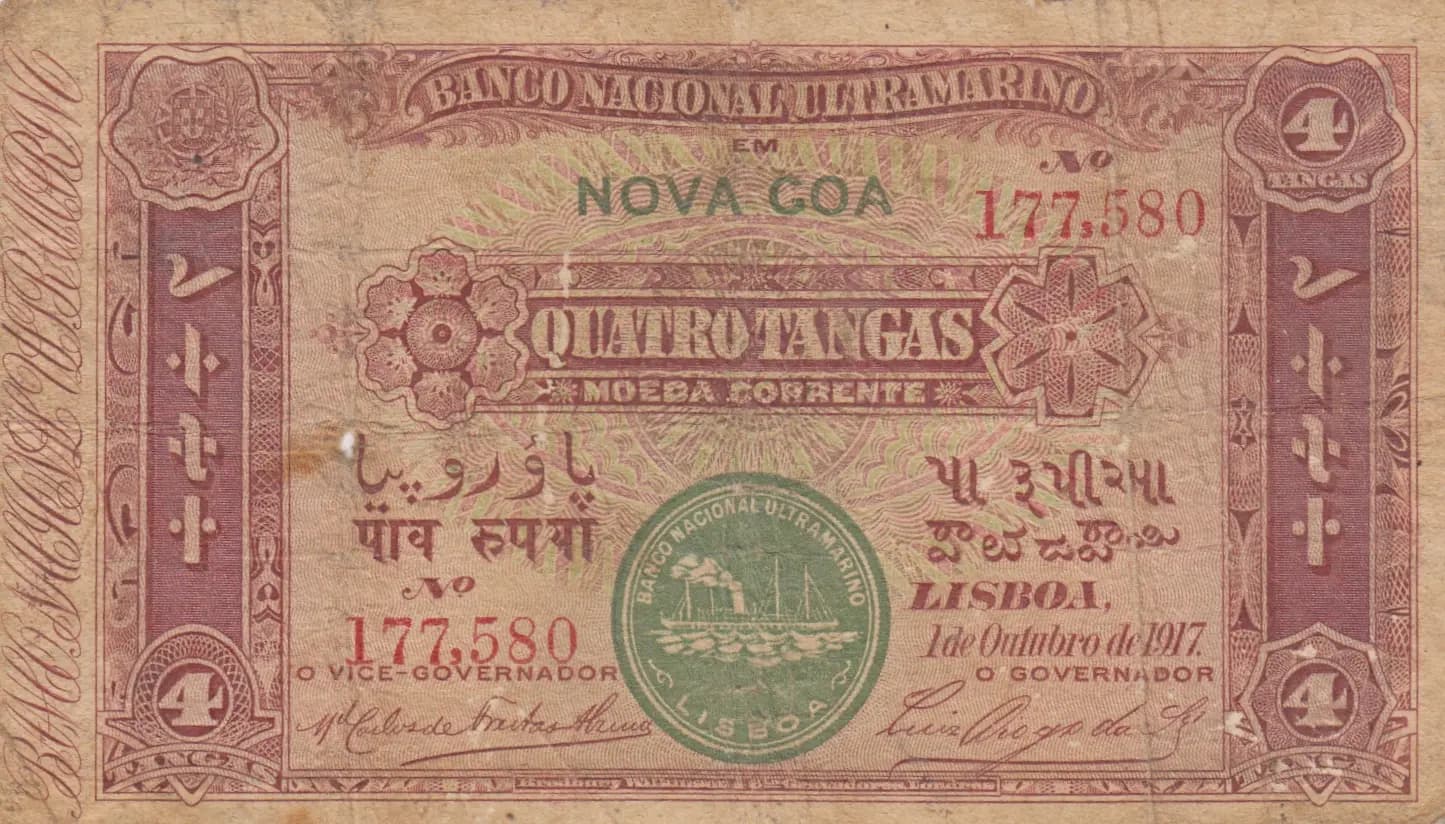
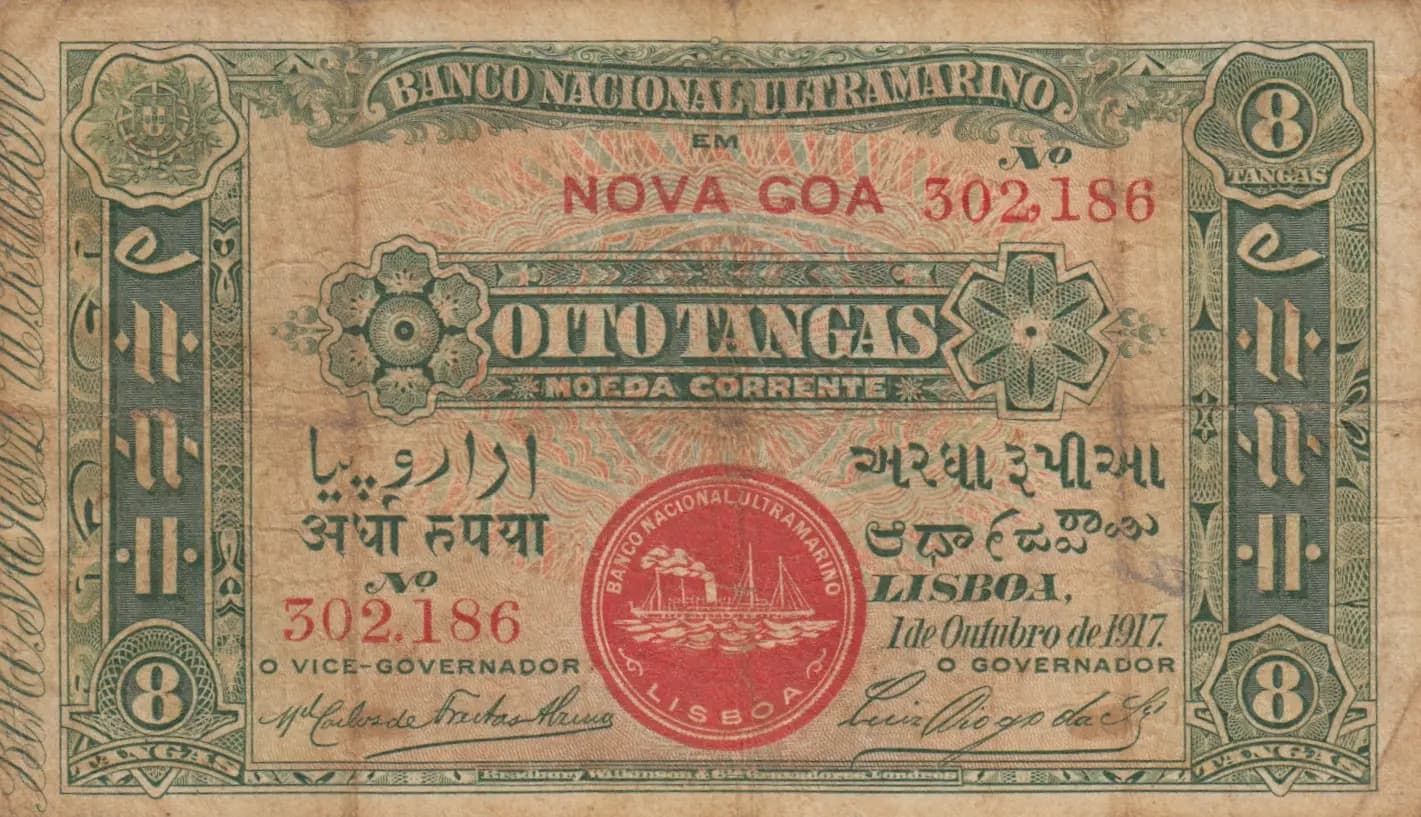
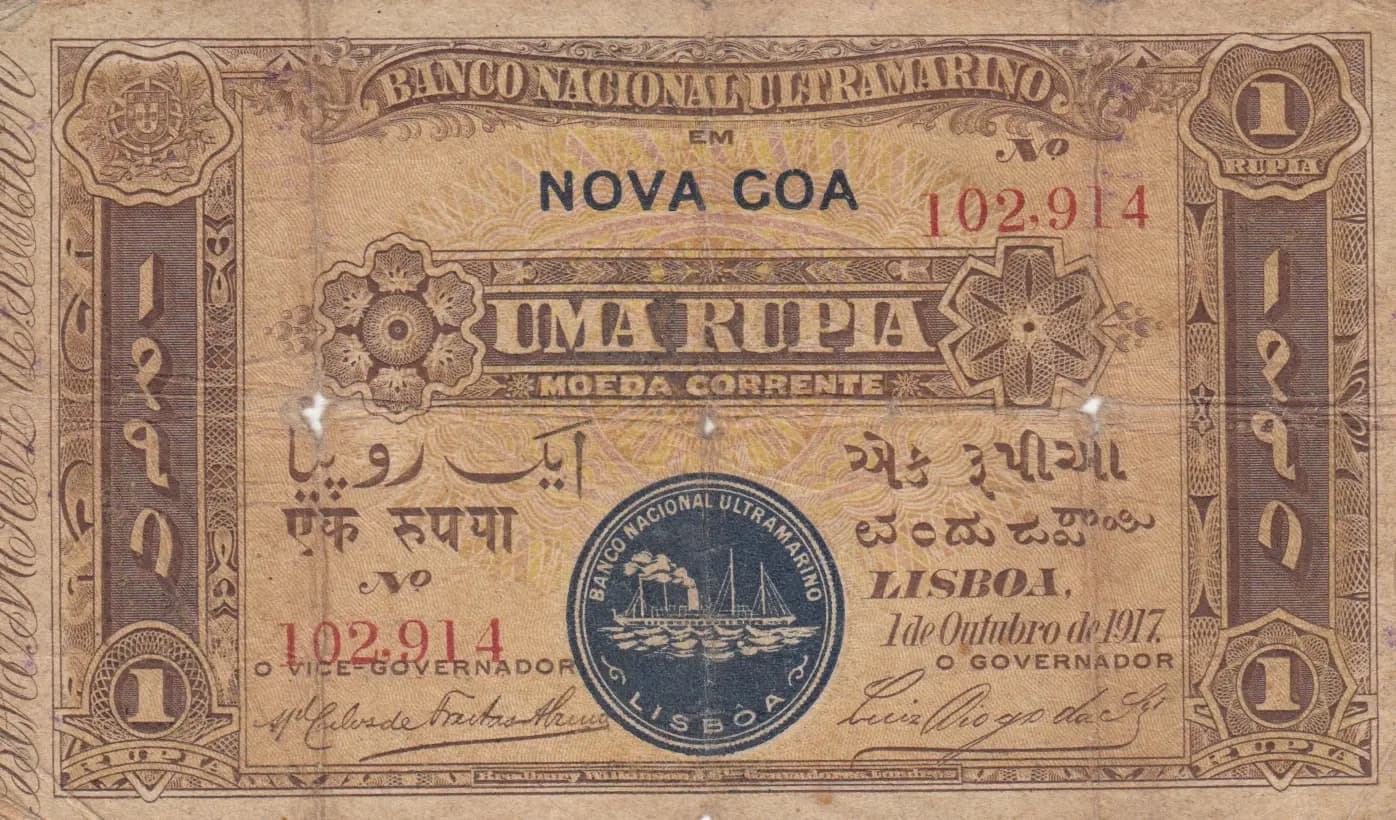
A 1 Rupia banknote issued by Banco Nacional Ultramarino on 1 October 1917, representing Portuguese India's colonial currency. The note features an ornate design with the bank's characteristic sailing ship emblem in a central circular seal, surrounded by decorative borders in brown and tan tones. This example exhibits heavy aging with significant foxing, staining, and moisture damage throughout, consistent with extended circulation in a tropical climate, though it remains a representative specimen of early 20th-century Portuguese colonial currency.
Common. The 1 Rupia denomination was the standard circulating denomination throughout Portuguese India's final decades and was produced in substantial quantities by Banco Nacional Ultramarino. No evidence suggests a limited print run or premature recall. This specific note, while collectible as a specimen of Portuguese colonial numismatics, is not scarce in the marketplace; VG-condition examples regularly appear in auctions and dealer listings at modest valuations typical of common colonial issues.
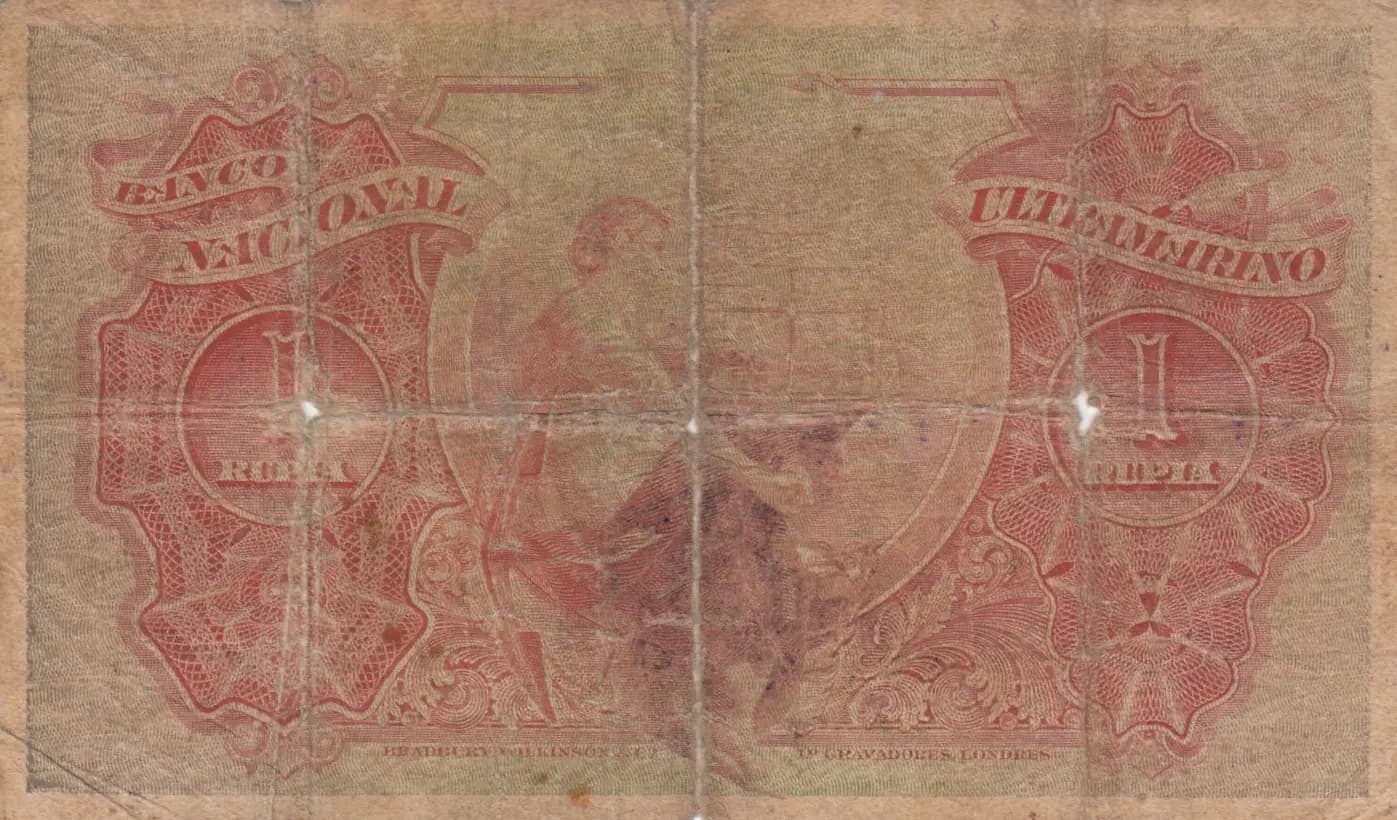
This note was issued during the final decade of Portuguese colonial rule in India (which ended in 1961) and reflects the multicultural administration of Portuguese India, with text presented in Portuguese alongside regional Indian languages (Hindi, Gujarati, and Kannada). The sailing ship depicted in the central seal represents Portugal's historical maritime dominance and trading heritage in Asia, while the heraldic shields on the reverse bearing 'NACIONAL' and 'ULTRAMARINO' emphasize the official status of Banco Nacional Ultramarino as the state-authorized currency issuer for Portugal's overseas territories.
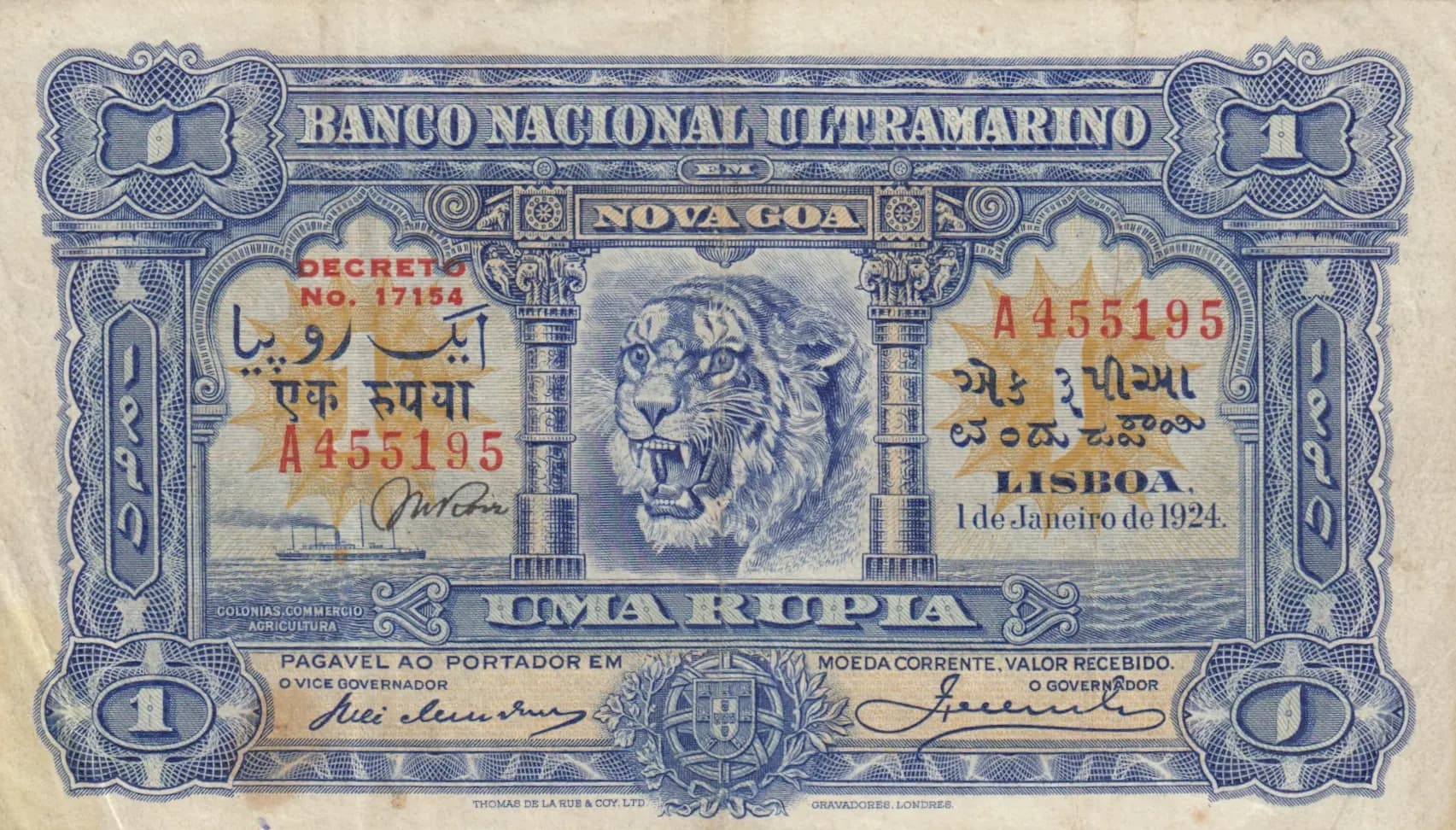
The front features an ornate rectangular design dominated by a centralized circular seal containing a sailing ship, representing the Portuguese maritime tradition and Banco Nacional Ultramarino's emblem. The sailing ship symbolizes Portugal's Age of Discovery and colonial commercial activities. Decorative corner ornaments display the numeral '1' integrated into floral and geometric patterns in brown and red tones. The denomination is clearly marked in Portuguese ('UMA RUPIA') as well as in three major Indian regional languages, reflecting the note's circulation across Portuguese India's diverse population. The back displays a symmetrical heraldic design featuring two prominent coats of arms with shields and crowns, labeled 'NACIONAL' (left) and 'ULTRAMARINO' (right), connected by elaborate scrollwork and flourishes, emphasizing the institutional authority of the issuing bank.
FRONT SIDE: 'BANCO NACIONAL ULTRAMARINO' (National Overseas Bank), 'EM NOVA GOA' (In New Goa), 'UMA RUPIA' (One Rupee), 'MOEDA CORRENTE' (Current Currency), 'एक रुपया' (Hindi: One Rupee), 'એક રુપિયા' (Gujarati: One Rupee), 'ಒಂದು ರೂಪಾಯಿ' (Kannada: One Rupee), 'LISBOA' (Lisbon), '1de Outubro de 1917' (1st of October 1917), 'O GOVERNADOR' (The Governor), Serial Number: 102914. BACK SIDE: 'NACIONAL' (National), 'ULTRAMARINO' (Overseas), 'RUPIA' (Rupee).
Engraved intaglio printing, evidenced by the intricate line work, detailed border patterns, and fine serif typography visible in the inscriptions. The multiple security elements including the circular emblem seal, heraldic shields, and ornamental borders are characteristic of high-security engraved banknote production typical of early 20th-century Portuguese colonial currency. The fineness of detail in the sailing ship depiction and the scrollwork indicates work by a skilled security printer, likely one of the European security printers contracted by Banco Nacional Ultramarino.
This note is dated 1 October 1917 and bears serial number 102914. The signature block indicates 'O GOVERNADOR' (The Governor), though the specific governor's signature is not clearly legible in the image due to aging. Portuguese India 1 Rupia notes from this period may exist with variations in serial number ranges and gubernatorial signatures corresponding to different governors' tenures. The multilingual format (Portuguese, Hindi, Gujarati, Kannada) remained consistent across this denomination's printing run.