5 rupias 1938
About This Note
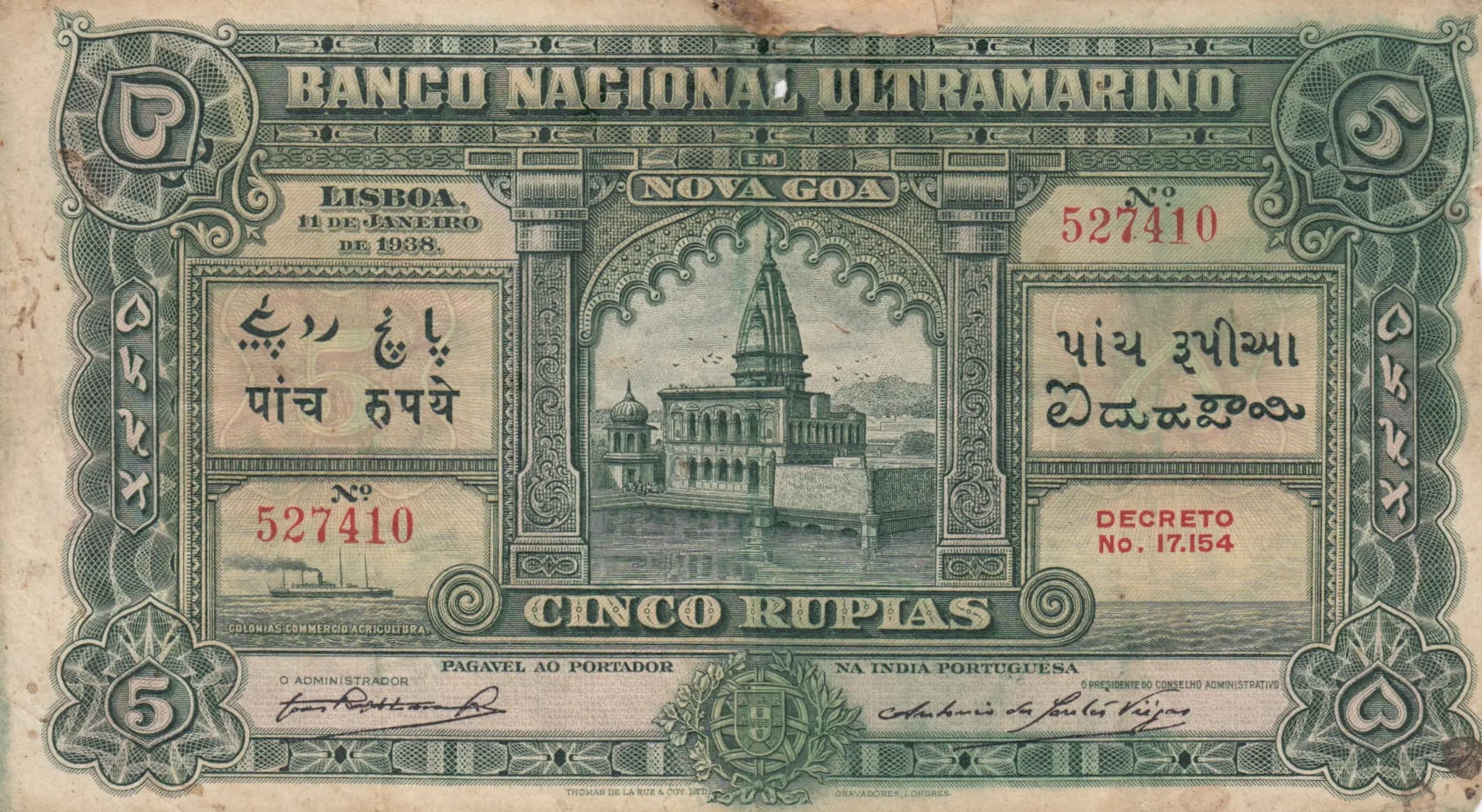
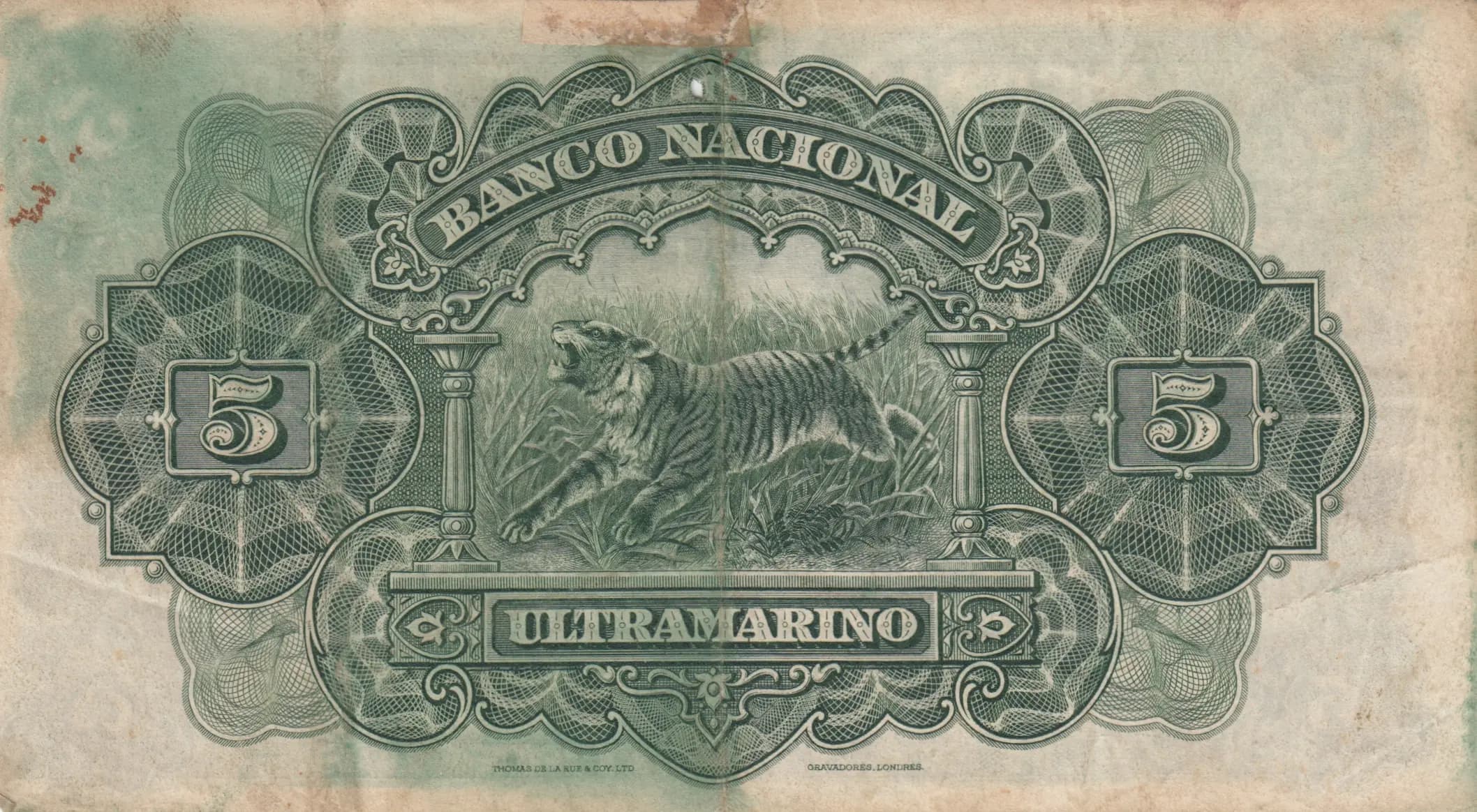
A scarce 1938 Portuguese India 5 Rupias note issued by Banco Nacional Ultramarino, featuring an elegant design of a Hindu temple with gopuram architecture and its water reflection on the obverse, with a prowling tiger on the reverse. The note exhibits period-appropriate aging with visible creasing, foxing, and discoloration consistent with its Fair condition grade, making it a historically significant example of colonial Indian currency.
Uncommon. Portuguese India notes from the 1938 series see moderate collector demand but relatively limited supply compared to earlier or later issues. The specific variety with the temple and tiger motifs on the 5 Rupias denomination had modest print runs typical of Portuguese colonial currency. Fair condition examples are more commonly encountered than higher grades, as most circulated specimens show the aging and wear visible in this note. While not scarce enough to be considered rare, this note is not common in the broader numismatic market and would appeal to specialists in Portuguese colonial currency and Indian numismatic history.
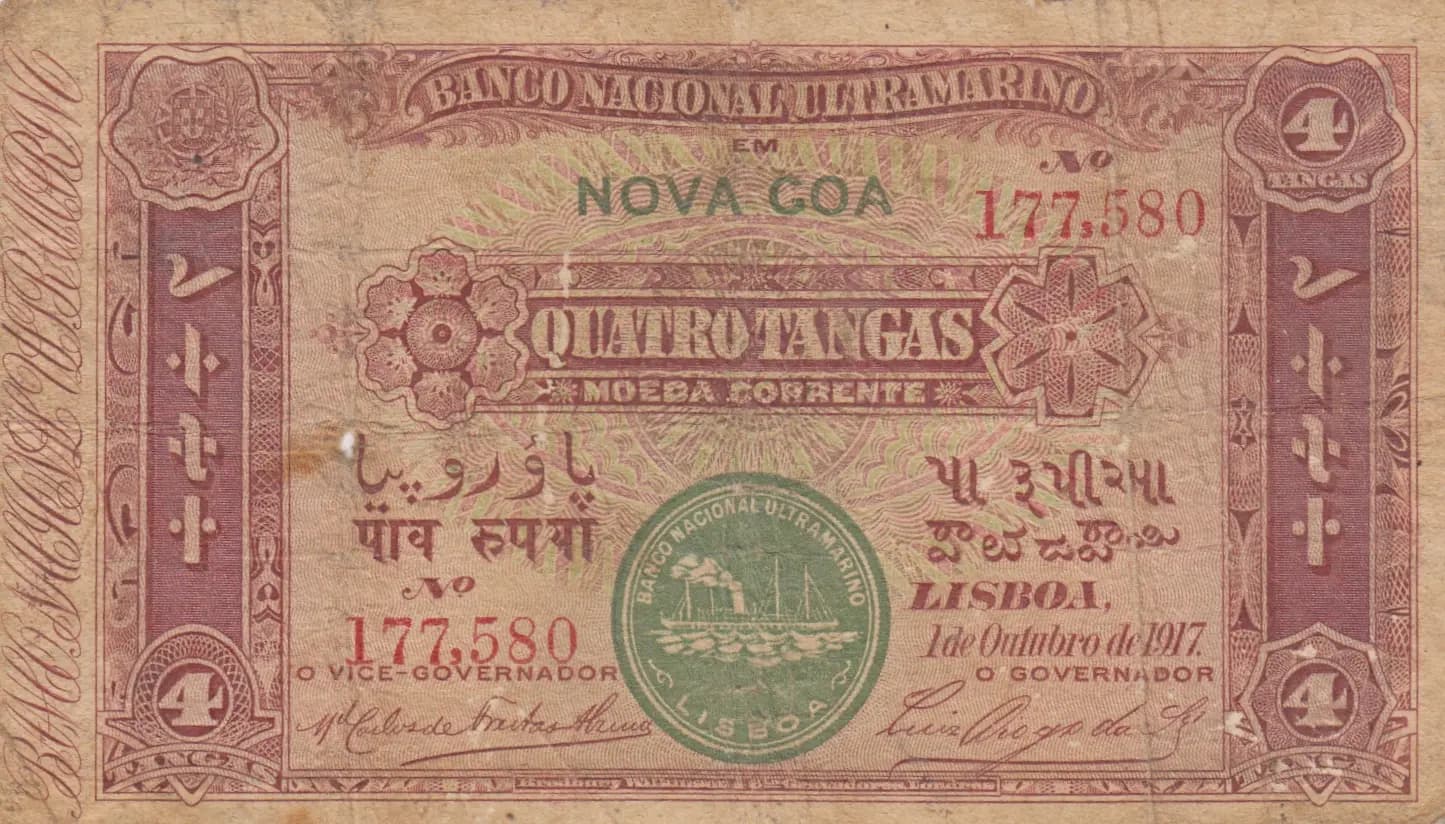
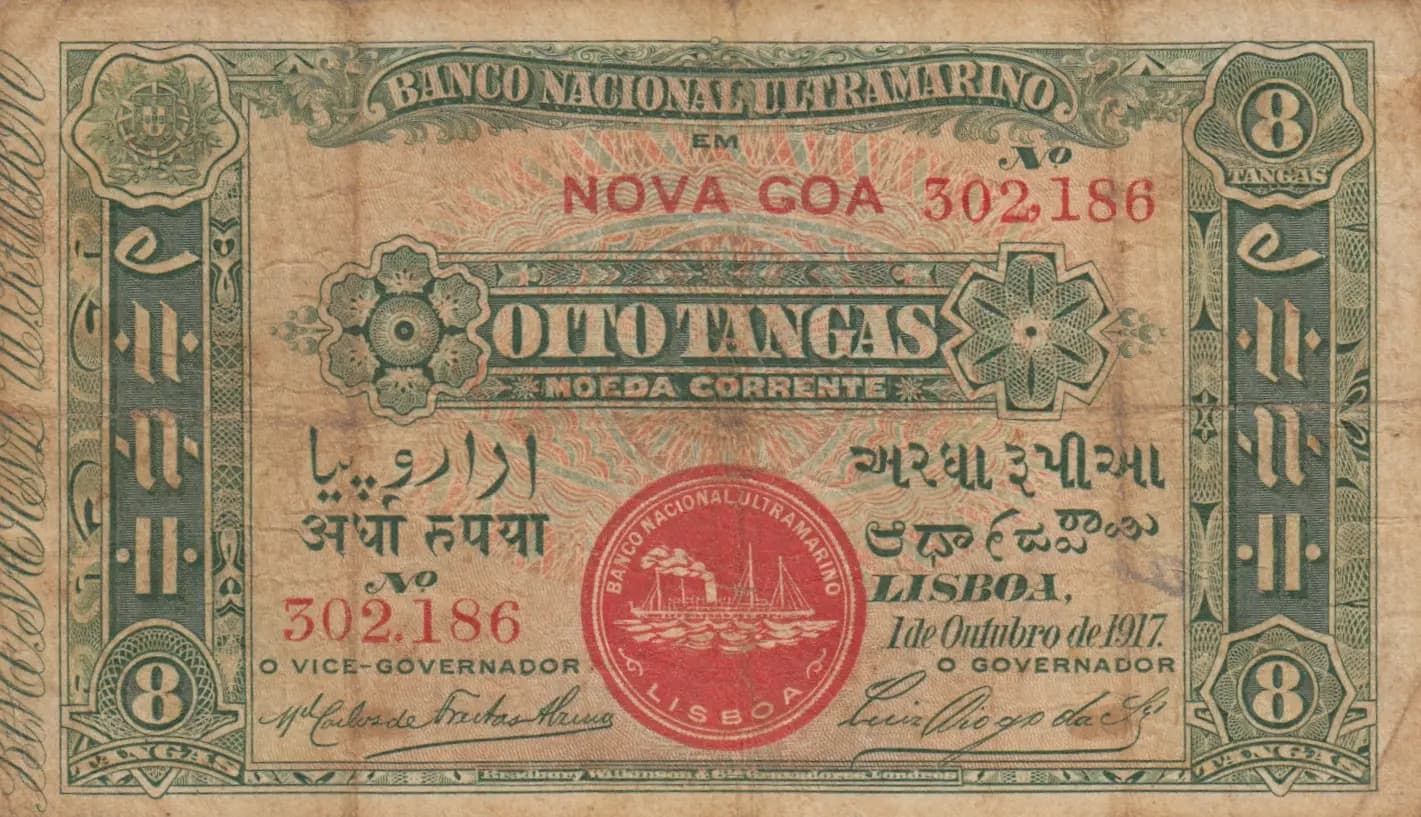
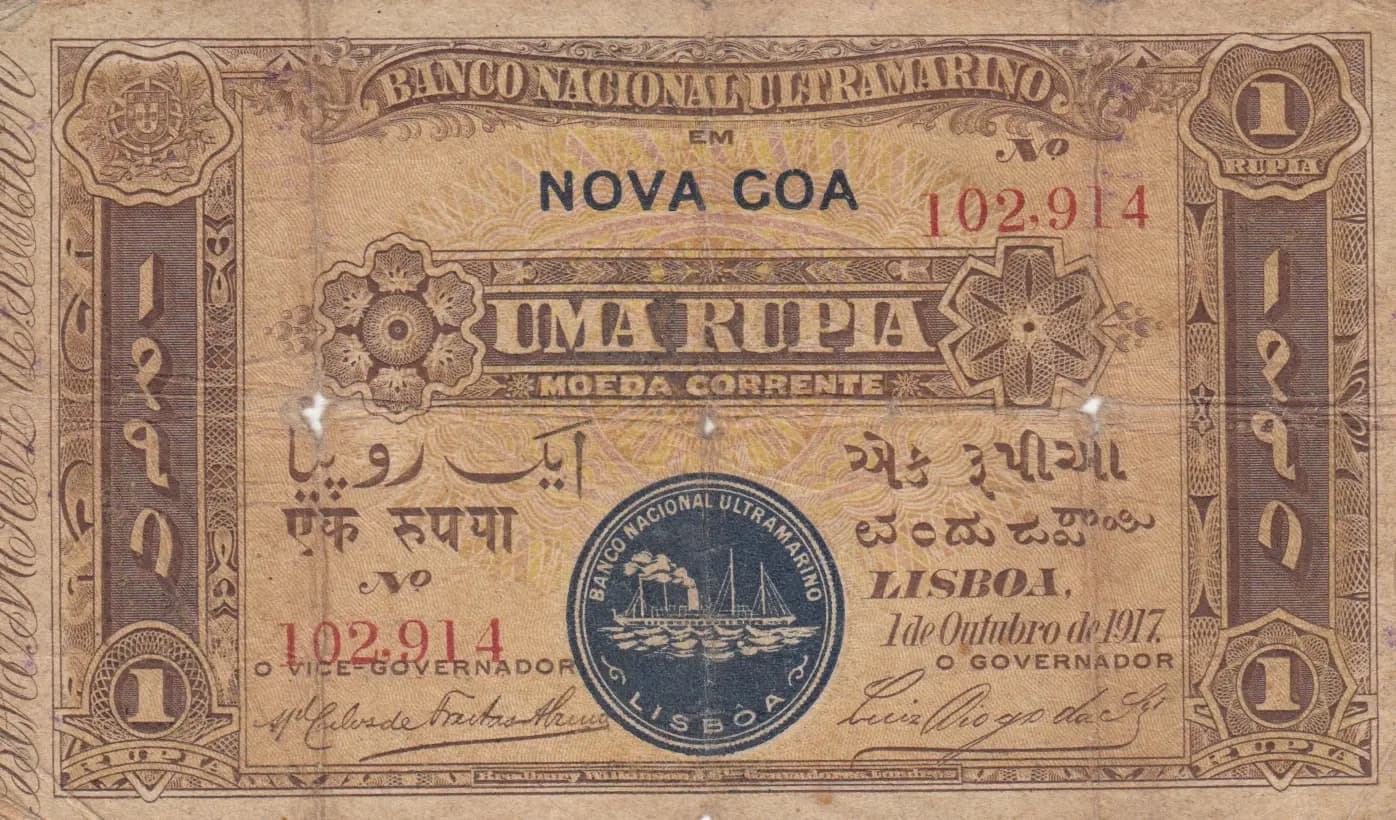
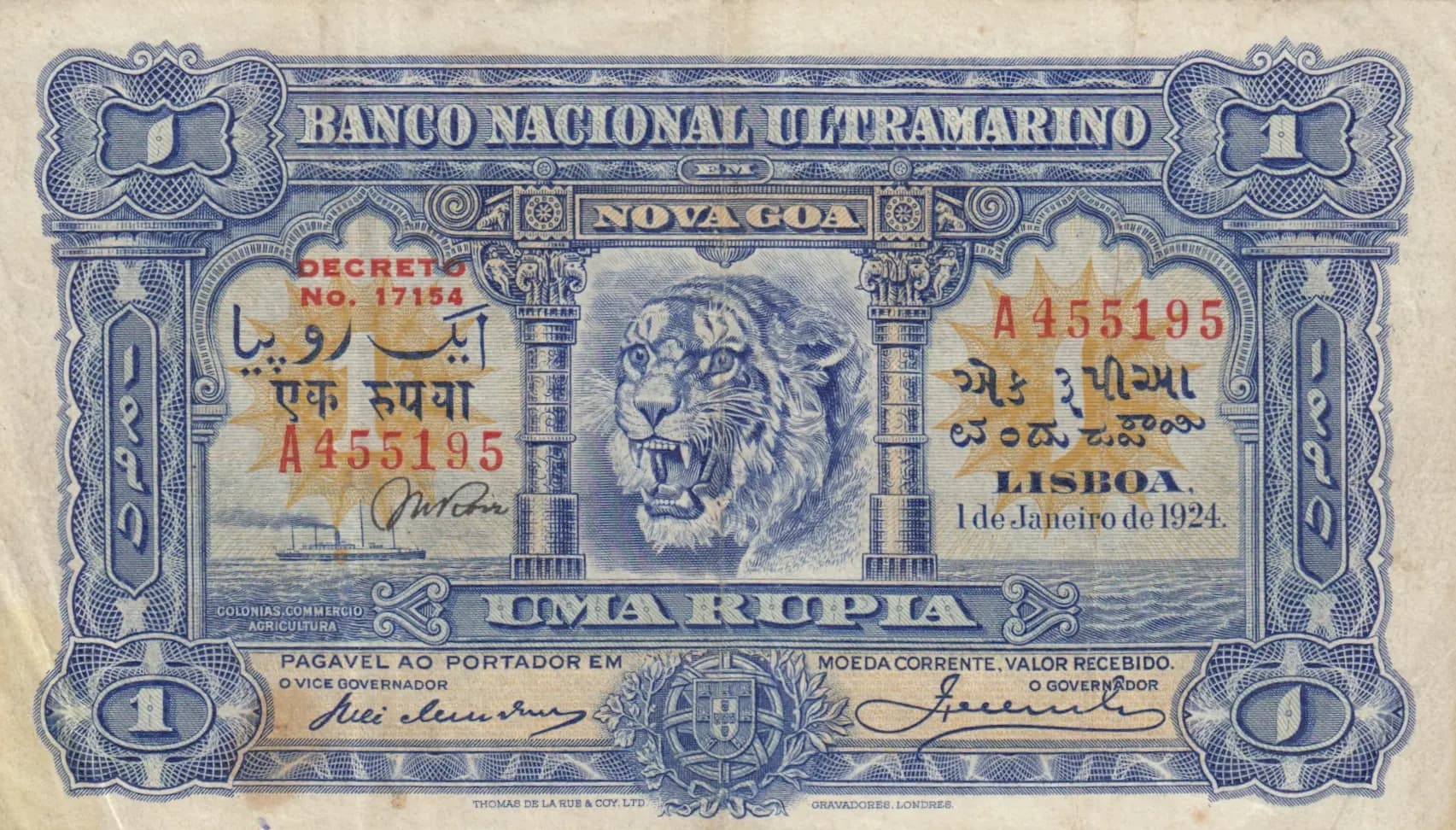
Issued on 11 January 1938 under Decree No. 17,154 by Portugal's Banco Nacional Ultramarino in New Goa, this note represents Portuguese India's monetary system during the late colonial period. The deliberate inclusion of the Hindu temple gopuram and tiger as central motifs reflects Portugal's effort to incorporate local Indian cultural and wildlife imagery into currency while maintaining Portuguese administrative authority, as evidenced by the prominent Portuguese inscriptions and administrative signatures. The multilingual text in Portuguese, Hindi Devanagari, Urdu/Persian, and Kannada scripts demonstrates the cosmopolitan nature of Portuguese India's commerce and administration.
The obverse features a prominent Hindu temple in the gopuram architectural style (characteristic of South Indian temples), depicted in precise engraving with its distinctive tall spire reflected in water below, evoking the sacred Dravidian temple tradition of the Deccan region. A small sailing vessel appears in the lower left, suggesting maritime commerce. The reverse displays a meticulously engraved tiger in a prowling or attacking posture, rendered with fine detail to the fur texture and musculature, set against vegetation. Both sides are framed by ornate decorative borders incorporating scrollwork, geometric patterns, and floral motifs typical of high-quality currency engraving. The corners feature ornamental frames containing the denomination numeral '5'. A Portuguese shield and crown coat of arms appears at the bottom center of the obverse, asserting colonial sovereignty. The overall design integrates Portuguese administrative authority with Indian cultural and natural symbolism.
FRONT SIDE: 'BANCO NACIONAL ULTRAMARINO' (Ultramarino National Bank) / 'LISBOA' (Lisbon) / '11 DE JANEIRO DE 1938' (11 January 1938) / 'EM NOVA GOA' (In New Goa) / 'CINCO RUPIAS' (Five Rupees) / 'पाँच रुपये' (Five Rupees in Hindi) / Urdu/Persian script: Five Rupees / Kannada: 'ಐಿ ರುಪಿಯ' (Five Rupees) / 'DECRETO No. 17.154' (Decree No. 17,154) / 'PAGAVEL AO PORTADOR' (Payable to Bearer) / 'O ADMINISTRADOR' (The Administrator) / 'NA INDIA PORTUGUESA' (In Portuguese India) / 'O PRESIDENTE DO CONSELHO ADMINISTRATIVO' (The President of the Administrative Council) / 'COLONIAS COMMERCIO AGRICULTURA' (Colonies Commerce Agriculture) / Serial number: 527410. BACK SIDE: 'BANCO NACIONAL' (National Bank) / 'ULTRAMARINO' (Ultramarino/Overseas) / '5' (denomination numeral).
Intaglio engraving (line engraving), the premium security printing method employed by major European currency printers of the era. The fine line work visible throughout the borders, the detailed rendering of the temple architecture, tiger fur texture, and the intricate geometric patterns are characteristic of steel plate engraving. The note was printed by Banco Nacional Ultramarino's printing facility or a contracted European security printer specializing in colonial currency. The multiple overlaid color printing (green, black, and red serial numbers on cream background) indicates a multi-pass intaglio process.
Serial number 527410 in red ink on front. Date of issue: 11 January 1938. Issued in New Goa (Goa Velha was the historic capital; printing in 'Nova Goa'/Panjim). The specific signature block corresponds to the 1938 administrative configuration of the Banco Nacional Ultramarino in Portuguese India. No overprints or significant varieties are visible on this specimen. This represents the standard circulation issue for the 5 Rupias denomination under the 1938 decree.