100 escudos 1959
About This Note
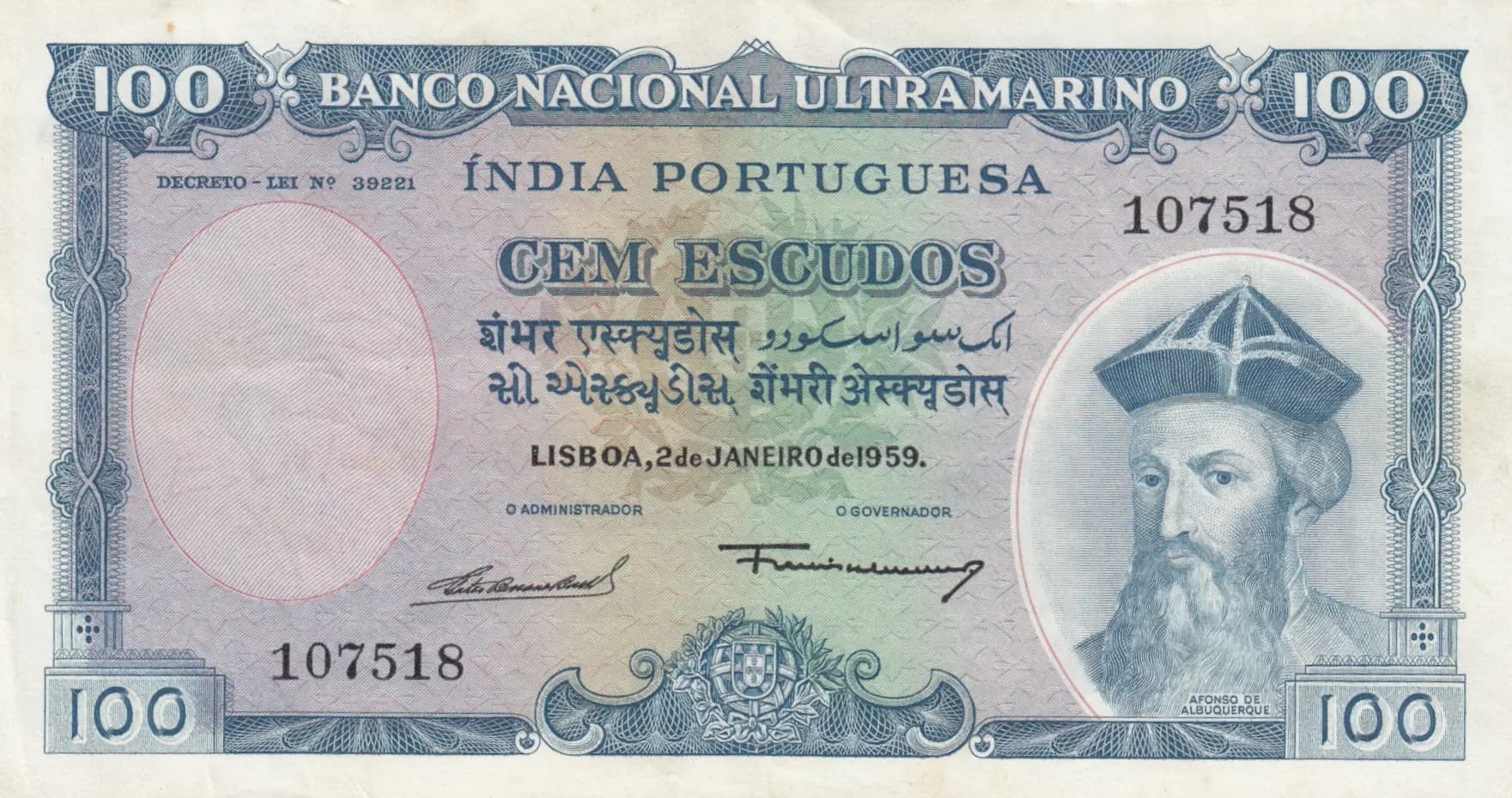
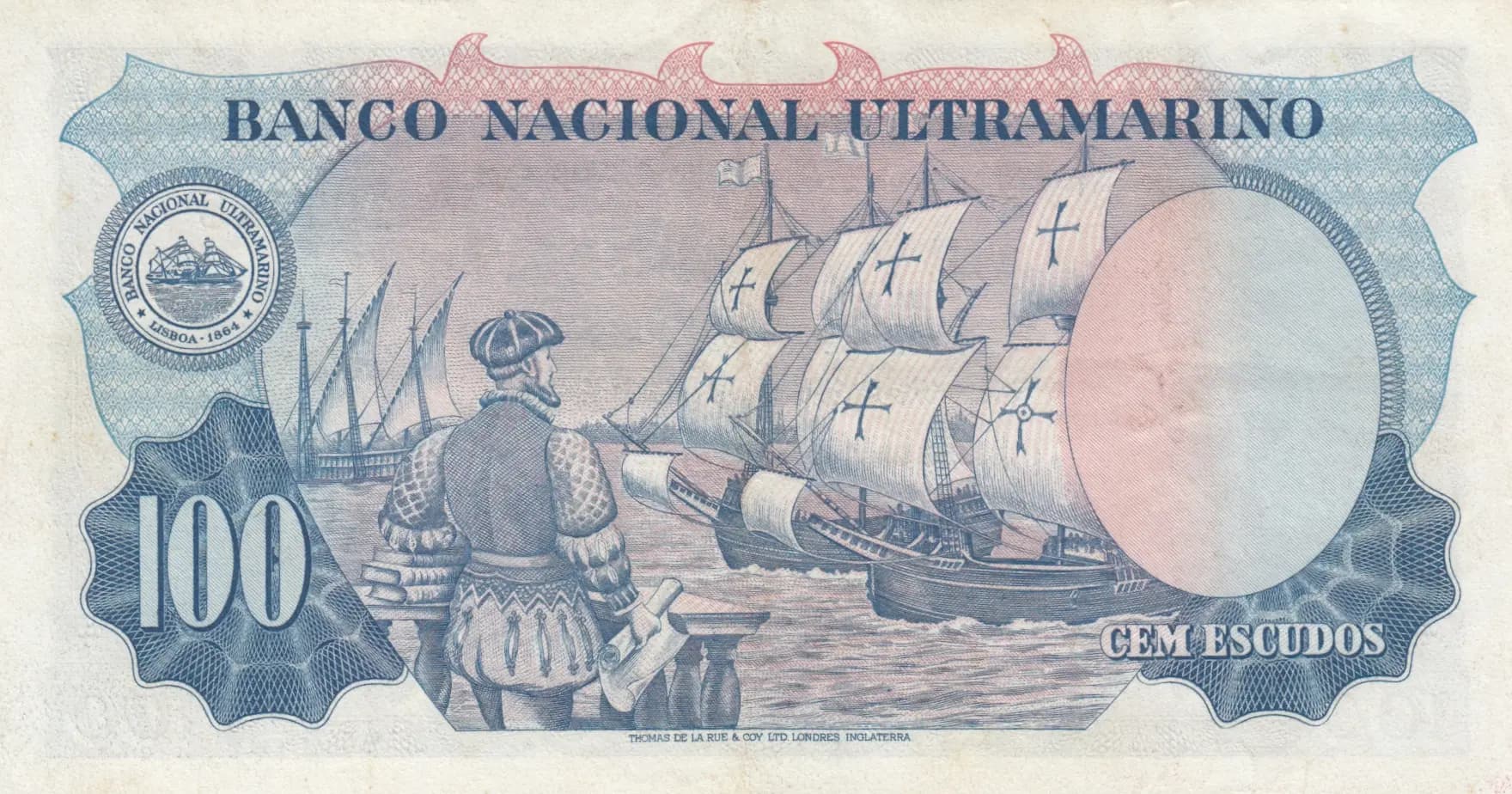
This is a VF-grade 100 Escudos banknote from Portuguese India, issued by Banco Nacional Ultramarino on January 2, 1959, under Decree-Law No. 39821. The note features a bearded portrait in profile within a circular frame on the front, complemented by a striking back design depicting a Portuguese maritime explorer overseeing period caravels with Cross of Christ sails, reflecting Portugal's Age of Discovery heritage. The note displays excellent preservation with minimal wear, vibrant blue-gray coloring with pink and cream toning, ornate borders, and security features including watermark areas, making it an attractive example of late-colonial Portuguese currency.
Common. The 100 Escudos denomination from Portuguese India's 1959 issue represents a standard circulating banknote from a major denomination that would have been produced in substantial quantities for use in the colonial territory. No specific indicators of limited print runs, recalled issues, or exceptional scarcity are known for Pick 43. Notes from this series regularly appear in numismatic channels at moderate valuations, consistent with common-grade colonial currency.
Issued in 1959, this banknote represents Portuguese India during the final years of colonial rule, just eight years before India's independence movements forced Portuguese withdrawal in 1961. The reverse design deliberately commemorates the Portuguese maritime explorer-merchants and the caravels that established Portugal's colonial presence in India, specifically evoking the legacy of figures like Vasco da Gama. The multilingual inscriptions in Hindi, Urdu, and Portuguese reflect the complex cultural and administrative reality of the Portuguese colonial territory, attempting to bridge the European issuing authority with the local Indian population.
The front features an unidentified bearded man wearing a distinctive crown or turban-like headdress, positioned in profile facing left within a circular frame on the right side. The left side contains a large oval watermarked area with pink tinting, likely intended for an additional portrait or security watermark. The Portuguese coat of arms with cross design is centered at the bottom. The back depicts a Portuguese maritime scene from the Age of Discovery, showing a period explorer or high-ranking official in elaborate 16th-century armor and ornate dress, standing on a shoreline observing multiple Portuguese caravels with characteristic Cross of Christ (Cruz de Malta) emblazoned on their sails, emphasizing Portugal's historical maritime dominance. The Banco Nacional Ultramarino circular seal appears on the lower left, dated 'LISBOA 1857,' marking the bank's founding year. The denomination appears in all four corners on the front and in dual-language format on the back. Ornamental scrollwork and flourishes frame all borders.
FRONT: 'BANCO NACIONAL ULTRAMARINO' (National Overseas Bank); '100' and 'GEM ESCUDOS' (One Hundred Escudos); 'DECRETO - LEI Nº 39821' (Decree-Law No. 39821); 'ÍNDIA PORTUGUESA' (Portuguese India); Hindi text 'सौभर एस्कुडोस' and 'सौ एस्कुडोस' (One Hundred Escudos); Urdu/Persian script 'ایک سو اسکوڈوز' (One Hundred Escudos); 'LISBOA, 2 de JANEIRO de 1959' (Lisbon, January 2, 1959); 'O ADMINISTRADOR' (The Administrator); 'O GOVERNADOR' (The Governor); Serial number '107518'. BACK: 'BANCO NACIONAL ULTRAMARINO' (National Overseas Bank); '100' and 'CEM ESCUDOS' (One Hundred Escudos); 'THOMAS DE LA RUE & COY LTD LONDRES INGLATERRA' (Thomas De La Rue & Co Ltd London England).
Intaglio engraving (line engraving), executed by Thomas De La Rue & Co Ltd of London, England, as credited on the reverse. The fine line work visible throughout the design, the precise circular frames, ornamental borders, and detailed portrait rendering are characteristic of high-quality intaglio banknote production of the mid-20th century. The security features include watermark areas and the fine engraved detail work typical of De La Rue's production standards.
This note is dated January 2, 1959, and bears the serial number 107518. Varieties for this Pick number may include different signature combinations for 'O ADMINISTRADOR' and 'O GOVERNADOR' positions, and potentially different serial number prefixes. The consistent use of multilingual inscriptions (Portuguese, Hindi, and Urdu) appears standard for this issue to accommodate the diverse population of Portuguese India. Confirmation of specific signature varieties would require comparison with additional examples of this Pick number.