50 escudos 1964
About This Note
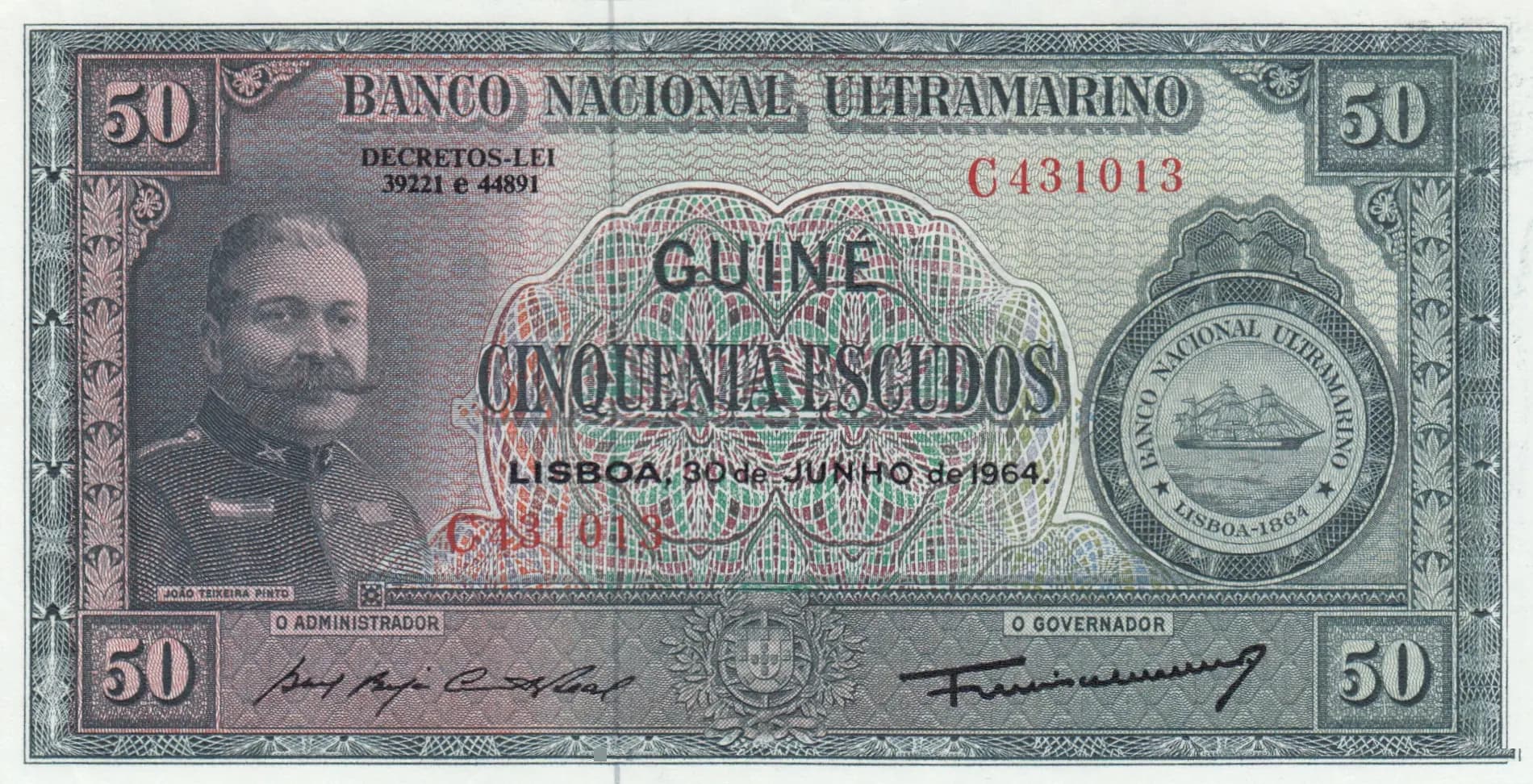
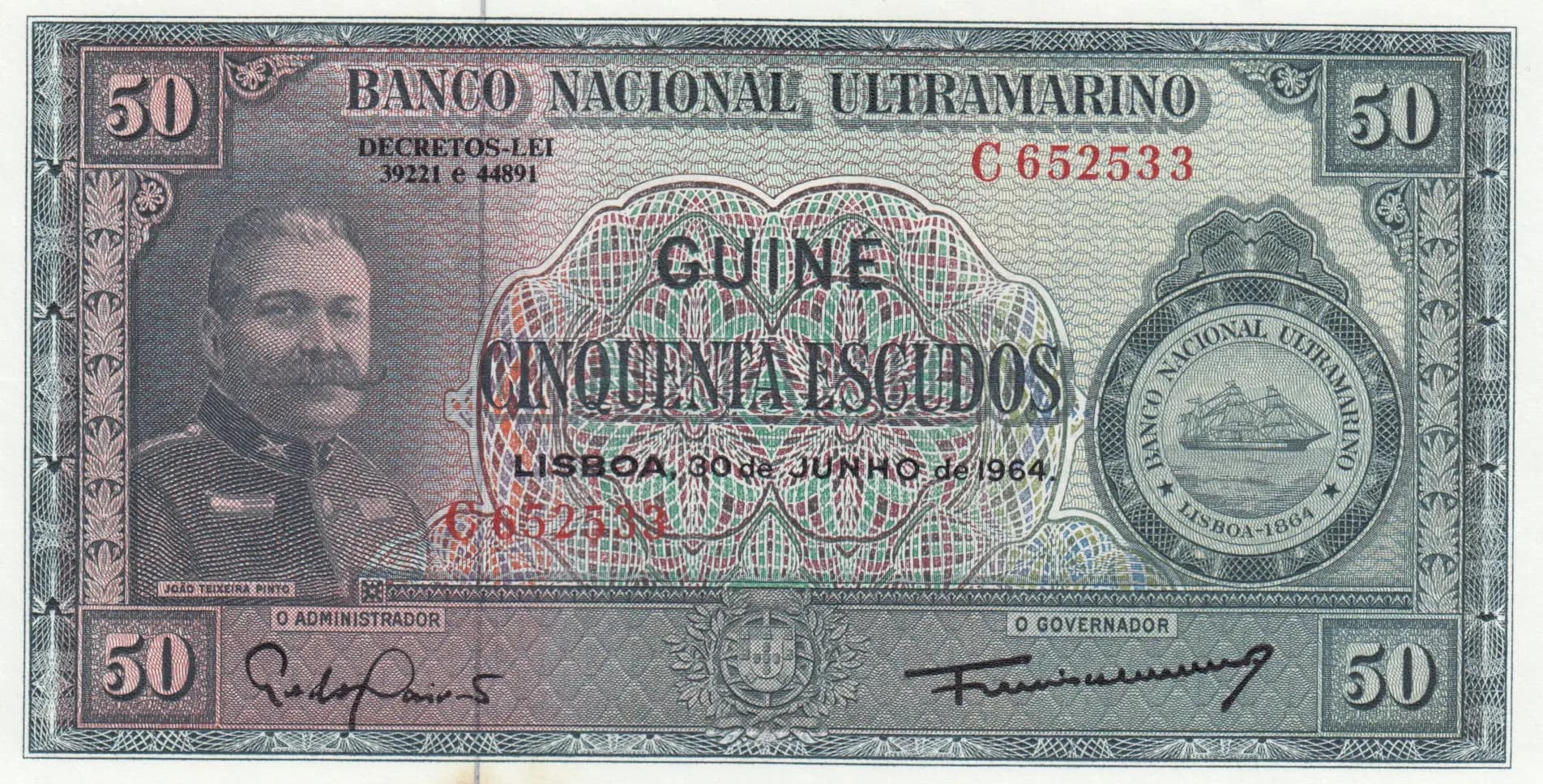
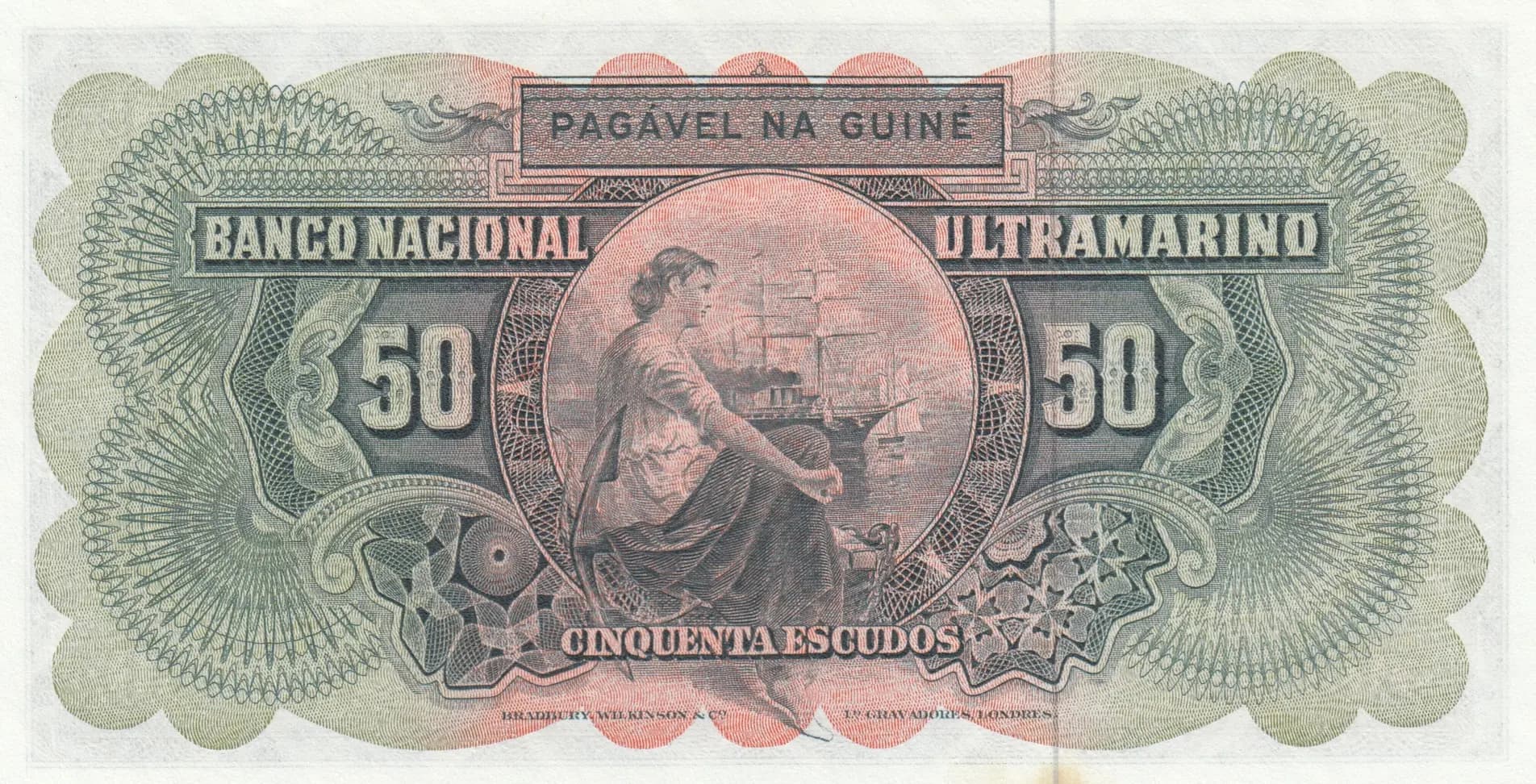
A handsome 50 Escudos banknote from Portuguese Guinea issued in 1964 by the Banco Nacional Ultramarino, presented in uncirculated condition with crisp, sharp printing throughout. The note features an elegant pink and green color scheme with a portrait of a bearded gentleman on the obverse and a classical allegorical female figure on the reverse, both rendered in fine engraved detail. This is a particularly collectible example of Portuguese colonial currency, representing the currency system used in Guinea during the final years of Portuguese colonial rule.
Common. The 50 Escudos P-40 was issued in substantial quantities by the Banco Nacional Ultramarino during 1964 and circulated throughout Portuguese Guinea until independence in 1974. While Portuguese colonial notes have developed a collector following, this denomination and issue remain relatively available in the marketplace, particularly in lower grades. Uncirculated examples command modest premiums but are not scarce.
This 1964 note was issued during the twilight of the Portuguese colonial period in Guinea, just as nationalist movements were gaining momentum that would lead to independence in 1974. The Banco Nacional Ultramarino, a venerable Portuguese financial institution, was responsible for issuing currency across Portugal's African territories, and this denomination represents the escudo system that governed colonial trade and commerce. The note's classical allegorical imagery reflects Portugal's emphasis on presenting itself as a civilized European power administering overseas territories.
The obverse features a portrait of a distinguished bearded gentleman in formal dress, positioned on the left side within an ornate decorative cartouche. The denomination '50' appears in all four corners. A circular seal of the Banco Nacional Ultramarino incorporating ship imagery appears on the right side, reflecting the bank's maritime heritage and role in overseas trade. The reverse displays a classical allegorical female figure in flowing robes, seated or reclining within an ornate circular frame, symbolizing Portugal's classical pretensions and administrative authority. Winged heraldic elements flank the central vignette on both sides. The note is bordered throughout with fine ornamental patterns typical of high-security currency design of the period.
FRONT SIDE: 'Banco Nacional Ultramarino' (National Ultramarino Bank); 'Decretos-Lei 59221 é 44891' (Decree-Laws 59221 and 44891); 'Cinquenta Escudos' (Fifty Escudos); 'Lisboa 30 de Julho 1964' (Lisbon 30 July 1964); 'O Administrador' (The Administrator); 'O Governador' (The Governor); 'João Teixeira Pinto' (artist/engraver); Serial number 'C 652533'. BACK SIDE: 'Pagável na Guiné' (Payable in Guinea); 'Banco Nacional Ultramarino' (National Ultramarino Bank); 'Cinquenta Escudos' (Fifty Escudos); 'Hambury, Wilkinson & Co, Engravers, London' (printer and engraver information).
Intaglio engraving (recess printing), executed by the London-based security printer Hambury, Wilkinson & Co. The fine line work, intricate stippling, and decorative patterns throughout are characteristic of traditional banknote engraving. Multiple color printing using pink, green, gray, and black inks demonstrates the sophisticated multi-plate production techniques employed for colonial currency.
PMG recognizes two varieties for Pick 40: P-40a (standard issue) and P-40s (specimen note with overprint). The examined note is P-40a, the regular circulation variety, as evidenced by the standard serial number 'C 652533' and absence of specimen markings. The issue date of 30 July 1964 and the decree-law references (59221 and 44891) are consistent with the primary release of this note.