50 escudos 1947
About This Note
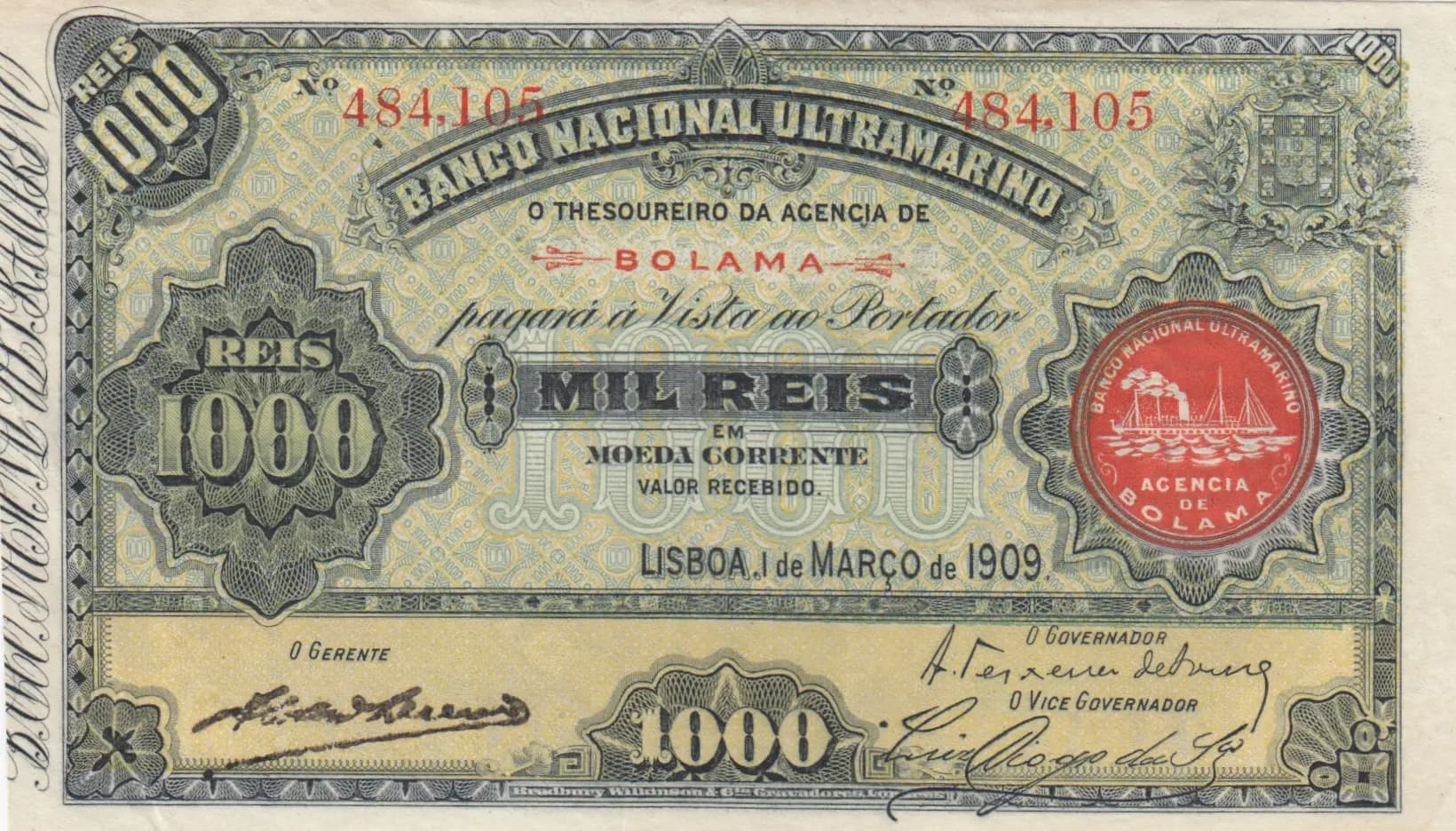
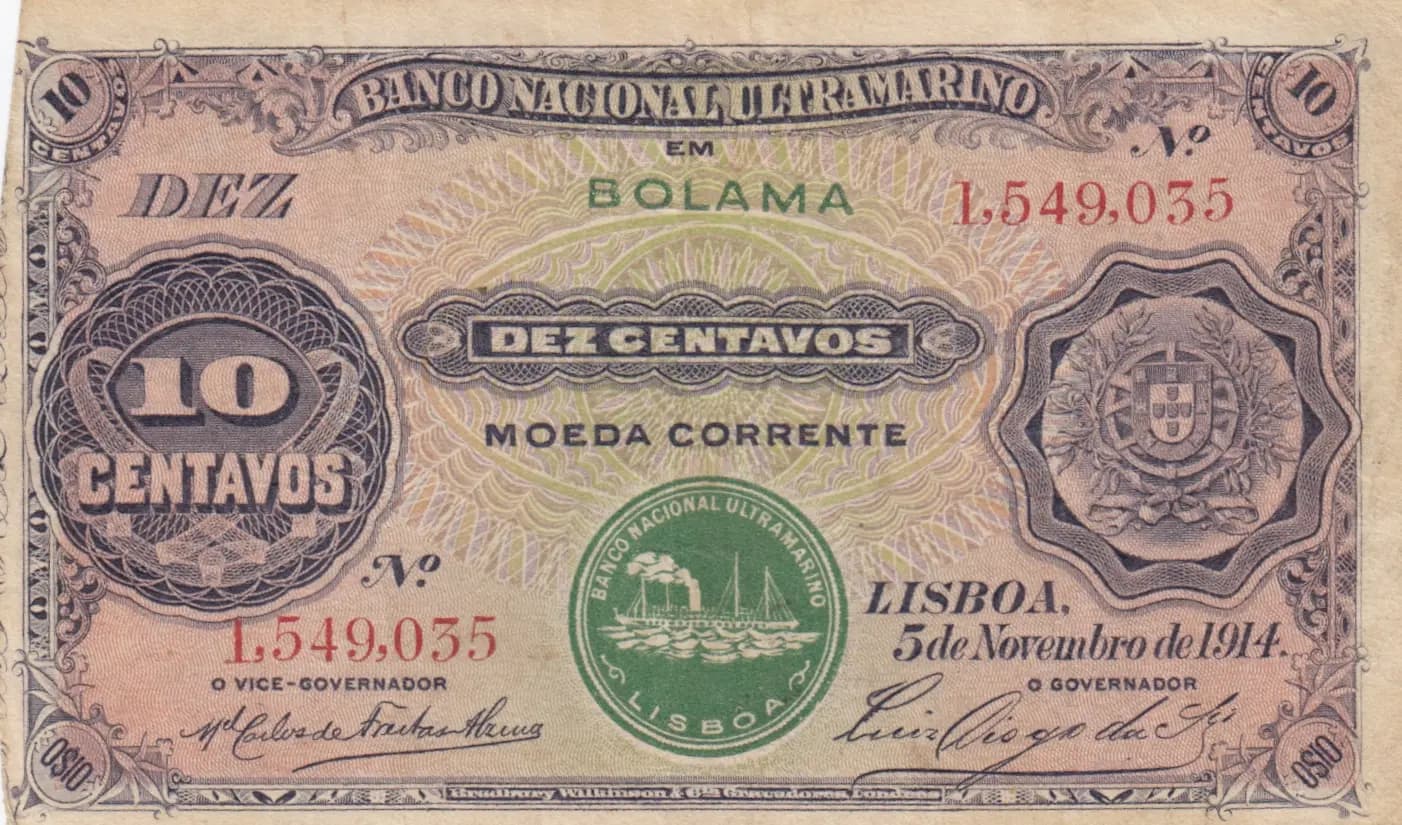
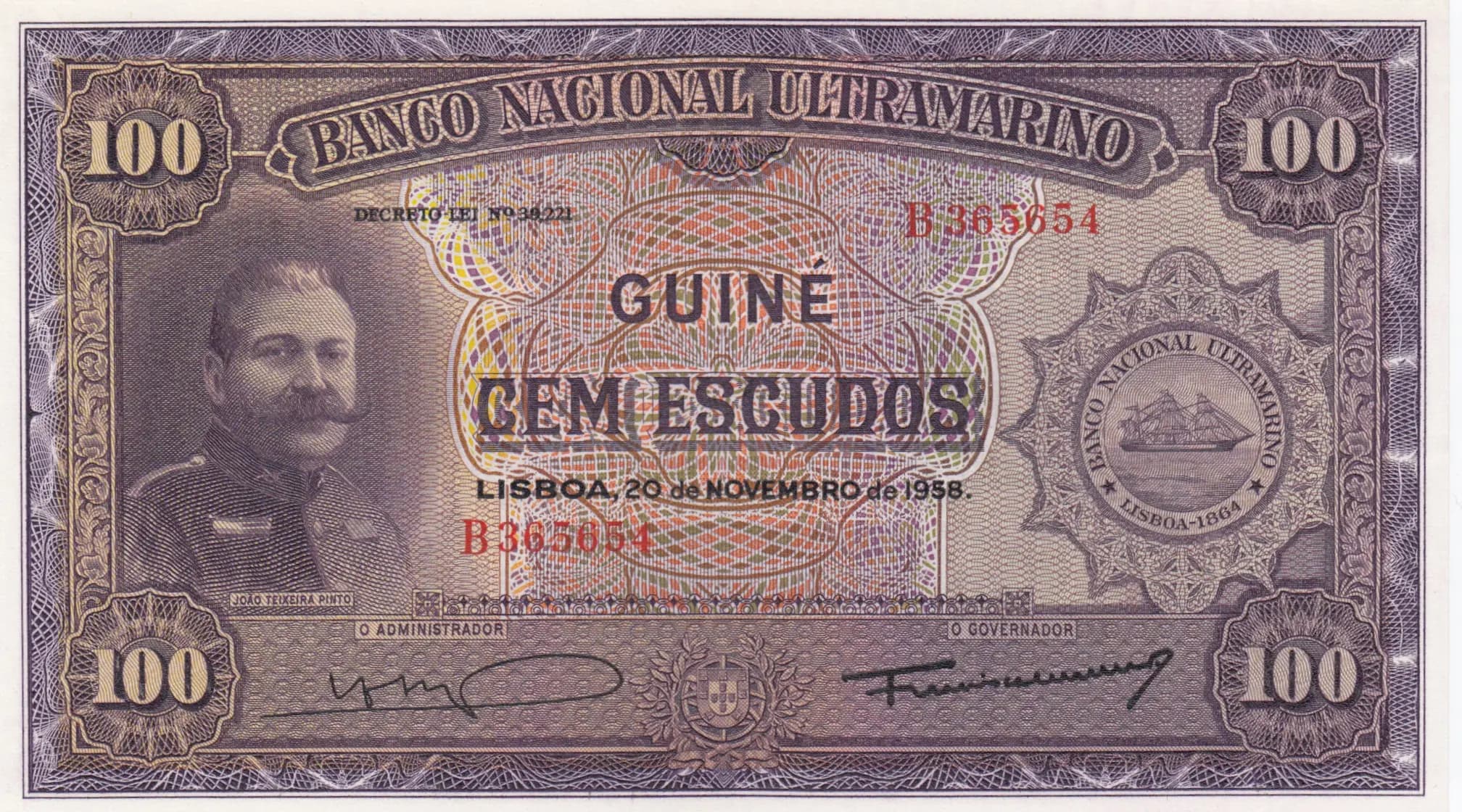
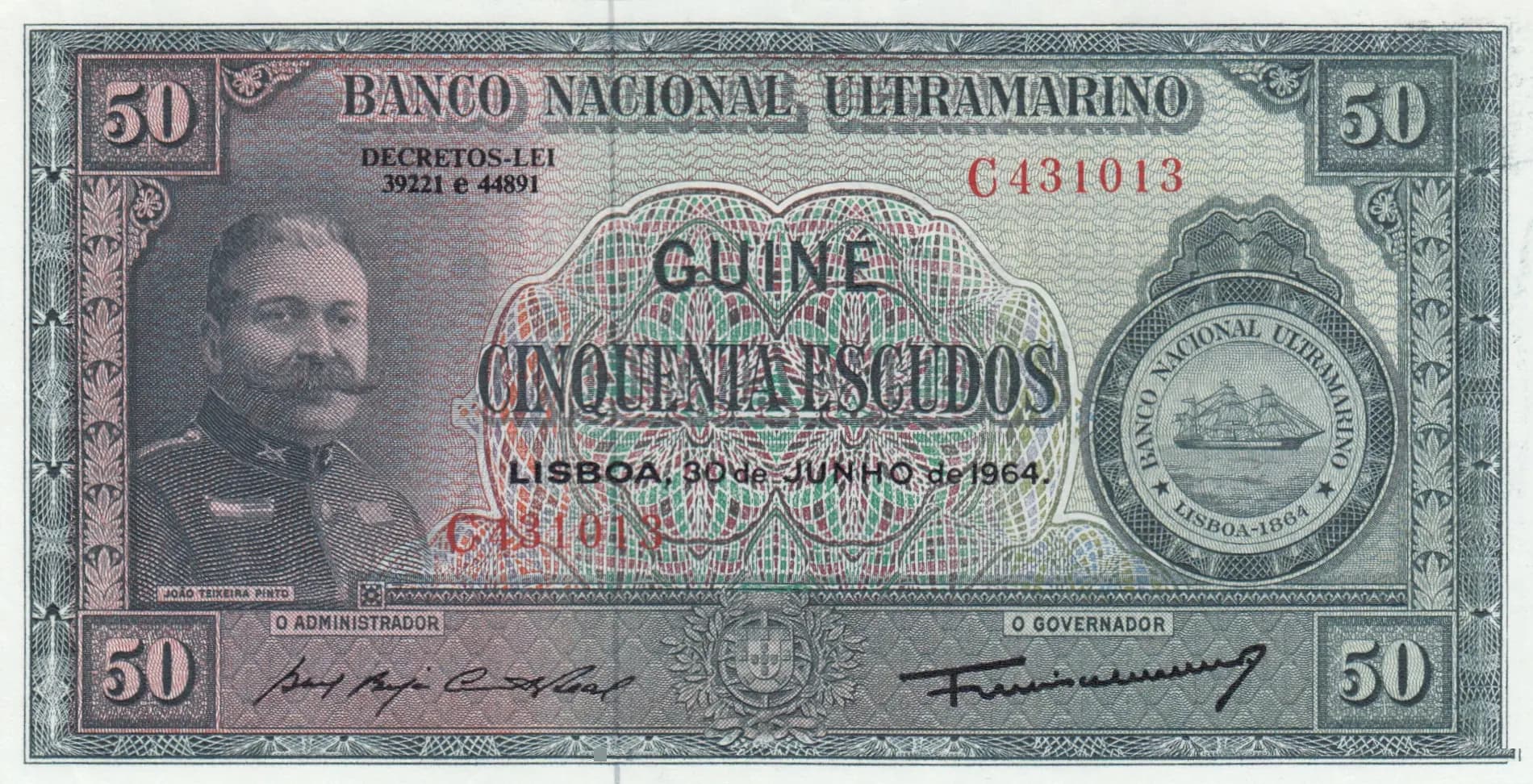
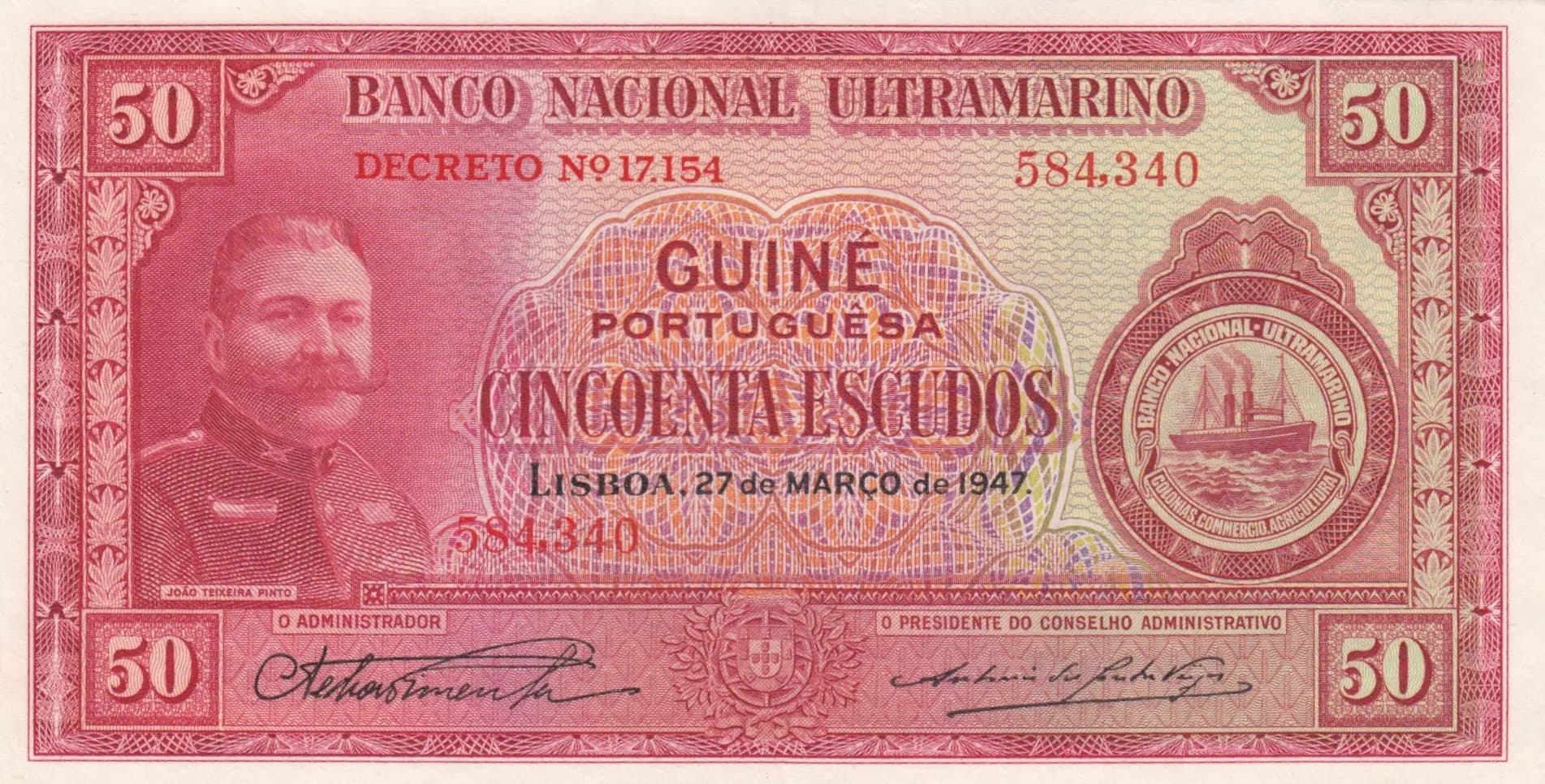
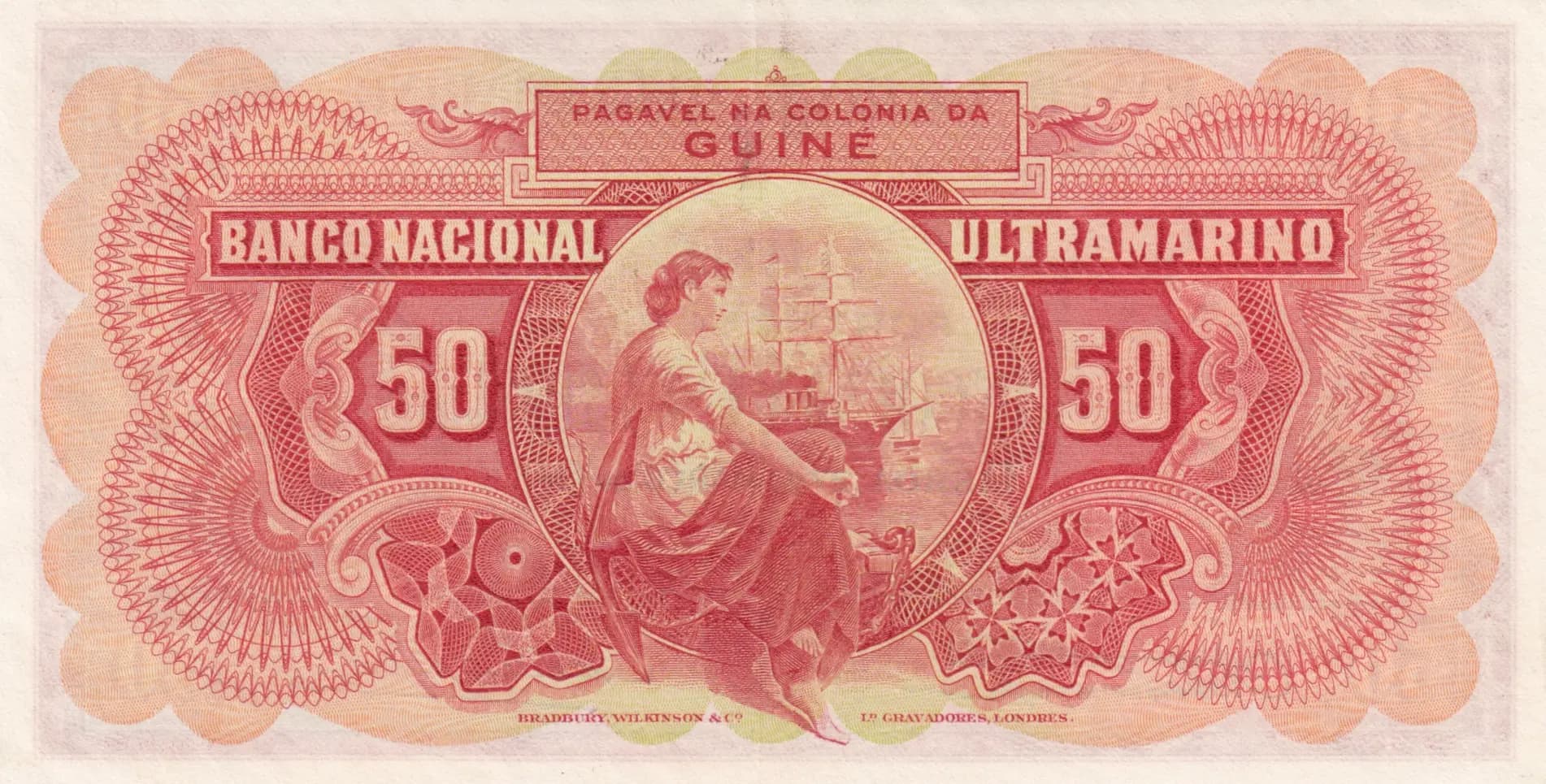
An exceptional example of the 1947 Portuguese Guinea 50 Escudos note in EF condition, featuring a striking pink/red color scheme with ornate classical design elements. The obverse displays a bearded military figure in portrait with an elaborate ship emblem, while the reverse showcases an allegorical female figure in classical dress with a sailing ship backdrop and radiating sunburst patterns. This note represents a well-preserved specimen of colonial Portuguese currency with crisp edges and no visible circulation wear.
Common. The 1947 Portuguese Guinea 50 Escudos (P-34) was issued in substantial quantities for use in the colonial territory and remains relatively available in the numismatic market today. While colonial currency from this period has collector interest, this particular denomination and year are not among the scarce issues of Portuguese Guinea. EF condition specimens are less common than circulated examples, but the base type itself is not rare or particularly difficult to acquire.
Issued by the Banco Nacional Ultramarino on March 27, 1947, this note reflects Portugal's administration of its West African colony during the Estado Novo period. The maritime and allegorical imagery—featuring a sailing ship and classical female figure—emphasize Portugal's historical connection to maritime exploration and colonial trade routes that defined Portuguese Guinea's economic relationship with the metropole. The decree reference and administrative signatures underscore the hierarchical colonial governance structure of the period.
The obverse features a portrait of a bearded man in military dress uniform positioned on the left side, characteristic of colonial-era currency honoring administrative or military figures. The right side displays a circular emblem containing a sailing ship, symbolizing maritime heritage and Portuguese naval power. The reverse presents an allegorical female figure in classical Greco-Roman style drapery, seated and facing left with a full-rigged sailing ship visible in the background, representing prosperity and colonial commerce. Both sides are framed by elaborate ornamental cartouches, decorative floral scrollwork, and geometric border patterns with radiating sunburst designs—typical of the classical revival aesthetic favored in early 20th-century Portuguese colonial currency design. The color palette of pink/red with cream accents creates strong visual contrast and aids in authentication.
FRONT SIDE: 'Banco Nacional Ultramarino' (Ultramarino National Bank) / 'Guiné Portuguesa' (Portuguese Guinea) / 'Cinquenta Escudos' (Fifty Escudos) / 'Decreto No. 17.154' (Decree No. 17,154) / 'Lisboa 27 de Março de 1947' (Lisbon, March 27, 1947) / 'O Administrador' (The Administrator) / 'O Presidente do Conselho Administrativo' (The President of the Administrative Council) / Serial number '584.340'. BACK SIDE: 'Pagável na Colónia da Guiné' (Payable in the Colony of Guinea) / 'Banco Nacional Ultramarino' (Ultramarino National Bank) / 'Bradbury, Wilkinson & Co, De Gravadores, Londres' (Bradbury, Wilkinson & Co, Engravers, London).
This note was produced using intaglio engraving (line engraving), as evidenced by the detailed fine line work, intricate border patterns, complex radiating sunburst patterns, and the precision of the portrait and allegorical figure rendering. The printing was executed by Bradbury, Wilkinson & Co of London, one of the premier security printers of the era, whose signature appears on the reverse. Intaglio printing was the standard security technique for high-value banknotes of this period, providing anti-counterfeiting protection through the complexity of the engraved plates.
The PMG population report indicates two cataloged variants for this Pick number: P-34 (standard) and P-34s (specimen note). The specimen here appears to be a standard circulation note (P-34) based on the absence of specimen overprints or cancellations visible in the visual analysis. No signature varieties, date variants, or serial number prefix variations are apparent from the observed inscriptions. The serial number visible is 584.340.