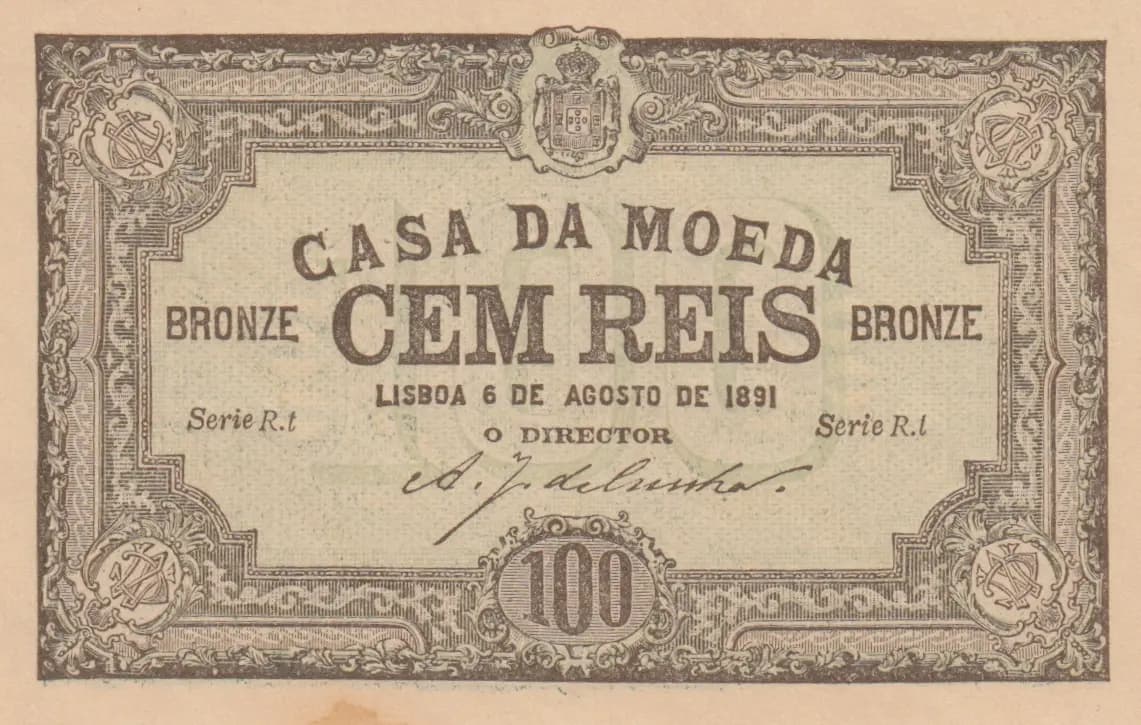
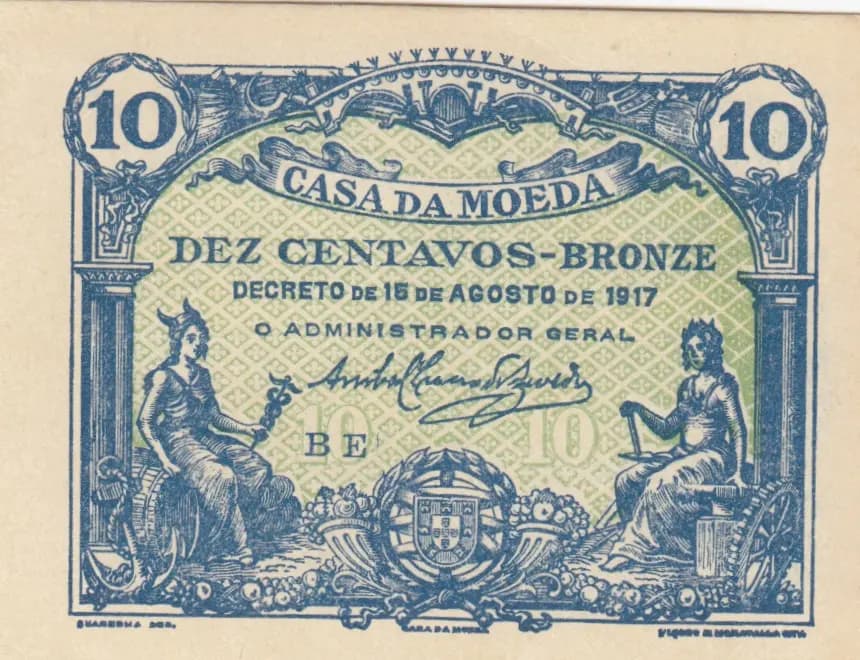
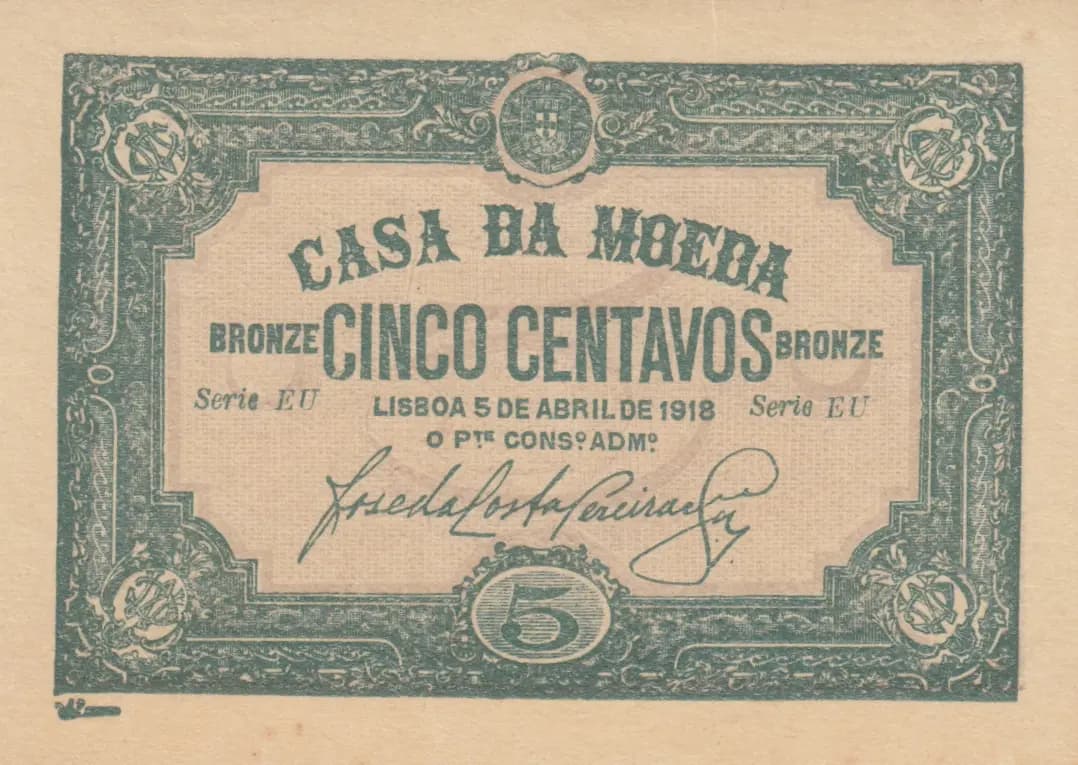
500 escudos 1979
About This Note
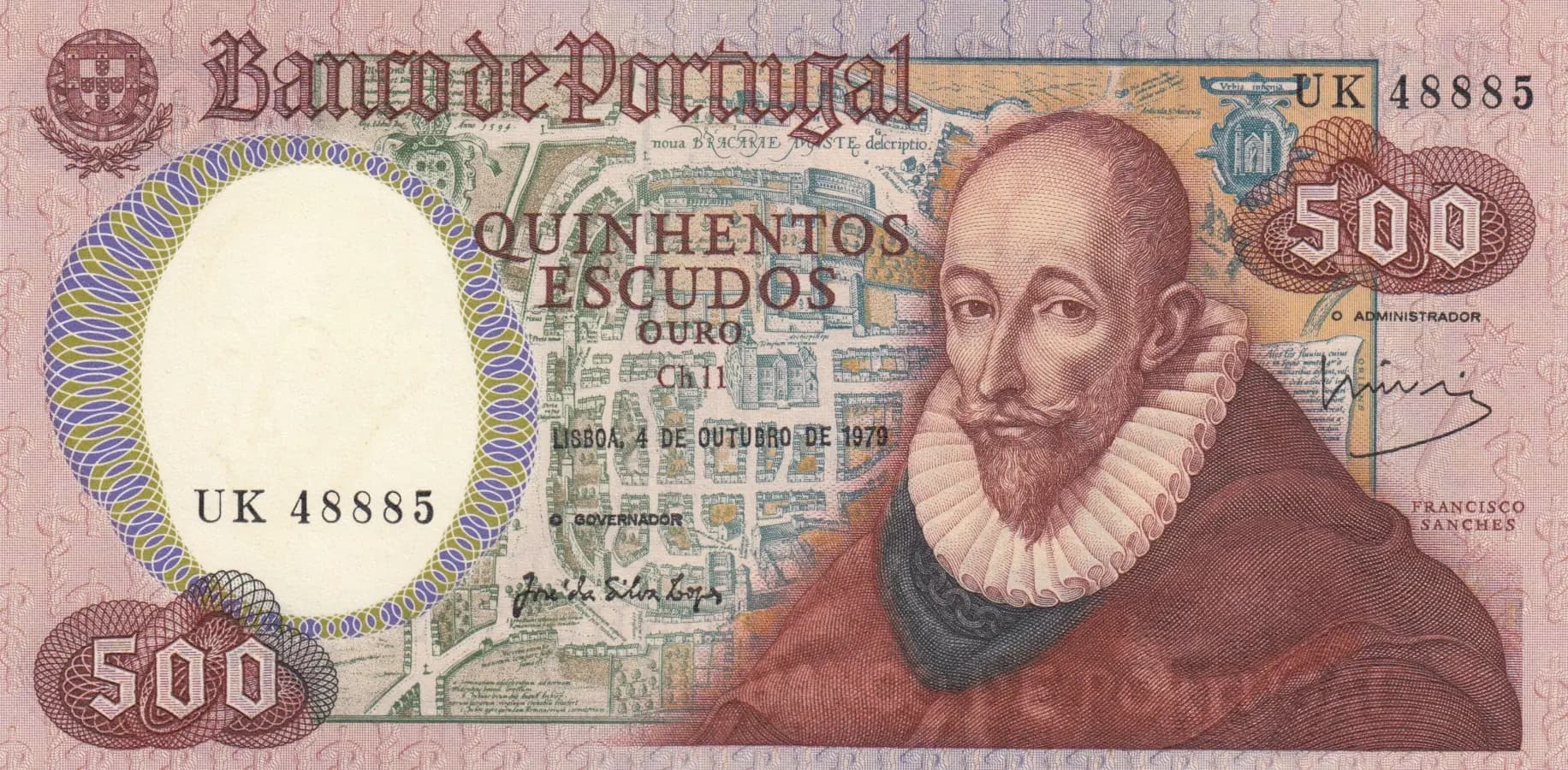
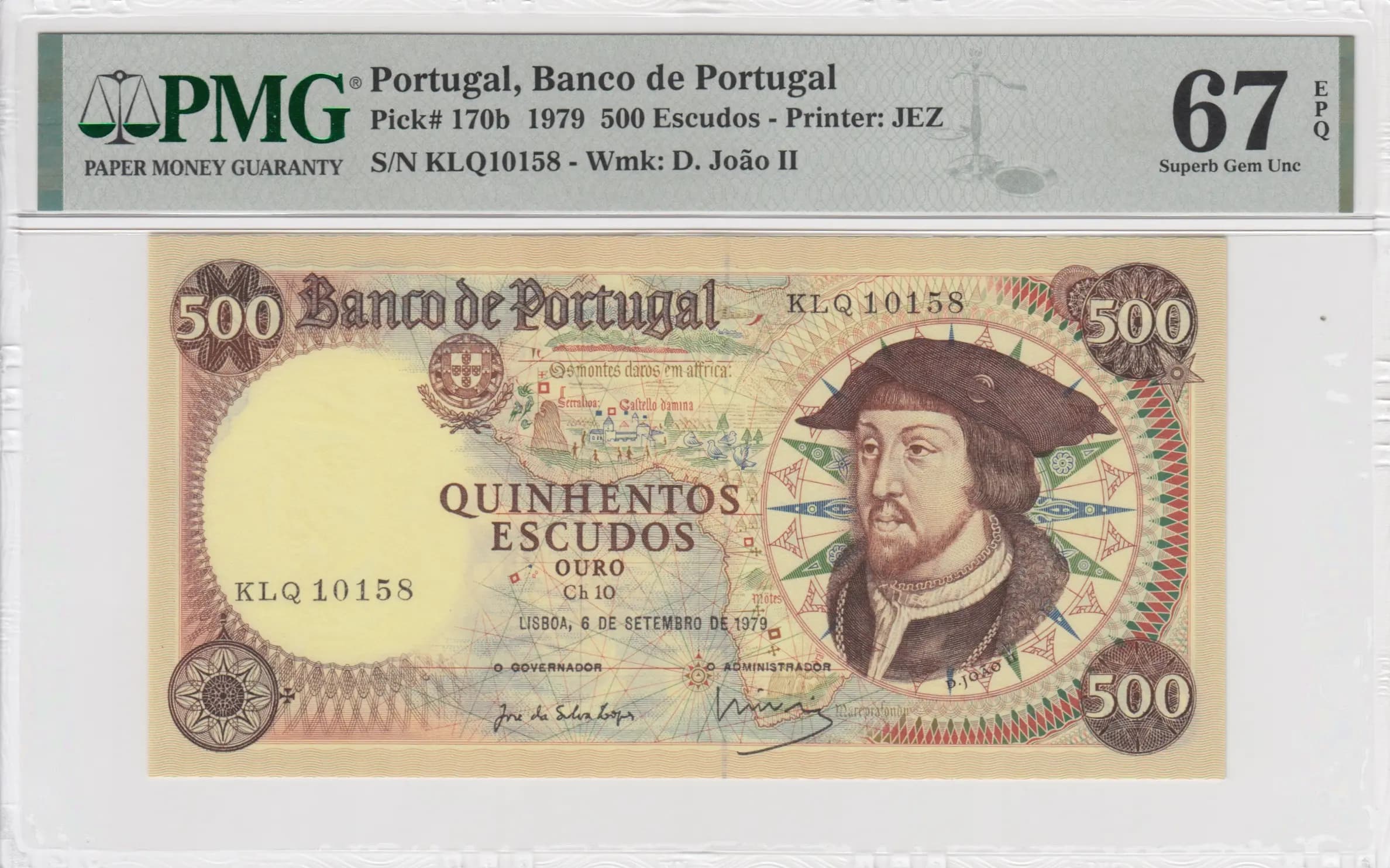
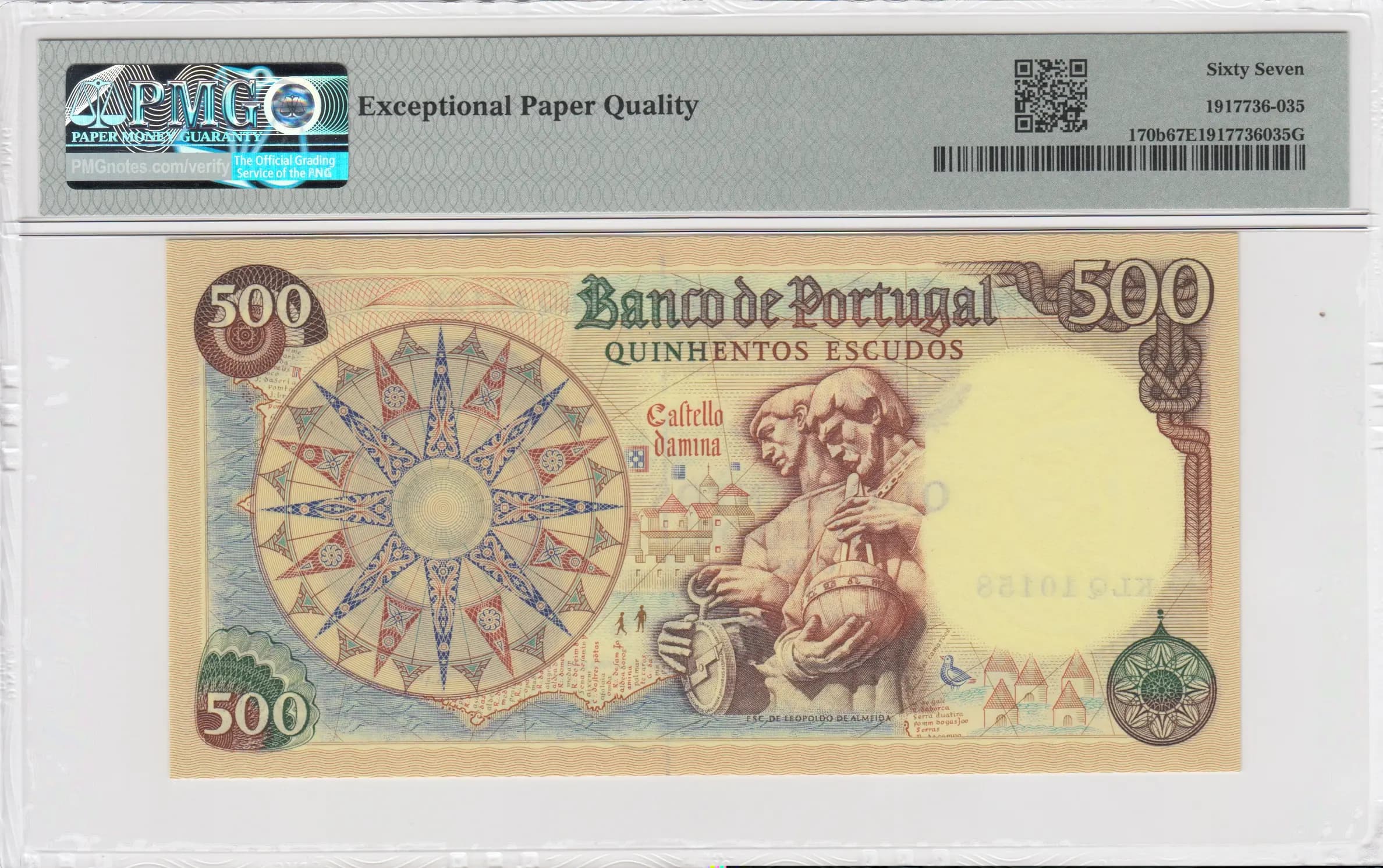
This is an exceptionally preserved example of the Portuguese 500 Escudos banknote from 1979, graded PMG 67 EPQ (Superb Gem Uncirculated). The note showcases the classical design celebrating Portugal's Age of Discovery, featuring a portrait of King João II on the obverse and elaborate maritime navigation symbolism on the reverse, including a prominent compass rose and classical figures. The pristine condition with crisp intaglio printing and vibrant color preservation makes this an outstanding specimen for collectors of Iberian currency.
Common. The 500 Escudos 1979 is a standard circulation issue from Banco de Portugal with substantial print runs. No documented evidence indicates limited production, recall status, or scarcity of this Pick-170b variety. While this PMG 67 EPQ specimen is individually exceptional in condition, the note type itself remains readily available in the collector market at modest valuations typical of 1970s-era Portuguese banknotes in similar grades.
Issued by Banco de Portugal on September 6, 1979, this denomination commemorates Portugal's maritime heritage and the reign of King João II (1481-1495), a pivotal figure in the Portuguese Age of Discovery. The reverse depicts navigational instruments and fortress imagery (Caltella Damina) reflecting Portugal's role as a leading maritime and exploratory power during the 15th-16th centuries. The note represents the later escudo currency period before Portugal's 1986 transition toward European monetary integration.
The obverse features King João II (João o Perfeito), depicted as a bearded man in historical dress with a dark beret, shown in left profile. The background incorporates an elaborate navigational chart with compass rose, Portuguese coat of arms featuring the distinctive cross shield, and fortified architectural elements symbolizing Portuguese strongholds. A prominent circular security feature (watermark area) in pale yellow-cream dominates the left-center. The reverse presents two classical putti (cherubs/children figures) in sepia-brown tones, paired with an intricate geometric compass rose design in red, blue, and cream. The fortress labeled 'Caltella Damina' appears rendered as a fortified coastal settlement. Both sides employ decorative rosette patterns in corners and ornamental geometric borders. The predominant color palette consists of cream-yellow backgrounds with burgundy, green, blue, and brown accents throughout.
FRONT SIDE: 'Banco de Portugal' (Bank of Portugal) / 'QUINHENTOS ESCUDOS' (Five Hundred Escudos) / '500' (denomination numeral) / 'OURO' (Gold) / 'Ch 10' (Chapter/Check 10) / 'LISBOA, 6 DE SETEMBRO DE 1979' (Lisbon, September 6, 1979 - issue date) / 'KLQ10158' (serial number) / 'O GOVERNADOR' (The Governor - signature line) / 'O ADMINISTRADOR' (The Administrator - signature line). REVERSE SIDE: 'Banco de Portugal' (Bank of Portugal) / 'QUINHENTOS ESCUDOS' (Five Hundred Escudos) / '500' (corner denomination markings) / 'Caltella Damina' (fortress/location name in red) / 'FIG. DE LEOPOLDO DE ALMEIDA' (Figure/Design by Leopoldo de Almeida - artist credit).
The note was produced using intaglio printing (engraved plate printing), evident from the exceptional fine line work, detailed background patterns, and sharp relief impression visible in the crisp condition of this example. The intricate geometric patterns, fine-lined security design elements, and the precise detail of portraiture are characteristic of high-security intaglio production. The artist credit 'FIG. DE LEOPOLDO DE ALMEIDA' indicates design attribution to the renowned Portuguese sculptor and artist. Banco de Portugal's official printing operations were utilized for this denomination.
This specimen is identified as Pick-170b(8), representing the 1979 issue date variant. The serial number prefix 'KLQ' and the specific date 'LISBOA, 6 DE SETEMBRO DE 1979' are consistent with the later production series of this denomination. The 'Ch 10' marking visible on the obverse may indicate a printer's check number or production batch designation. No overprints or significant varieties are evident on this note; it represents the standard 1979 circulation type.