5 escudos 1920
Market Prices
8 salesAbout This Note
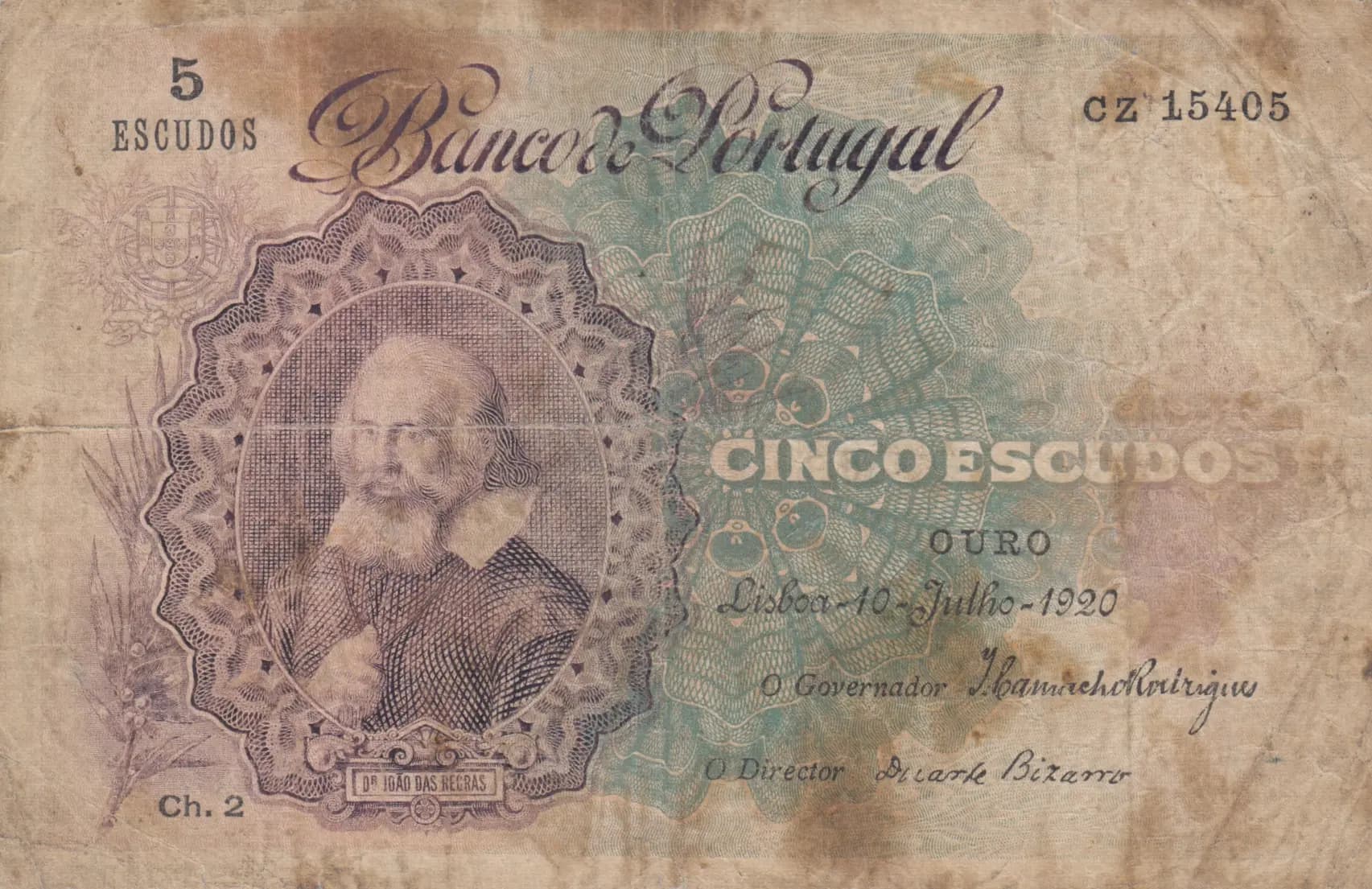
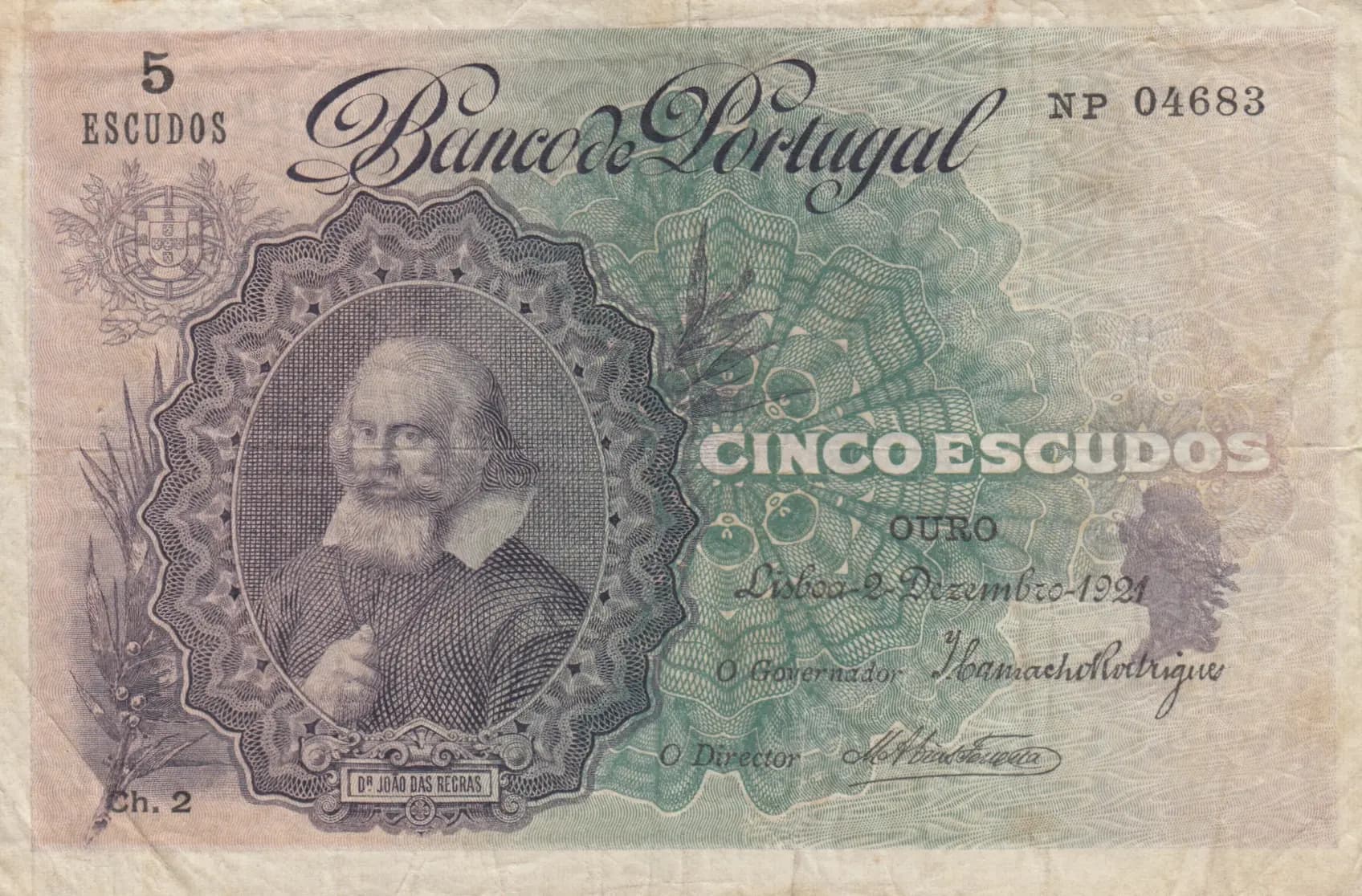
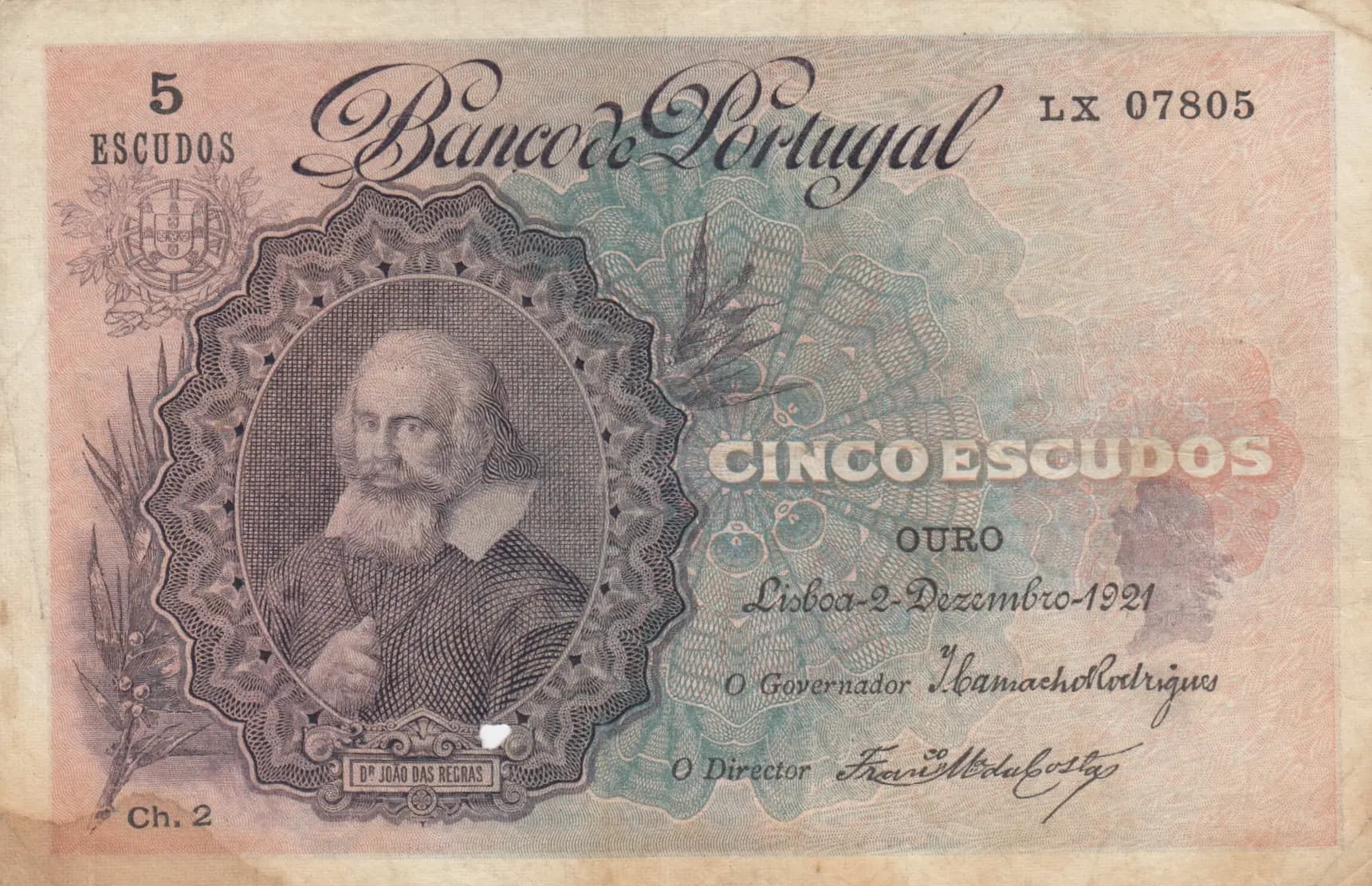
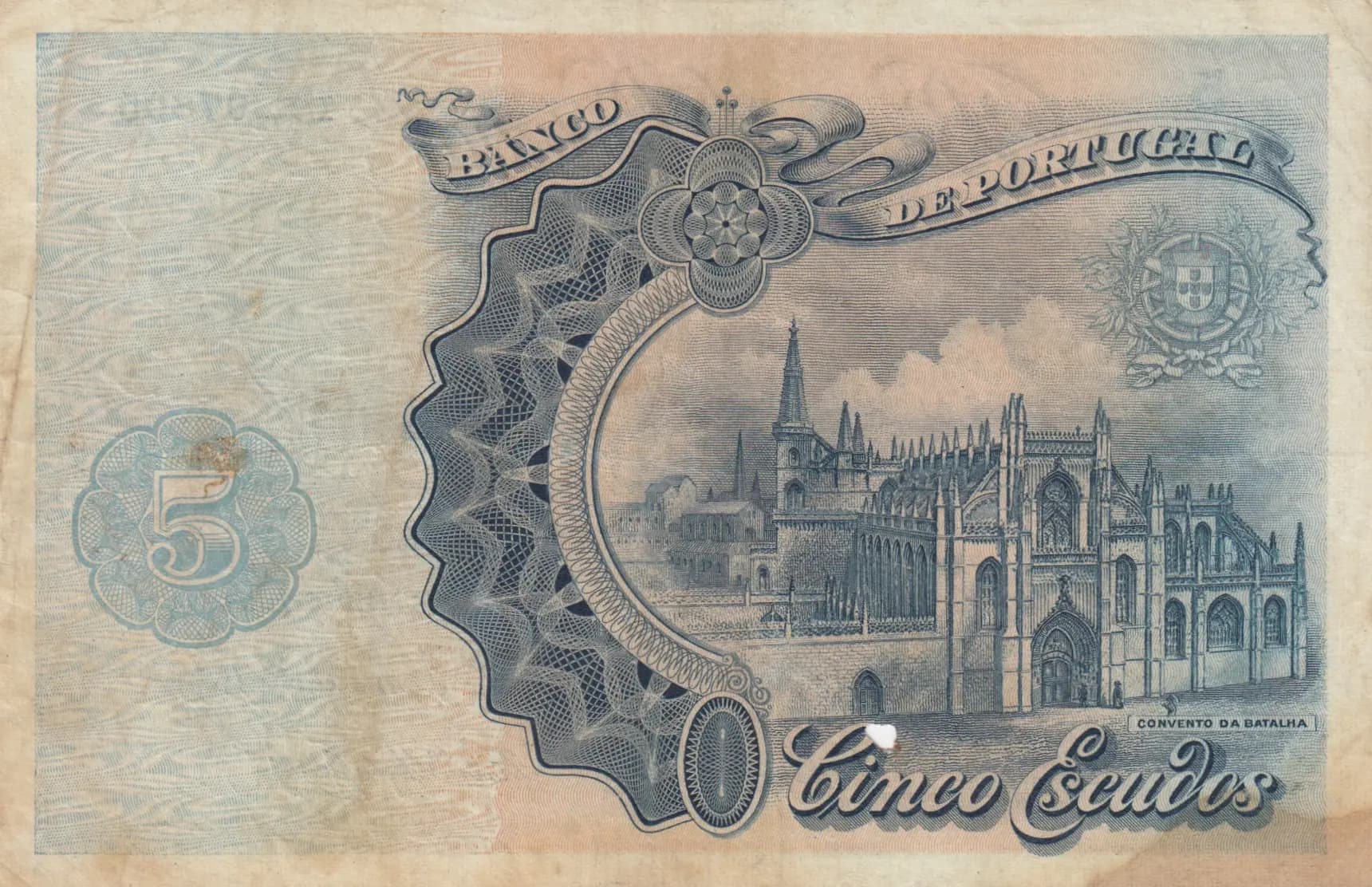
This is a 1920-1925 Portuguese 5 Escudos note (Pick P-120) issued by Banco de Portugal, displaying the characteristic violet-brown and green coloration of the period. The note features a portrait of Dr. João das Regras on the obverse and the Convento da Batalha monastery on the reverse, both rendered in fine line engraving. In Fair condition as graded, the note shows moderate circulation wear with visible creasing, age-related yellowing, and foxing consistent with its nearly century-old age, making it a representative example of this regular-issue denomination.
Common. The eBay price history provided shows consistent and frequent sales of this note in Fair condition, ranging from approximately $100-$182 across multiple transactions from 2013-2024. The 2016 catalogue value of $100 for Fair condition aligns with observed market prices. With multiple sales per year and no indication of scarcity in the market, this represents a standard regular-issue banknote from a major European central bank. The large number of bids on these sales (16-39 bids per transaction) indicates healthy collector demand but not rarity, merely popularity of Portuguese currency among collectors.
This banknote was issued during a transitional period in Portuguese monetary history, following the turmoil of World War I and the establishment of the First Portuguese Republic. The note celebrates national heritage through its imagery: Dr. João das Regras represents Portuguese legal and intellectual tradition as a 14th-century jurist and statesman, while the Convento da Batalha—the magnificent Gothic monastery—symbolizes Portugal's historic triumph and religious significance. The denomination in 'OURO' (gold) references the note's backing in the gold standard system that prevailed in the early 1920s.
The obverse features a portrait of Dr. João das Regras (1344-1404), a renowned Portuguese jurist, legislator, and university founder, depicted in profile within an ornate circular frame with scalloped borders and star-like embellishments. The portrait is rendered in fine detail showing a bearded man in period clothing. The left side incorporates the Portuguese coat of arms and decorative floral motifs, while the right side displays the denomination and baroque-style ornamental scrollwork. The reverse depicts the Convento da Batalha (Batalha Monastery), an outstanding example of late Gothic Portuguese architecture with characteristic pointed arches, multiple spires, and intricate stonework. This UNESCO World Heritage site is shown in detailed architectural rendering surrounded by baroque decorative borders, with the coat of arms positioned on the upper right and the numeral 5 in a decorative rounded frame on the left. The color scheme of violet-brown and green on the obverse contrasts with the blue-green tones of the reverse.
FRONT: '5 ESCUDOS' / 'CINCO ESCUDOS' (Five escudos); 'Banco de Portugal' (Bank of Portugal); 'OURO' (Gold); 'Lisboa 2 Dezembro 1921' (Lisbon December 2, 1921); 'O Governador Champalimaud Rodrigues' (The Governor Champalimaud Rodrigues); 'O Director Ferreira Malheiros' (The Director Ferreira Malheiros); 'Dr JOAO DAS REGRAS' (Dr. João das Regras); 'LX 07805' (serial number); 'Ch. 2' (Chapa/plate 2). BACK: 'BANCO DE PORTUGAL' (Bank of Portugal); 'Cinco Escudos' (Five escudos); 'CONVENTO DA BATALHA' (Batalha Monastery).
The note was produced using intaglio engraving (copperplate printing), evident from the fine line work, detailed cross-hatching, and ornate guilloché patterns throughout both sides. The intricate detail in the portrait frame, the architectural rendering of the monastery, and the background patterns are characteristic of high-security intaglio production. The printer is identified as BWC (Bradbury, Wilkinson & Co., Ltd.), a premier British security printer, which did not include an imprint on this particular note. This British printing was typical for Portuguese currency of the period.
This note is identified as Chapa (Plate) 2, as indicated by 'Ch. 2' on the obverse. The serial number prefix 'LX' and serial number '07805' are typical of this issue. The note is dated December 2, 1921 (signing date), which falls within the official issue period of 10.07.1920 - 13.01.1925. The signatures of Governor Champalimaud Rodrigues and Director Ferreira Malheiros are consistent with this date range. Chapa 2 is the standard plate marking for regular circulation notes of this series; Chapa 1 varieties exist but are not indicated as significantly more scarce. No overprints or special designations are evident on this example.