5 escudos 1920
Market Prices
8 salesAbout This Note
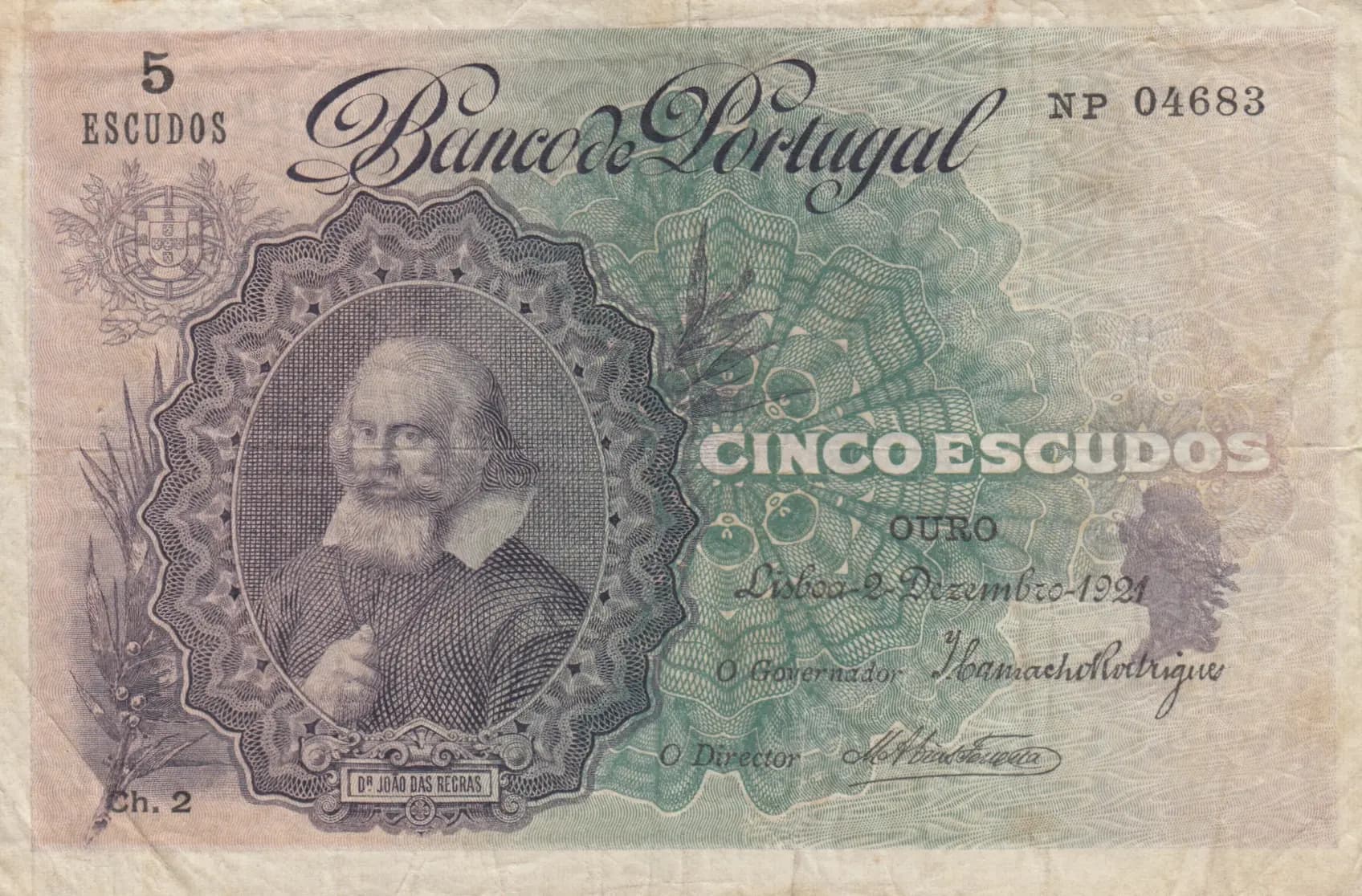
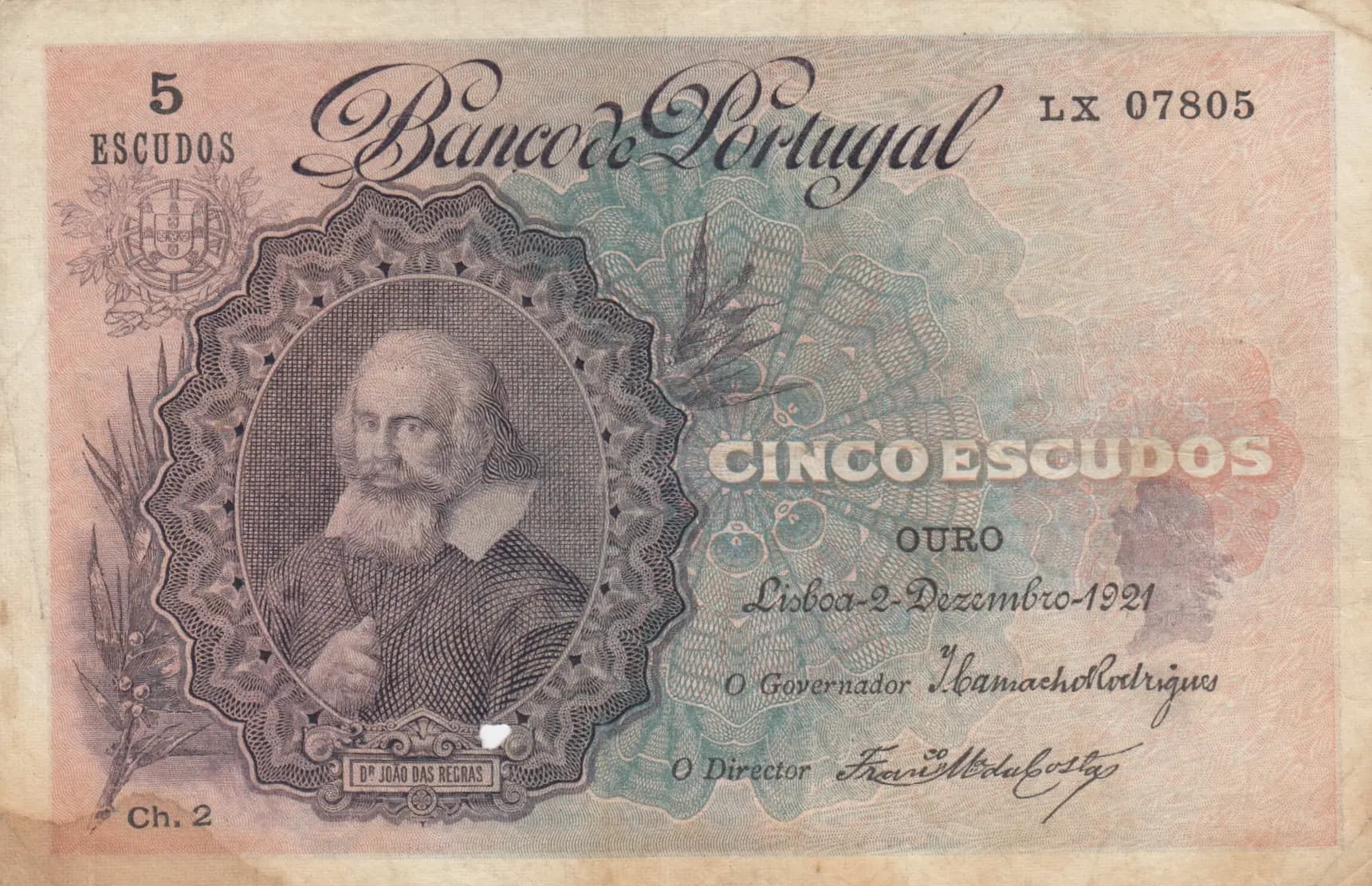
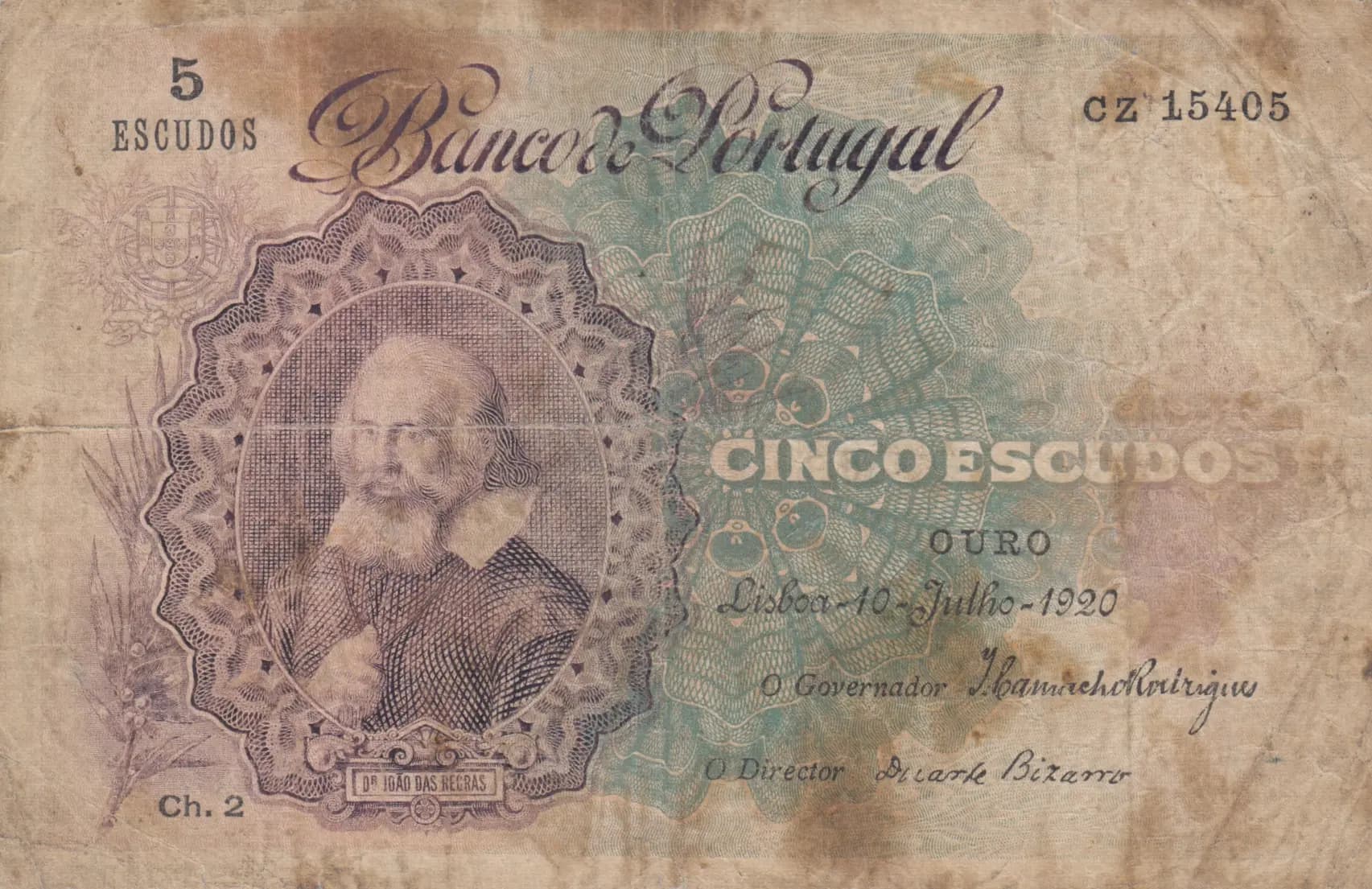
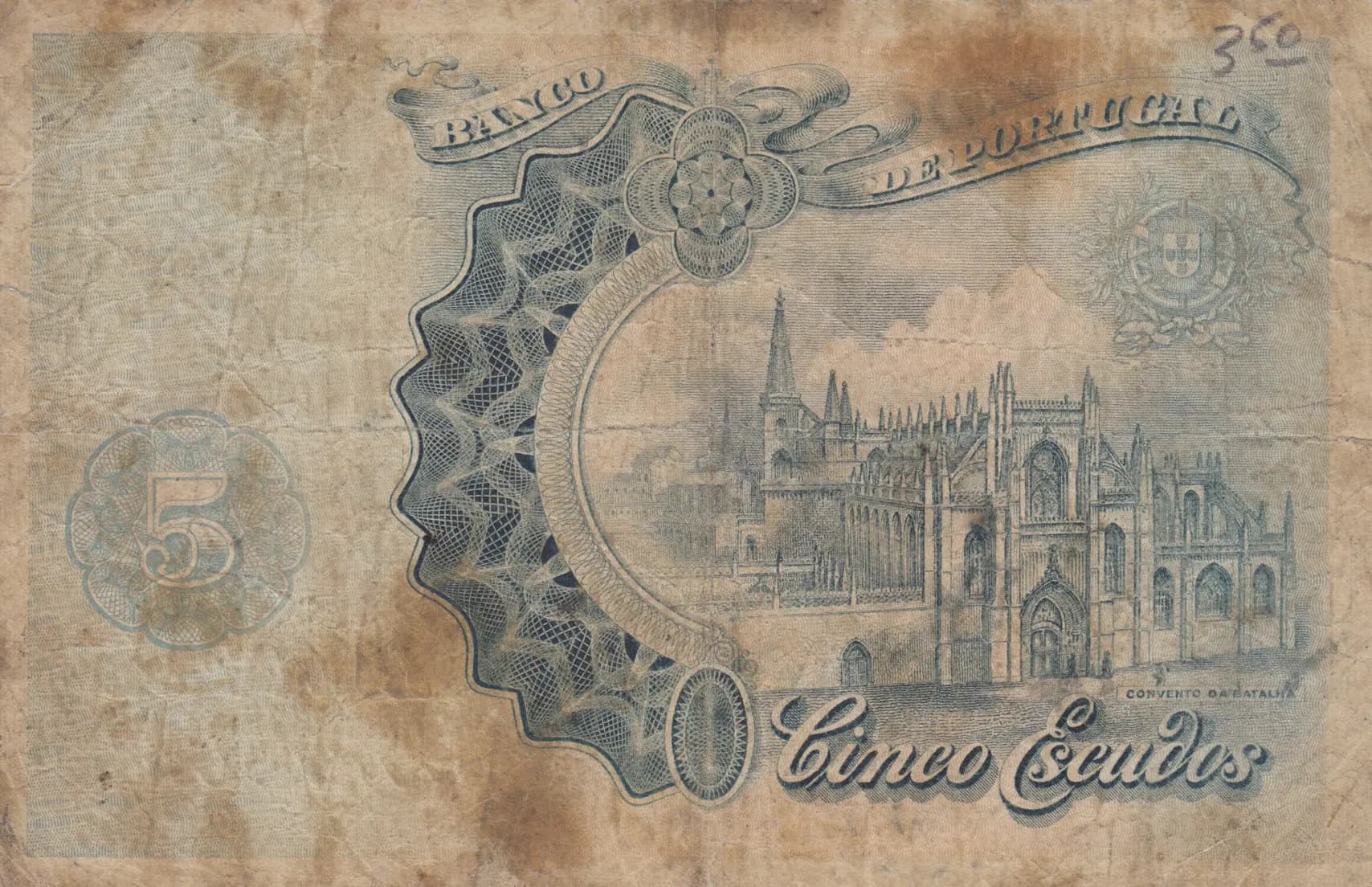
This Portuguese 5 Escudos banknote from 1920 presents a handsome example of early 20th-century Iberian currency design, featuring a striking portrait of João das Regras on the front and the magnificent Convent of Batalha on the reverse. The note displays the characteristic purple/mauve and green coloring typical of this issue, with VG condition showing expected wear from circulation including creasing, foxing, and age-related patina on the paper. The intricate engraved details remain clearly visible despite the decades of handling, making this a desirable collector's piece representing Portugal's post-WWI monetary period.
Common. This note trades regularly on secondary markets with consistent eBay sales activity documented from 2013 through 2024. The eBay market data shows F-grade examples typically realizing $100-150, with VF examples reaching $150-250, indicating healthy collector demand but no scarcity premium. Based on catalog values (G: $30, F: $100, EF: $225), the 1920 5 Escudos Pick-120 represents a standard issue from a major central bank with substantial print runs. The VG condition grade observed here places this note in the mid-range of typical circulation wear, and no historical evidence suggests limited print runs or early recall.
Issued on 10 July 1920 by Banco de Portugal, this banknote commemorates João das Regras, a prominent 14th-century Portuguese jurist and administrator central to Portuguese legal and administrative history. The reverse features the Convent of Batalha (Mosteiro da Batalha), one of Portugal's most iconic Gothic monuments built to commemorate the victory at the Battle of Aljubarrota in 1385, reflecting the nationalist and historical themes emphasized during Portugal's early republican period following the 1910 revolution.
This note features a formal portrait of João das Regras, the 14th-century Portuguese statesman and jurist, positioned within an ornate scalloped frame on the left side of the obverse, rendered in the neoclassical style favored for currency portraiture of the era. The reverse showcases the Monastery of Batalha (Mosteiro da Batalha), an exceptional example of Portuguese late Gothic architecture with its characteristic multiple spires, pointed arches, and intricate architectural ornamentation. Both sides employ sophisticated ornamental frames with scrollwork flourishes and include the Portuguese national coat of arms. The color scheme of purple/mauve tones combined with green accents was deliberately chosen to enhance security through complexity while achieving aesthetic sophistication typical of early 20th-century European banknote design.
FRONT: '5 Escudos' / 'Banco de Portugal' (Bank of Portugal) / 'CINCO ESCUDO OURO' (Five Escudos Gold) / 'Lisboa. 10 Julho. 1920' (Lisbon. 10 July. 1920) / 'O Governador' (The Governor) / 'O Director' (The Director) / 'D. JOAO DAS NACOES' (D. João of the Nations) / 'Ch. 2' (Chapter/Series 2) / 'CZ 15405' (Serial number). BACK: '5' / 'Banco de Portugal' (Bank of Portugal) / 'Cinco Escudos' (Five Escudos) / 'CONVENTO DA BATALHA' (Convent of Batalha).
This banknote was produced using steel plate engraving, the primary security printing method of the period. The printer was Bradbury Wilkinson & Company (BWC, identified in the references), a renowned British security printer. The note exhibits no imprint marking on the face itself, which was common practice. The intricate line work visible throughout—particularly in the portrait rendering, architectural details, and decorative borders—demonstrates the fine engraving characteristic of this method. The complex geometric patterns and fine line cross-hatching throughout provide both aesthetic appeal and anti-counterfeiting protection through their difficulty to reproduce.
This example is identified as 'Chapa 2' (Plate 2), indicating it was printed from the second engraved plate used for this denomination and issue. Serial number 'CZ 15405' suggests a mid-range serial from the printing sequence. The note bears the date '10 Julho 1920' (10 July 1920), which falls within the official circulation period of 10.07.1920-13.01.1925 documented for Pick-120. The absence of any overprint or secondary marking indicates this is from the standard regular issue with no unusual variety characteristics such as color variations or signature varieties visible in this example.