1 escudo 1920
Market Prices
11 salesAbout This Note
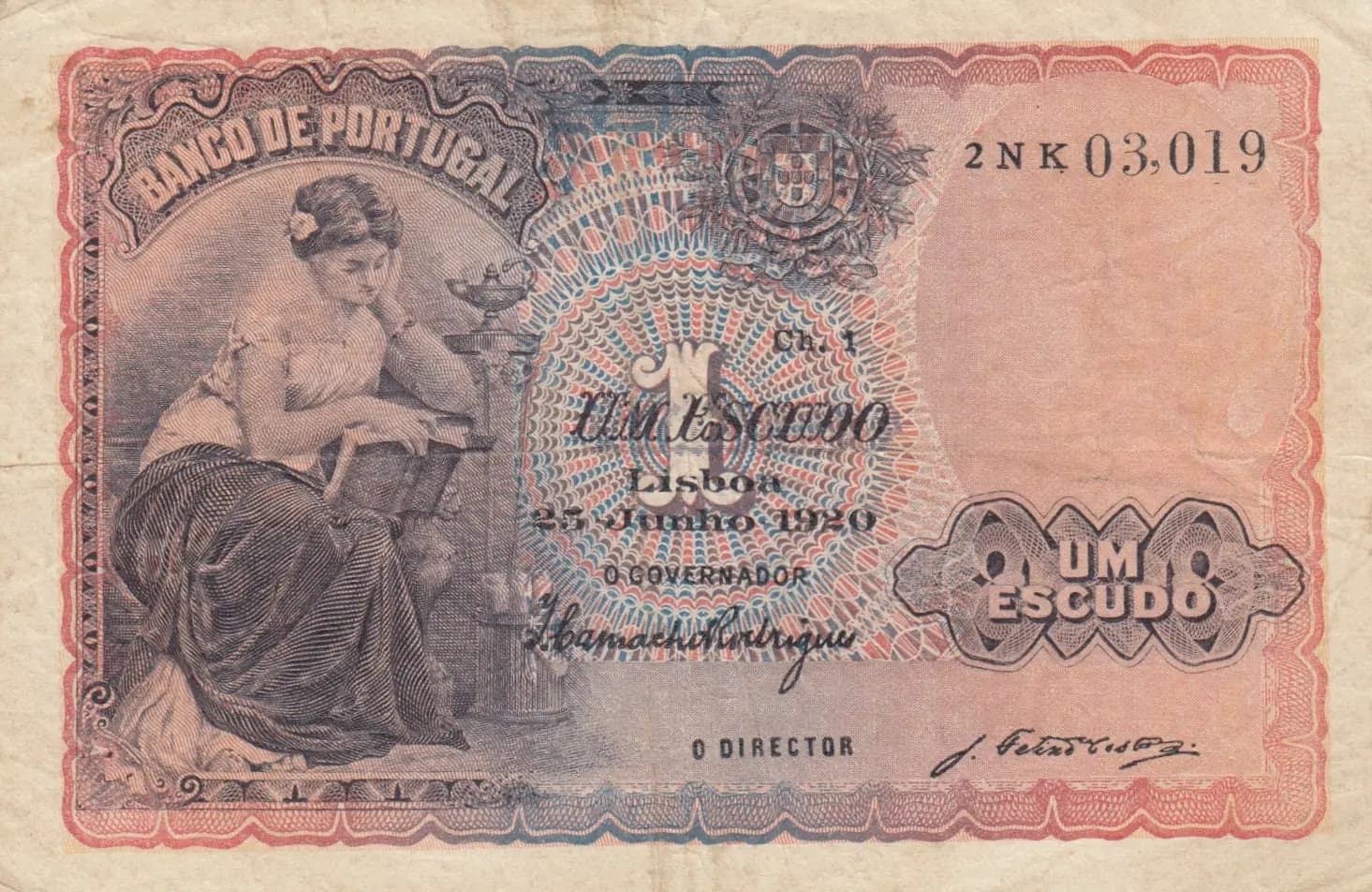
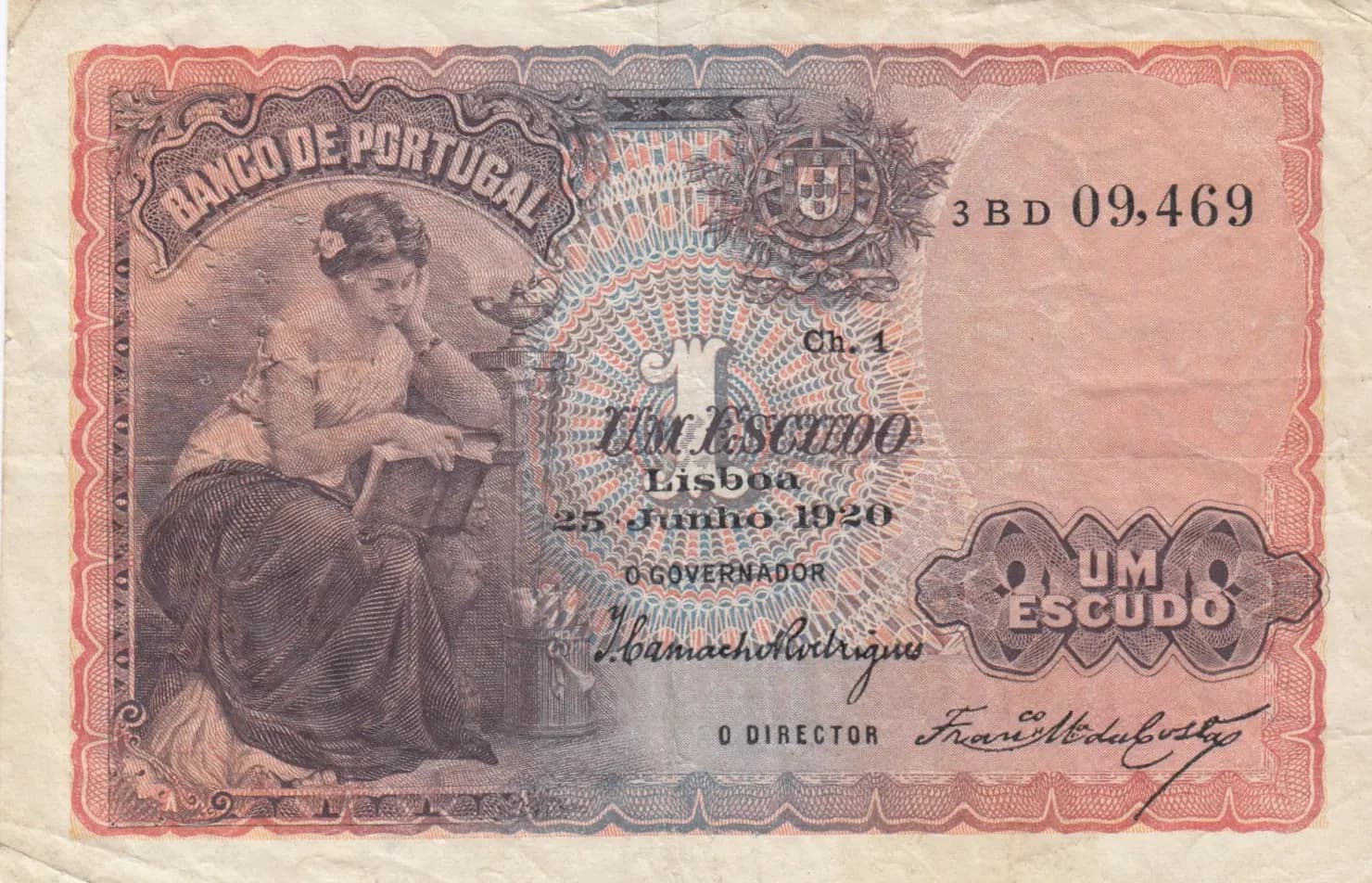
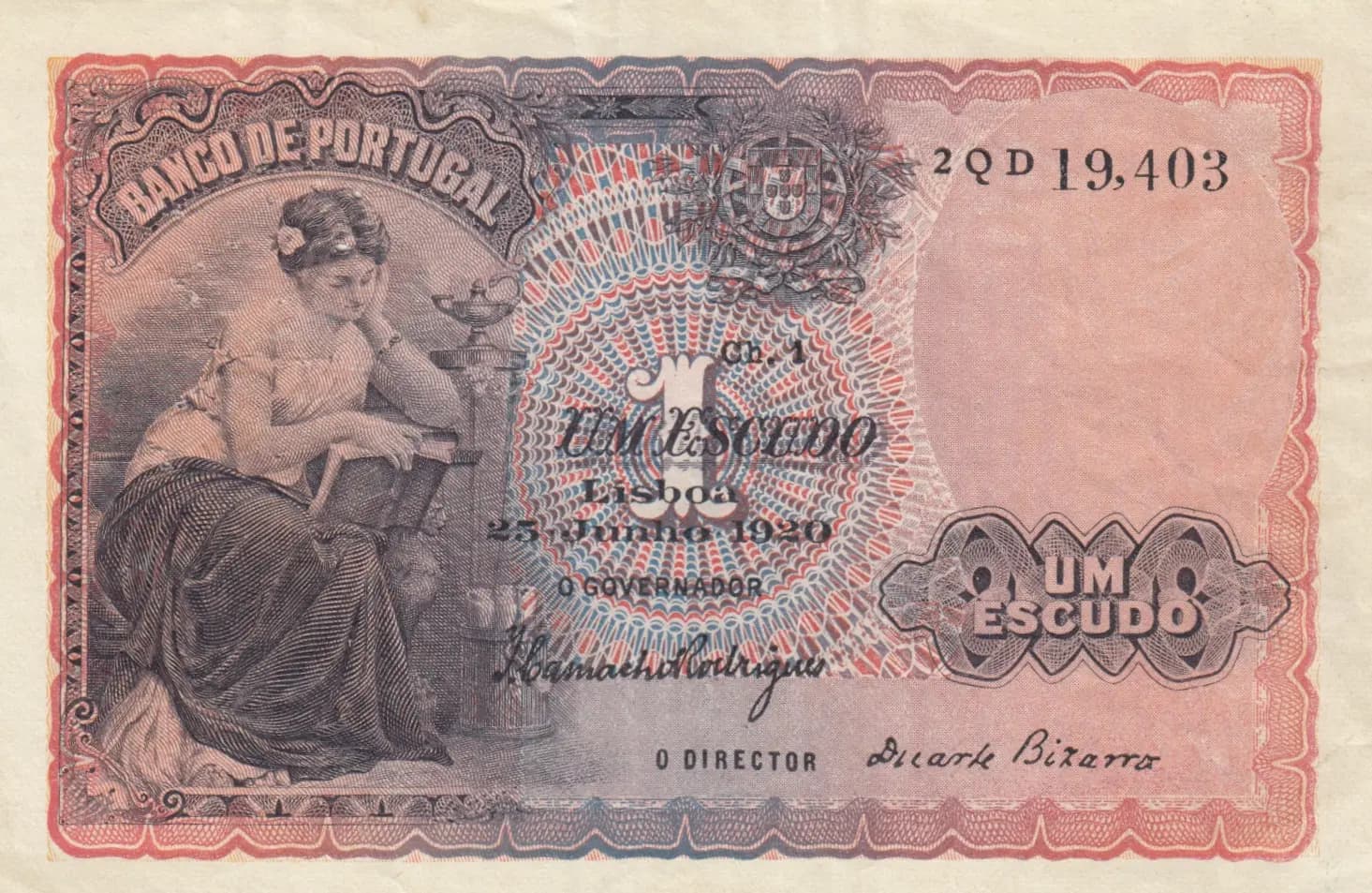
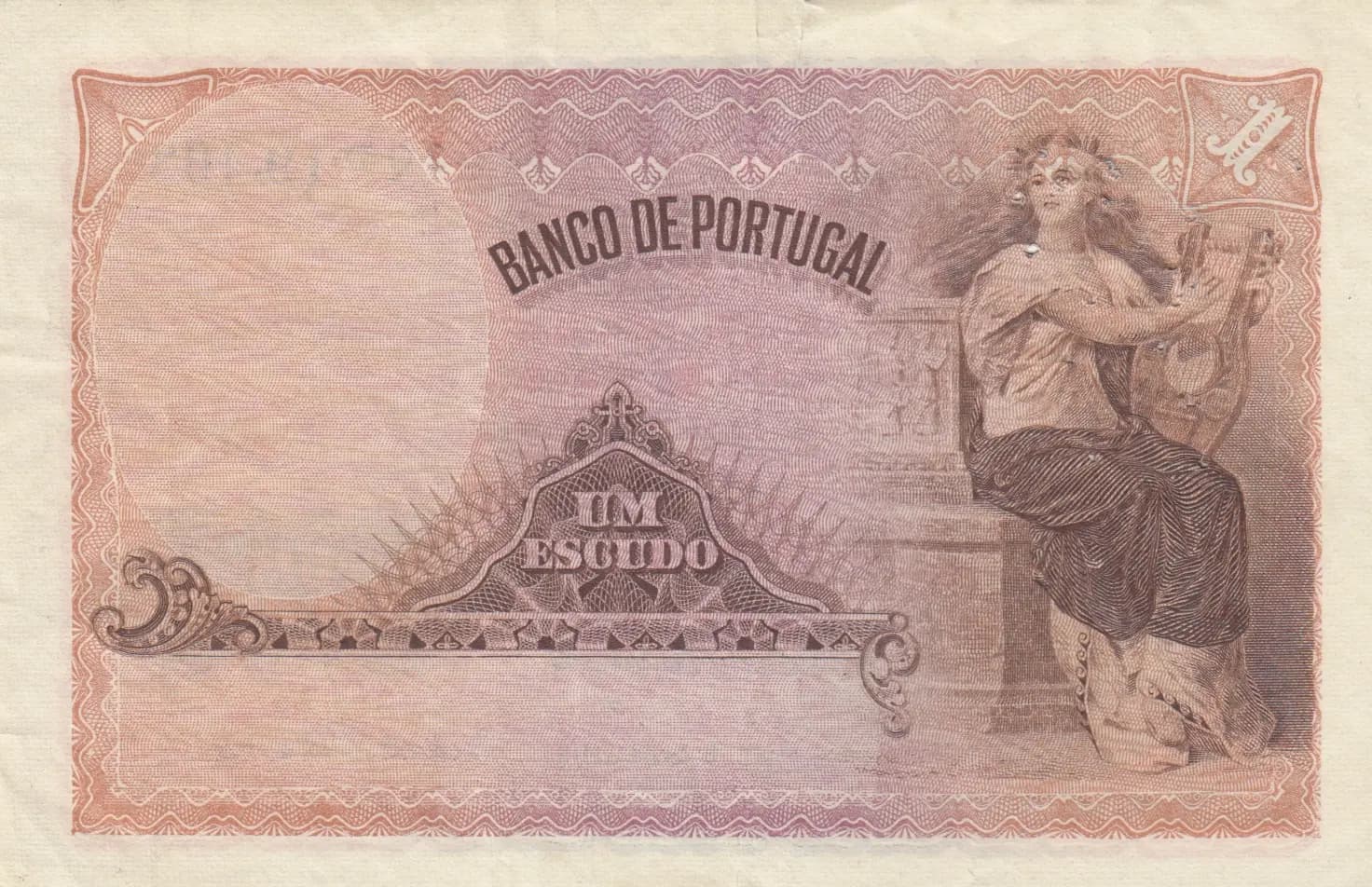
This is a VF-graded Portuguese 1 Escudo from 1920 issued by Banco de Portugal, featuring elegant allegorical imagery on both sides with fine line engraving characteristic of early 20th-century Portuguese currency design. The front depicts a seated woman holding a cherub or child figure, while the reverse shows a classical male figure with a lyre, rendered in harmonious red and mauve tones respectively. The note shows honest circulation wear with visible postmarking on the obverse and aged patina, yet the engraving detail remains well-preserved, making it a representative example of this series that typically realizes $40-125 USD in VF condition.
Common. Despite being over 100 years old, this 1 Escudo denomination from the 1920 issue was produced in substantial quantities sufficient for regular circulation. The eBay price data provided shows consistent trading in the $40-125 range for VF examples, with multiple sales across different years (2011-2016), indicating steady collector availability rather than scarcity. Catalogue values list VF at approximately $45 USD (2016 reference), and numerous examples appear in the secondary market regularly. The note's age and allegorical design appeal to collectors, but it remains fundamentally common within Portuguese numismatic material.
This 1920 issue represents Portugal's monetary system during the First Republic period (1910-1926), when the country was establishing modern currency standards following the 1910 revolution. The allegorical female figure holding a child on the front symbolizes national prosperity and the nurturing of the Portuguese state, while the classical lyre-bearing figure on the reverse evokes cultural refinement and the humanistic values the Republic sought to promote. The Banco de Portugal's choice of these allegorical subjects reflects early 20th-century European design conventions that favored symbolic representation over historical portraiture.
The obverse features an allegorical representation of a seated woman (likely symbolizing Portugal or Liberty) positioned at the left, cradling a cherub or infant figure—a classical motif suggesting national nurture and future prosperity. The design incorporates the Portuguese coat of arms in the upper right area. A prominent central circular medallion with intricate radiating geometric patterns in red and blue serves both decorative and security purposes. The ornate scalloped border in red and cream tones frames the composition with fine line engraving throughout. The reverse depicts a classical male allegorical figure (possibly representing Arts, Sciences, or Classical Heritage) seated in partial drapery on the right side, accompanied by a lyre—an instrument symbolizing cultural achievement. Both sides employ shield cartouches containing denomination text. The dominant color palette shifts from red/cream on the obverse to pink/mauve on the reverse, unified by cream border elements and fine engraving detailing.
Front side: 'BANCO DE PORTUGAL' (Bank of Portugal) — institutional issuer identification; 'UM ESCUDO' (One Escudo) — denomination; 'O DIRECTOR' (The Director) — title of authorized signatory; 'Duarte Bizarra' — signature of the Director; serial number '2QD19,403'. Back side: 'BANCO DE PORTUGAL' (Bank of Portugal); 'UM ESCUDO' (One Escudo). Additional dating visible indicates issue between 1917-1920 as per catalog notation.
Intaglio (line engraving) printing, characteristic of high-security banknote production of the 1917-1920 period. The fine cross-hatching, intricate geometric patterns, and sharp detail preservation visible in the image confirm this method. The printer is identified as BWC (Bradbury Wilkinson & Company, London), though the visual analysis notes the imprint is not visible on the note itself—standard practice for some security printings. The multiple color pass printing (red/cream and pink/mauve) suggests multiple plate transfers typical of period banknote production.
This example is identified as Pick P-113a (1920 date variant). The note exhibits Chapa 1 (Plate 1) designation as noted in reference sources. The signature of Director Duarte Bizarra is visible, and the serial number prefix '2QD' appears consistent with documented examples from this issue. The dating inscription shows '25.6.1920' (June 25, 1920) as the specific issue date. No evidence of overprints, revalidations, or emergency modifications is visible, indicating this is a standard regular-issue example from the main production run rather than a specialized variety.