1 escudo 1920
Market Prices
11 salesAbout This Note
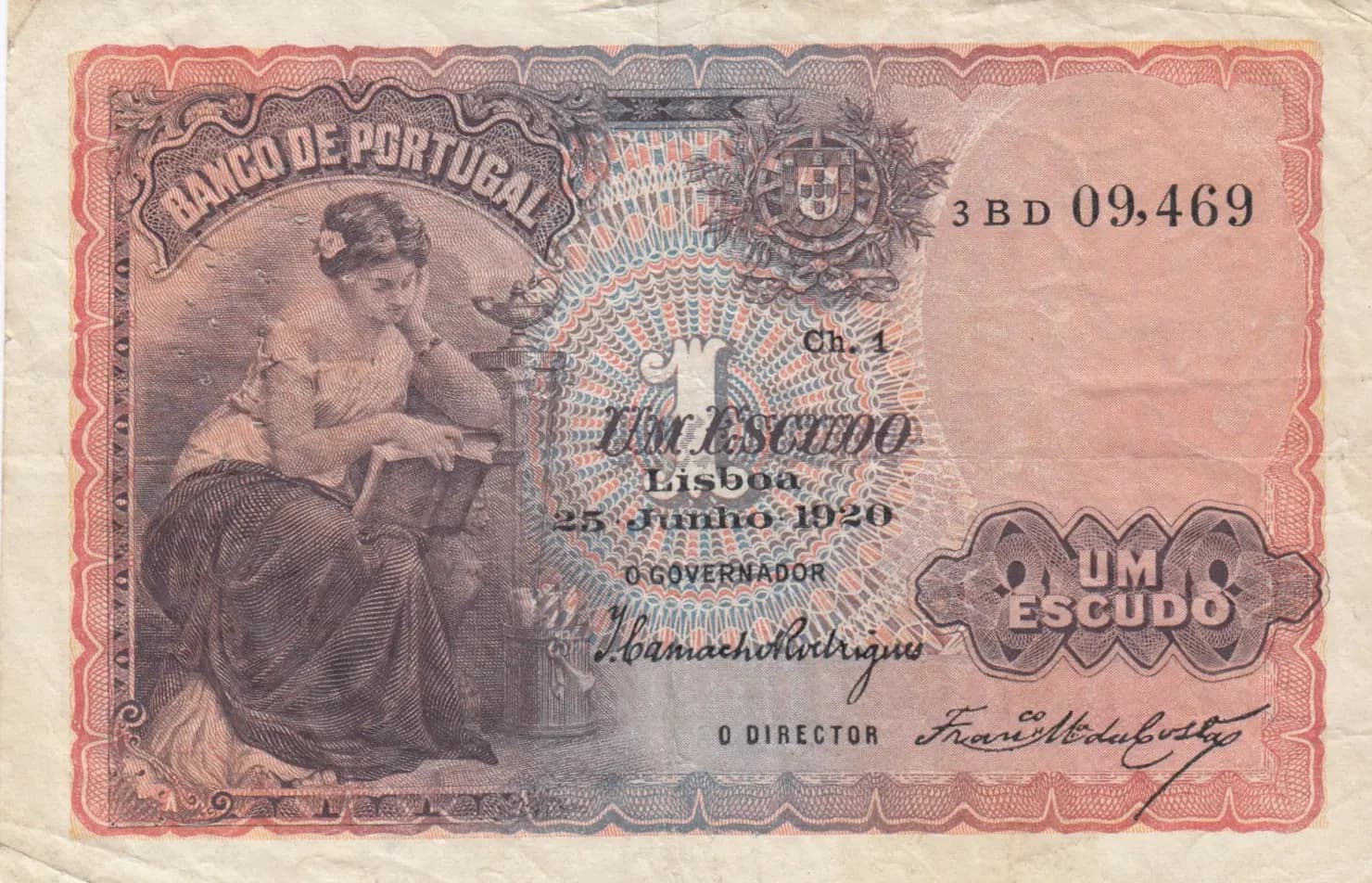
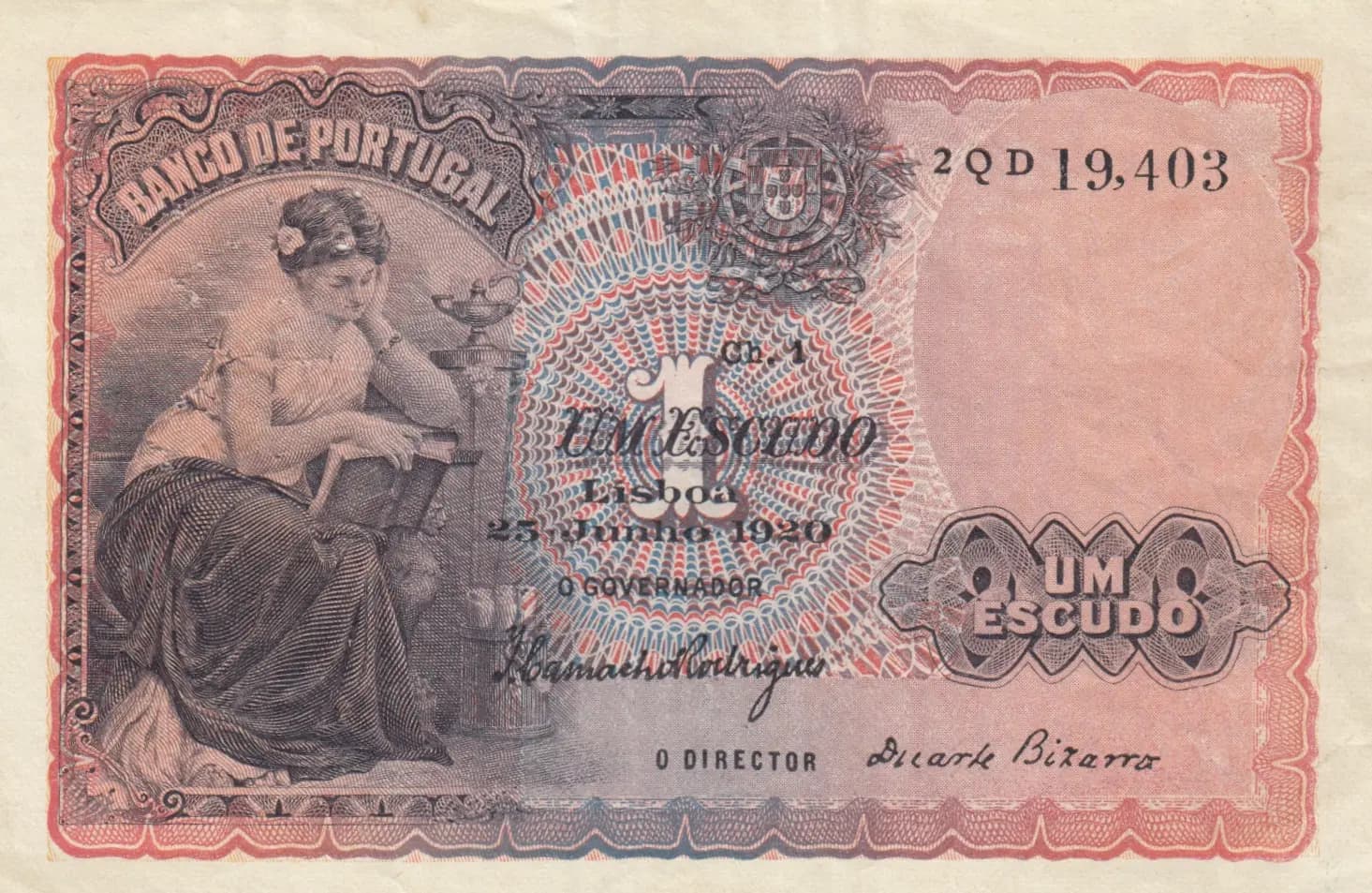
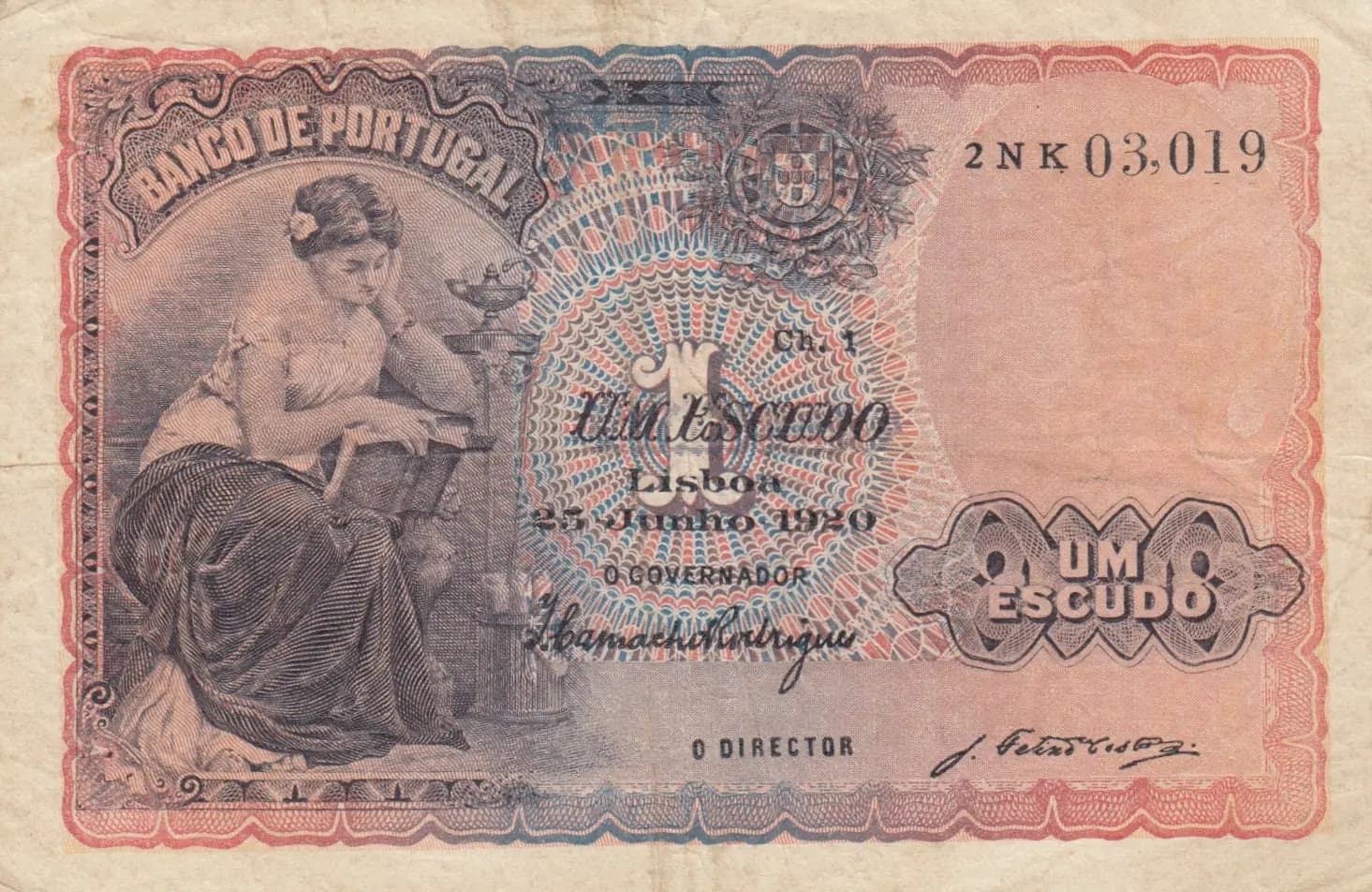
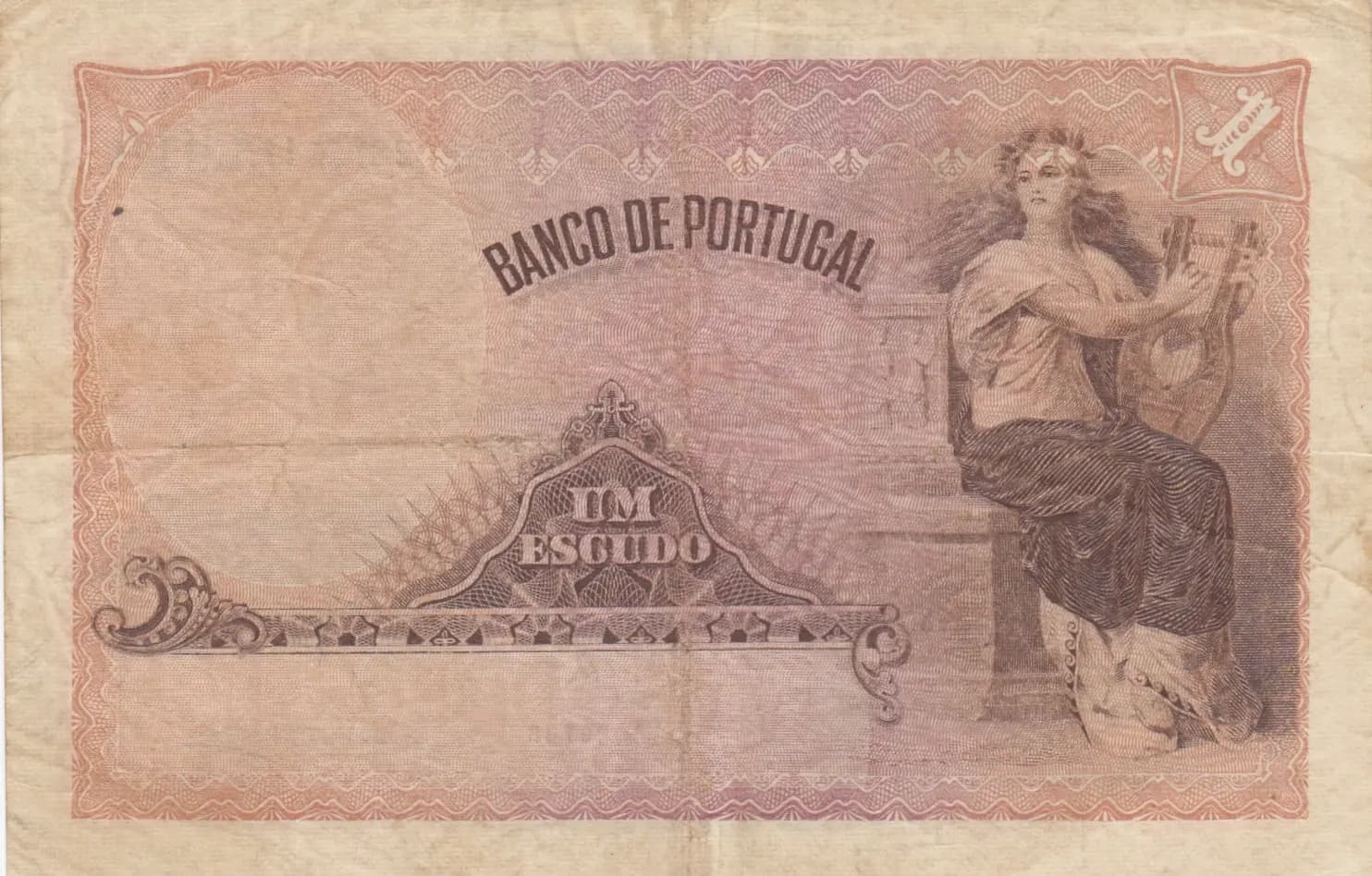
This is a Portuguese 1 Escudo banknote from 1920 (Pick P-113a) issued by Banco de Portugal, graded as Fine (F). The note features classical allegorical female figures on both sides—one seated with a book on the obverse and another in a graceful pose with a lyre on the reverse—rendered in fine engraved detail. The specimen exhibits typical aging characteristics including yellowing and light foxing consistent with a century-old note, but maintains excellent legibility and clear preservation of the intricate decorative rosette patterns and security engraving work that define this issue.
Common. The eBay price data provided shows consistent sales activity across multiple condition grades from 2011-2016, with F-graded examples selling between $33-$71, which is well within the normal range for common early twentieth-century European banknotes. The 2016 catalogue value of $10 for F grade further confirms this is a standard, readily available issue with substantial surviving examples. Print run and circulation data are consistent with regular-issue banknotes of the period.
Issued on 25 June 1920, this banknote represents Portugal's monetary system during the early twentieth century, a period of significant political and economic instability following the 1910 revolution. The allegorical imagery—featuring representations of Knowledge (woman with book) and the Arts (woman with lyre)—reflects the Portuguese state's aspirational messaging about enlightenment and cultural refinement during the transition to the First Republic. Banco de Portugal's prominence in the inscriptions underscores the central bank's authority in monetary policy during this transformative era.
The obverse presents an allegorical female figure identified as personifying Knowledge or Education, seated at left in classical drapery, holding a book—a common iconographic element in Portuguese banknote design of this period representing national progress and literacy. The reverse depicts another allegorical female figure, likely representing the Arts, in a reclining or graceful seated pose, traditionally associated with cultural achievement. Both sides feature elaborate engraved ornamental borders with scalloped edges and a prominent circular rosette security pattern rendered in multiple colors (red, blue, cream, and black). Shield-shaped denomination markers reading '1 ESCUDO' appear on both sides. The watermark features an allegorical head, consistent with BWC (Bradbury Wilkinson & Company) production standards.
Front: 'BANCO DE PORTUGAL' (Bank of Portugal), '1 ESCUDO' (denomination), 'O GOVERNADOR' (The Governor), 'O DIRECTOR' (The Director), 'Emitido em Lisboa 25 Junho 1920' (Issued in Lisbon 25 June 1920), with signatures of authorized officials. Back: 'BANCO DE PORTUGAL' (Bank of Portugal), '1 ESCUDO' (denomination). Serial number observed: 2NK03,019.
This note was produced using traditional steel engraving and intaglio printing techniques, evidenced by the fine line work, intricate hatching, and dimensional quality visible throughout the design. The complex rosette pattern in the center and the detailed allegorical figures demonstrate the high level of craftsmanship characteristic of Bradbury Wilkinson & Company (BWC), the primary security printer for Portuguese currency of this era. Multiple color printing (red, blue, black, and cream) was applied in separate passes to create the characteristic security features and visual complexity.
This specimen is identified as Pick P-113a, representing Chapa (plate) 1 of the 1917-1920 issue. The specific issue date of 25 June 1920 places it within the final year of the printing series authorized from 1917. The serial number 2NK03,019 indicates a later printing within the series. Known varieties for this Pick number include different signature combinations and plate variations, though the most common variations relate to signature authority changes across the 1917-1920 issuance period. No major overprints or special markings are evident on this specimen.