50 zlotych 1929
Market Prices
42 salesAbout This Note
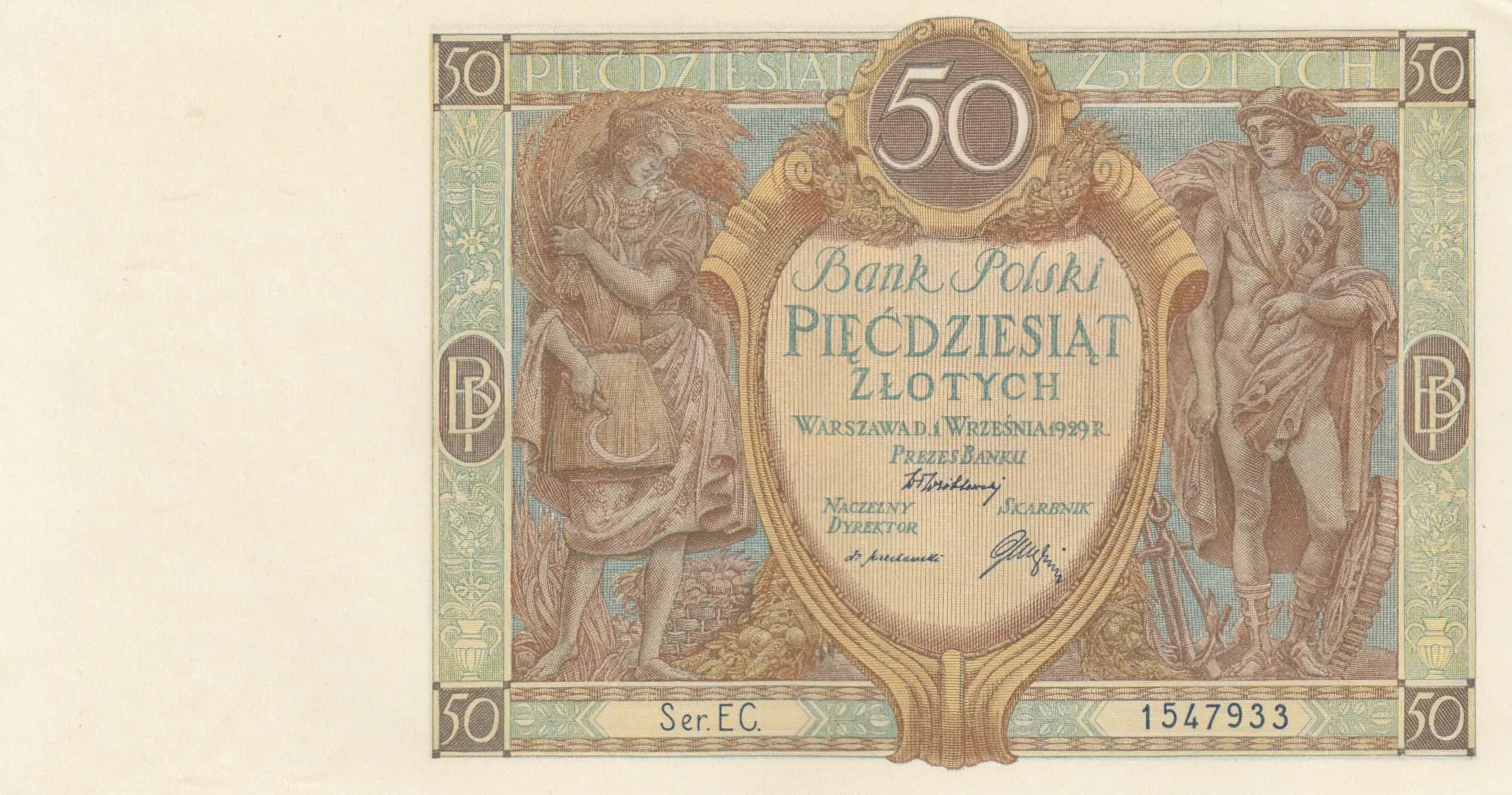
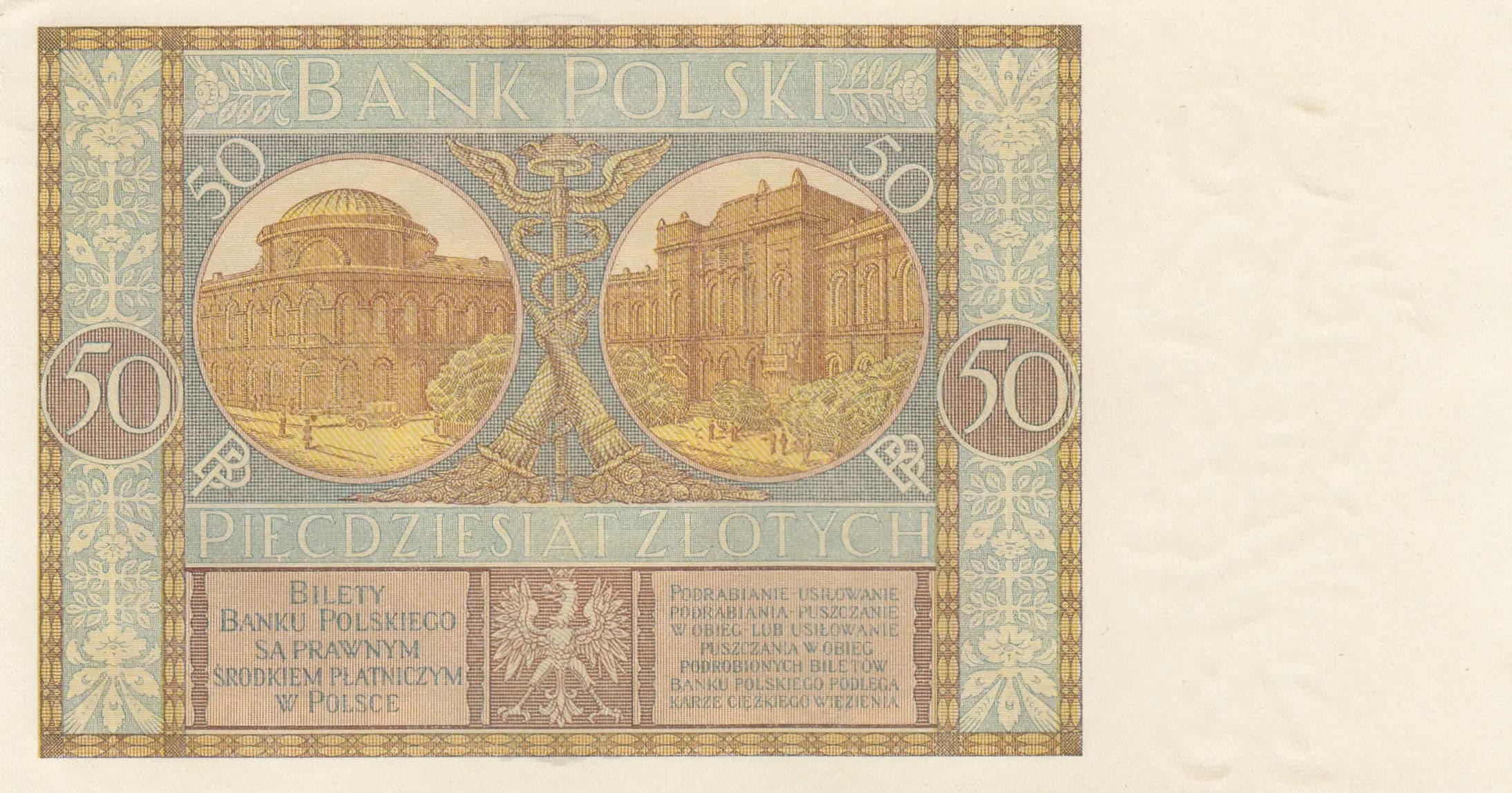
This is a beautifully preserved Polish 50 Zlotych banknote from 1929, graded UNC (Uncirculated), issued by Bank Polski on September 1, 1929. The note features exceptional clarity and condition with no visible circulation wear, creases, or foxing, presenting the intricate allegorical and architectural engravings in pristine detail. The design showcases fine line engraving with allegorical female figures and important Polish architectural landmarks, making it a notable example of interwar Polish currency design.
Common. The eBay sales data spanning 2012-2025 shows consistent, modest pricing across all conditions—UNC examples typically realizing $5-$29, with most sales under $15. The extensive transaction history demonstrates ready market availability at collector level. Print run data for this series was substantial, and the note was not recalled or subject to withdrawal, indicating no artificial scarcity. This is a standard, regularly encountered issue from the 1929 Polish banknote series.
This note was issued during the stabilization period of the Polish currency following the economic turbulence of the 1920s, after the establishment of the złoty as the national currency in 1924. The allegorical imagery and architectural vignettes reflect Poland's post-independence confidence and modernization efforts during the Second Polish Republic. The September 1, 1929 issue date places this note at the cusp of the Great Depression, making it part of a transitional era in Polish monetary history.
The obverse features two allegorical female figures flanking a central ornamental oval frame—the left figure represents Agriculture or Harvest (holding a palm frond or agricultural symbol), while the right figure represents Commerce or Mercury (identifiable by the caduceus or merchant's staff). The reverse displays two circular architectural vignettes: the left depicts a classical domed civic or religious building, while the right shows a grand ornate structure with multiple towers, likely representing the old and new Bank Polski buildings as referenced in catalog sources. The color scheme employs light blue-green, brown, and tan tones with cream/beige accents. Decorative elements include ornate scrollwork, cross-hatching, urns, floral motifs, and the Polish eagle emblem. The note is dominated by fine ornamental borders and repeating geometric patterns throughout, characteristic of high-security banknote design of the period.
FRONT: '50' and 'PIECDZIESIĄT ZŁOTYCH' (Fifty Zlotych) appear in corner denominations. Central text includes 'Bank Polski' (Bank of Poland), 'WARSZAWA D.1 WRZEŚNIA 1929 R.' (Warsaw, September 1, 1929), 'PREZES BANKU' (President of the Bank), 'NACZELNY SKARBNIK' (Chief Treasurer), and 'DYREKTOR' (Director). Series designation 'Ser.EC' and serial number '1547933' are printed. BACK: 'BANK POLSKI' and 'PIECDZIESIĄT ZŁOTYCH' (Fifty Zlotych) appear at top. Legal tender declaration reads 'BILETY BANKU POLSKIEGO SA PRAWNYM ŚRODKIEM PŁATNICZYM W POLSCE' (Bank of Poland notes are legal tender in Poland). Warning text states 'PRARABIANIE USŁOWANIE WYTWARZANIA I ROZPOWSZECHNIANIA FALSYWYCH BILETÓW BANKU POLSKIEGO PODLEGA KARZE WIĘZIENIA' (Counterfeiting, production, and distribution of forged Bank of Poland notes is subject to imprisonment).
This banknote was produced using intaglio (engraved) printing, as evidenced by the deep, detailed line work, fine cross-hatching, and intricate engraving patterns visible throughout both sides. The multiple layers of decorative engraving, fine detail work in the allegorical figures and architectural vignettes, and the precision of the text all indicate professional banknote intaglio production. This was the standard security printing technique employed by Bank Polski for denominations during this period, likely produced by the Polish state printing facility.
This specimen is identified as Series EC with serial number 1547933, representing the regular EC series of the 1929 issue. The visual analysis confirms the standard design as described in catalog references (P-71), with the characteristic color combination of green, brown, and blue. No overprints, significant printing variations, or known major varieties are evident from this example. The series designation and serial number prefix (EC) may be used to distinguish between different series runs within the 1929 issue, but no specific rare varieties are indicated for this Pick number.