50 zlotych 1941
Market Prices
83 salesAbout This Note
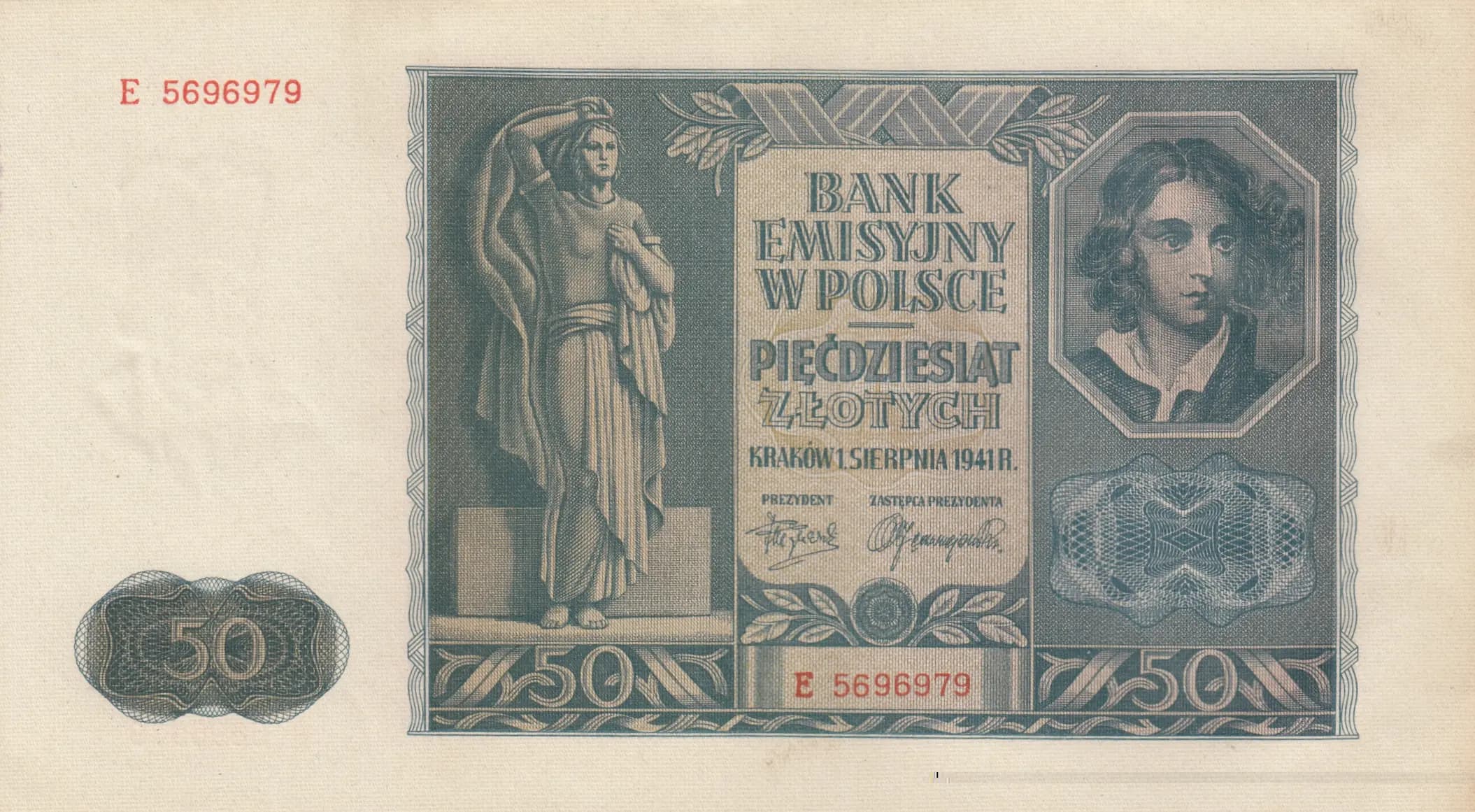
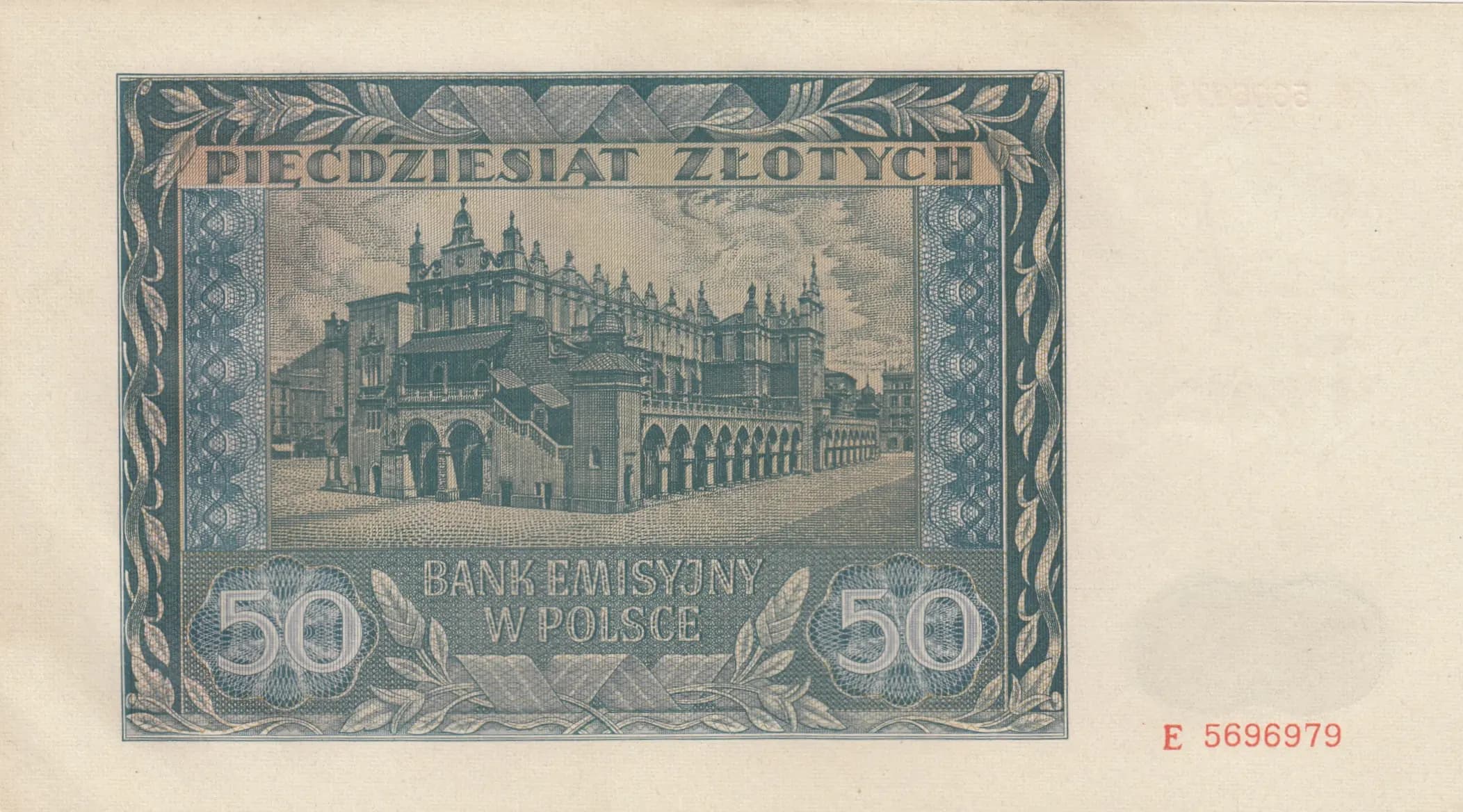
This is a Poland 50 zlotych banknote from August 1, 1941, issued by Bank Emisyjny w Polsce during the German occupation period. The note is in AU (About Uncirculated) condition with pristine appearance, featuring a classical female allegorical figure on the obverse and a detailed Gothic architectural structure (the Cloth Hall of Kraków) on the reverse. The intricate engraving, uniform cream coloring, and absence of wear, creases, or foxing make this an attractive example of Polish wartime currency.
Common. This banknote, despite its wartime historical significance, is relatively common in the collector market. eBay sales data spanning over a decade shows consistent availability with prices typically ranging from $1-15 for notes in F to AUNC condition, with AU examples generally selling in the $5-12 range. The large volume of sales transactions (over 100 recorded) indicates substantial circulation among collectors and steady supply. While the 1941 date and occupation-era provenance make it historically interesting, it does not command premium prices typical of scarce or rare issues.
This banknote was issued during World War II under German occupation of Poland, with the date and place of issue (Kraków, August 1, 1941) prominently displayed on the obverse. The classical female figure likely represents Polish national identity or civic virtue, while the architectural landmark on the reverse—the famous Cloth Hall (Tuchhalle) of Kraków—symbolizes Polish cultural and commercial heritage. The Bank Emisyjny w Polsce (Emission Bank in Poland) was the German-controlled central banking authority established during the occupation, making this note a historically significant artifact of the wartime period.
The obverse features a formal, classical design with a robed female allegorical figure positioned on the left side, representing Polish national or civic virtues. On the right, within an octagonal frame, is a male portrait (likely a historical Polish figure or dignitary). The center displays the bank name and denomination prominently. The reverse showcases the Cloth Hall (Sukiennice) of Kraków, a magnificent Gothic structure with multiple spires, towers, and ornate stonework characteristic of late medieval Polish architecture. Both sides are framed by elaborate decorative ornamental borders featuring floral and geometric patterns, with fine cross-hatching and detailed engraving throughout. The dominant colors are dark teal/green and cream/beige on a gray-toned paper base.
Front: 'BANK EMISYJNY W POLSCE' (Emission Bank in Poland), 'PIECDZIESIAT ZLOTYCH' (Fifty zlotych), 'KRAKOW 1 SIERPNIA 1941 H.' (Kraków 1 August 1941), 'PREZYDENT' (President), 'ZASTUPA PREZYDENTA' (Deputy President), serial number 'E 5696979', denomination '50'. Back: 'PIECDZIESIAT ZLOTYCH' (Fifty zlotych), 'BANK EMISYJNY W POLSCE' (Emission Bank in Poland), denomination '50', serial number 'E 5696979'.
Intaglio engraving (steel plate engraving), evidenced by the fine line work, precise geometric patterns, intricate architectural details, and the characteristic crisp appearance of engraved banknote printing. The detailed cross-hatching, ornamental flourishes, and multiple layers of fine line work are hallmarks of professional security printing. The note was likely produced by a German security printer operating under occupation authority, consistent with Pick catalog documentation for Bank Emisyjny w Polsce issues of this period.
Serial number E 5696979 observed on this example. Known varieties for this Pick-102 issue include different serial number prefixes and potentially printer variations, though precise variety designation requires comprehensive reference materials. The August 1, 1941 date is standard for this issue (not a variety factor). No visible overprints or unusual features observed that would constitute a recognized variety. Collector variation assessment would benefit from comparison with other examples in institutional collections.