5 zlotych 1930
Market Prices
25 salesAbout This Note
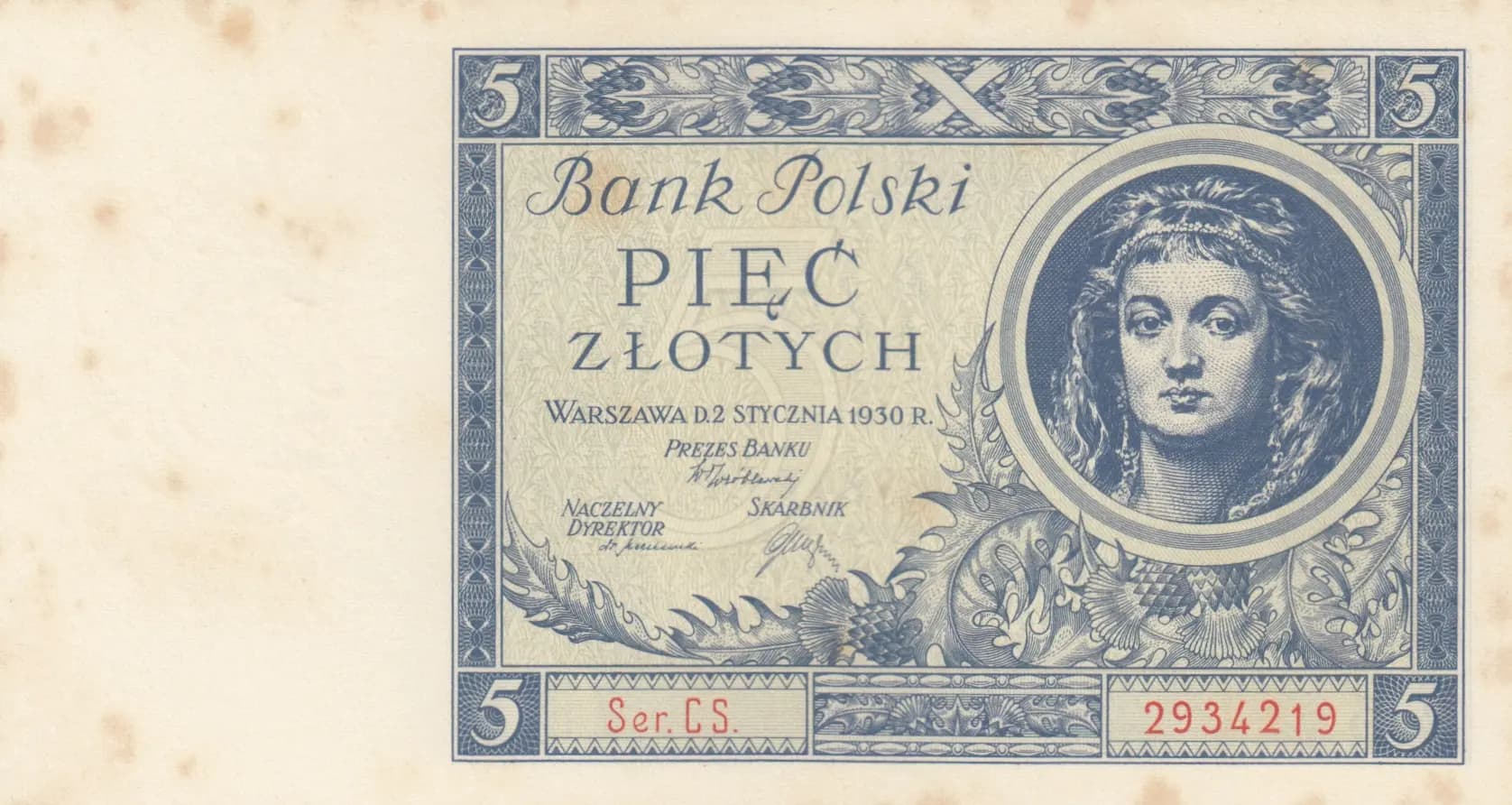
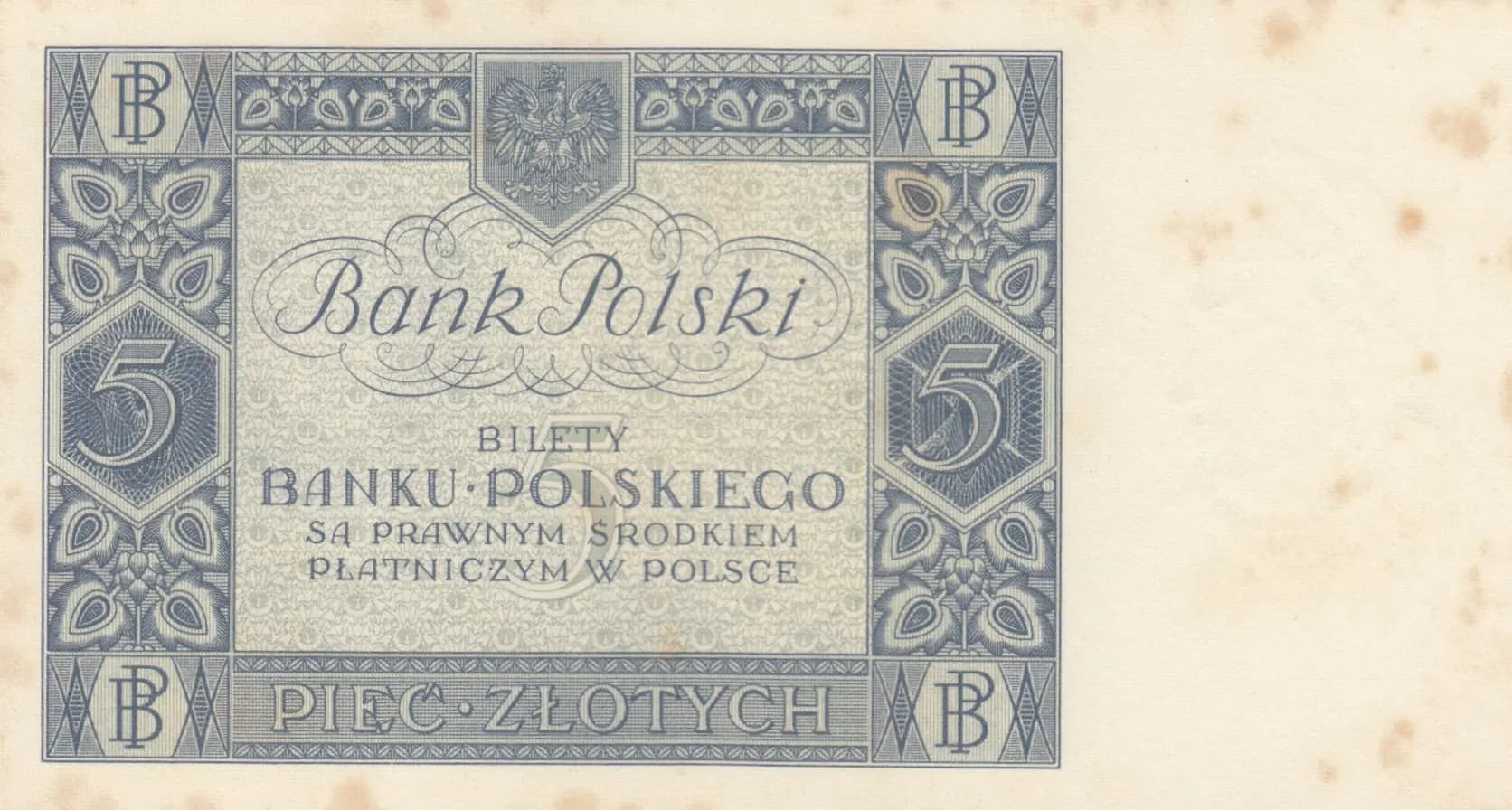
A well-preserved example of Poland's Bank Polski 5 zlotych note from 1930, graded AU with excellent eye appeal. The front features an elegant circular portrait of a young woman with distinctive long braided hair rendered in fine detail, while the reverse displays the crowned Polish eagle emblem characteristic of interwar Polish currency. Light age-related foxing and cream-colored patina are consistent with the note's near-90-year age and do not detract from its strong overall preservation.
Common. Market data from realbanknotes.com shows consistent eBay sales of this Pick number across multiple condition grades, with AUNC specimens regularly selling in the $15-$20 range and certified examples (PMG 64-66) achieving $20-$48. The 1930 5 złotych was a standard circulation note with substantial print runs. The AU grade specified is well-represented in the secondary market, indicating broad availability without rarity premium.
Issued on January 2, 1930, this note represents Poland's early independent monetary period following World War I and the restoration of the Polish state. The prominent display of 'Bank Polski' and the crowned eagle symbol reflected the newly sovereign nation's commitment to establishing a stable, nationally-backed currency. The ornate classical design aesthetic was typical of 1920s-1930s European banknote artistry, projecting institutional authority and economic confidence during the interwar period.
The 5 złotych note features a symmetrical, ornately engraved design typical of early 20th-century European banknote production. The obverse is dominated by a central circular vignette portrait of a young woman identified as E. Plater (a historical Polish patriot figure), rendered in fine lines with characteristic long braided hair—a nod to traditional Polish cultural imagery. The reverse is architecturally balanced with elaborate decorative corner panels containing floral and geometric scrollwork, and prominently features the crowned Polish eagle emblem within a shield at the top center, symbolizing national sovereignty. The color scheme employs blue printing on a cream/white underprint, creating strong visual contrast and legibility. The note's frame consists of ornate linear borders and corner decorations incorporating the denomination numeral '5'.
FRONT: 'Bank Polski' (Polish Bank); 'PIĘĆ ZŁOTYCH' (Five Zlotych); 'WARSZAWA D.2 STYCZNIA 1930 R.' (Warsaw, January 2, 1930); 'PREZES BANKU' (President of the Bank); 'NACZELNY DYREKTOR' (Chief Director); 'SKARBNIK' (Treasurer); Serial number 2934219, Series CS. BACK: 'Bank Polski' (Polish Bank); 'BILETY BANKU POLSKIEGO' (Banknotes of the Polish Bank); 'SĄ PRAWNYM ŚRODKIEM PŁATNICZYM W POLSCE' (Are legal tender in Poland); 'PIĘĆ ZŁOTYCH' (Five Zlotych).
Intaglio (engraved line) printing on paper with a watermark featuring a portrait head. The fine line work, detailed shading in the portrait vignette, and crisp ornamental patterns are characteristic of high-quality intaglio banknote production standard for Polish currency of this period. The Bank Polski contracted with established European security printers for its 1930s-era notes, with production quality consistent with PWN (Polska Wytwórnia Papierów Wartościowych) or similar Central European security printing facilities.
This specific example carries Series CS and serial number 2934219. The 1930 5 złotych issue (Pick 72) is known with multiple signature combinations reflecting different officials holding the positions of Bank President, Chief Director, and Treasurer. No significant overprints, watermark varieties, or design variations are evident in this specimen. The standard variety for this Pick number and date has been catalogued, with no rare signature or printing variants noted for this particular series prefix.