20 zlotych 1940
Market Prices
65 salesAbout This Note
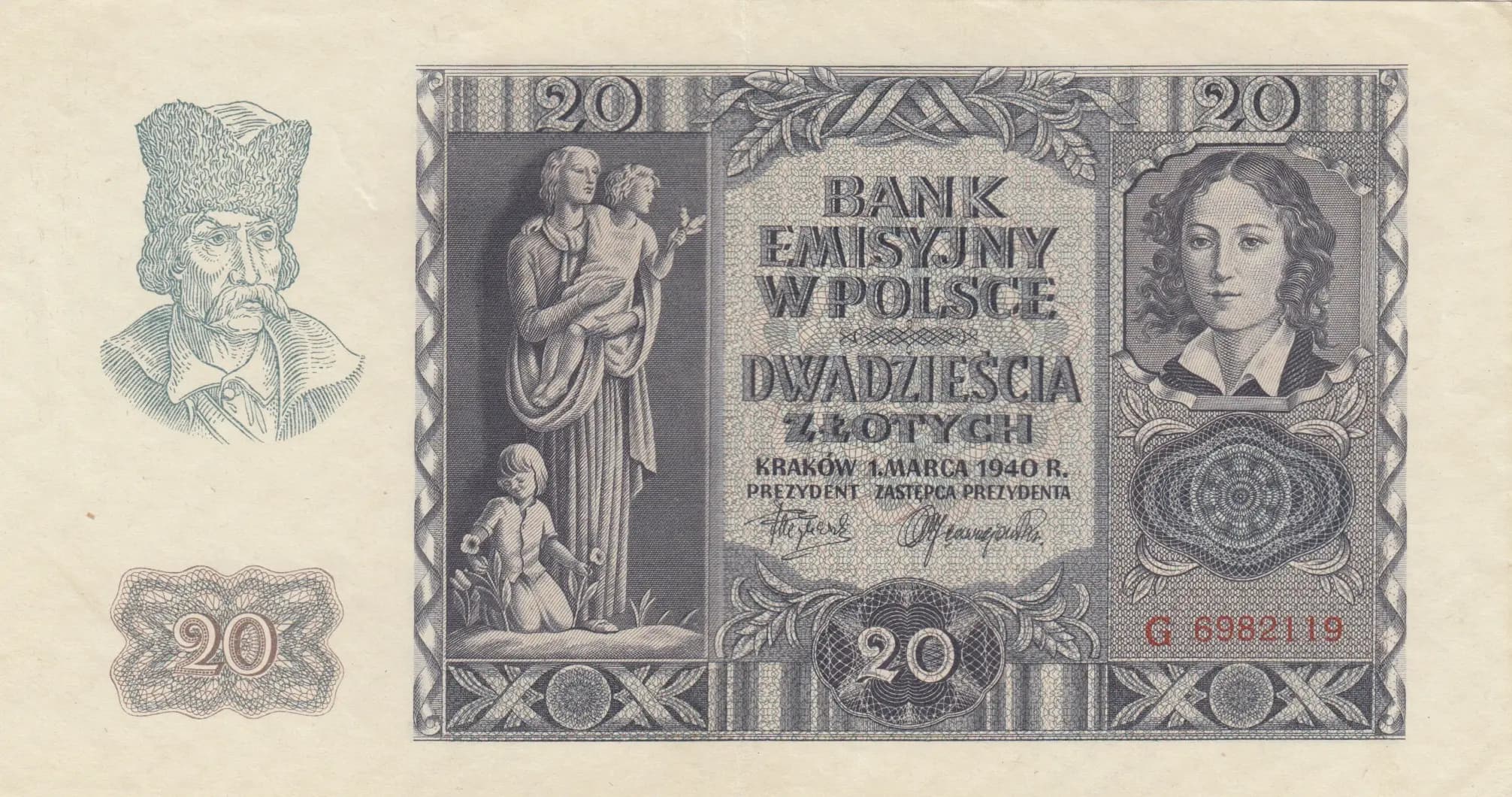
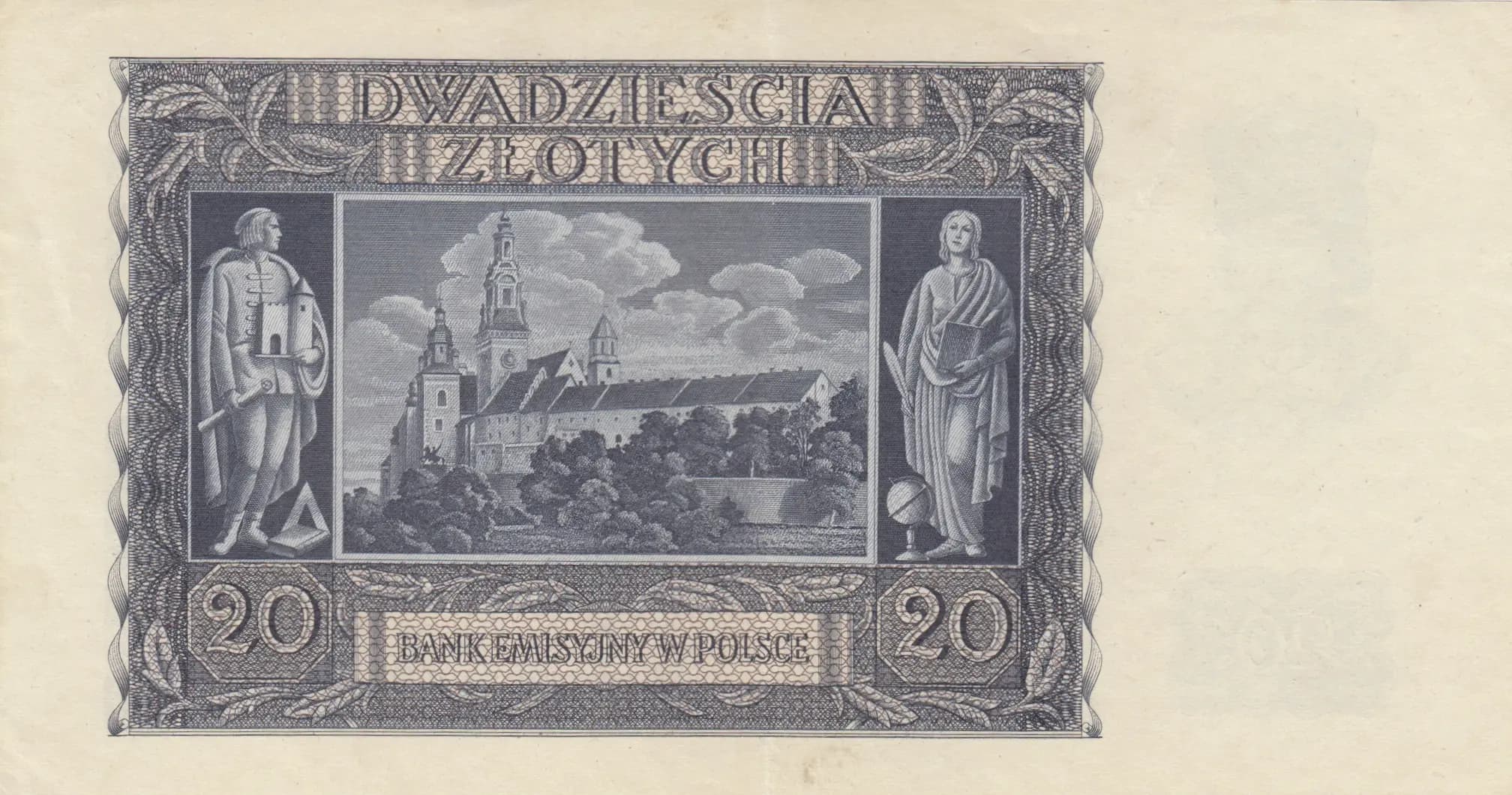
This is a Poland 20 złotych note from March 1, 1940, issued by Bank Emisyjny w Polsce (Pick-95), graded in AU condition. The obverse features a bearded male portrait on the left and a young woman with curled hair on the right, with classical allegorical figures between them, while the reverse displays a prominent cathedral (Wawel Castle) flanked by standing classical figures representing Poland's cultural heritage. The note exhibits exceptional preservation with no visible wear, creases, or damage, displaying the fine engraved detail characteristic of interwar Polish currency.
Common. eBay market data shows consistent sales across a wide range of condition grades from 2010-2025, with prices ranging from $0.25 (poor condition) to $125 (PMG 67), and AU/UNC examples typically selling in the $12-45 range. The regular issue status, extended circulation period before wartime disruptions, and steady availability on the secondary market indicate this is a widely available note in most conditions. High-grade certified examples (PMG 65+) command modest premiums but remain reasonably accessible to collectors.
This banknote was issued during the final year before Poland's invasion by Nazi Germany, representing the last regular currency issue of the Bank Emisyjny w Polsce under the Second Polish Republic. The reverse imagery featuring Wawel Castle in Kraków symbolizes Polish national identity and historical continuity, while the allegorical figures on both sides reflect the classical artistic traditions valued by the interwar Polish state. The March 1940 date places this issue at a critical juncture in European history, making it a poignant artifact of Poland's pre-war sovereignty.
The obverse features a commemorative design centered on Emilie Plater (the young woman on the right), a Polish heroine from the November Uprising, alongside a bearded male portrait (likely a historical or contemporary figure of state) on the left. The central composition depicts a woman with two children in classical dress, representing allegorical concepts of motherhood, education, or national hope. The reverse is dominated by Wawel Castle (Krak�w), the royal residence and symbol of Polish statehood, rendered in detailed architectural perspective and surrounded by landscape elements. Flanking the castle are two classical figures: a male warrior or protector figure on the left holding a shield and sword, and a female figure on the right in draped classical robes, likely representing Poland itself or virtues such as wisdom and protection. The entire design is framed by intricate ornamental borders featuring floral and geometric patterns typical of 1930s-40s currency design.
Front side: 'BANK EMISYJNY W POLSCE' (Emission Bank in Poland), 'DWADZIEŚCIA ZŁOTYCH' (Twenty Zlotych), 'KRAKÓW 1.MARCA 1940 R.' (Kraków, March 1, 1940), 'PREZYDENT' (President), 'ZASTĘPCA PREZYDENTA' (Deputy President), with denomination '20' in Arabic numerals and serial number 'C 8982118'. Back side: 'DWADZIEŚCIA ZŁOTYCH' (Twenty Zlotych), 'BANK EMISYJNY W POLSCE' (Emission Bank in Poland), denomination '20' in corner positions.
Intaglio engraving (recess printing), the dominant method for high-security banknotes of this era. The fine line work, detailed background patterns, complex allegorical scenes, and sharp portrait definition visible in the images are characteristic of steel engraving. The printer for Polish Bank Emisyjny notes of this period was typically Polska Drukarnia Papierów Wartościowych (Polish State Security Printing Works) or international security printers such as De La Rue; detailed printer attribution for this specific Pick number would require examination of plate marks or archival documentation.
Serial number observed: C 8982118. This note is consistent with the standard 1940 issue. Varieties for Pick-95 may exist based on signature combinations (president and deputy president positions shown but not individually identified in this analysis) or serial number prefix variations. The March 1, 1940 date is the known official issue date for this Pick number. No overprints or special varieties are evident from the visual analysis of this example.