2 zlote 1941
Market Prices
24 salesAbout This Note
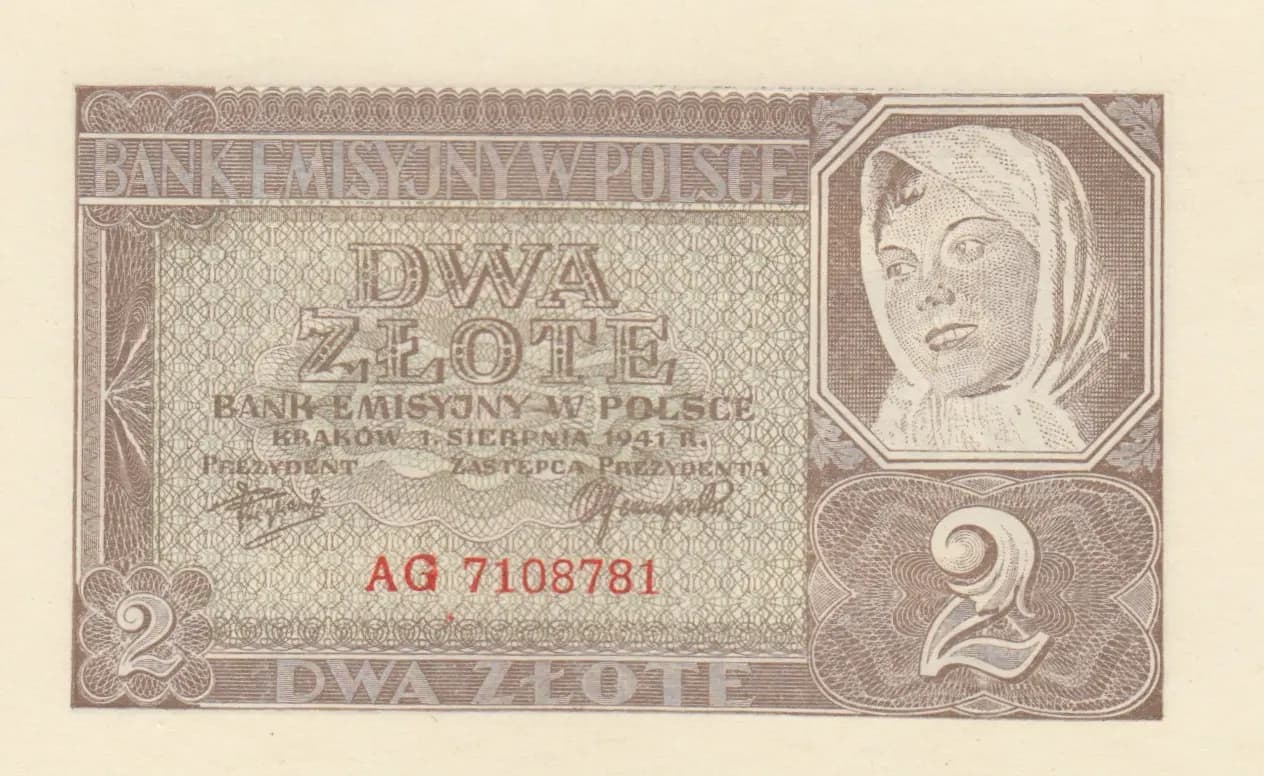
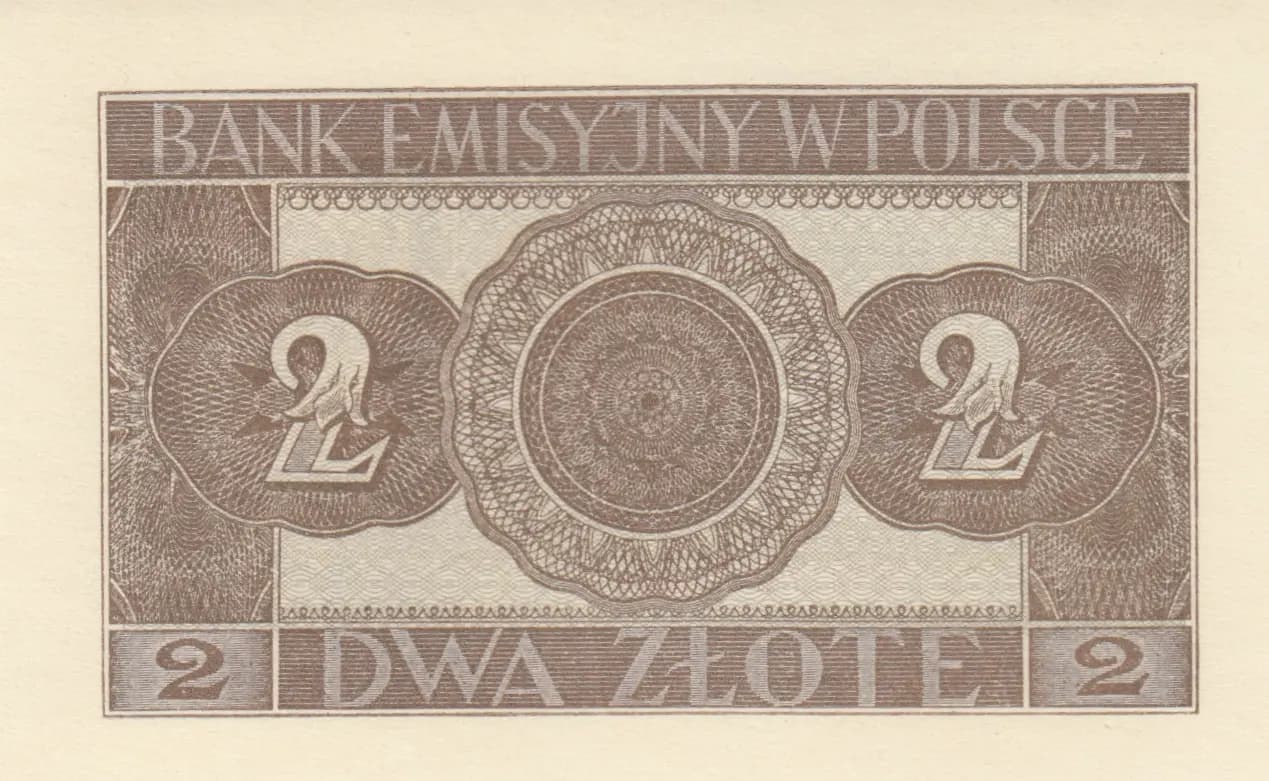
This is a 2 Złote banknote from Poland issued by Bank Emisyjny w Polsce on August 1, 1941, graded UNC. The note features an elegant portrait of a peasant woman wearing a traditional head scarf in profile on the obverse, set within an octagonal frame, with the reverse displaying a symmetrical design of ornate rosettes and denomination frames. The sharp printing, uniform cream-brown coloring, and complete absence of wear or circulation marks confirm its uncirculated status, making it a well-preserved example of wartime Polish currency.
Common. Despite being a wartime issue from the occupation period, the 2 Złote 1941 (Pick 100) remains common in the collector market. eBay price tracking data shows regular sales across all grade ranges, with UNC examples historically selling between $10-$31, well within the range for common 20th-century banknotes. The catalog value for UNC is listed at $10, and the note's consistent appearance on auction platforms with multiple sales per year indicates substantial surviving population.
This note was issued during the German occupation of Poland in World War II, a period when the Bank Emisyjny w Polsce (Bank of Issuance in Poland) continued limited operations under occupation. The imagery of the peasant woman with traditional head covering reflects a romanticized rural Polish identity, a common theme in wartime occupation currency designed to maintain cultural continuity. The August 1, 1941 date places the issue midway through the occupation period, during a time of restricted economic activity and tight currency control.
The obverse presents a formal portrait of a Polish peasant woman in profile facing left, wearing a traditional head scarf, enclosed in an octagonal ornamental frame positioned at upper right. The denomination '2' appears in an ornamental square frame below the portrait. Extensive decorative scrollwork and geometric lattice patterns form intricate borders on the left side and throughout the design. The reverse displays three ornamental frames arranged symmetrically: a central ornate rosette or medallion with complex geometric interlocking patterns flanked by two larger frames each containing the numeral '2'. The entire back design is enclosed within a decorative border with repeating geometric patterns. The color scheme is predominantly brown and tan on cream paper, with fine line engraving throughout creating the ornamental effects.
FRONT: 'BANK EMISYJNY W POLSCE' (Bank of Issuance in Poland), 'DWA ZŁOTE' (Two Zlote), 'KRAKÓW 1. SIERPNIA 1941 R.' (Kraków, August 1, 1941), 'PREZYDENT' (President), 'ZASTĘPCA PREZYDENTA' (Deputy President), Serial number 'AG 7108781'. BACK: 'BANK EMISYJNY W POLSCE' (Bank of Issuance in Poland), 'DWA ZŁOTE' (Two Zlote), multiple denomination numerals '2'.
Intaglio/engraving printing, evidenced by the fine line work, intricate lattice patterns, and complex geometric designs visible in both the portrait and ornamental elements. The sharp, precise definition of the decorative borders, the detailed rosette pattern on the reverse, and the overall crispness of the design in this uncirculated example are characteristic of high-quality intaglio production. Polish banknotes of this period were typically produced by domestic security printers; this note likely came from the Polish state printing facilities operating under German oversight.
The specimen observed carries the serial number 'AG 7108781'. The 'AG' prefix is the standard prefix for this issue. Notable varieties in this Pick number may include different signature combinations representing the President and Deputy President positions, though these are not typically distinguished in major catalogs as separate varieties. The series appears to use consistent prefixes, with no reported major varieties affecting collector value.