1000 marek 1919
“2 serija H”
Market Prices
67 salesAbout This Note
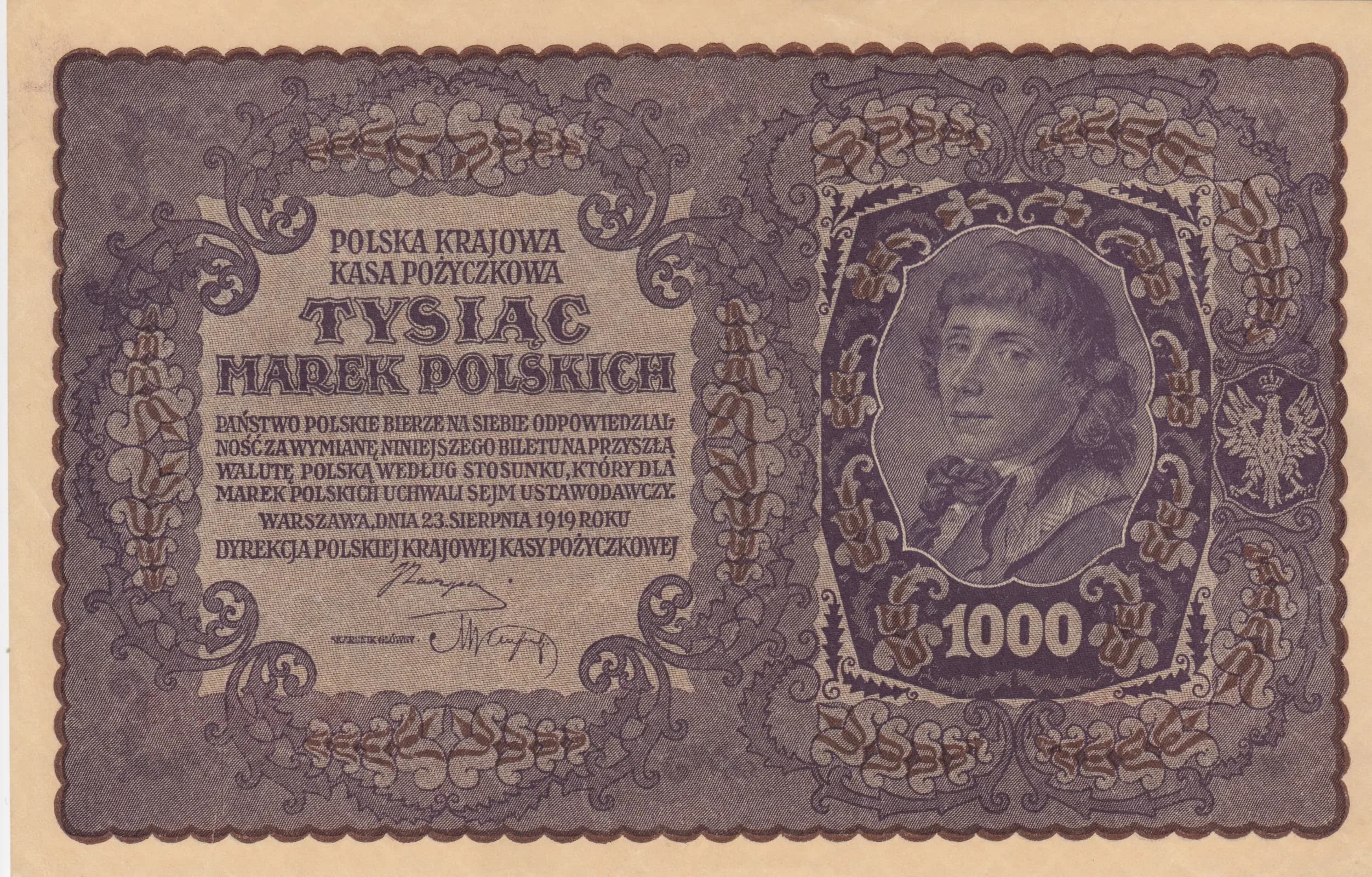
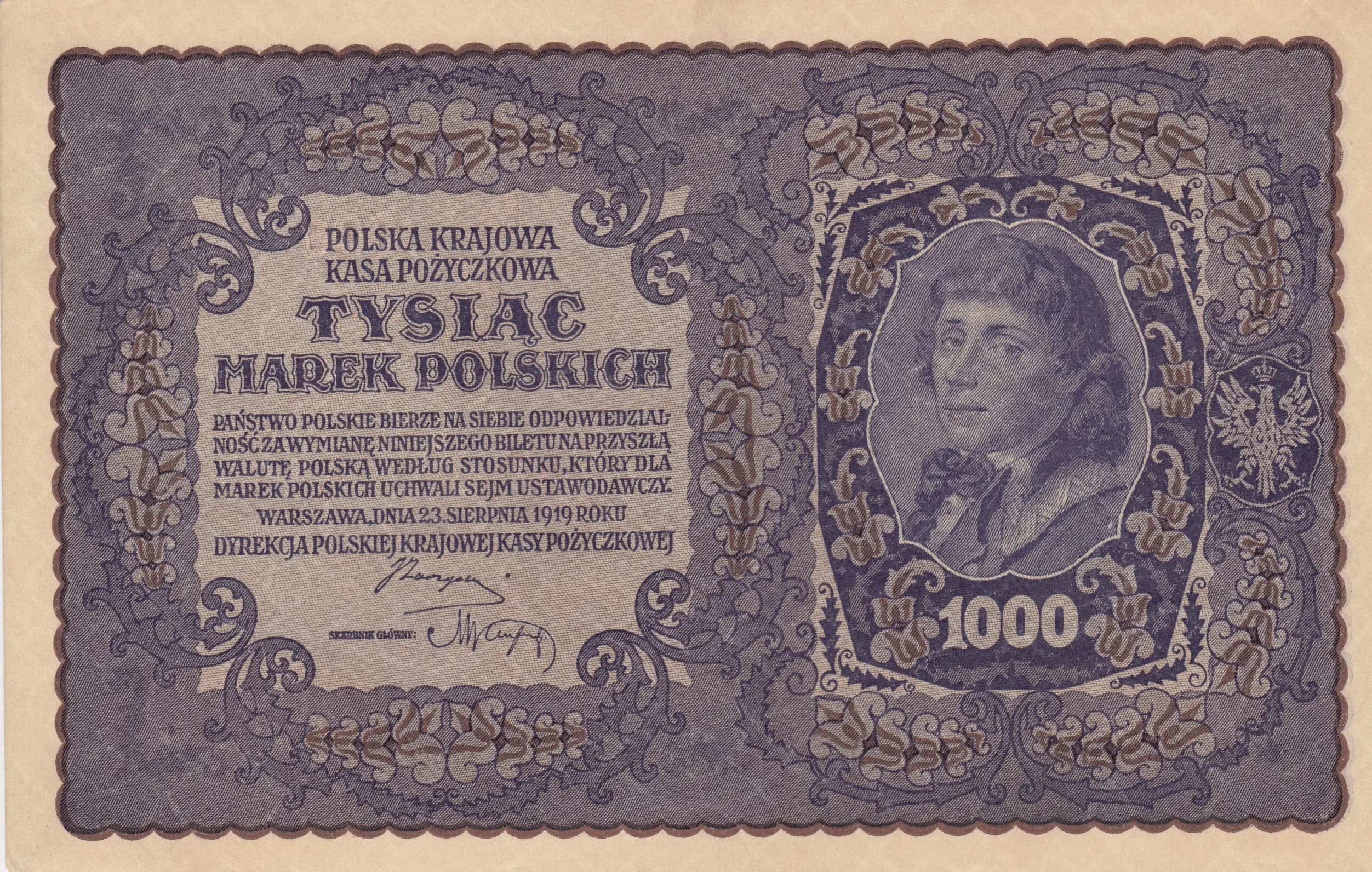
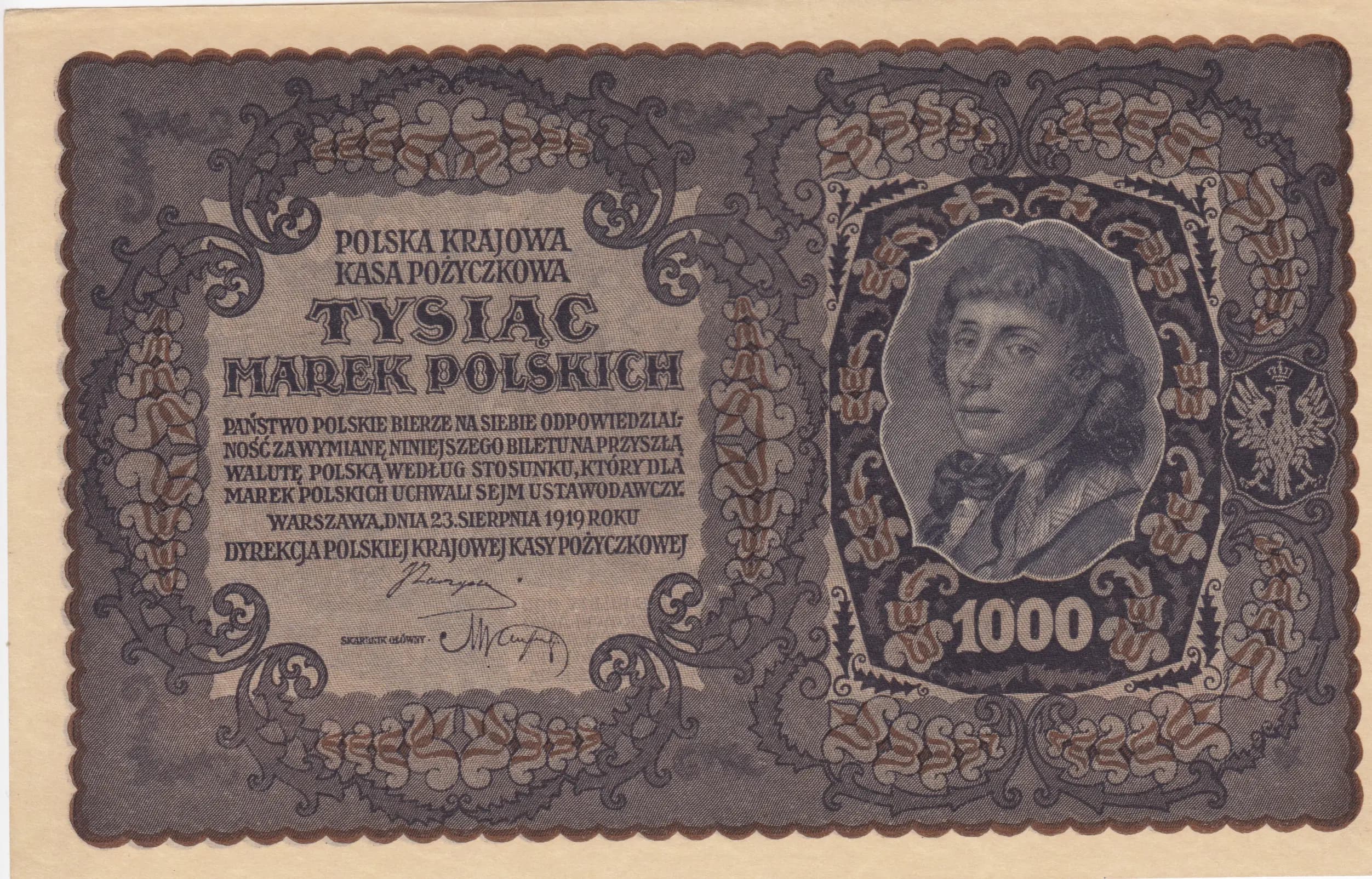
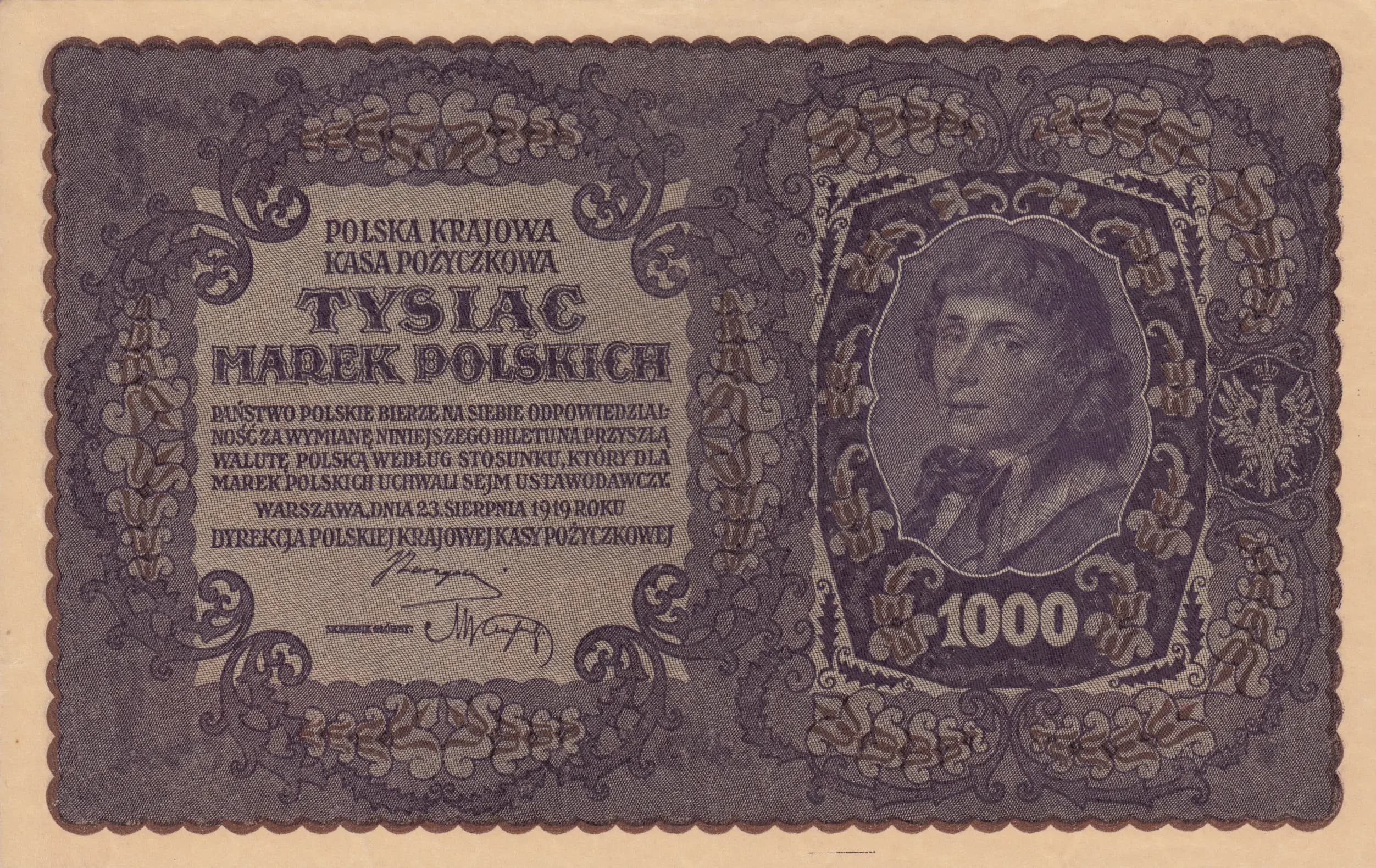
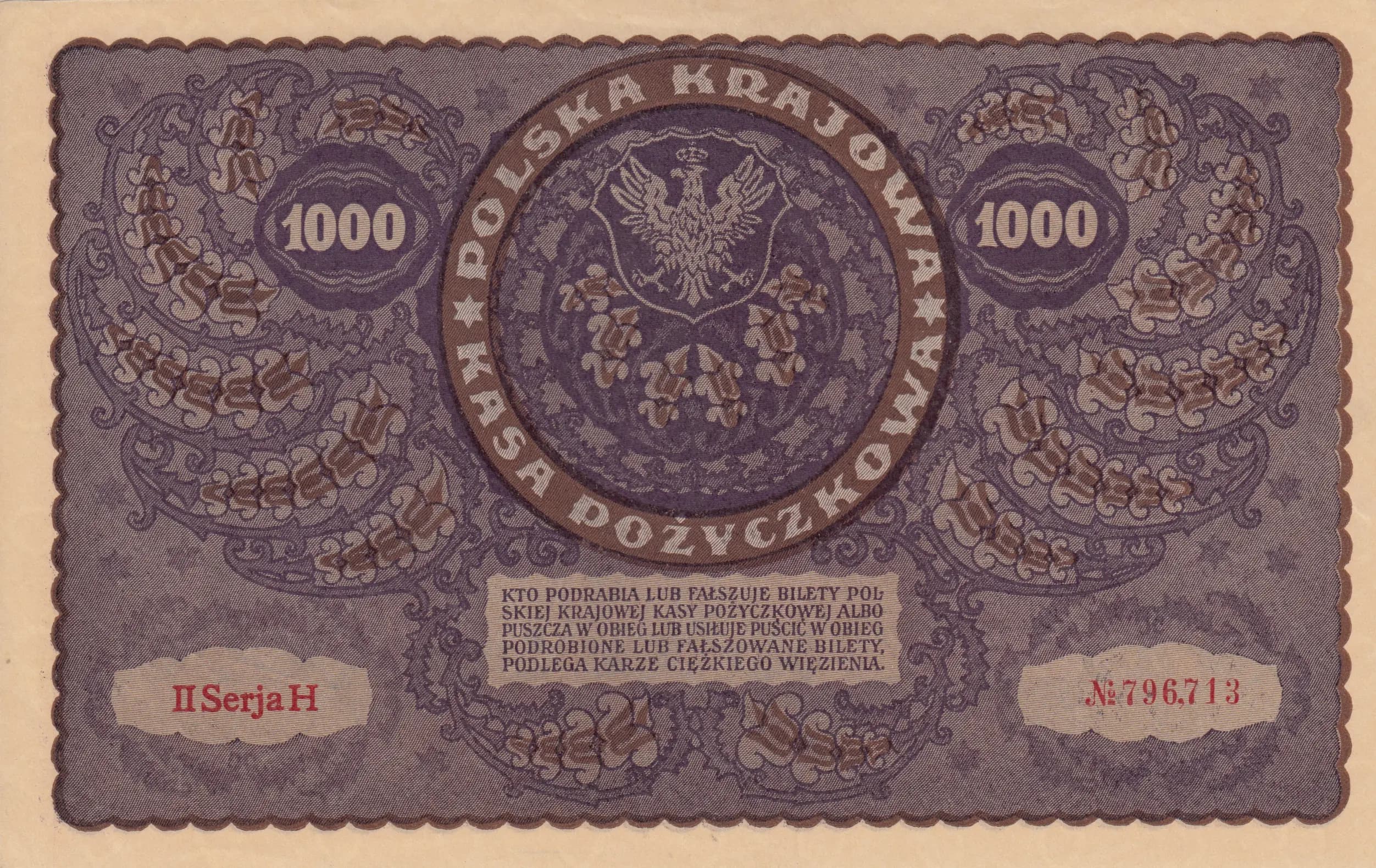
An exceptional example of Poland's 1919 1000 marek note issued by the Polska Krajowa Kasa Pozyczkowa, graded AU with excellent preservation. The note features distinctive purple/mauve coloring with intricate ornamental borders and displays crisp, sharp printing throughout with minimal wear. This Series II H specimen represents an important transitional currency from the early Polish state period, with the serial number 796713 clearly visible in red ink on the reverse.
Common. The 1919 1000 marek notes from the Polska Krajowa Kasa Pozyczkowa were issued in substantial quantities to support the newly independent Polish state's monetary needs during 1919-1924. While early Polish currency from this period has historical significance, these notes were widely circulated and surviving examples in all grades remain readily available to collectors. The AU grade represents above-average preservation rather than exceptional rarity, and no specific mintage or recall information suggests scarcity for this Pick number.
Issued on August 23, 1919, this banknote represents Poland's immediate post-World War I period when the newly independent Polish state was establishing its financial infrastructure. The Polska Krajowa Kasa Pozyczkowa (Polish National Loan Bank) served as a critical issuing authority during this transitional phase. The note's declaration that 'The Polish State assumes responsibility for exchanging this note for future Polish currency' reflects the provisional nature of these marks, which were temporary currency issued before the permanent złoty was established in 1924.
The obverse features an ornate portrait of an unidentified male figure rendered in profile or three-quarter view, positioned within an elaborate circular decorative frame with flourishes and scrollwork. The reverse displays the Polish heraldic double-headed eagle, a national symbol of sovereignty, centered within a circular emblem bearing the issuer's name. Both sides are framed by complex ornamental borders incorporating floral and scrollwork patterns characteristic of early 20th-century security printing. The denomination '1000' appears prominently in the lower right of the obverse and is repeated within circular medallions on the reverse, rendered in the dominant purple/mauve color scheme against a cream/tan background.
FRONT SIDE: 'POLSKA KRAJOWA KASA POŻYCZKOWA' (Polish National Loan Bank); 'TYSIĄC MAREK POLSKICH' (One Thousand Polish Marks); 'PAŃSTWO POLSKIE BIERZE NA SIEBIE ODPOWIEDZIALNOŚĆ ZA WYMIANĘ NINIEJSZEGO BILETU NA PRZYSZŁĄ WALUTĘ POLSKĄ WEDŁUG STOSUNKU, KTÓRY DLA MAREK POLSKICH UCHWALĄ SĘM USTAWODAWCZI' (The Polish State assumes responsibility for exchanging this note for future Polish currency at the rate which the legislative bodies will establish for Polish marks); 'WARSZAWA, DNIA 23 SIERPNIA 1919 ROKU' (Warsaw, 23 August 1919); 'DYREKCJA POLSKIEJ KRAJOWEJ KASY POŻYCZKOWEJ' (Direction of the Polish National Loan Bank). BACK SIDE: 'POLSKA KRAJOWA KASA POŻYCZKOWA' (Polish National Loan Bank); 'II Serja H' (Series II H); 'KTO PODRABIA LUB FAŁSZUJE BILETY POLSKIEJ KRAJOWEJ KASY POŻYCZKOWEJ ALBO PUSZLZA W OBIEG LUB UISUJE PUSCIĆ W OBIEG PODROBIONE LUB FAŁSZOWANE BILETY, PODLEGA KARZE CIĘZKIEGO WIĘZIENIA' (Whoever counterfeits or forges notes of the Polish National Loan Bank or puts in circulation or attempts to put in circulation counterfeit or forged notes is subject to hard labor imprisonment); Serial number '№ 796713'.
Intaglio (engraved) printing, evidenced by the crisp line-work, fine detail definition, and complex ornamental patterns observed throughout both sides. The intricate borders, portrait rendering, and heraldic eagle exhibit the characteristic precision and depth associated with engraved security printing methods employed for government-issued currency. The sharp print quality and excellent ink adhesion visible in the AU specimen indicate professional security printing standards typical of early Polish state banknotes.
Series II H variant with serial number 796713. The series designation 'II Serja H' is clearly documented on the reverse. This represents the second series (II) with H prefix designation, which helps distinguish production batches. While various series and serial ranges exist for the 1000 marek 1919 note, individual serial numbers do not create distinct cataloged varieties. Collectors may differentiate notes by series letter (A through H appear in different print runs), but this standard series II H is a typical production variant rather than a scarce or erroneous variety.