100 zlotych 1943
Market Prices
39 salesAbout This Note
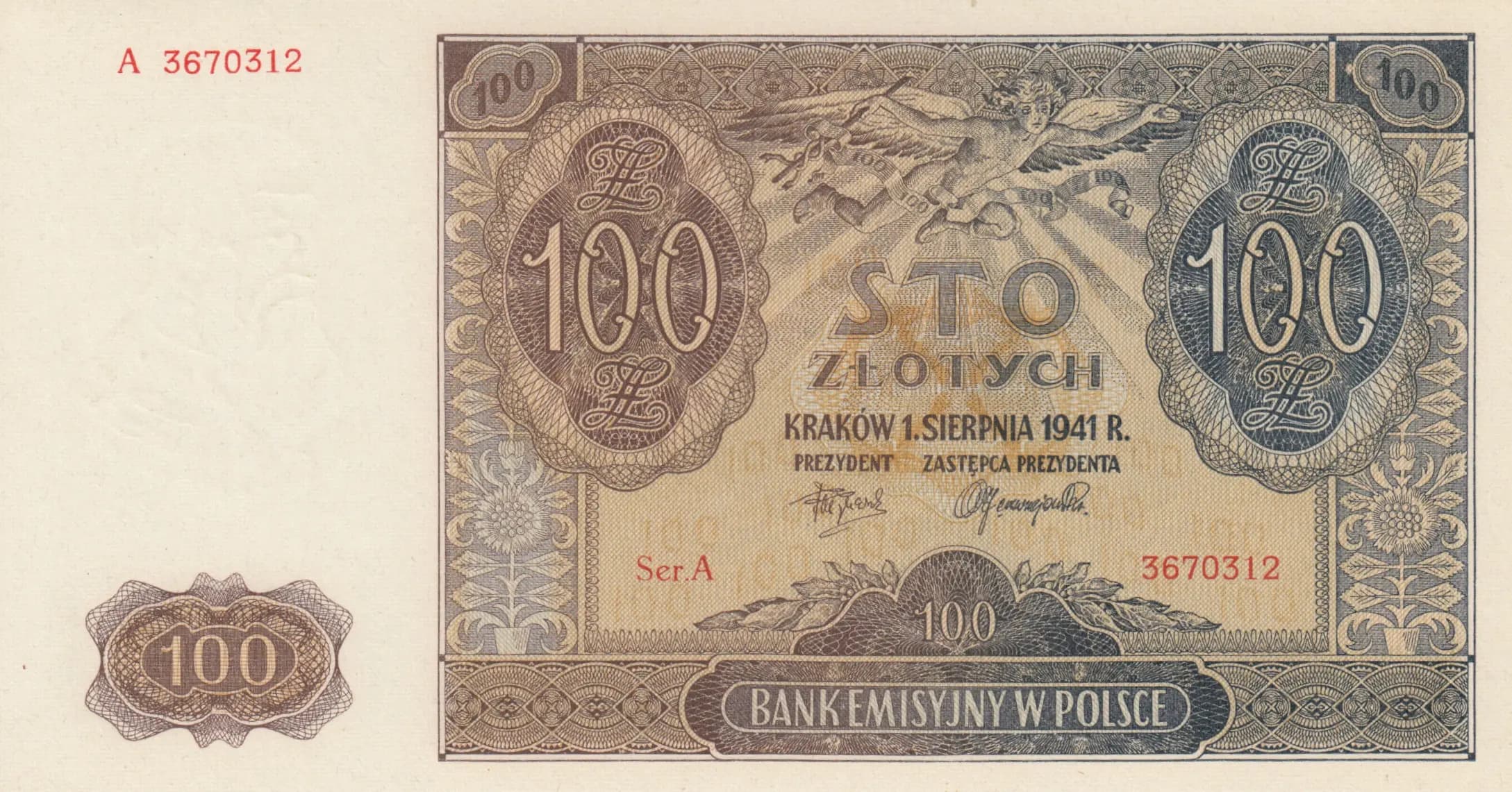
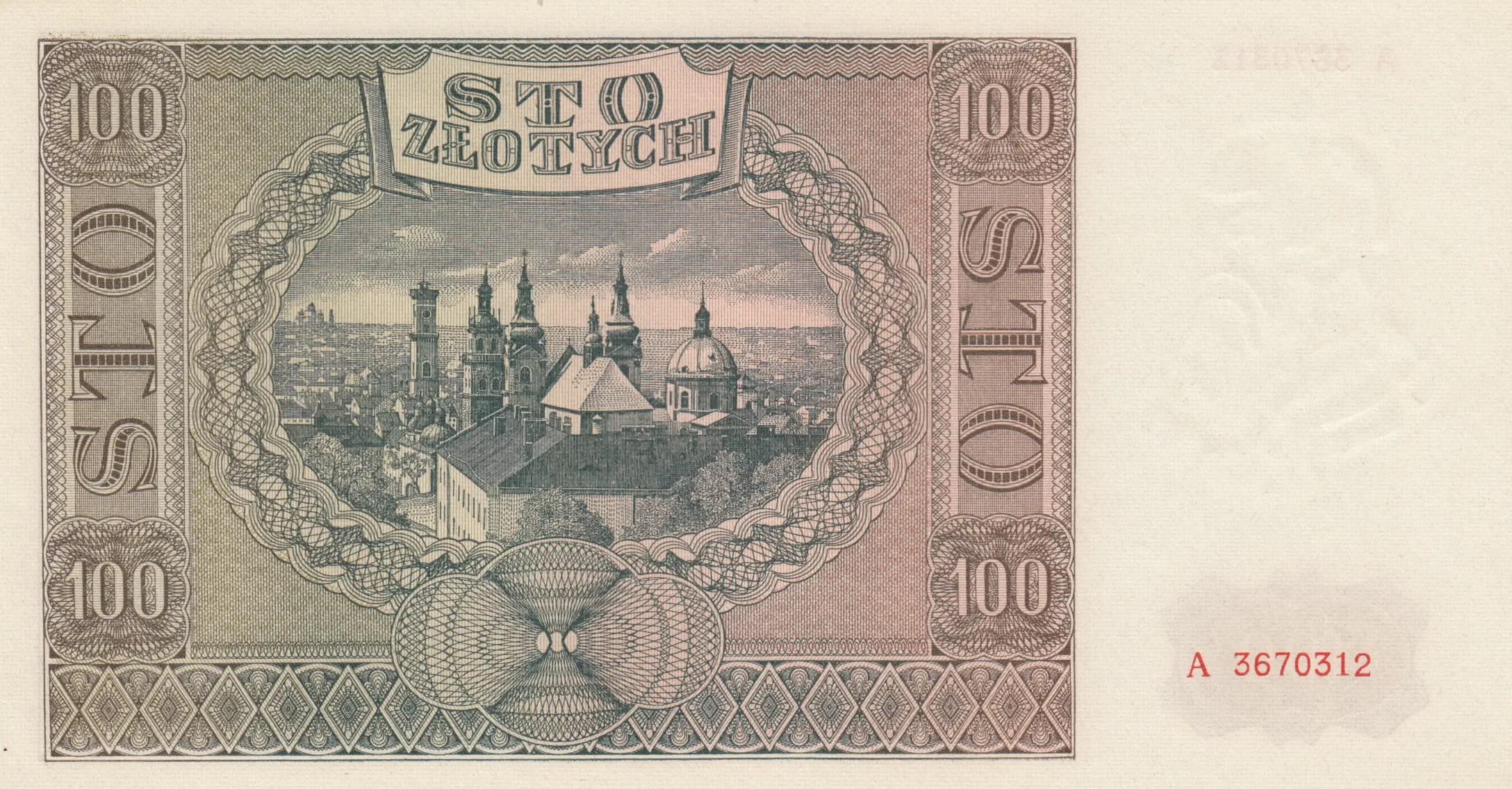
This is an uncirculated example of Poland's 100 Złotych note from 1941, issued by Bank Emisyjny w Polsce (the Emission Bank in Poland). The note displays pristine condition throughout, with sharp engraving detail visible in both the ornate decorative borders and the central cityscape on the reverse. The front features elegant geometric and floral patterns framing denomination numerals and official signatures, while the reverse showcases a detailed view of Kraków's skyline with its distinctive church spires and religious architecture—a striking representation of Polish cultural heritage from the wartime period.
Common. The eBay price data provided shows consistent sales activity spanning from 2012 to 2025, with most raw examples selling in the $3–$12 range depending on condition grade, and even PMG-graded examples (64–67) typically fetching $26–$92. The 2016 catalogue value of $15 UNC aligns with observed market prices. The large number of sales transactions documented indicates robust collector circulation and adequate supply in the market. While wartime occupation-era notes have historical interest, this Pick number was issued in sufficient quantities to remain accessible to collectors.
This banknote was issued on August 1, 1941, during Nazi occupation of Poland in World War II, by the Bank Emisyjny w Polsce—a German-controlled entity established to manage currency in occupied Polish territories. The obverse's formal design with presidential and deputy presidential signatures reflects the administrative structure imposed during occupation, while the reverse's depiction of Kraków's skyline—featuring multiple church spires and civic buildings—served as a cultural symbol, maintaining visual connection to Polish national identity despite foreign control. The Kraków date line prominently displayed on the front anchors the note to this specific wartime context.
The obverse features an ornate Classical design dominated by intricate floral and geometric borders in brown and tan tones. Large denomination numerals '100' in decorative circular frames occupy the upper corners. The center displays the issuer name, denomination text in Polish ('Sto Złotych'), the official date and location (Kraków, August 1, 1941), and signature lines for the President and Deputy President of the institution. A Polish eagle emblem appears at top center as the national symbol. The reverse presents a detailed engraved cityscape of Kraków featuring multiple church spires, religious domes (including a prominent central dome with cross), and civic towers set against a cloudy sky rendered in pink, gray, and blue tones. This cityscape is framed by matching ornate rope and floral border patterns. The design emphasizes Poland's cultural and religious identity through its architectural focus on Kraków's sacred and civic landmarks.
FRONT: 'Bank Emisyjny w Polsce' (Emission Bank in Poland); 'Sto Złotych' (One Hundred Złotych); 'Kraków 1.Sierpnia 1941 R.' (Kraków, 1st August 1941); 'Prezydent' (President); 'Zastępca Prezydenta' (Deputy President); 'Ser.A' (Series A); Serial number 'A 3670312'. BACK: 'Sto Złotych' (One Hundred Złotych); 'Bank Emisyjny w Polsce' (Emission Bank in Poland); Serial number 'A 3670312'. Denomination numerals '100' appear in all corners on both sides.
Intaglio engraving (line engraving), evidenced by the fine, precise linear patterns throughout the decorative borders, the detailed cross-hatching in security elements, and the intricate rendering of the cityscape architecture. The sharp detail visible in the uncirculated example, particularly in the geometric patterns and building silhouettes, is characteristic of high-quality intaglio production typical of 1941-era European banknote printing. The security features—including fine line patterns and geometric cross-hatching—were accomplished through traditional engraved plate techniques.
Series A is documented on this example (prefix 'Ser.A'). The serial number 'A 3670312' is a specimen of the primary series issued in 1941. Known varieties of this Pick-103 note include different series designations and signature combinations; however, without comprehensive reference material on all known series and signature varieties for this specific issue, detailed variety classification cannot be confirmed. The August 1, 1941 date is consistent with the standard issue date. Collectors should verify series letters and signatures when building collections of this note, as different official signatories were appointed during the occupation period.