100 marek 1919
“serie O”
Market Prices
6 salesAbout This Note
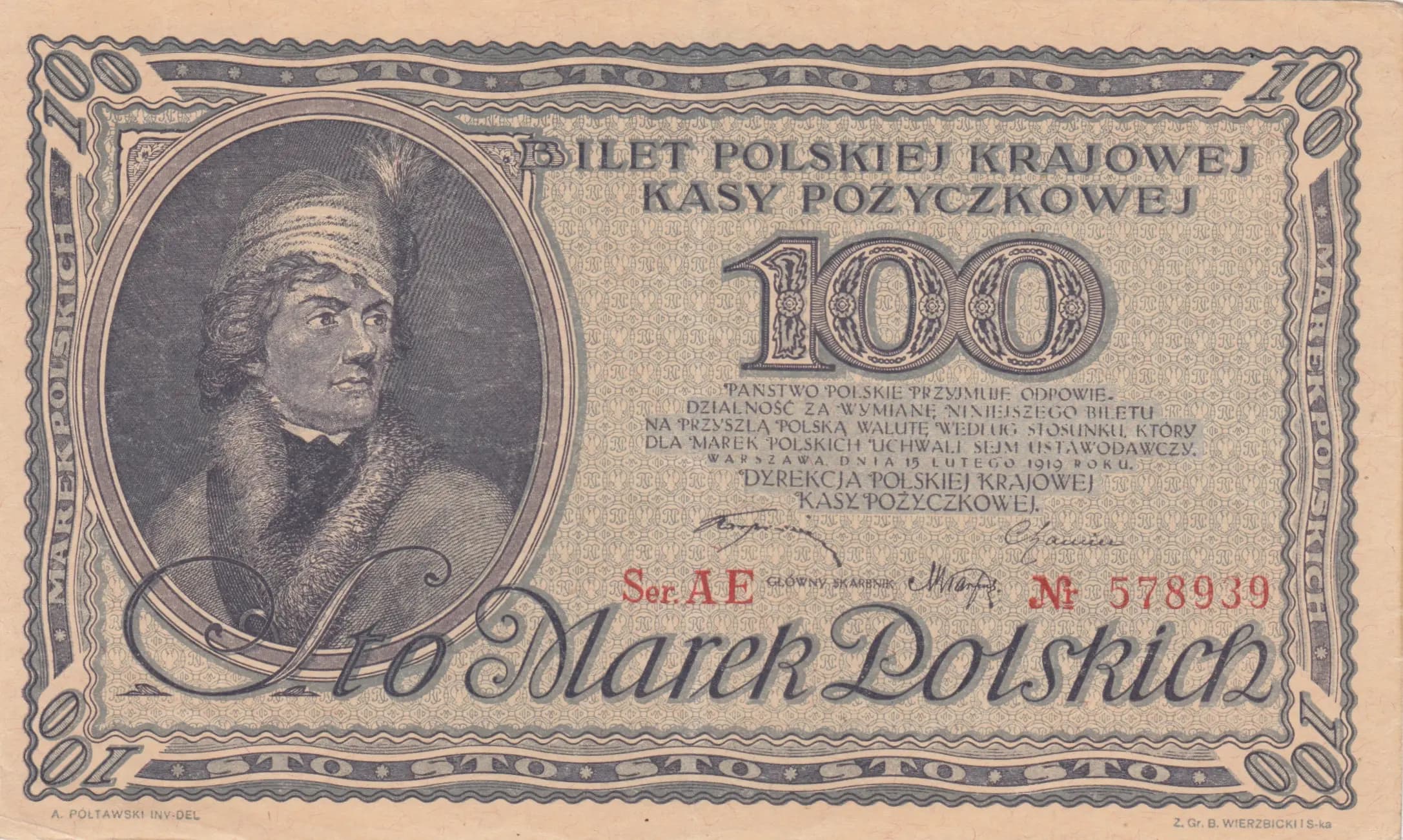
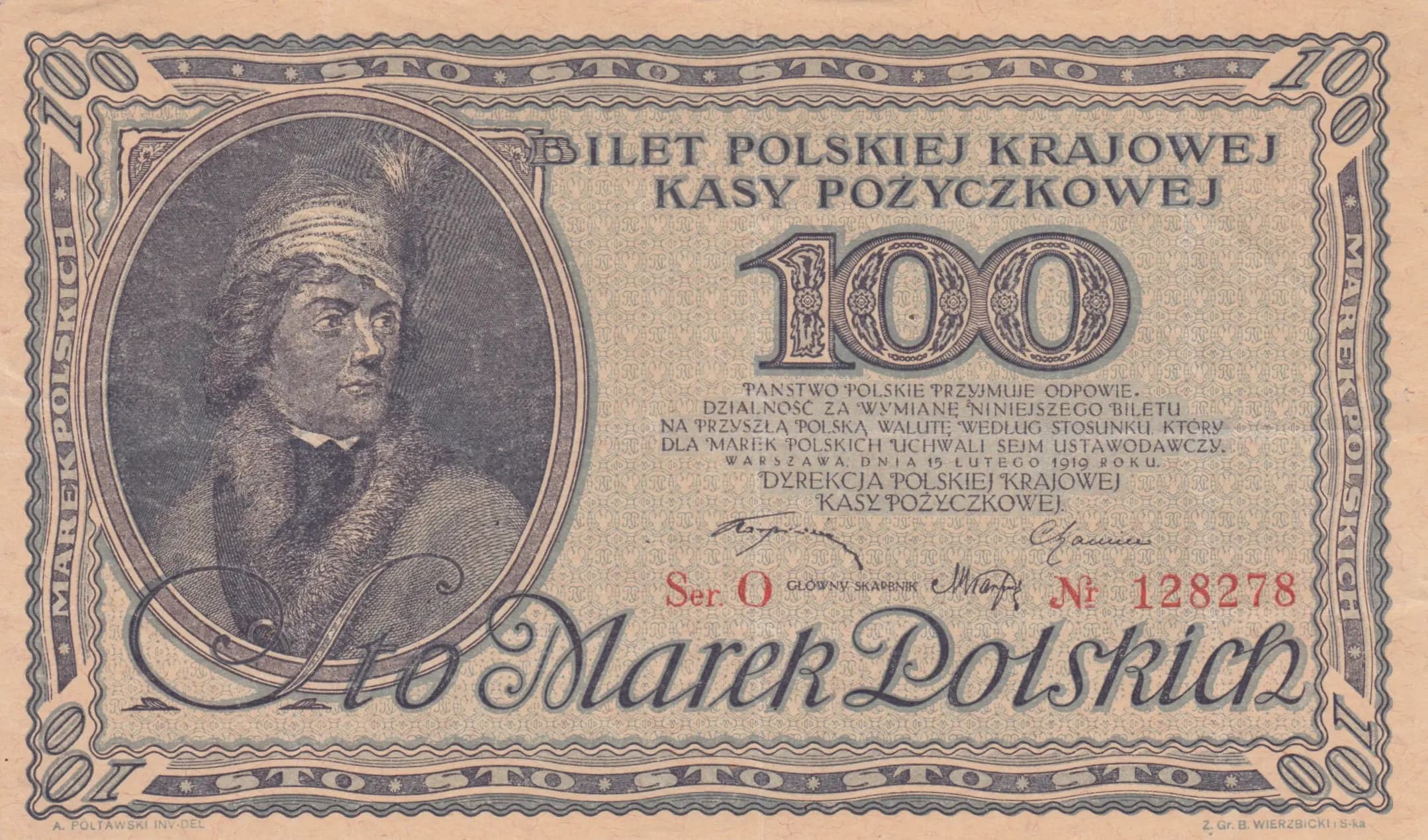
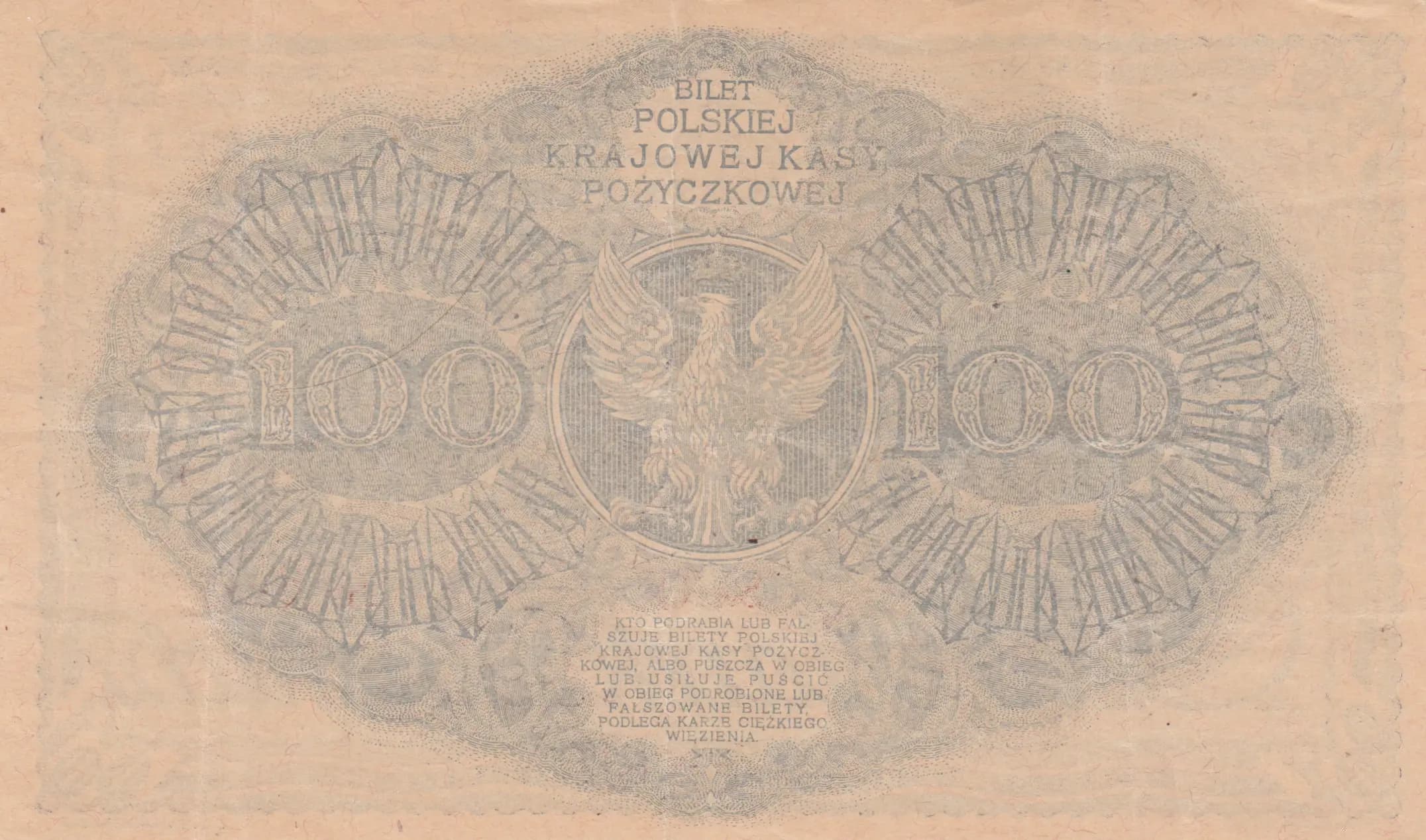
This 100 Marek banknote from 1919 represents an important transitional currency issued by Poland's newly established national loan bank following independence. The note displays excellent craftsmanship with fine line engraving, an ornate portrait frame on the obverse, and a prominent heraldic eagle on the reverse, all rendered in characteristic beige and dark gray tones. Despite showing age-appropriate patina and light browning consistent with VF condition, the note retains good structural integrity and legibility, making it a desirable example of early Polish monetary instruments for collectors of post-WWI European currencies.
Common. The Polska Krajowa Kasy Pozyczkowa 100 Marek from 1919 (Pick 17a) was produced in substantial quantities as emergency currency during Poland's transitional period. Series O and serial numbers in the 128,000 range indicate mid-range production runs typical of circulated issues. While these notes are historically significant and genuinely scarce in exceptional conditions, examples in VF grade appear regularly in the numismatic market. The note's current market position reflects its accessibility to collectors of Polish or post-WWI European currency at moderate price points.
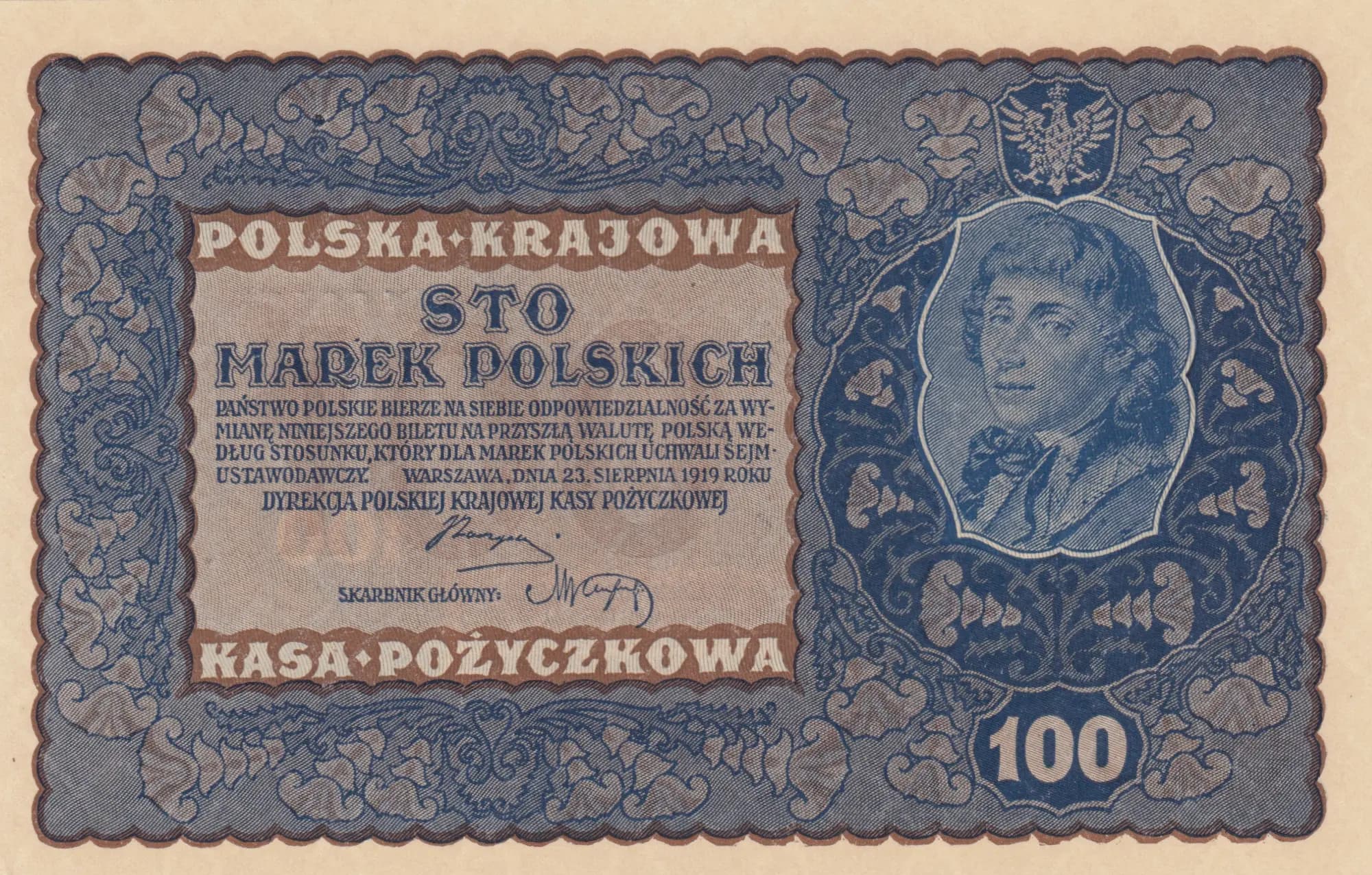
The Polska Krajowa Kasa Pozyczkowa (Polish National Loan Bank) issued these emergency marks in early 1919 as Poland rebuilt its financial institutions following the collapse of Austro-Hungarian and German rule. The inscribed date of February 15, 1919, coincides with Poland's re-establishment as an independent nation, and the note's explicit promise to exchange marks for future Polish currency reflects the transitional uncertainty of the period. The heraldic eagle prominently displayed on the reverse symbolizes Polish national sovereignty and was a recurring motif in early Polish state iconography.
The obverse features a profile portrait positioned left of center within an ornate oval frame, depicting a figure wearing a wrapped head covering or turban, facing rightward. The denomination 100 is prominently centered in large numerals. The entire note is framed with elaborate geometric borders incorporating repeating wave patterns and circular ornamental designs in the corners, consistent with security-minded banknote design of the period. The reverse displays the Polish heraldic eagle (likely a single or double-headed eagle symbolizing national power) with radiating feather details, positioned centrally within a circular frame. The denomination 100 appears twice on the reverse, flanking the eagle emblem. The color scheme throughout is predominantly beige/tan paper with dark gray to black printing, typical of intaglio currency production. Fine line engraving is evident throughout both sides.
FRONT: 'BILET POLSKIEJ KRAJOWEJ KASY POŻYCZKOWEJ' (Ticket of the Polish National Loan Bank). 'PAŃSTWO POLSKIE PRZYJMUJE ODPOWIE. DZIAŁNOŚĆ ZA WYMIANIE NINIEJSZEGO BILETU NA PRZYSZŁA POLSKĄ WALUTĘ WEDŁUG STOSUNKU KTÓRY DLA MAREK POLSKICH UCHWALĄ SĘM USTAWODAWCZY. WARSZAWA, DNIA 15 LUTEGO 1919 ROKU' (The Polish State accepts responsibility for exchanging this note for future Polish currency according to the rate that the legislative body will adopt for Polish marks. Warsaw, February 15, 1919). 'DYREKCJA POLSKIEJ KRAJOWEJ KASY POŻYCZKOWEJ' (Direction of the Polish National Loan Bank). 'Ser O' (Series O). 'GŁÓWNY SKARBNIK' (Chief Treasurer). 'Nr 128278' (Number 128278). 'Marek Polskich' (Polish Marks). Denomination: '100' (One Hundred). BACK: 'BILET POLSKIEJ KRAJOWEJ KASY POŻYCZKOWEJ' (Ticket of the Polish National Loan Bank). 'TĘ PODRABIA LUB FAŁSZUJE BILETY POLSKI KRAJOWEJ KASY POŻYCZKOWEJ ŚCIGANY JEST RÓWNIEŻ W OBIEG USILUJE PUŚCIĆ W OBIEG PODROBIONE LUB PAŁSZOWANE BILETY WEDŁUG KARZE CIĘŻKIEGO WIĘZIENIA' (Anyone who counterfeits or forges notes of the Polish National Loan Bank is prosecuted. Also anyone who attempts to put into circulation counterfeited or forged notes is punished according to the law with imprisonment). Denomination: '100' (One Hundred) displayed twice.
Intaglio (engraved) printing on paper stock. The fine line detail visible in the ornamental borders, portrait oval frame, and eagle feather work are characteristic of steel plate engraving. The security features including the geometric border patterns and detailed feather rendering on the heraldic eagle indicate professional security printing, likely executed by a European banknote printer specializing in currency production during the immediate post-WWI period. The consistent ink impression and fine detail preservation suggest high-quality press work typical of national monetary authorities.
This specimen is identified as series O (Ser O) with serial number 128278. Pick catalog 17a denotes a specific variety classification within the 100 Marek 1919 issue. Known varieties of this denomination include different series designations (series A through O were produced), different signature combinations representing various officials of the Polskiej Krajowej Kasy Pożyczkowej, and variations in serial number ranges corresponding to different printing sessions. The series O designation places this note in the later production run of this issue. No overprints or alterations are evident in the visual analysis.