10 zlotych 1940
Market Prices
50 salesAbout This Note
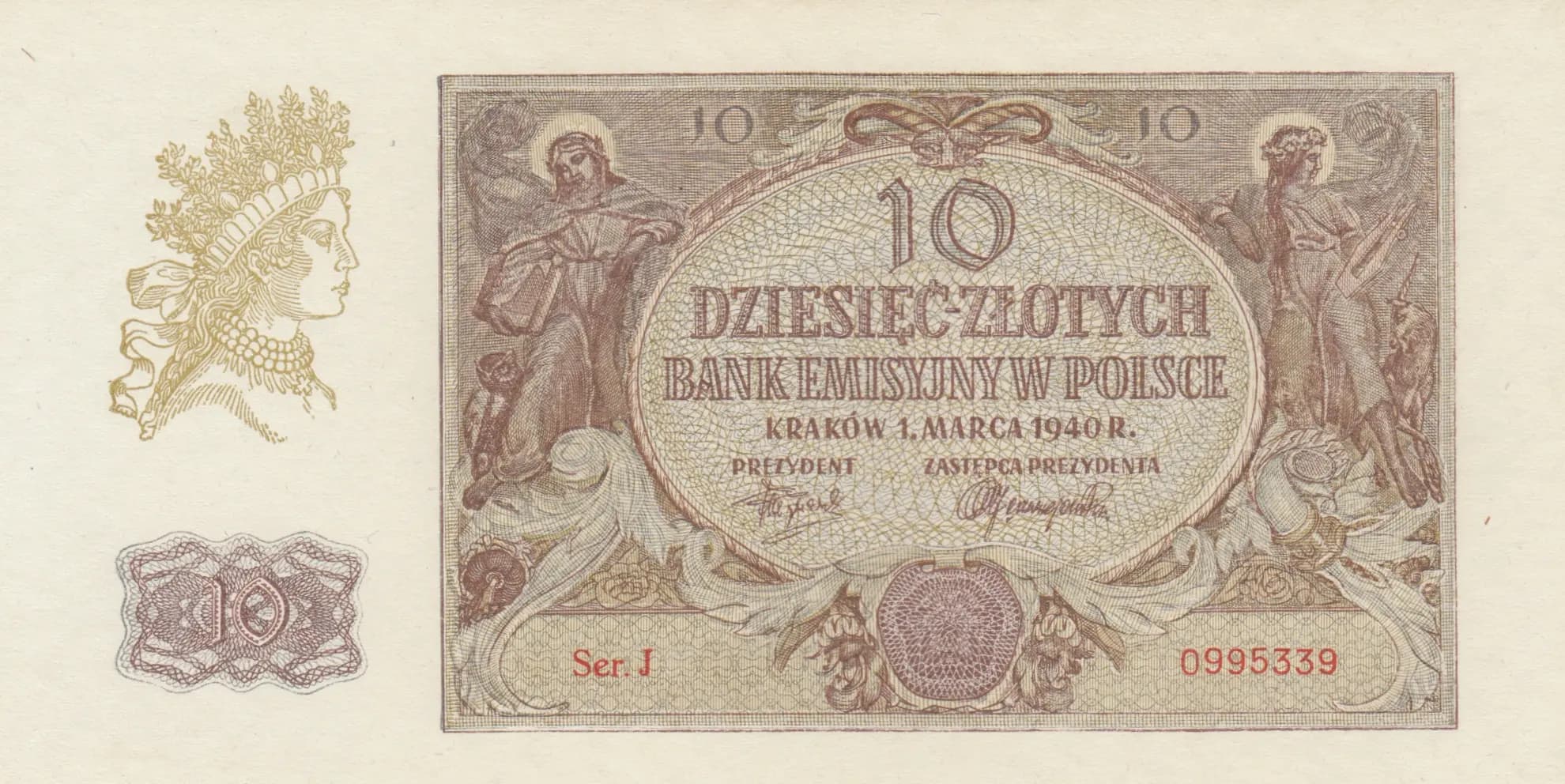
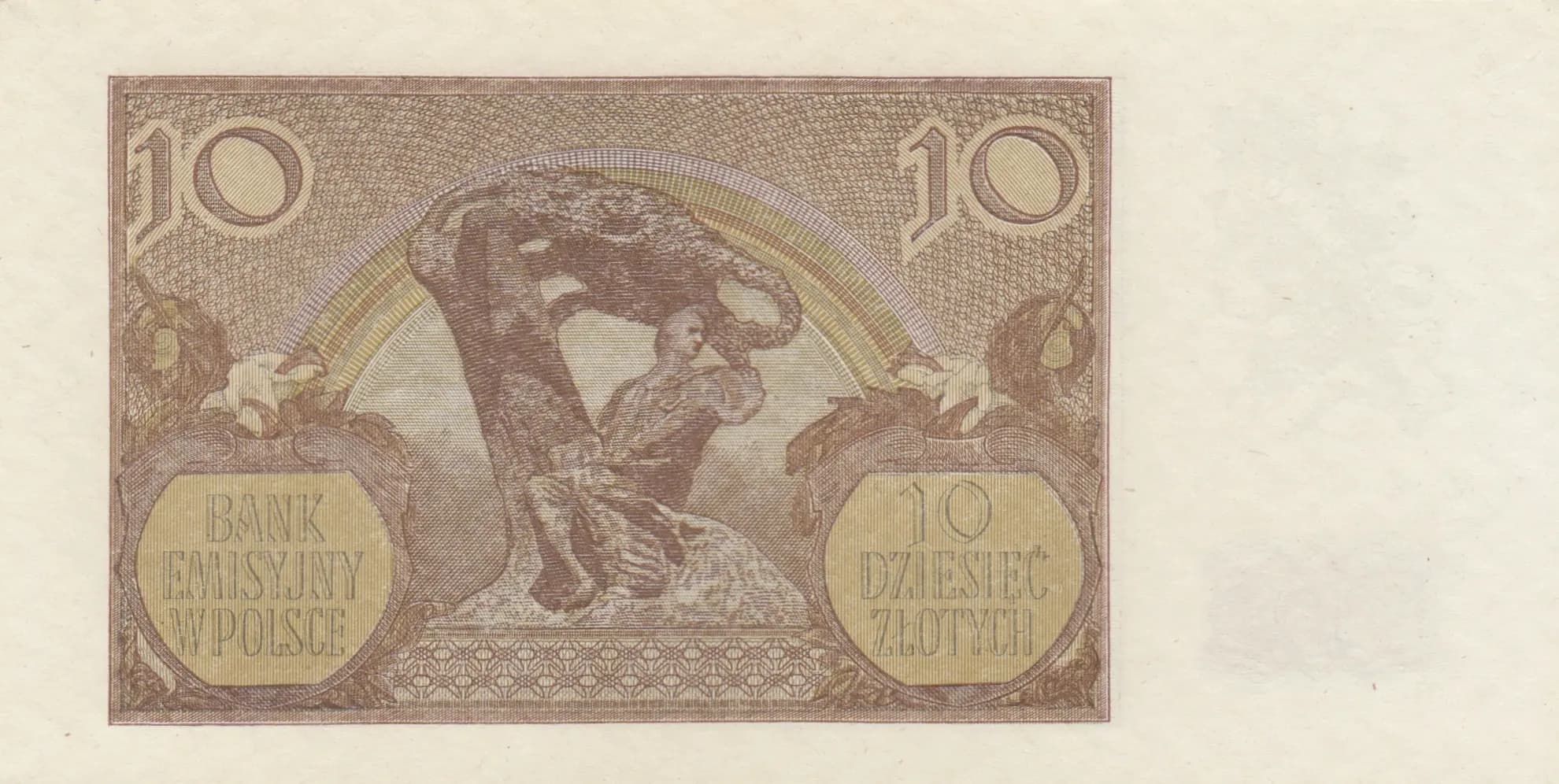
This Polish 10 zlotych note from 1940 is presented in uncirculated condition with sharp, well-preserved engraved details throughout. The obverse features allegorical female figures and a heraldic female portrait in profile with elaborate headdress, while the reverse displays a male portrait in military or formal attire, all rendered in fine brown and sepia tones. The exceptional clarity of the engraving and pristine paper condition make this an outstanding example of interwar Polish currency design.
Common. Despite the historical significance of 1940 Polish currency, this denomination and issue remain widely available in the collector market. eBay transaction data spanning 2010-2025 shows consistent supply at modest prices, with UNC examples selling in the $13-14 range historically and VF specimens regularly appearing below $10. Catalog values from 2016 list UNC at $20, and the frequency of sales across all condition grades indicates this is a standard issue with reasonable print runs that survive in significant quantities. No evidence of scarcity or special collector premium beyond condition-based pricing.
Issued by Bank Emisyjny w Polsce on March 1, 1940, this note represents Polish monetary policy during the final year before German occupation. The formal allegorical imagery and heraldic portraits reflect the nationalist and classical aesthetic of the Polish government during this period. The Kraków imprint and dual signature spaces (for President and Vice President) underscore the institutional authority of the Polish state in its final months of independence.
The obverse features a sophisticated allegorical composition with three female figures: a heraldic female head in profile with an elaborate crown or headdress positioned at left (representing Polish sovereignty or a regional emblem), flanked by two classical allegorical female figures in the upper corners. A large circular central medallion with geometric engraved patterns serves as the composition's focal point. The reverse presents a male portrait in profile facing left, depicted in formal or military dress with detailed collar work, characteristic of high-ranking state officials of the period. Both sides employ ornate decorative borders, scrollwork, and floral ornaments typical of the classical revival style favored by Polish designers in the 1930s-40s. The shield-shaped denomination marker containing '10' appears on the obverse.
Front: '10 DZIESIĘCIOŁOTYCH' (10 ten zlotych), 'BANK EMISYJNY W POLSCE' (Bank of Issue in Poland), 'KRAKÓW 1.MARCA 1940 R.' (Kraków, March 1, 1940), 'PREZYDENT' (President), 'ZASTĘPCA PREZYDENTA' (Vice President), 'Ser. I' (Series I), '0995339' (serial number). Back: '10 DZIESIĘĆ ZŁOTYCH' (10 ten zlotych), 'BANK EMISYJNY W POLSCE' (Bank of Issue in Poland), '10' (denomination markers).
Intaglio engraving (recess printing), the standard security printing technique for Polish banknotes of this era. The visual evidence of fine crosshatching, detailed line work, sharp portrait rendering, and complex geometric patterns in the central medallion are characteristic of high-quality intaglio production. The Bank Emisyjny w Polsce contracted with security printers experienced in producing notes with multiple security layers through engraved detail; this print run likely involved the Polska Drukarnia Papierów Wartościowych or similar state-controlled security printing facilities.
This example is identified as Series I (Ser. I) with serial number 0995339. The note is dated 1 March 1940 from Kraków. Known varieties of the 10 zlotych 1940 (P-94) include different signature combinations and possible series variations (Series I through Series III are documented). The specific series designation and serial number prefix should be cross-referenced with Pick catalog or specialized Polish numismatic references to confirm if this represents a standard or special variety within the 1940 issue.