50 pisos 1978
Market Prices
2 salesAbout This Note
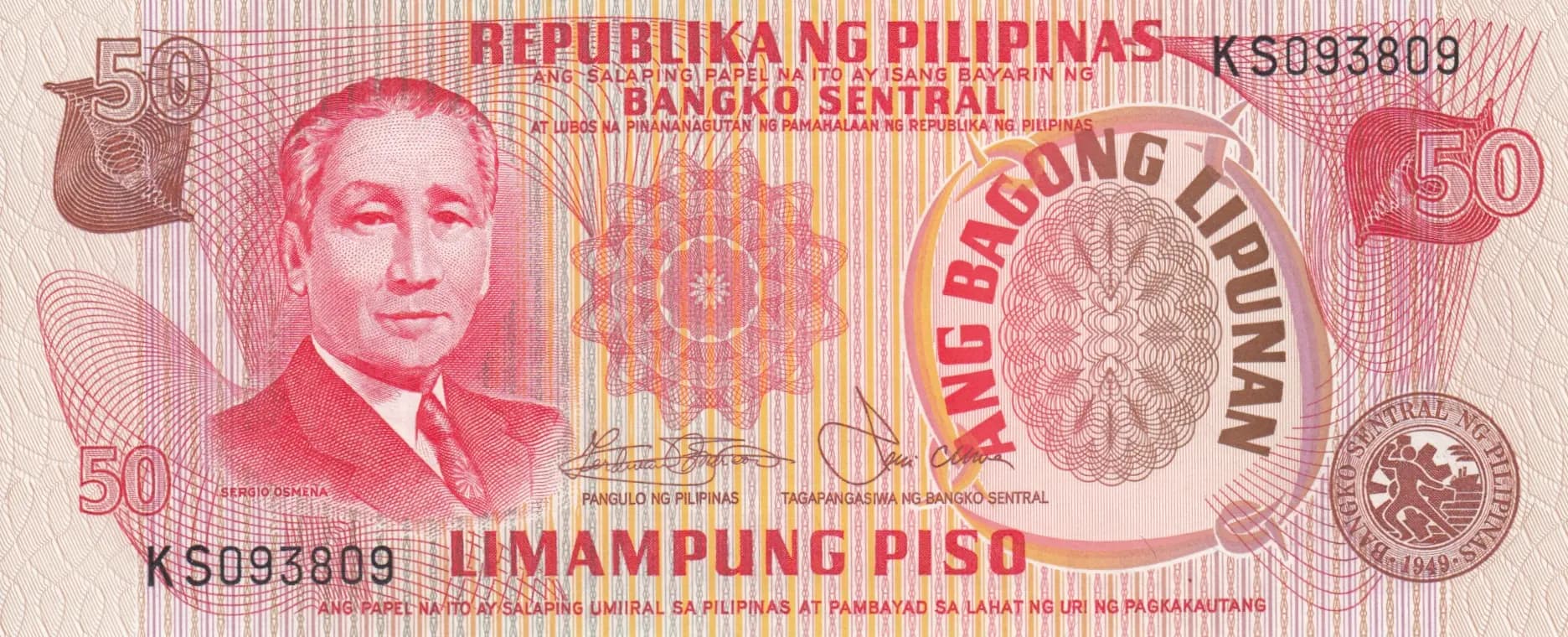
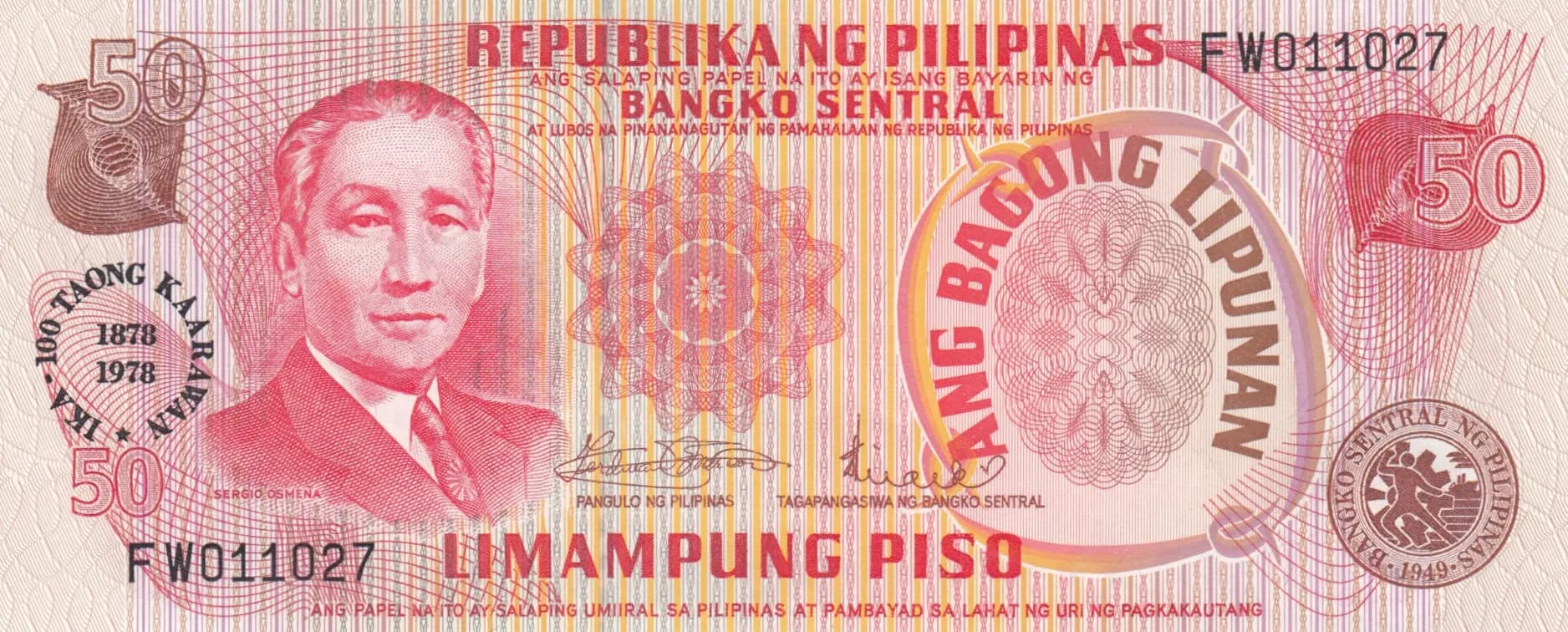
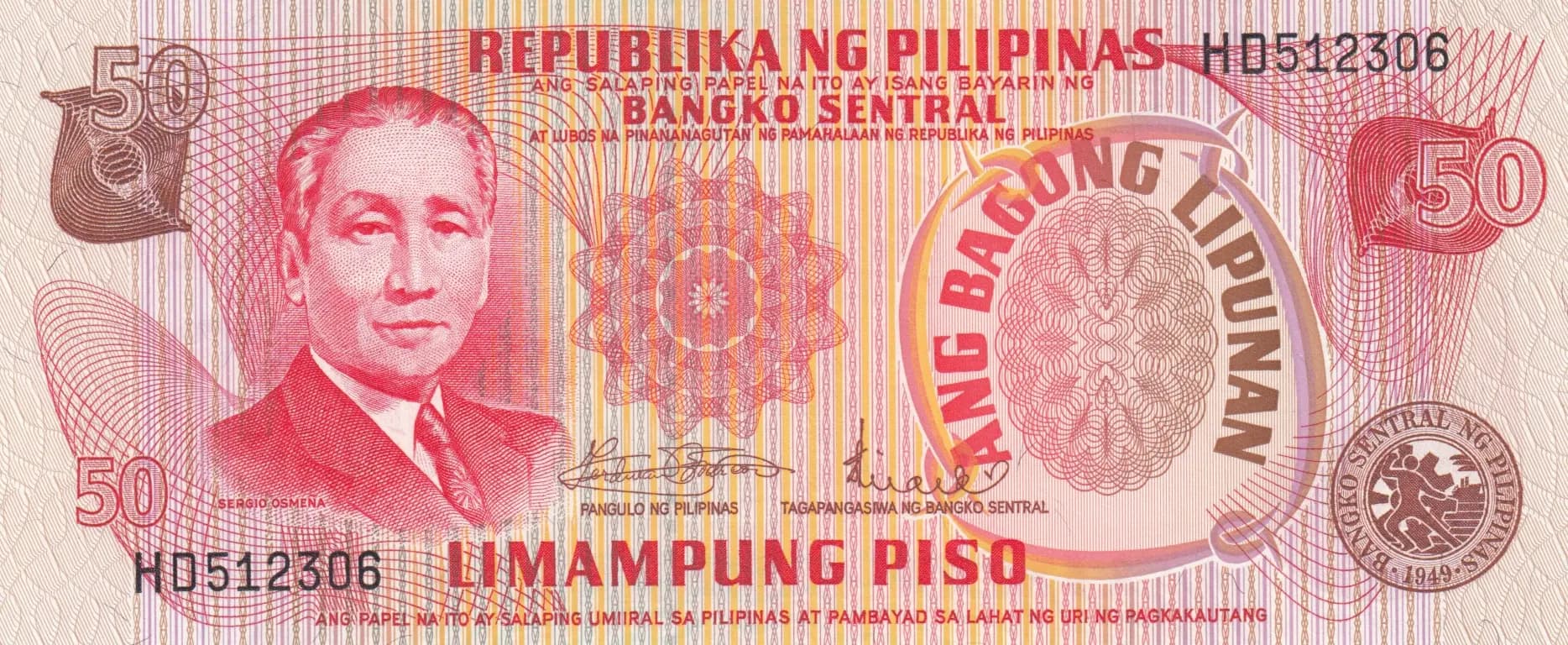
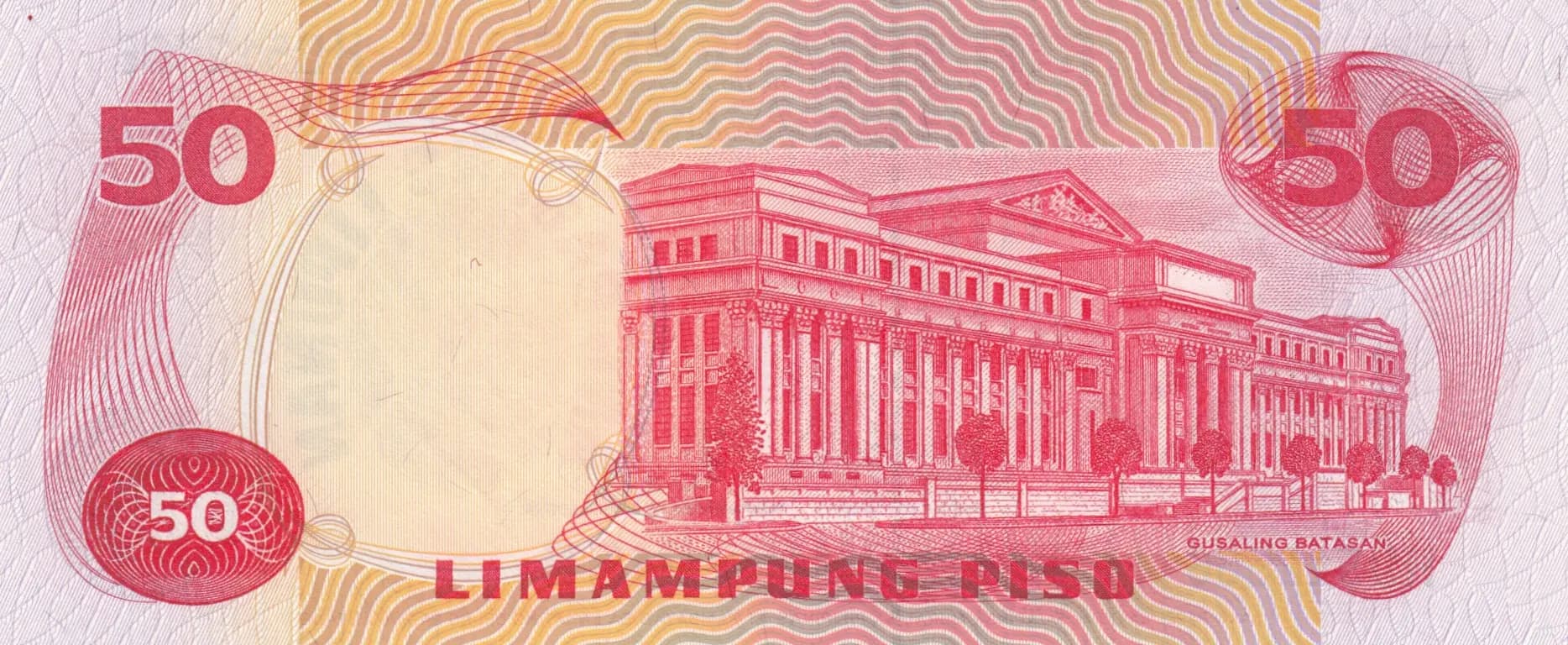
This is a Philippine 50 piso banknote from 1978 in Uncirculated condition, featuring a striking red and orange color scheme with the portrait of Sergio Osmeña on the obverse. The note exhibits exceptional preservation with no visible wear, creases, or damage, and displays intricate guilloche security patterns throughout. The reverse presents a detailed architectural engraving of the Batasan Building (Legislative Palace), making this an attractive example of late 1970s Philippine currency design.
Common. This note had a substantial print run as part of the regular currency circulation series of the Central Bank of the Philippines. Catalog values from 2019 list UNC examples at $5.50, and recent eBay market data shows comparable notes selling in the $1–$3 range, indicating ready availability in the collector market. The denomination and issue year were not subject to production restrictions or early recalls.
Issued during Ferdinand Marcos's "Bagong Lipunan" (New Society) era, this 1978 banknote reflects the Central Bank of the Philippines's modernization of its currency series. The obverse honors Sergio Osmeña, a prominent Philippine statesman and former president, while the reverse depicts the Batasan Building, the legislative seat of the Republic, symbolizing the institutional framework of the contemporary government during this period of Philippine history.
The obverse features a formal three-quarter portrait of Sergio Osmeña, a significant Philippine statesman, positioned on the left side wearing business formal attire (suit and tie). The Central Bank of the Philippines seal, featuring a complex geometric design, is prominently placed on the right. The note employs a dominant color palette of pink, red, and orange with intricate geometric line patterns and guilloche backgrounds providing security features. The reverse displays a classical architectural engraving of the Batasan Building (now part of the National Museum complex), featuring prominent columns and a pediment roof in the neoclassical style characteristic of important Philippine governmental structures. Wave patterns and decorative oval frames containing the denomination appear throughout the reverse.
FRONT: 'REPUBLIKA NG PILIPINAS' (Republic of the Philippines); 'ANG SALAPING PAPEL NA ITO AY ISANG BAYARIN NG BANGKO SENTRAL' (This paper money is legal tender of the Central Bank); 'AT LUOS NA PINAKAAGAPAN TUNGO NG PAMAHALAANG NG REPUPLIKA NG PIPINAS' (And recognized as such by the Government of the Republic of the Philippines); 'PANGUILO NG PILIPINAS' (Governor of the Philippines); 'TAGAPANGASIMA NG BANGKO SENTRAL' (Manager of the Central Bank); 'LIMAMPUNG PISO' (Fifty Pesos); 'ANG PAPEL NA ITO AY SALAPING UMIRAT SA PILIPINAS AT PAMBAYAD SA LAHAT NG URI NG PAGKAKAUTANG' (This paper is money circulating in the Philippines and payment for all types of debts); 'SERGIO OSMENA' (name of depicted statesman); 'BANGKO SENTRAL NG PILIPINAS' (Central Bank of the Philippines). BACK: 'LIMAMPUNG PISO' (Fifty Pesos); 'GUSALING BATASAN' (Batasan Building); denomination numeral '50' appears multiple times.
Intaglio engraving combined with multicolor lithography, executed by Giesecke+Debrienne (G&D) without imprint marking. The note exhibits characteristic security printing elements including complex guilloche patterns, fine line work in the background, and detailed architectural engraving, all typical of high-security banknote production from this era.
This example represents the Pick P-163a variety. The catalog notes reference to similar designs (P-146, P-151, P-156, P-165) indicates this belongs to a series of notes sharing design elements. The observed seal type is identified as Central Bank Seal Type 4. Replacement notes exist with serial number prefix '+', which would constitute a distinct variety (P-163b). The visual analysis shows regular serial number formatting (HO512306) consistent with standard circulation issues of this period.