1 centavo 1942
Market Prices
7 salesAbout This Note
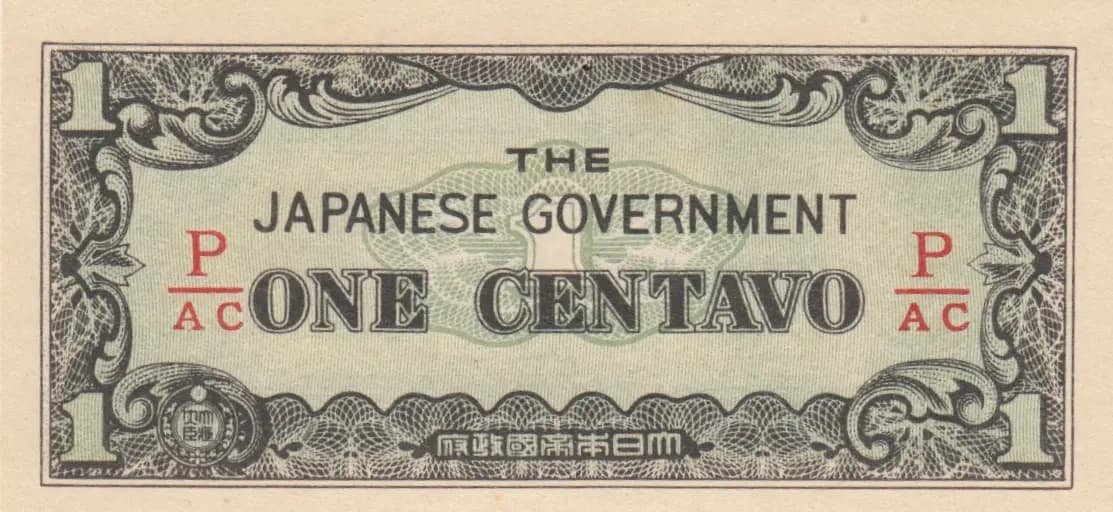
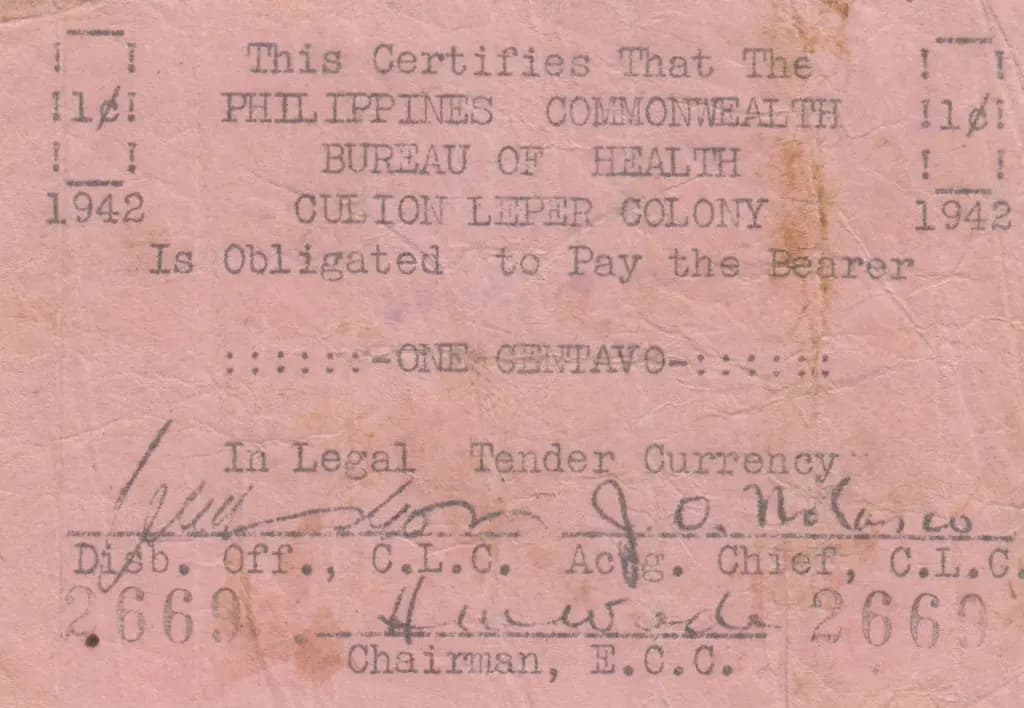
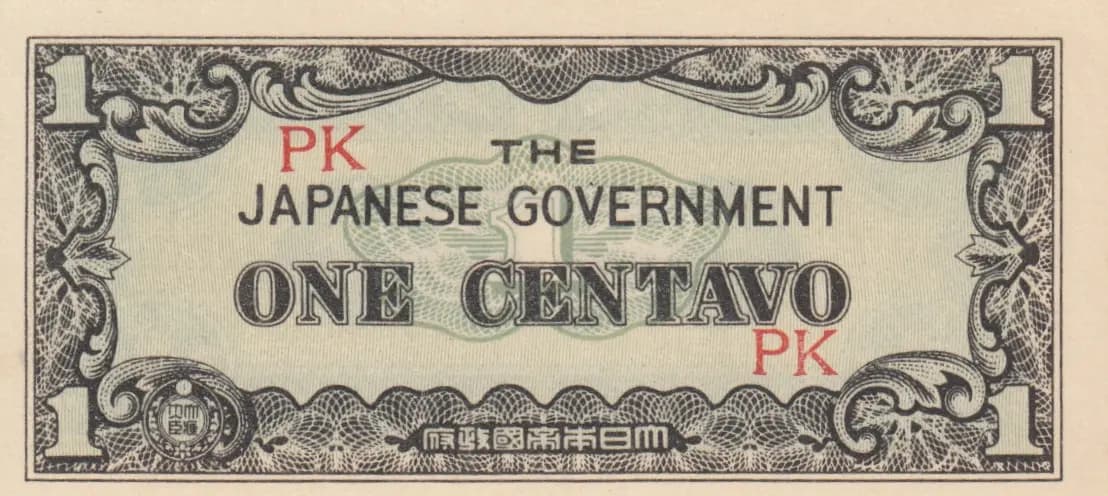
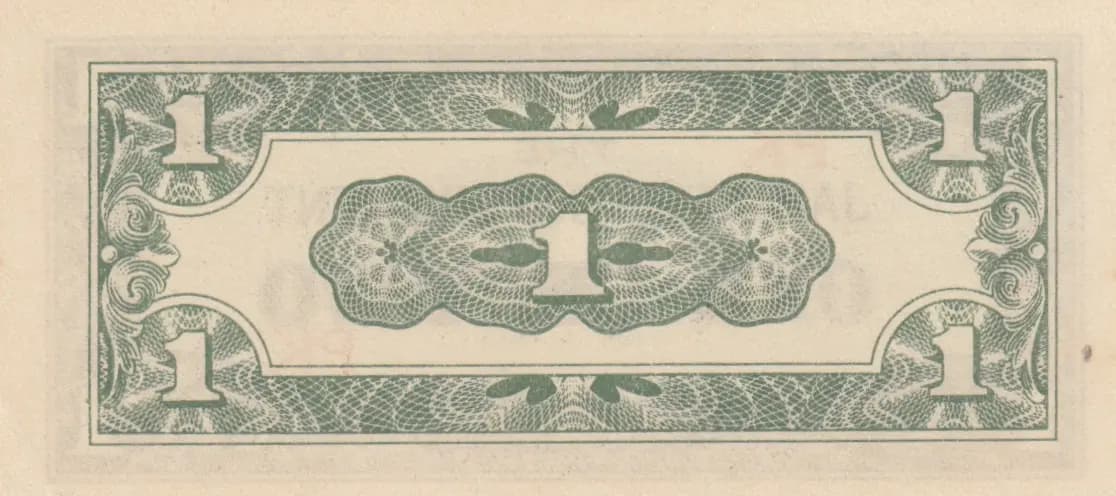
This is a 1942 Japanese Government 1 Centavo note from the Philippines occupation period, graded UNC (Uncirculated). The obverse features bold black text on a green underprint with ornate decorative borders and fine crosshatching throughout, while the reverse displays a symmetrical design with a prominent central numeral '1' in an elaborate cartouche. The note exhibits exceptional condition with sharp printing, no visible wear, tears, or creases—a pristine example of this wartime occupation currency.
Common. While this is occupation-period currency with historical significance, the eBay market data strongly indicates common status—multiple UNC examples have sold for under $2 ($0.81-$1.50), and even a PMG 63 sold for only $24.42. The 2016 catalog value for UNC is $0.75. High print runs during the occupation period and the availability of multiple examples in the market confirm this as a common note despite its historical interest.
Issued during the Japanese occupation of the Philippines in World War II, this 1 Centavo note represents the Japanese Government's attempt to establish occupation currency in the territory. The bilingual inscriptions in English and Japanese (日本国政府円), combined with the official 'JAPANESE GOVERNMENT' designation, reflect the administrative control and currency replacement that characterized the occupation period from 1942-1945.
The obverse design features a formal, institutional layout with 'THE JAPANESE GOVERNMENT' prominently displayed in the central frame, flanked by 'ONE CENTAVO' denomination marking. Two circular seals or emblems appear in the lower corners, likely representing Japanese governmental authority. The entire design is surrounded by an intricate engraved border with elaborate scrollwork and floral ornamental corner patterns typical of early 20th-century security printing. The reverse presents a symmetrical composition with a large decorative cartouche as the centerpiece containing the numeral '1', with matching '1' numerals positioned in all four corners on cream-colored background. Fine-line crosshatching and mesh patterns create the security features throughout both sides.
OBVERSE: 'THE JAPANESE GOVERNMENT' (English, top center); 'ONE CENTAVO' (English, denomination declaration); 'PK' (block letter prefix, appears twice—lower left and lower right corners); '日本国政府円' (Japanese, translates to 'Japanese Government Currency/Yen'). REVERSE: Four corner numerals displaying '1' (Arabic numeral indicating denomination); central cartouche contains decorative '1' numeral.
Intaglio (engraved) printing, as evidenced by the fine-line crosshatching, intricate scrollwork, and the depth and sharpness of the ornamental border details visible in both the obverse and reverse designs. The sophisticated security features including the fine mesh patterns and detailed scrollwork are characteristic of high-quality security printing employed by the Japanese Government for occupation currency. The specific security printer for this Pick P-102a issue is not definitively documented in standard references, though Japanese Government printing facilities were utilized.
This note is identified as Pick P-102a, indicating it is the first cataloged variety of the 1 Centavo 1942 issue. The 'PK' block letter prefix visible in the lower corners represents the serial number prefix variety. The note exhibits the standard bilingual (English/Japanese) inscription format characteristic of the Philippine occupation currency series. No significant overprints or date variations are noted in the visual analysis.