10 rupees 1970
Market Prices
7 salesAbout This Note
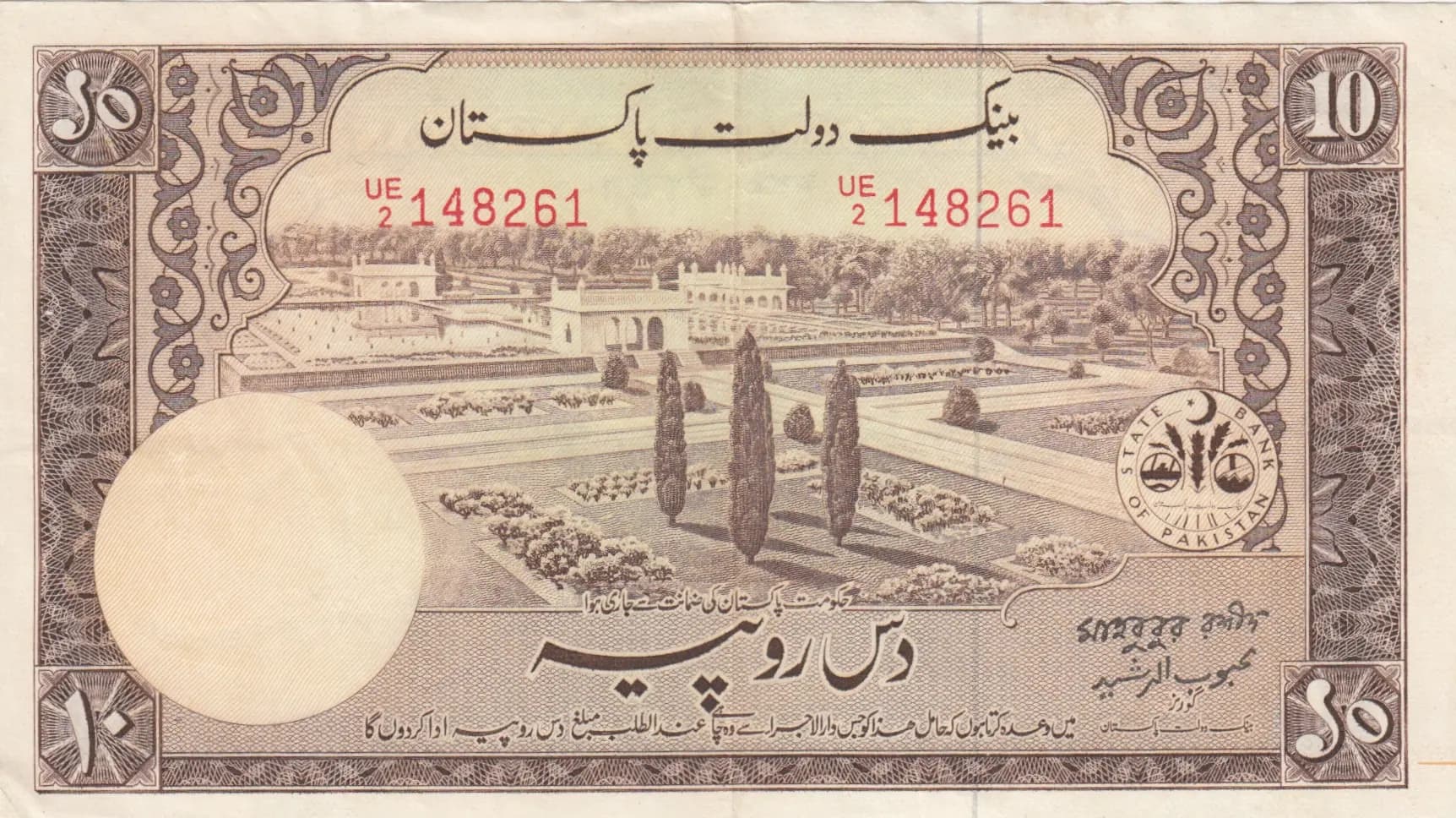
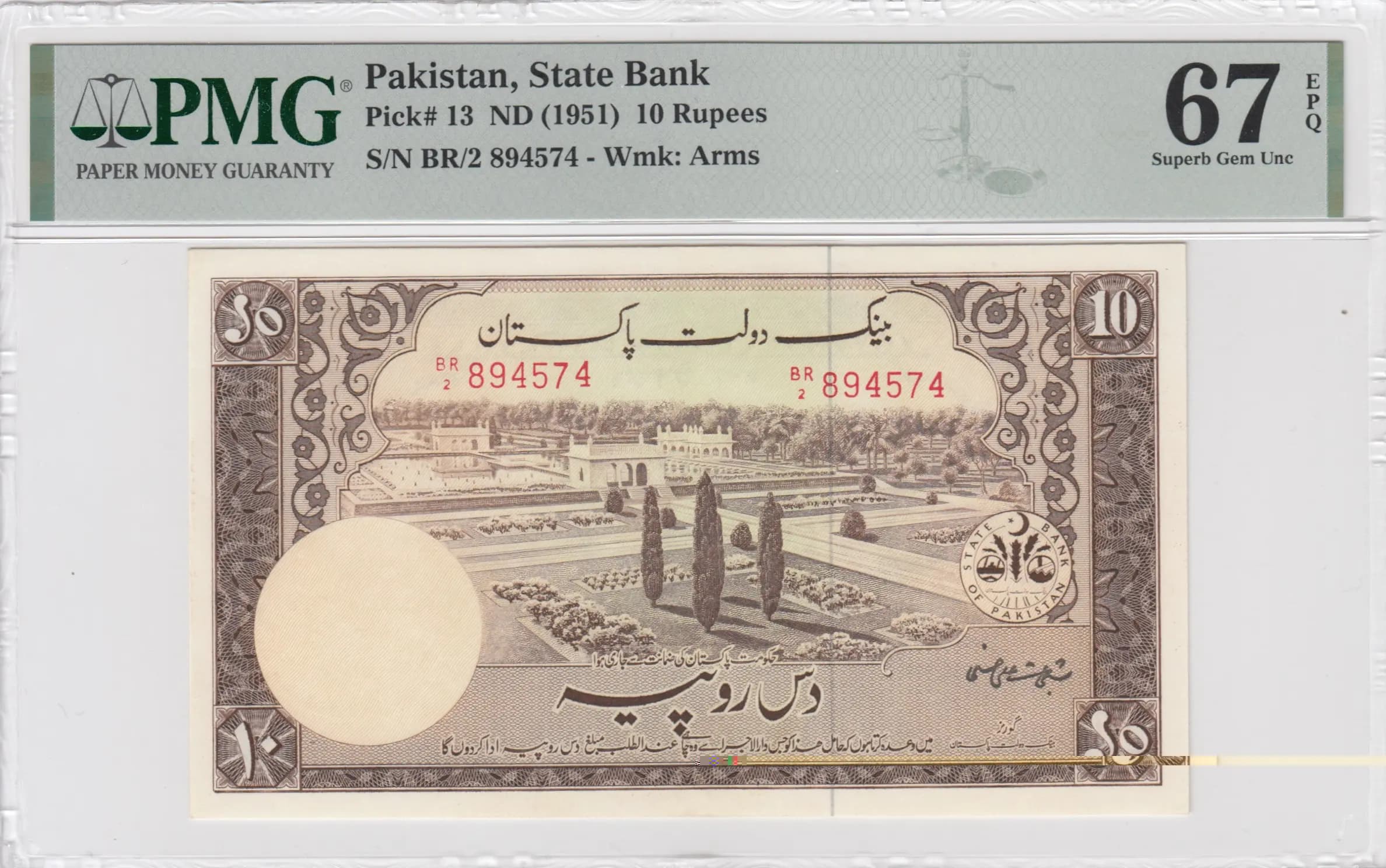
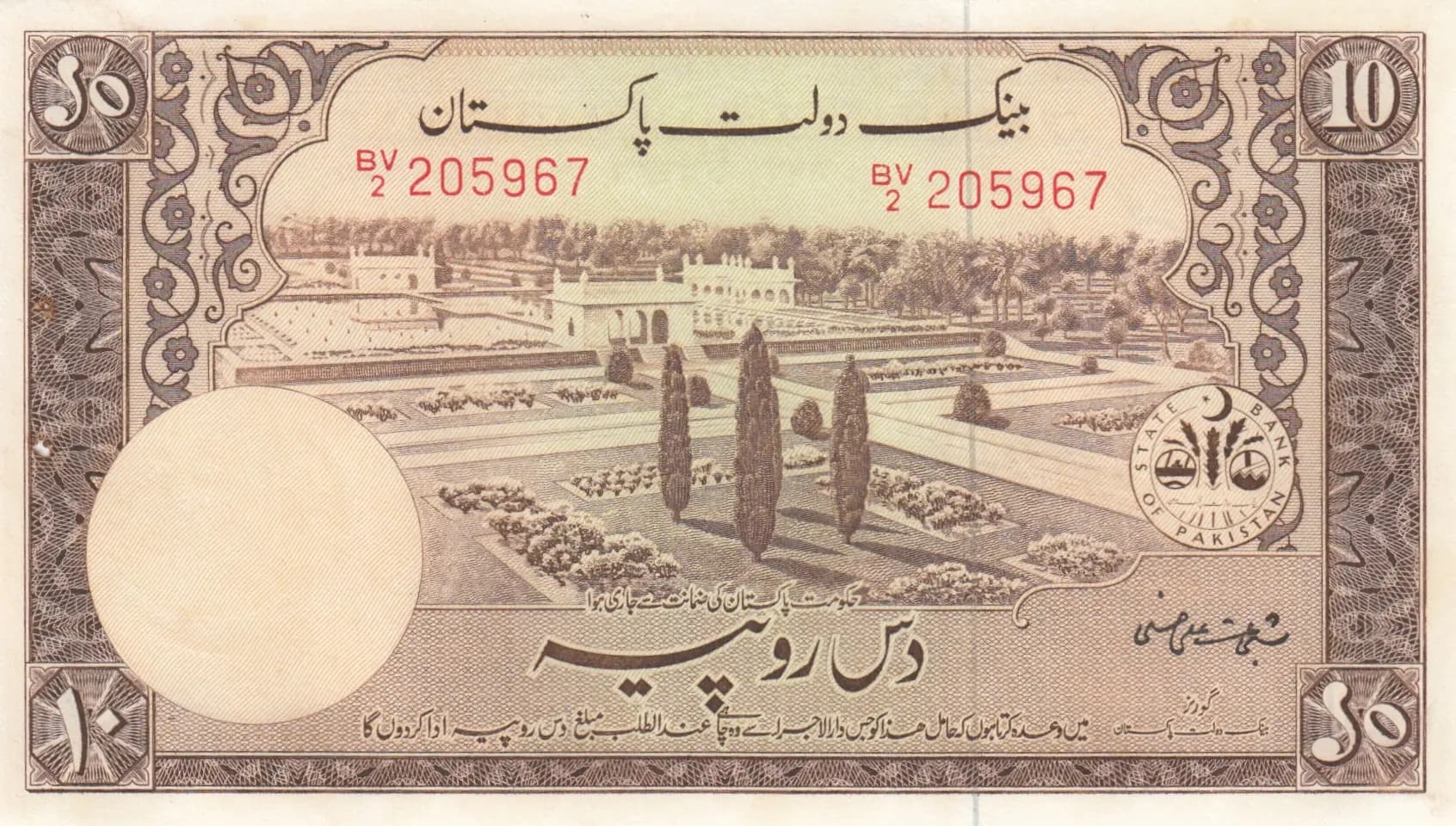
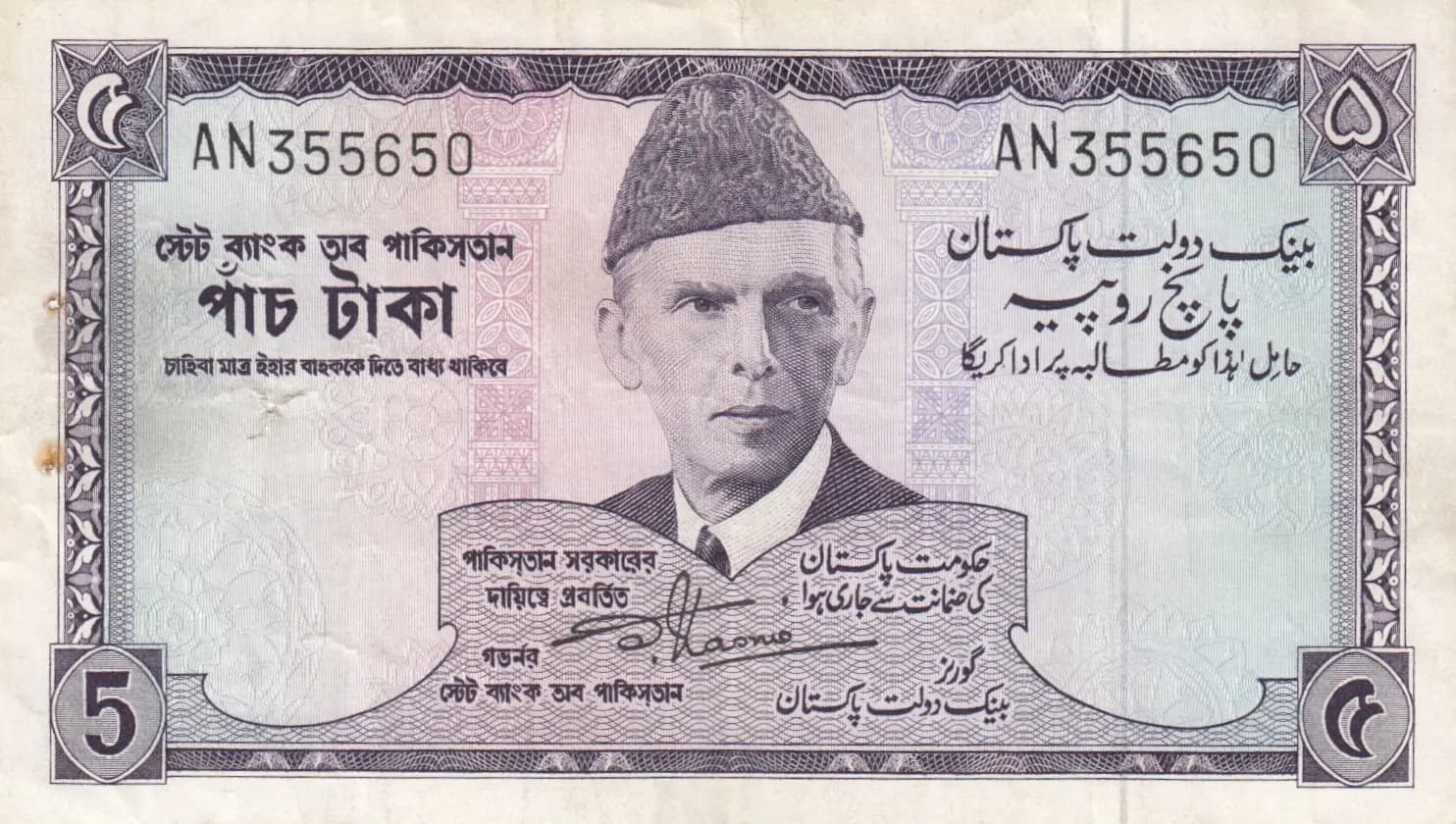
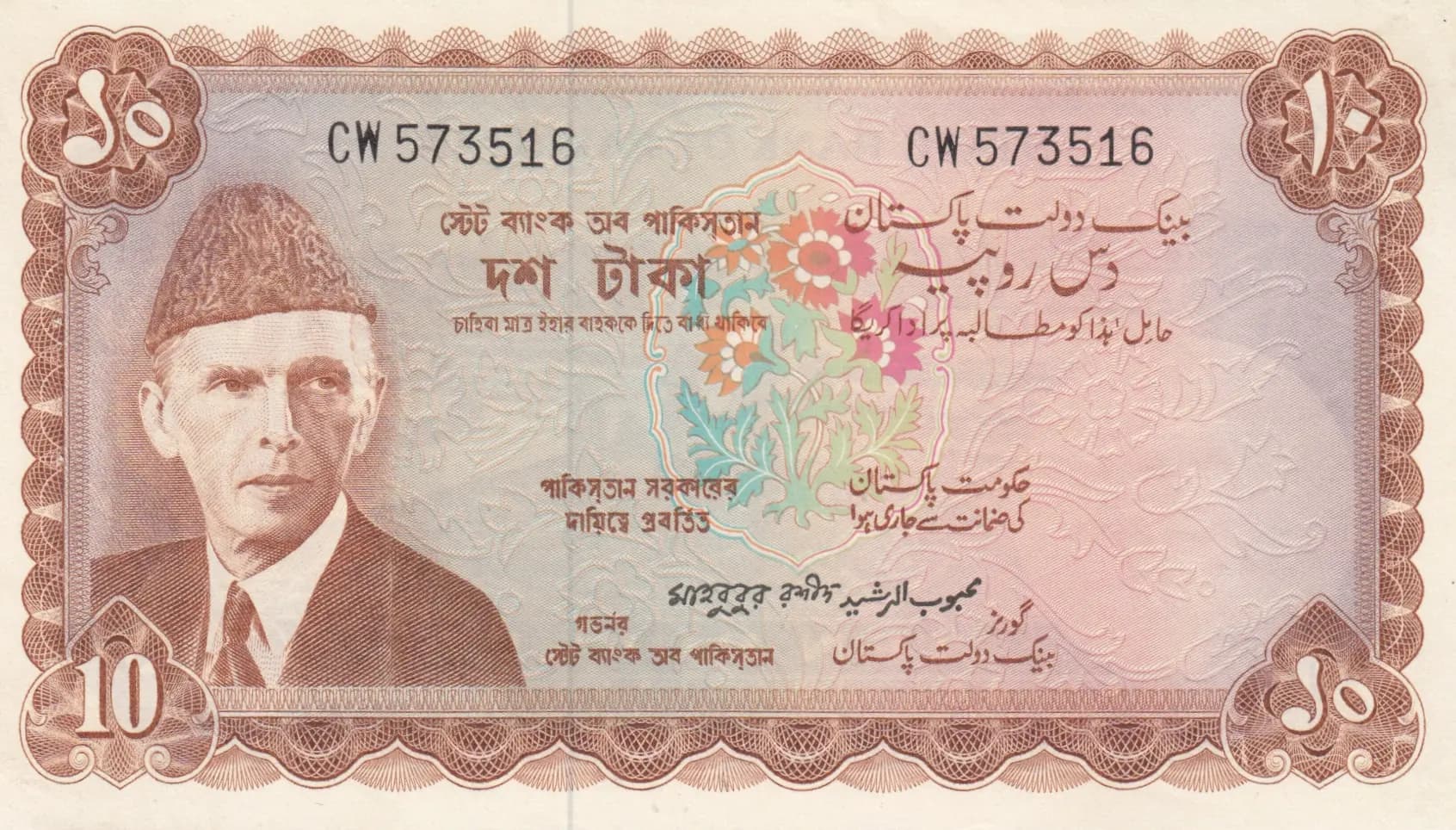
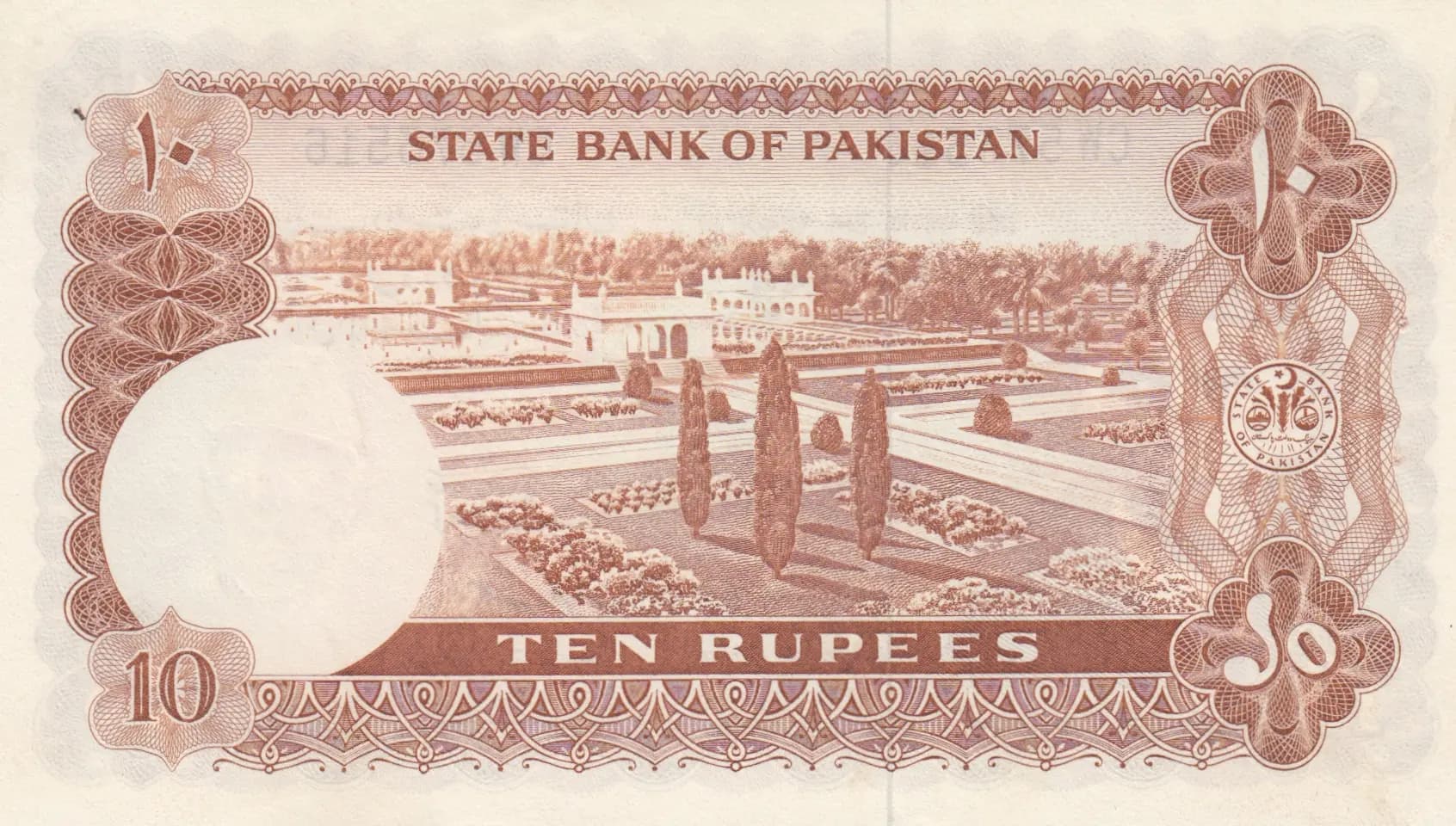
This is a Pakistan 10 Rupees note from 1970 (Pick-16b) in AU (About Uncirculated) condition, featuring Mohammed Ali Jinnah's portrait in traditional dress on the obverse. The note displays excellent condition with crisp printing, no visible wear, tears, or creases, and vibrant multicolored security elements including ornate decorative borders and a striking floral medallion in the center. The reverse presents an agricultural landscape with cypress trees characteristic of the Shalimar region, making this an aesthetically significant example of early post-partition Pakistani currency design.
Common. This note was a regular issue of the State Bank of Pakistan with standard print runs typical of the period. eBay market data shows consistent availability at modest prices ($1.62–$15 depending on condition), with PMG-graded examples selling in the $40–45 range only for lower grades (PMG 55). The 2019 catalog values of $12.50 for UNC condition further confirm this is a widely circulated and readily available note. No evidence of a short print run, recall, or scarcity exists. AU examples like this specimen are neither particularly rare nor especially valuable, though they represent attractive examples of early Pakistani banknote design.
Issued in 1970 by the State Bank of Pakistan during a critical period of nation-building following the 1971 Bangladesh independence, this note commemorates Mohammed Ali Jinnah, founder of Pakistan, reinforcing national identity. The dual-script design (Urdu and Bengali) reflects Pakistan's linguistic diversity during this era, while the Shalimar Gardens landscape on the reverse celebrates the cultural and agricultural heritage of the region. This series represents an important transitional phase in Pakistani banknote design, bridging early post-independence currency with more sophisticated security features.
The obverse features a three-quarter profile portrait of Mohammed Ali Jinnah, the founder of Pakistan, depicted wearing a traditional brown fez cap and formal Western-style attire with necktie—a symbolic representation of his role bridging traditional Islamic values and modern governance. The portrait is set against an ornate frame with elaborate scrollwork and geometric patterns in the corners. The center features a decorative multicolored floral medallion with orange, pink, cyan, and green flowers, along with a crescent and star symbol within a circular design, representing Islamic and national identity. The reverse depicts the Shalimar Gardens near Lahore, showing organized agricultural fields with prominent cypress trees and farm structures—a UNESCO-recognized Mughal-era landmark that symbolizes Pakistan's cultural heritage. Both sides feature scalloped ornamental borders with intricate geometric and floral patterns typical of 1970s Pakistani banknote design.
Front side: Serial number 'CW573516' (appears twice); Bengali: 'দশ টাকা' (Ten rupees); Urdu: 'دس روپے' (Ten rupees); Bengali: 'স্টেট ব্যাংক অব পাকিস্তান' (State Bank of Pakistan); Urdu: 'پاکستان اسٹیٹ بینک' (State Bank of Pakistan); Governor's signature in Urdu with official titles and authority marks. Back side: English text 'STATE BANK OF PAKISTAN' and 'TEN RUPEES'; numeral '10' indicating denomination. The note carries official signatures and authority marks of the State Bank of Pakistan governor from this issuance period.
Intaglio (engraved) printing on cotton-based banknote paper. The visual analysis reveals fine line work, intricate geometric patterns, and multi-layered decorative elements characteristic of high-security engraving. The sharp, crisp impression of borders and landscape details, combined with the precise portrait rendering and complex security patterns, indicates production by a specialized banknote security printer, likely contracted by the State Bank of Pakistan. The multicolor printing technique employed multiple plates to achieve the vibrant color scheme observed in the floral medallion and landscape elements.
This note is cataloged as Pick-16b, indicating it is the second variant of the 10 Rupees 1970 issue. The visual analysis shows the characteristic dual-script design (Urdu and Bengali) consistent with this variety. Serial number prefix 'CW' and the specific governor's signature visible on this specimen (appearing to be from the 1970–1971 issuance period per catalog data) would be the identifying factors for this particular note. PMG population reports indicate only one variant has been professionally graded for this base Pick number, suggesting limited collector differentiation among extant specimens.