10 rupees 1951
About This Note
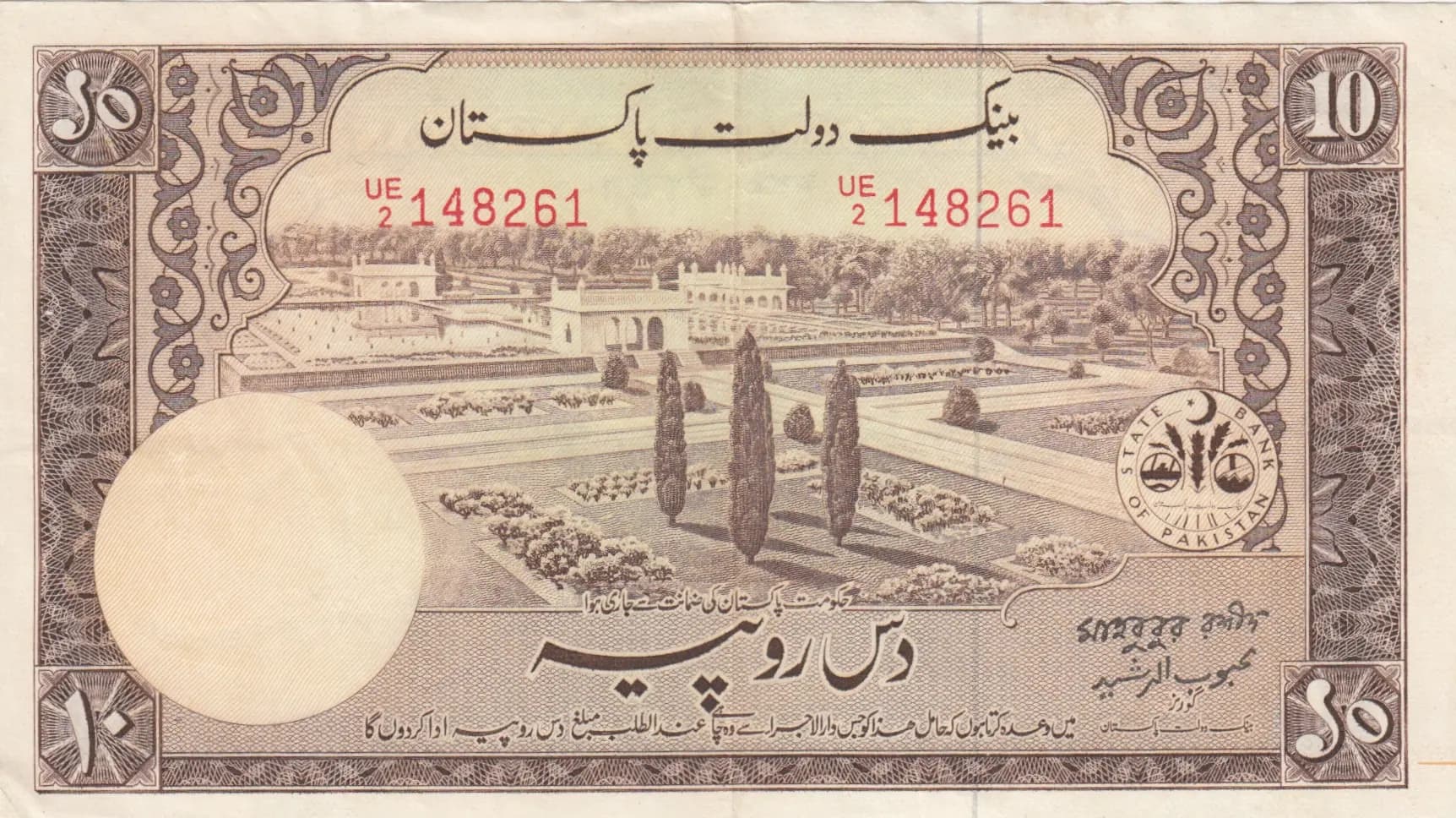
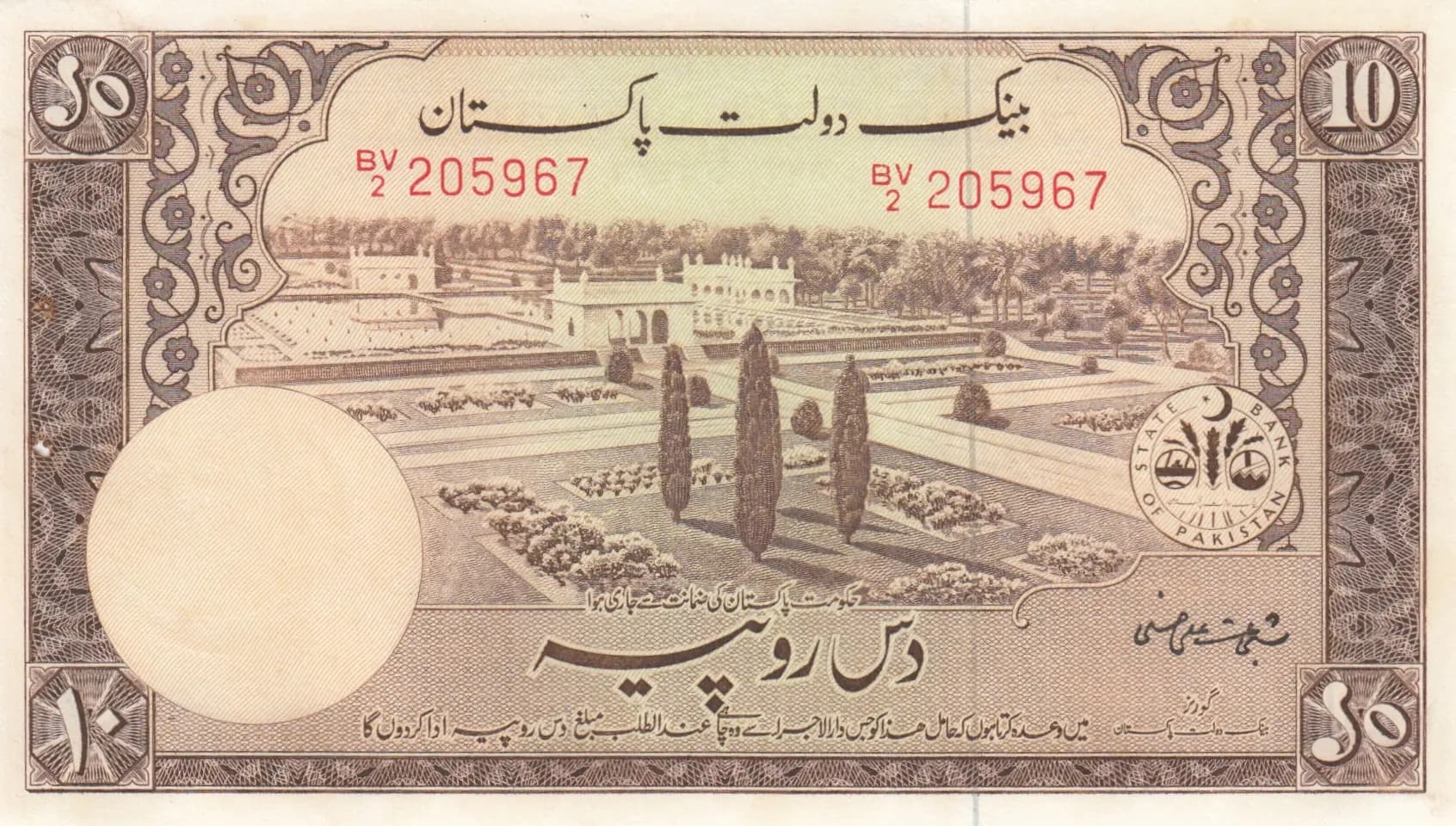
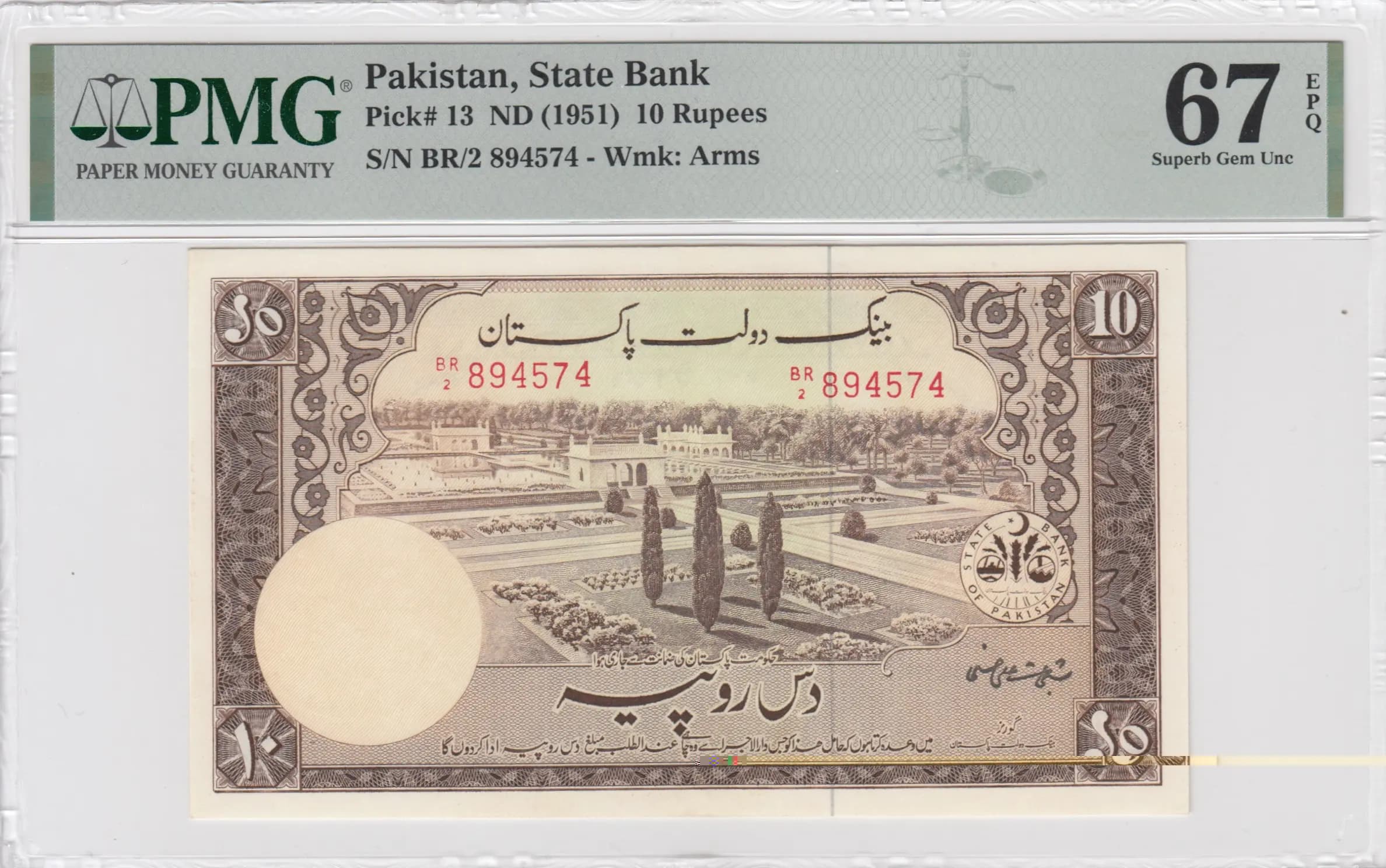
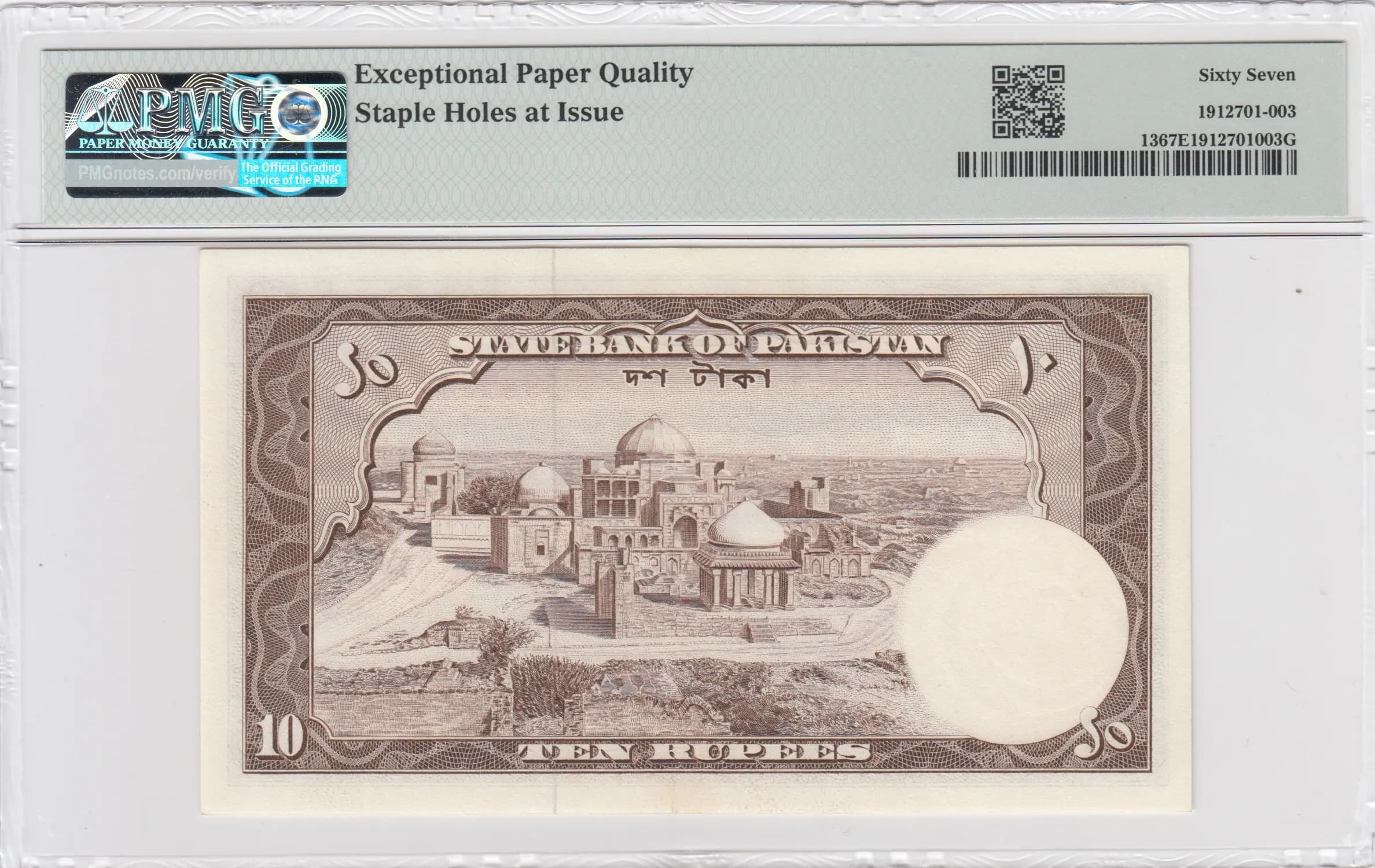
This PMG 67 EPQ graded 10 Rupees note from Pakistan's State Bank (1951) represents an exceptional example of early Pakistani currency design, featuring the iconic Shalimar Gardens on the obverse rendered in fine sepia tones with ornate scrollwork borders. The reverse depicts the historic tombs near Thatta with characteristic Islamic architectural details, and the note exhibits remarkable preservation with no visible circulation wear, creases, or foxing—a true near-gem specimen from the early independence era.
Common. The 1951-1967 series (Pick P-13) was issued in substantial quantities across multiple years and denominations. While early Pakistani currency from the immediate post-independence period commands collector interest, 10 Rupees denominations were widely circulated and remain readily available in the market. The PMG 67 EPQ grade elevates this specific example above average specimens, but the underlying note type itself is not scarce. Market evidence shows similar examples in this condition range trading in moderate price ranges consistent with common-to-uncommon classification.
Issued in 1951, just four years after Pakistan's independence from British India, this banknote reflects the nascent State Bank of Pakistan's commitment to portraying the nation's cultural and architectural heritage. The selection of Shalimar Gardens—one of the Mughal Empire's most celebrated horticultural achievements in Lahore—and the tombs near Thatta (likely referencing the Shah Jahan Mosque or related structures) demonstrates how early Pakistani currency makers deliberately highlighted pre-Islamic and Islamic architectural treasures as symbols of national identity and continuity.
The obverse features the Shalimar Gardens of Lahore as its central vignette—a UNESCO World Heritage Site and Mughal garden complex established in 1641—depicted with characteristic cypress trees, manicured flower beds, water channels, and palatial structures in the background, all rendered in fine sepia engraving. The reverse showcases the architectural complex near Thatta (in Sindh province), displaying Islamic domed structures with minarets and fortification walls representative of Mughal and pre-Mughal Indo-Islamic architecture. Both sides are framed by ornate decorative borders featuring scrollwork and geometric patterns typical of 1950s security printing. A circular watermark incorporating the State Bank's arms is prominently positioned on each side (left on obverse, right on reverse). Denomination markers '10' appear in decorative circular cartouches in the upper corners of both sides.
Front Side: 'State Bank of Pakistan' (English) / 'دولتِ پاکِستان' (Urdu: 'State of Pakistan') / 'دس روپیے' (Urdu: 'Ten Rupees') / '10' (English denomination marker) / Serial number: 'BR/2 894574'. Back Side: 'STATE BANK OF PAKISTAN' (English) / 'دس ٹکہ' (Urdu: 'Ten Taka' or 'Ten Units') / '10' (English denomination marker).
Intaglio (engraved) printing on watermarked security paper, characteristic of State Bank of Pakistan's early currency production. The fine line work, detailed architectural rendering, and ornamental borders demonstrate high-quality security printing typical of British-trained printers managing early Pakistani currency operations. Red serial numbers applied via letterpress. The watermark and overall security architecture suggest production by a major security printer, likely with British or European technical oversight during this transitional period of Pakistani monetary independence.
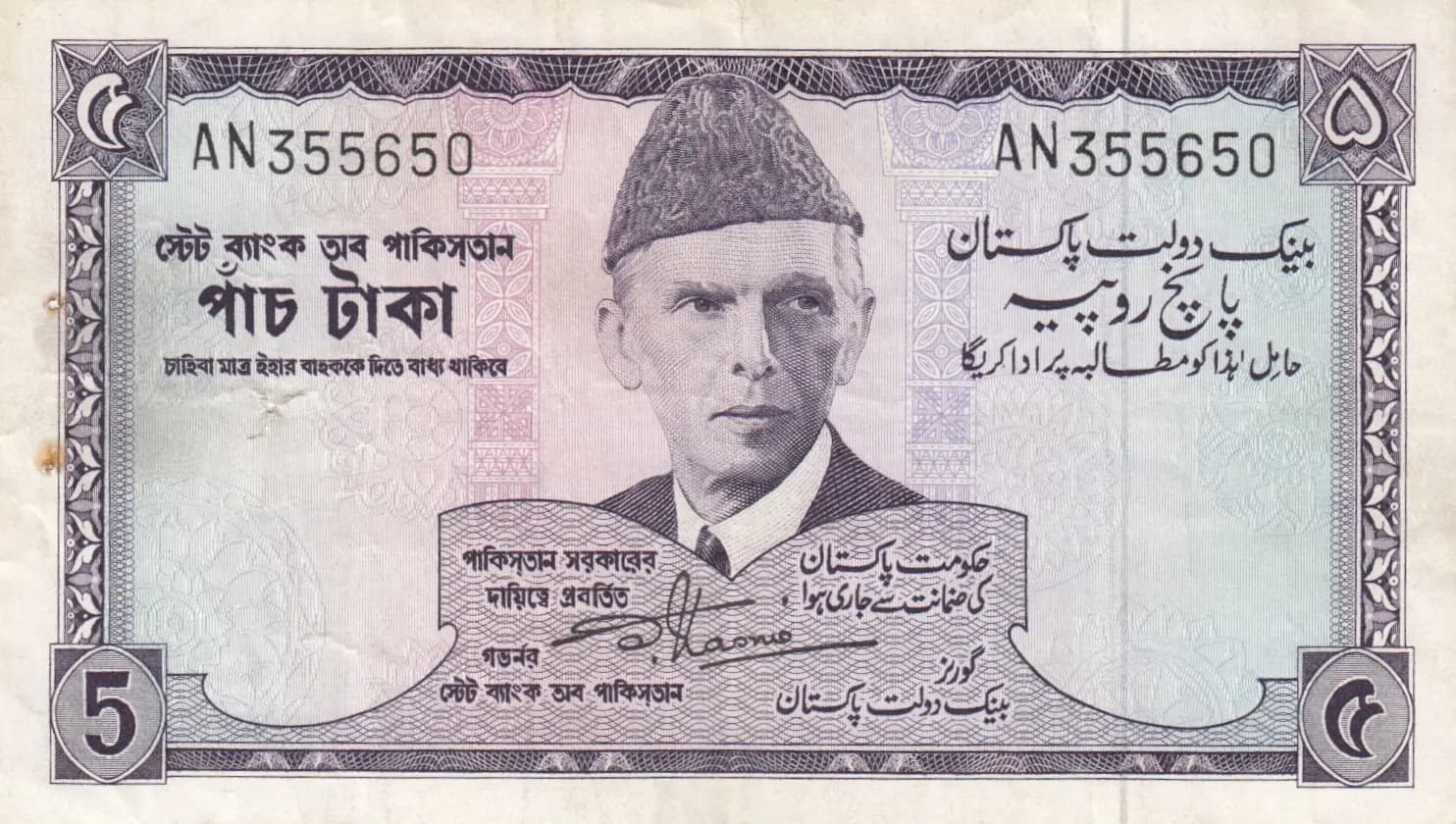
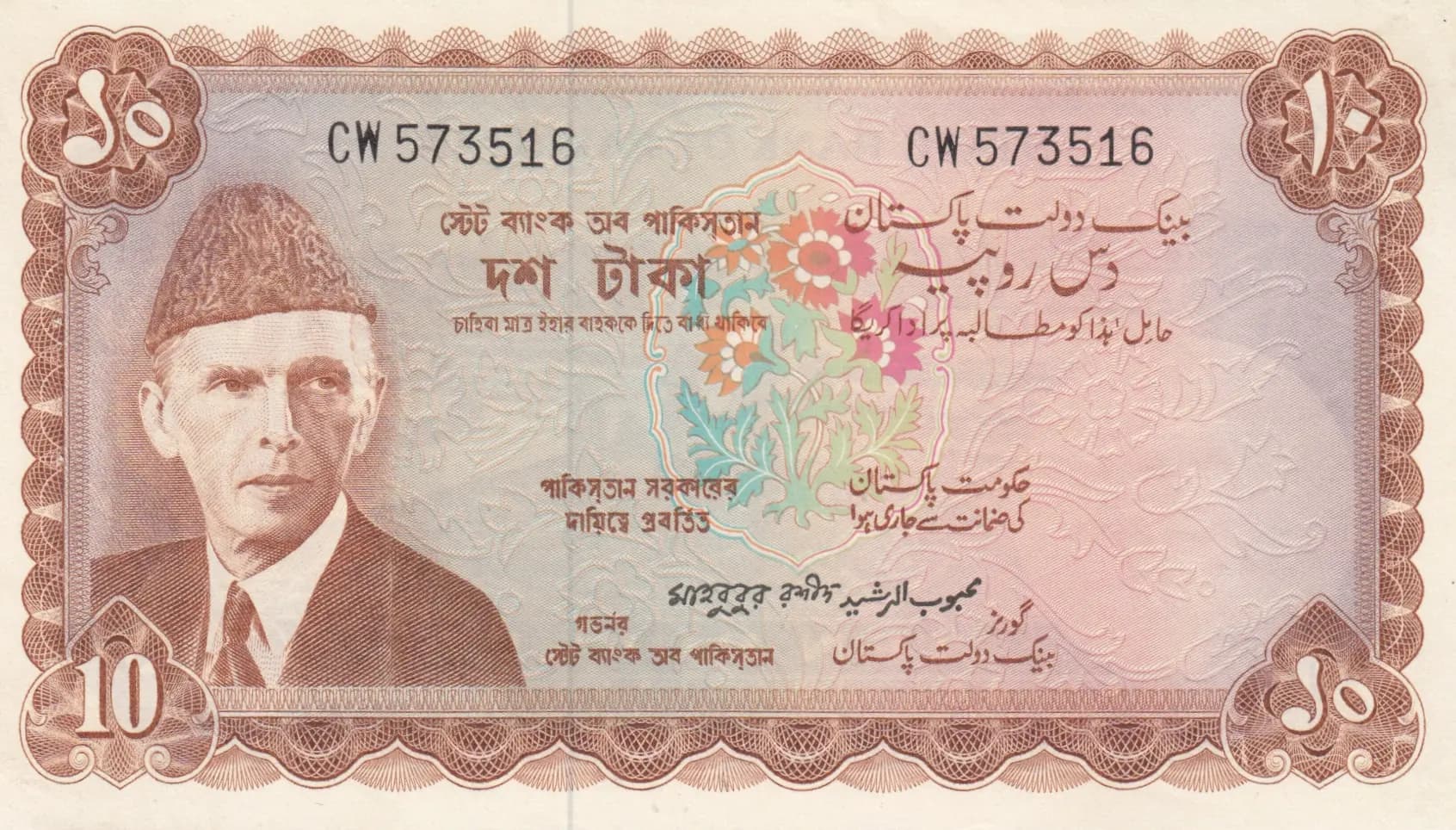
This specimen exhibits the serial number prefix 'BR/2' which represents a specific printing batch or series within the 1951-1967 circulation period. The note displays staple holes at issue (as noted in PMG holder information), indicating this was from a bank bundle or official specimen set rather than retail circulation—a characteristic feature of some early State Bank of Pakistan presentations. The Urdu inscription on the reverse reading 'دس ٹکہ' (das taka) reflects the period when 'Taka' terminology was still in use in East Pakistan (pre-1972 Bangladesh), making this a transitional-period variety with both 'Rupees' (obverse, in Urdu) and 'Taka' (reverse) denominations present.