10 rupee 1977
Market Prices
20 salesAbout This Note
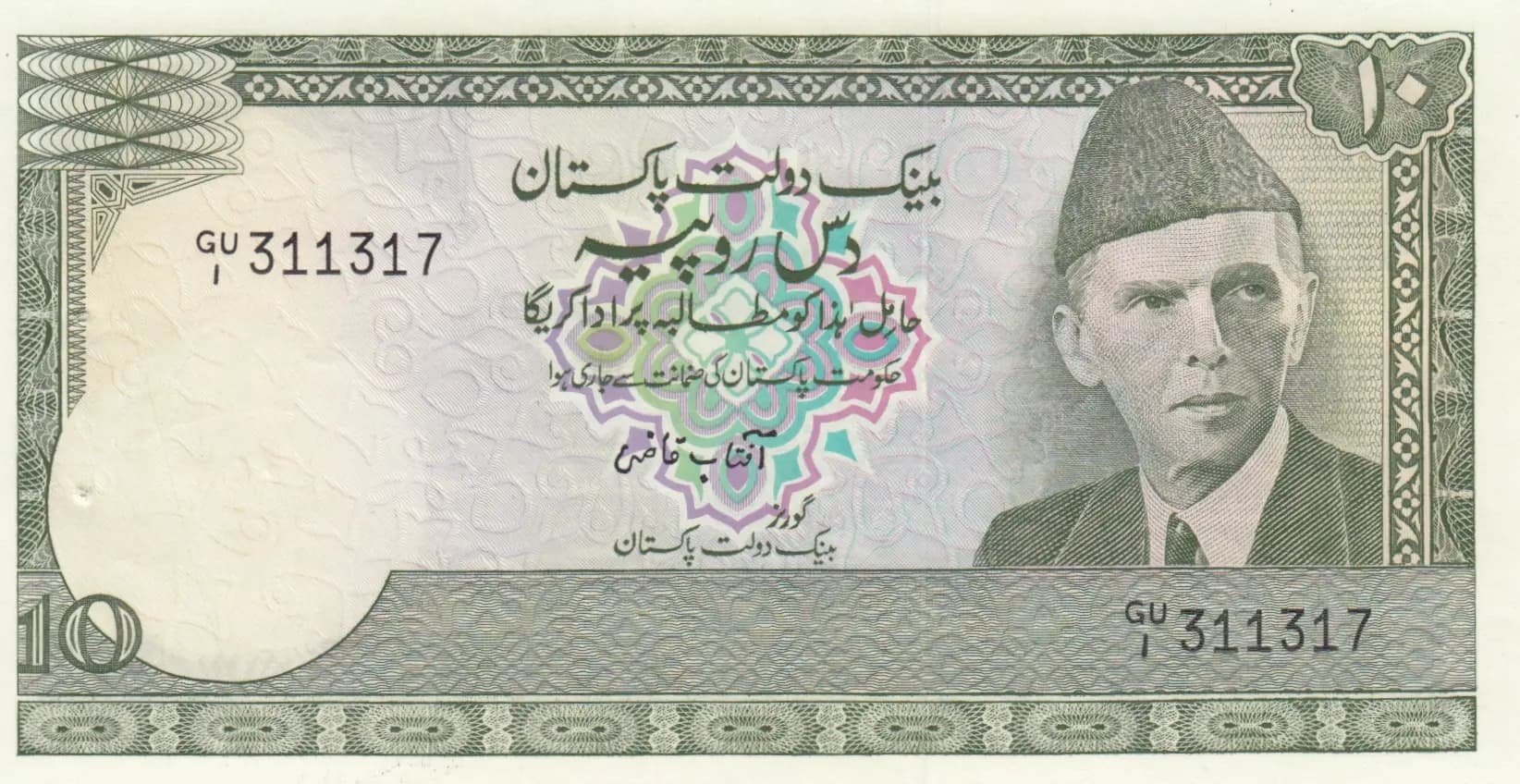
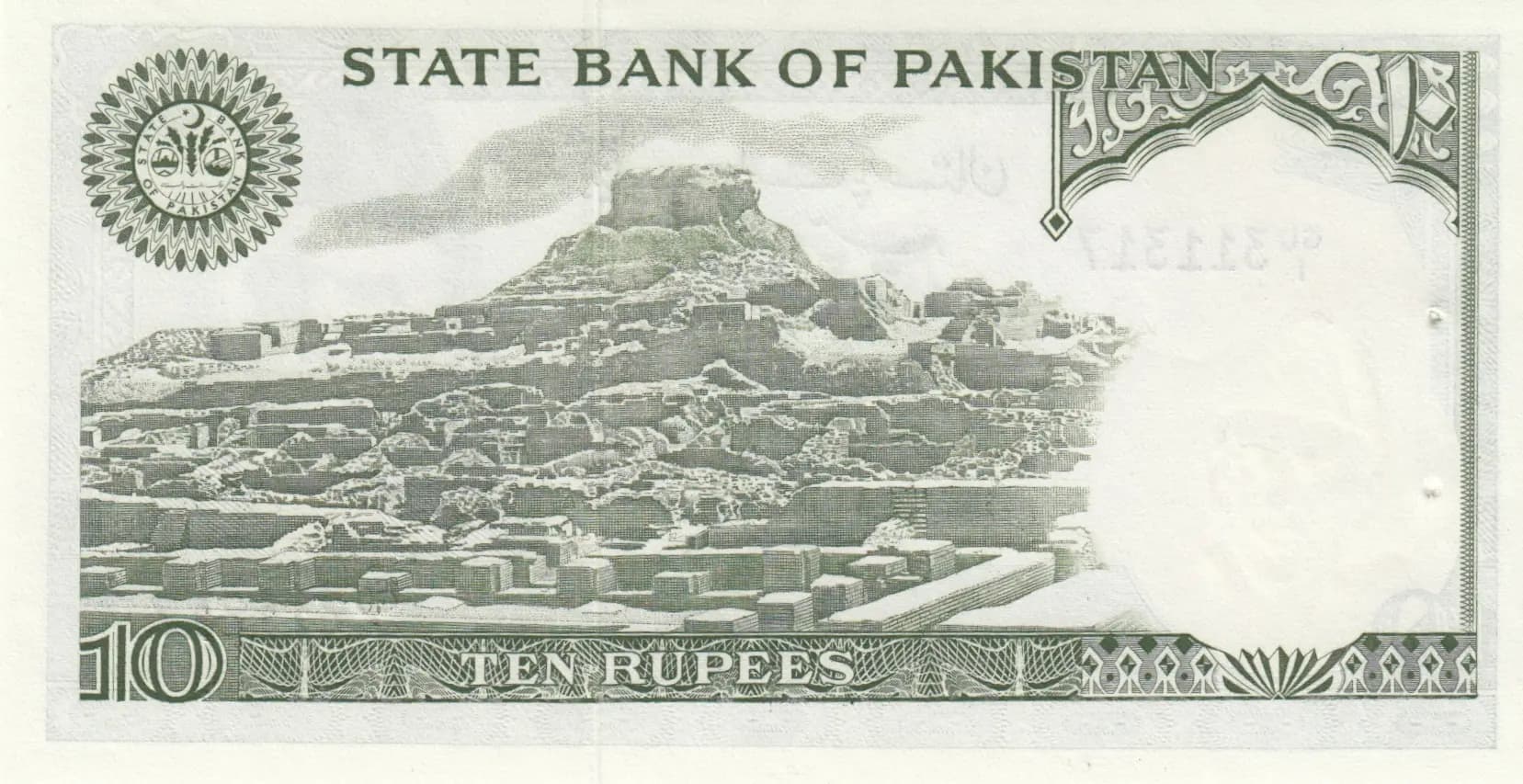
A Pakistani 10 Rupee note from 1977 in uncirculated condition, featuring Mohammed Ali Jinnah in traditional karakul cap on the obverse and the ancient ruins of Mohenjo-Daro on the reverse. The note displays crisp, vibrant multicolor printing with characteristic pale olive-green base and ornate Islamic geometric designs, with no visible signs of circulation, wear, or handling.
Common. The eBay price data provided shows consistent sales in the $1-5 range across multiple condition grades (UNC, AUNC, VF) over nearly a decade, with even graded PMG specimens (64-66) selling for approximately $10. Print run data and circulation evidence indicate this is a standard issue note with no significant scarcity. As a 1977 issue from a regular emission period with no documented recall or short-term production run, this note remains widely available in the collector market.
Issued during Pakistan's early monetary modernization period (1977-1982), this note commemorates the nation's founding father Mohammed Ali Jinnah and celebrates the archaeological heritage of the Indus Valley civilization through the depiction of Mohenjo-Daro in Larkana. The note's design reflects Pakistan's dual focus on national identity and historical pride during the post-independence era.
The obverse features Mohammed Ali Jinnah (Quaid-e-Azam), Pakistan's founder, depicted in profile facing left wearing formal Western suit and traditional karakul cap, positioned on the right side of the note. The design incorporates an elaborate central rosette or mandala pattern rendered in purple, pink, turquoise, and green overlays, surrounded by ornate Islamic geometric border patterns characteristic of Pakistani currency design. The reverse showcases Mohenjo-Daro, the ancient Indus Valley civilizational site located in Larkana, depicted as a fortified settlement on elevated terrain with surrounding brick structures and archaeological remains. A circular security seal with radial decorative pattern appears in the upper left of the reverse. Throughout both sides, fine line engraving and detailed cross-hatching provide security and aesthetic sophistication.
FRONT: 'بیک ڈولٹ پاکستان' (State Bank of Pakistan - Urdu); 'دس روپے' (Ten Rupees - Urdu); Serial number 'GU 311317' (English, appears twice). BACK: 'STATE BANK OF PAKISTAN' (English); 'TEN RUPEES' (English).
Intaglio engraving with multicolor offset printing. The note exhibits fine line work, complex geometric patterns, and layered color overlays characteristic of modern security printing. This was standard for State Bank of Pakistan currency production during the 1977-1982 period, likely produced by a Pakistani security printer or in coordination with international currency printing security specialists.
The visual analysis indicates serial number GU 311317, representing one of multiple serial number varieties known for this Pick number. The catalog reference notes two signature varieties exist for P-29. The note is confirmed as the variant WITHOUT the Urdu text line on the upper center of the back, distinguishing it from similar contemporary issues P-34 and P-39 which feature that additional text element. No overprints or exceptional marking variants are evident in the examined specimen.