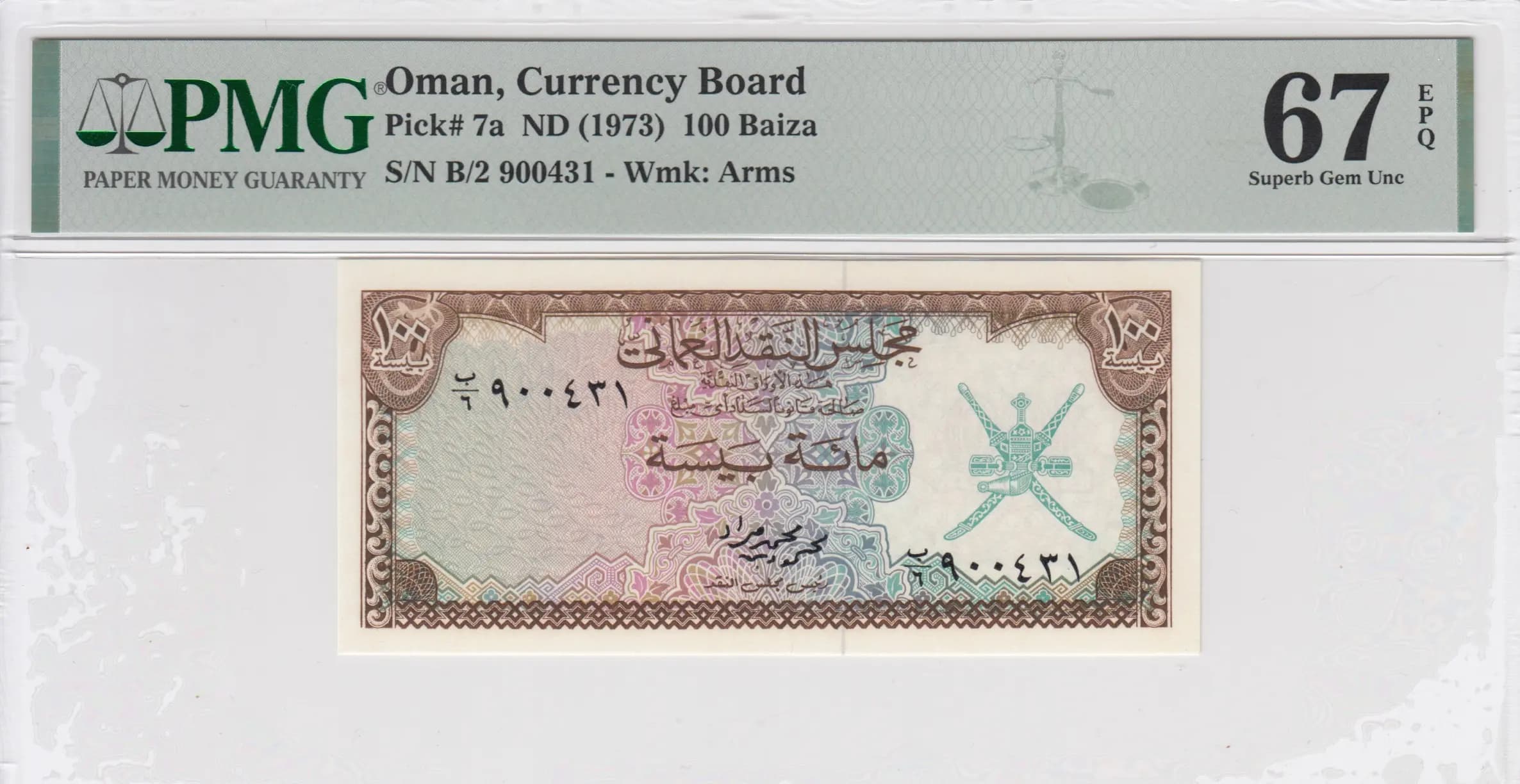
100 baiza 1973
Market Prices
40 salesAbout This Note
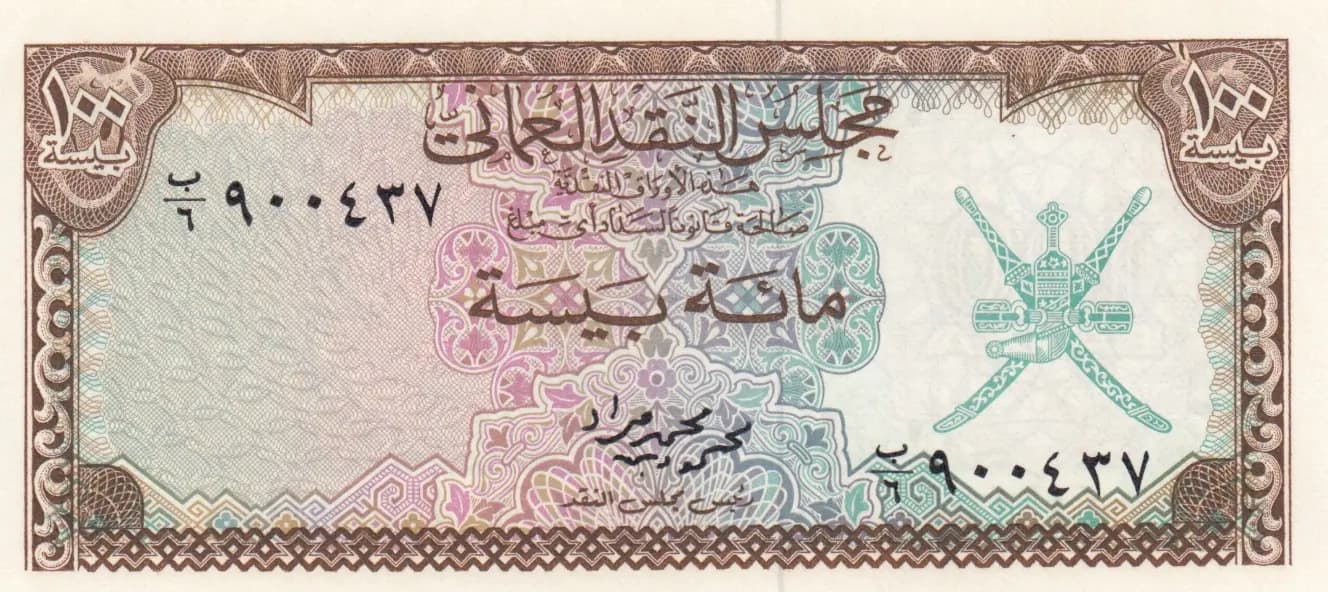
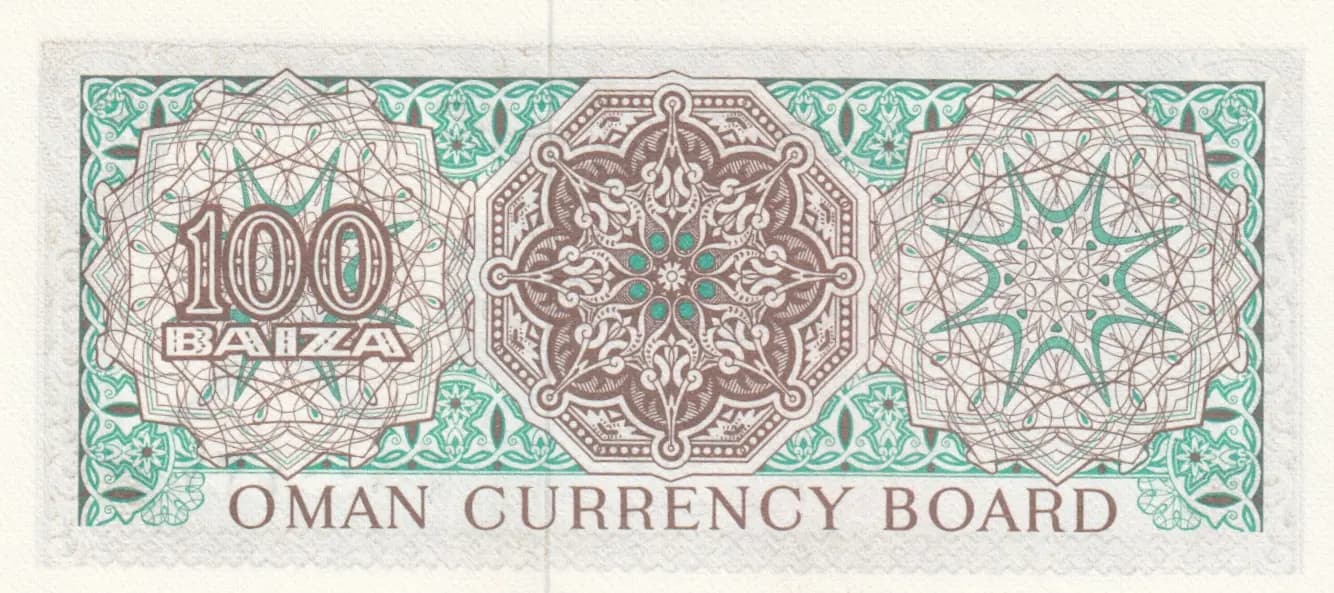
This 1973 Oman Currency Board 100 Baiza note is presented in uncirculated condition, displaying the characteristic brown-on-multicolor design typical of early Omani currency. The obverse features a prominent central octagonal medallion with intricate Islamic geometric patterns in brown and green, flanked by symmetrical decorative panels, while the reverse showcases elaborate pink, purple, and teal arabesques centered around the national emblem (crossed curved elements, likely representing traditional daggers or swords). The note's appeal lies in its historical significance as an early issue from Oman's currency board era and its exceptional state of preservation with crisp color and no visible wear.
Common. Despite being an early issue from 1973, the 100 Baiza note remains widely available in the collector market. eBay auction data shows consistent sales activity across multiple condition grades from 2013 to 2025, with UNC specimens regularly selling in the $7–$27 range (most clustering around $12–$20), and even PMG-graded examples (65–67) typically achieving $20–$80. The absence of any recorded scarcity premium, the regular appearance in auctions, and the modest price realizations across nearly a decade of market data all indicate this is a standard-issue banknote with no production anomalies or rarity factors.
Issued in 1973 by the Oman Currency Board during the early years of Sultan Qaboos bin Said's reign, this banknote reflects the modernization of Oman's monetary system following the 1970 coup. The prominent display of the national emblem—the crossed daggers (khanjars) with finials—on the reverse connects the currency to Omani national identity and Islamic cultural heritage. The use of Arabic and English inscriptions alongside intricate Islamic geometric designs demonstrates the transitional character of Oman's emergence as a modern nation-state during this period.
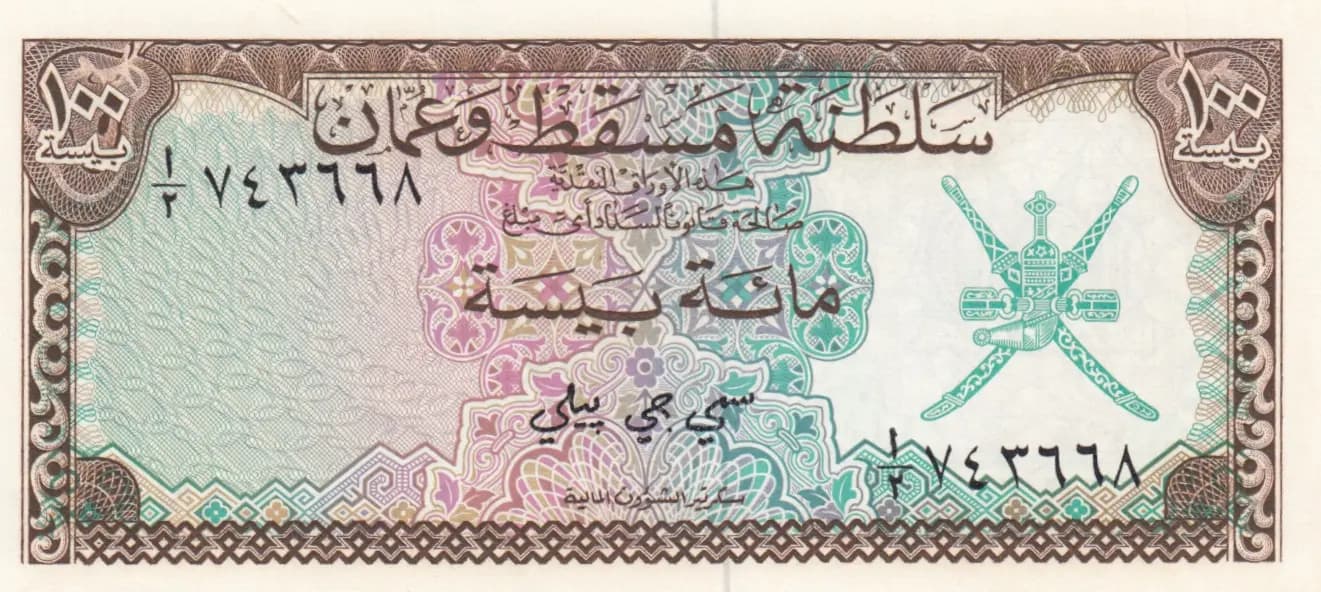
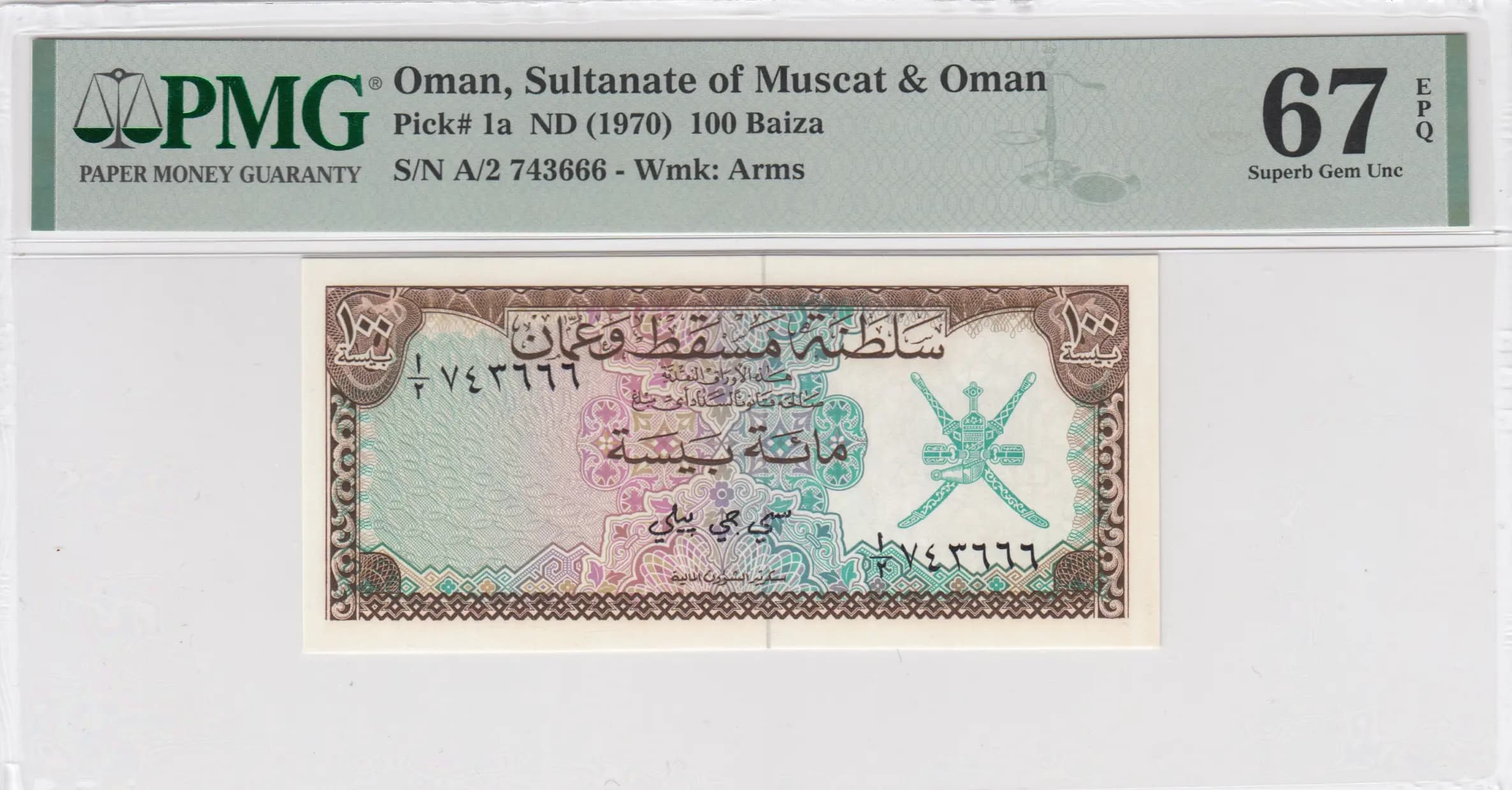
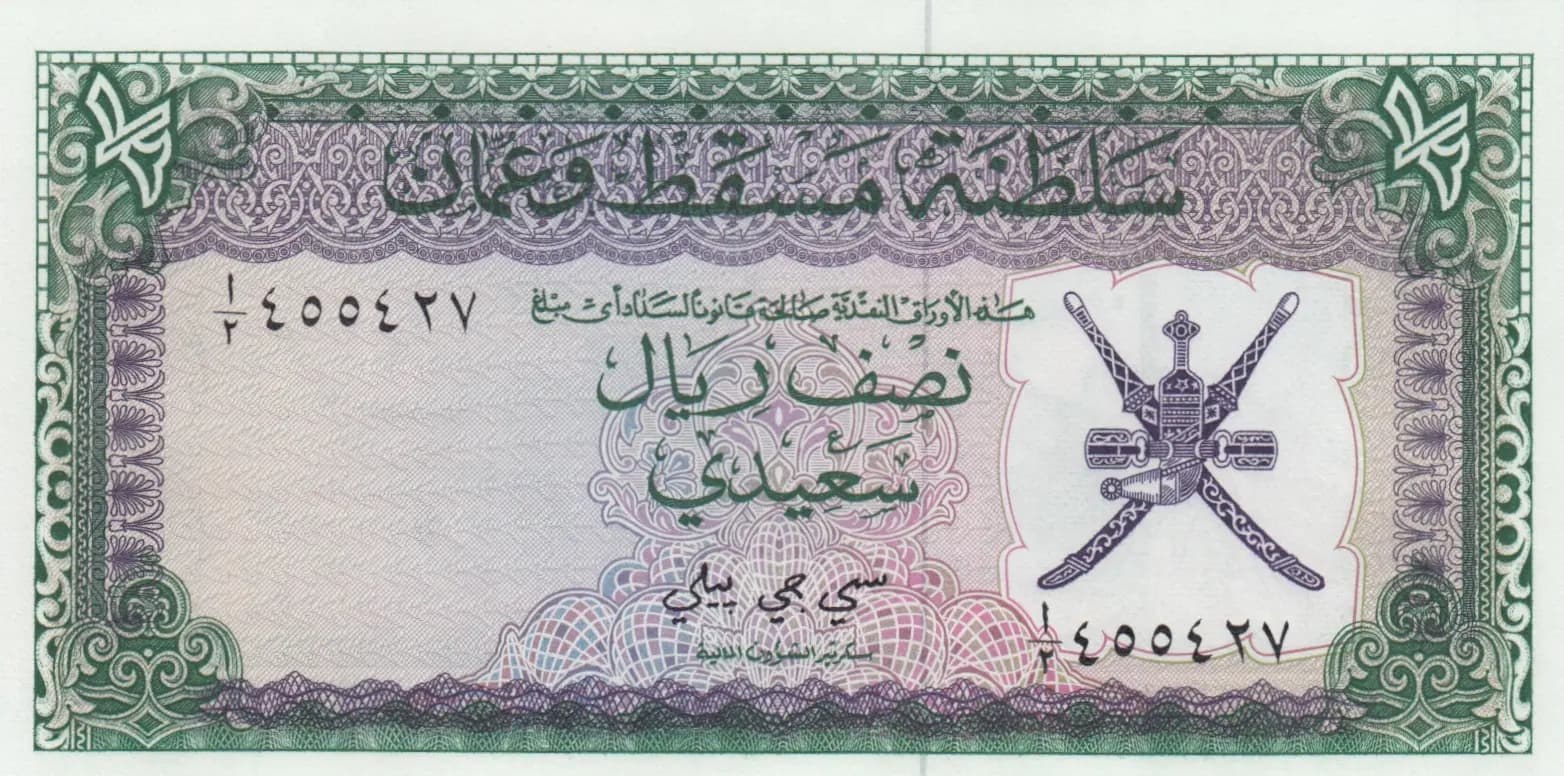
The 100 Baiza note features a carefully balanced design emphasizing Islamic artistic traditions and national symbols. The obverse is dominated by a central octagonal medallion containing complex geometric and floral arabesques in brown, characteristic of traditional Islamic ornamentation. This is framed by symmetrical decorative panels in the upper corners, with the denomination '100 BAIZA' prominently boxed on the left in large brown capital letters. The background employs a green and cream color palette with fine-line geometric patterns creating visual depth. The reverse showcases the national emblem—a pair of crossed khanjars (traditional curved daggers) with ornamental finials above them rendered in teal—positioned centrally among elaborate pink, purple, and teal Islamic floral and geometric designs. Arabic text identifying the Sultanate of Oman appears in the upper register. The design reflects Oman's cultural heritage while establishing a modern, secure currency aesthetic appropriate for an emerging nation-state.
Front Side: '100 BAIZA' (English denomination marking), 'OMAN CURRENCY BOARD' (English issuer identification). Back Side: 'سلطنة عمان' (Arabic: 'Sultanate of Oman'), 'مائتا بيزة' (Arabic: 'Two hundred baiza' — note: this appears to be a transcription anomaly as the front clearly states 100 Baiza; the reverse text may reference a different denomination or may be a printing variety). Serial numbers are rendered in Arabic numerals on both sides (example noted: '٤٩.٤٣٧').
Multi-color intaglio (engraved) printing, employing multiple color plates and fine-line engraving techniques. The visual analysis confirms the use of complex geometric and floral intaglio patterns with multiple color layers (brown, green, cream on obverse; brown, pink, purple, teal on reverse). The precision of the fine-line work, intricate background patterns, and the crisp registration visible in the uncirculated specimen indicate professional security printing standards typical of early 1970s central bank note production. The specific security printer is not definitively documented in readily accessible sources for this Pick number, though notes from this era were likely produced by established European or British security printers given Oman's historical ties.
No significant varieties or overprints are evident from the visual analysis of this specimen. The note displays standard printing for the 1973 issue with consistent design elements, Arabic serial numbering, and no visible date variations or signature plate varieties that would distinguish it as a catalogued variety. The serial number format (Arabic numerals in the margins) appears consistent with Pick P-7 specifications. Further variety information would require examination of multiple specimens to identify any potential serial number prefix variations or subsequent printings with design modifications.