10 gulden 1931
About This Note
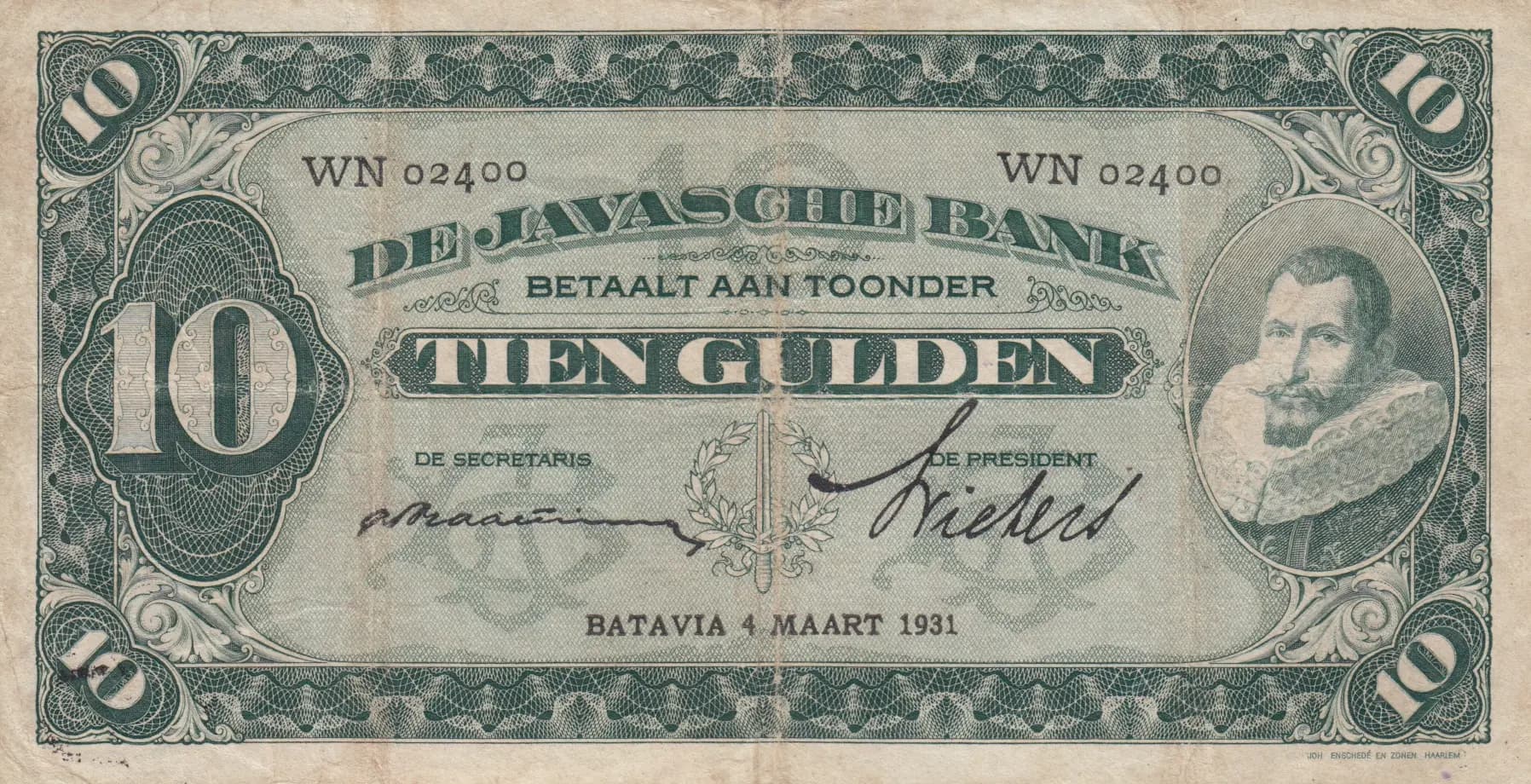
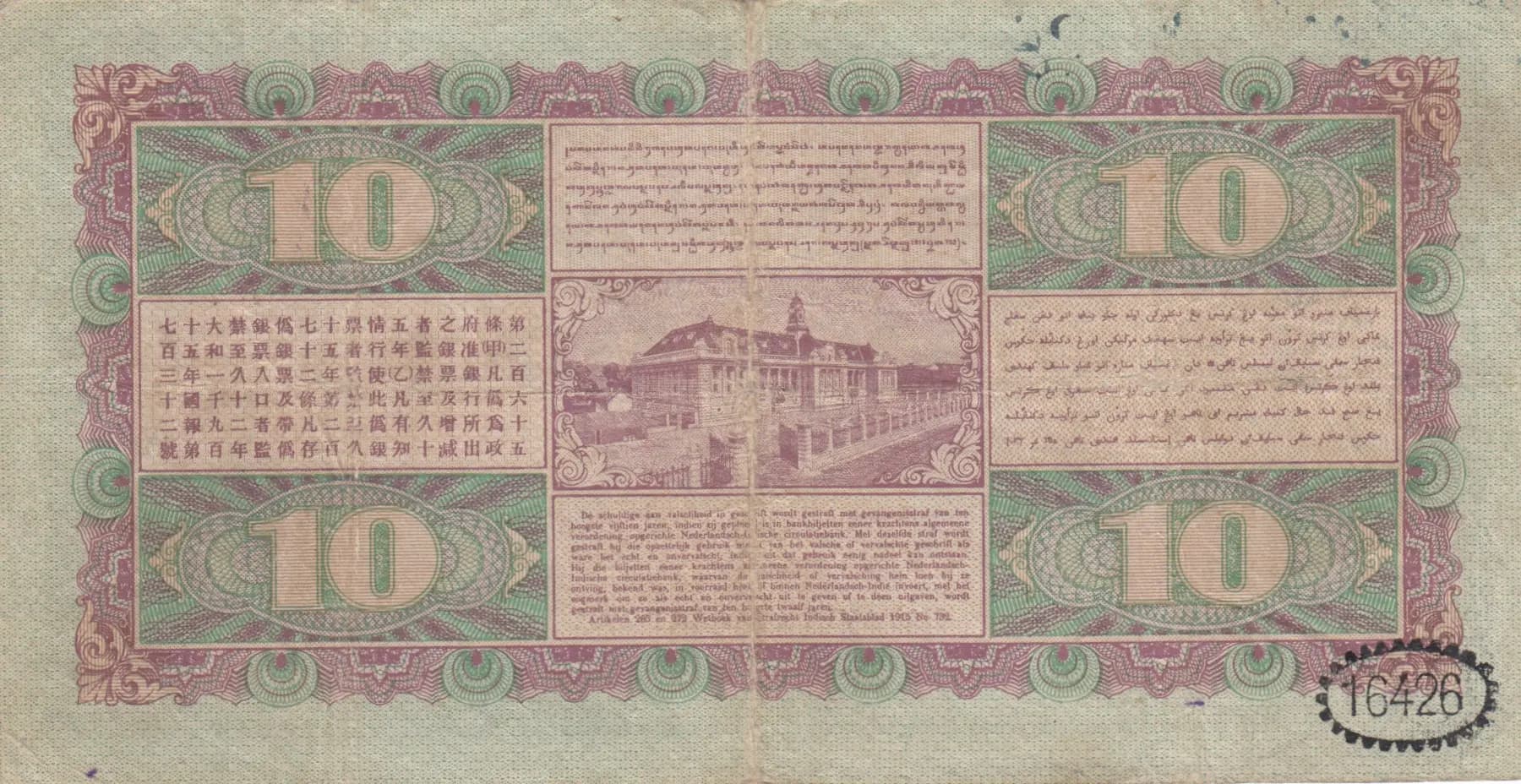
This is a VF-grade 10 gulden banknote from De Javasche Bank, dated 4 March 1931 in Batavia, representing a significant example of Dutch East Indies currency from the late colonial period. The note displays excellent engraving quality with ornate green borders, a portrait of a bearded historical figure in formal dress on the obverse, and a striking multi-language reverse featuring a colonial-era building and Asian script, indicating the bicultural nature of Indies banking. Despite visible aging, foxing, and minor creasing consistent with circulation, the note retains strong definition in its intricate security features and maintains the vibrant color palette characteristic of this issue.
Common. The 10 gulden denomination from De Javasche Bank's 1931 series represents a standard circulation note from a major colonial issuer with substantial production runs. While examples do show age and condition issues due to the 90+ years since issue, VF-grade specimens remain readily available in the collector market at modest premiums. No evidence of restricted print runs, early recalls, or exceptional scarcity for this Pick number exists in standard references. The note's age and historical significance provide collector interest, but supply remains adequate to classify it as common rather than scarce or rare.
Issued during the final decades of Dutch colonial rule in the Netherlands East Indies, this 10 gulden note reflects the complex administrative structure of the colony, with De Javasche Bank serving as the primary banking institution for Java and surrounding regions. The bilingual design—combining Dutch inscriptions with Chinese/Japanese characters—documents the significant Asian merchant communities integral to Indies commerce and the bank's role in serving a multicultural colonial economy. The 1931 date places this note in the interwar period, shortly before the Japanese occupation of 1942-1945 would fundamentally alter the region's monetary system.
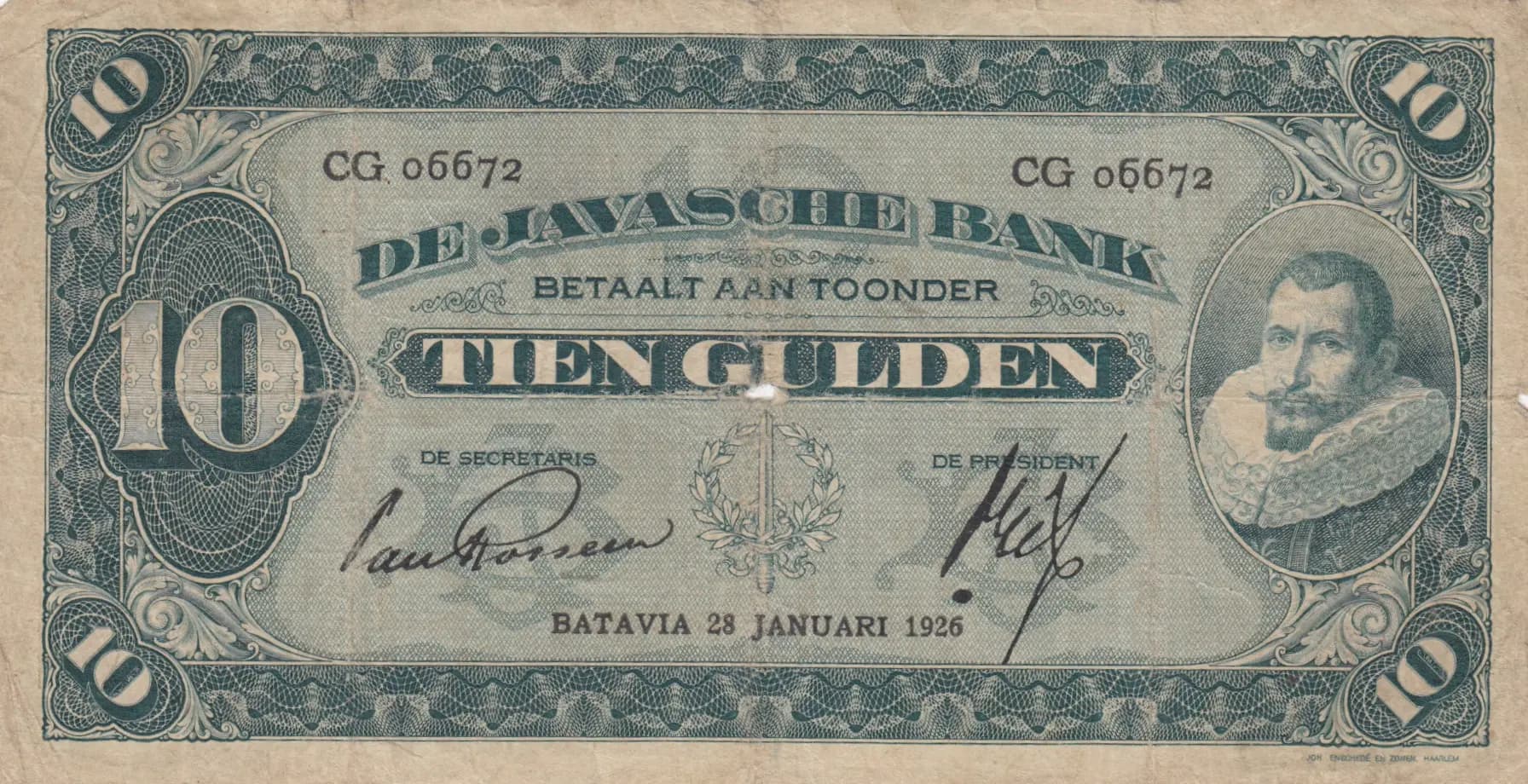
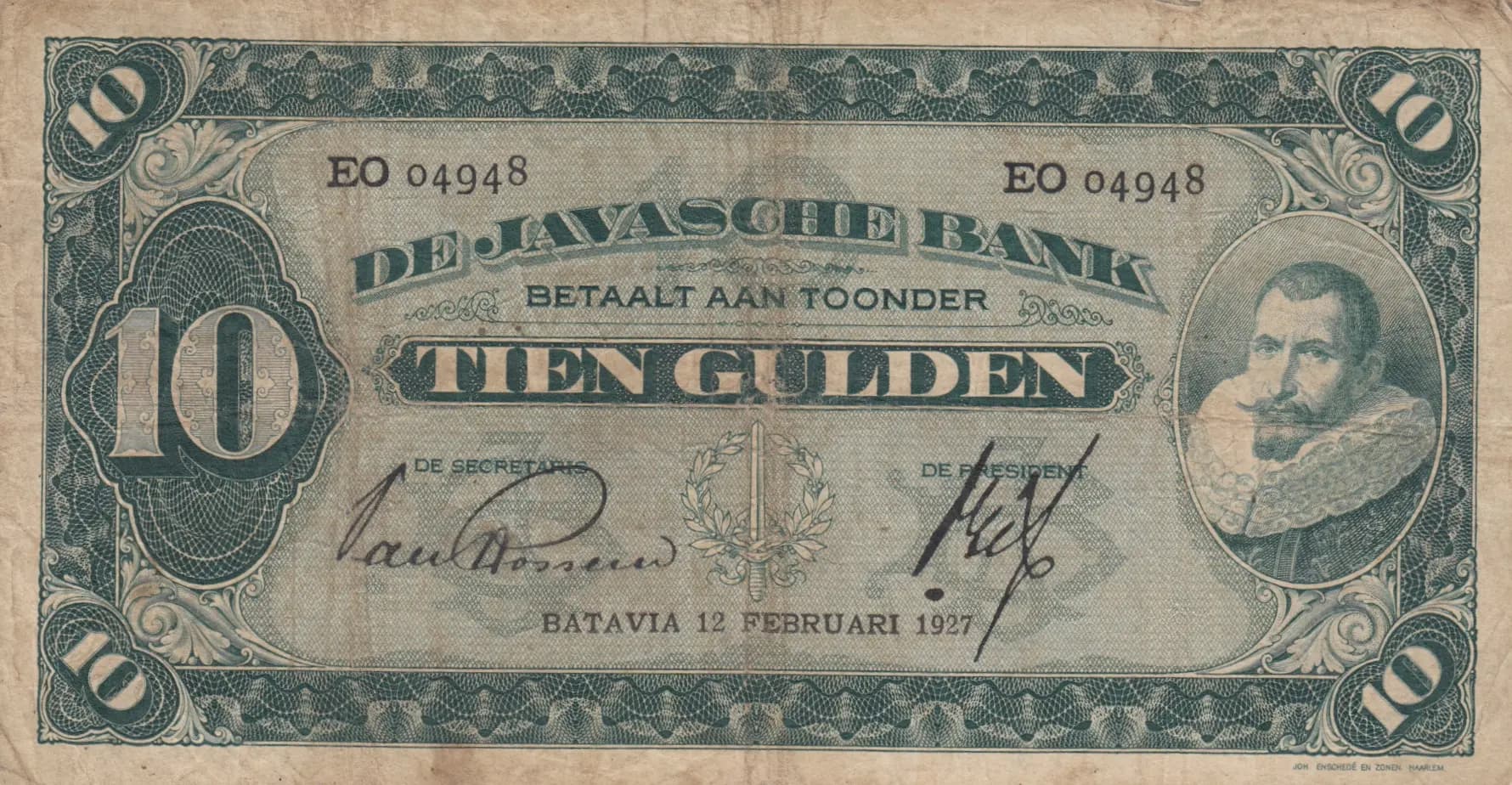
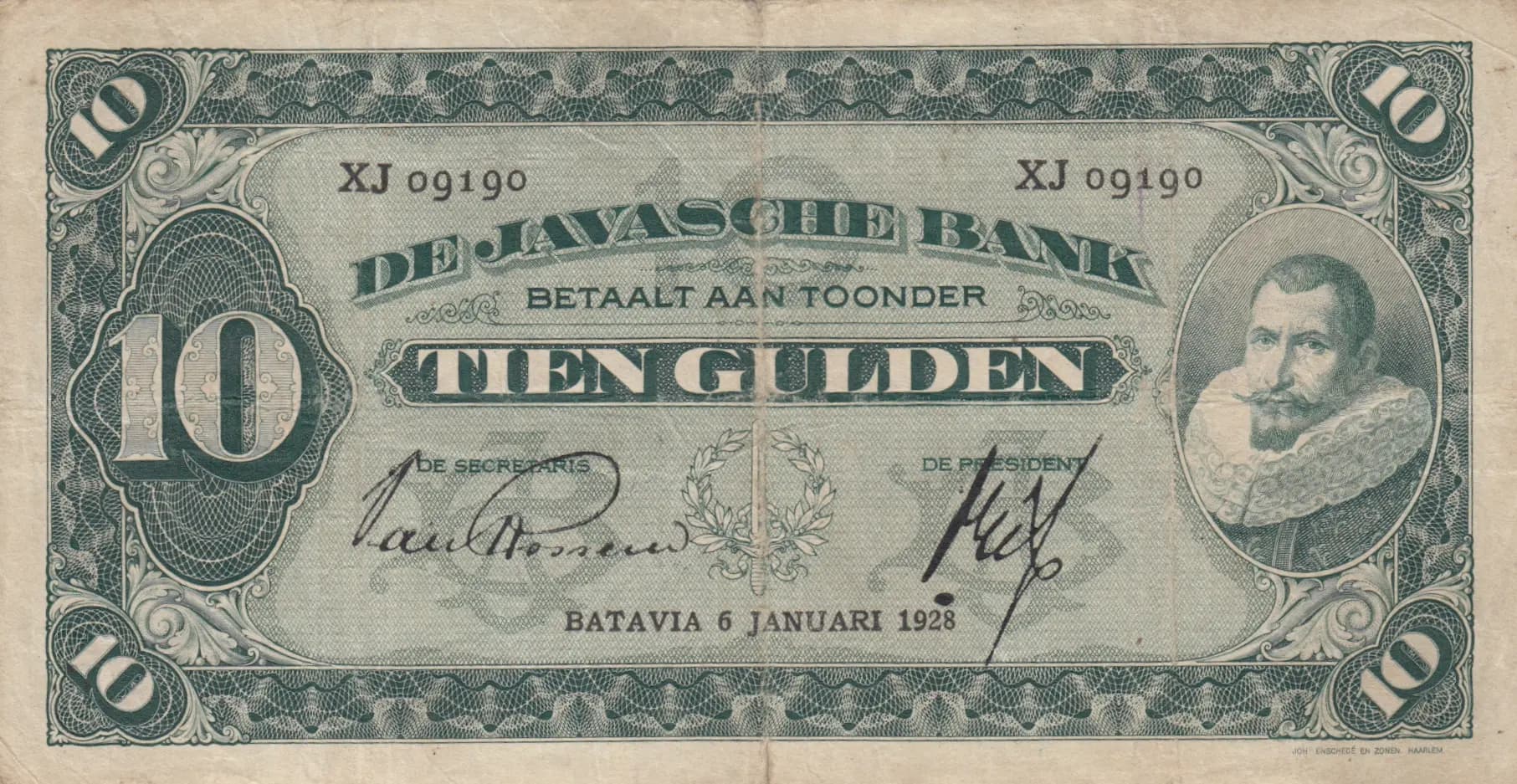
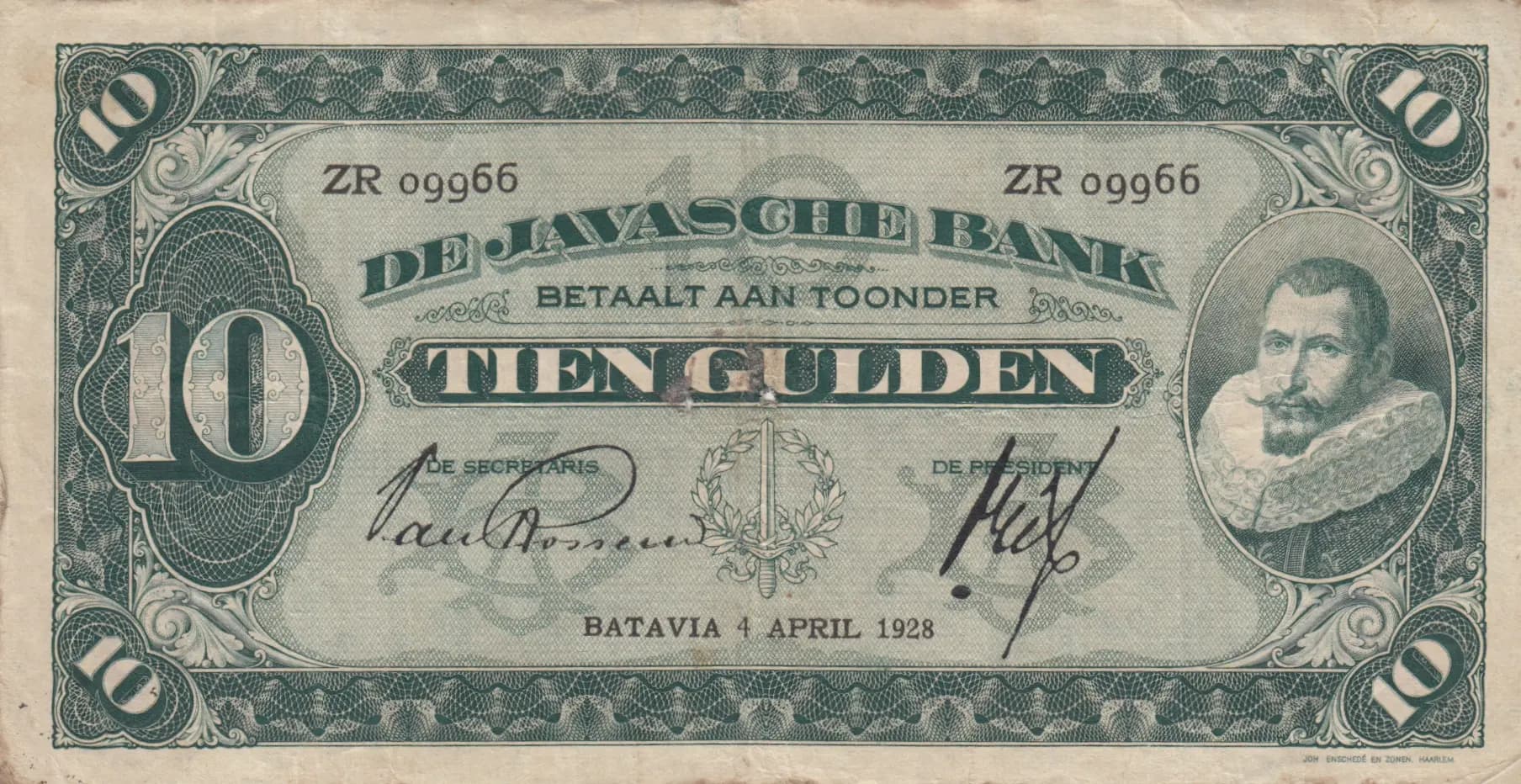
The obverse features the denomination '10' in large numerals at top corners, with the central composition dominated by an oval portrait of a bearded gentleman wearing historical formal attire with a fur collar—likely representing a significant historical figure or colonial official important to the bank's founding or operations. The design is framed by elaborate ornamental borders with laurel wreaths, scrollwork, and fine floral motifs in green ink, with signature lines for both secretary and president indicating dual authorization. The reverse employs a more complex multi-panel layout with four corner medallions containing ornate denominational '10' markers, a centrally positioned two-story colonial building with a distinctive cupola or tower (representing De Javasche Bank headquarters in Batavia), and extensive parallel text blocks in both Chinese/Japanese script and Dutch, emphasizing the bicultural commercial environment of the Indies. The overall design demonstrates the sophisticated engraving standards of early 20th-century colonial banking institutions.
Front side: 'DE JAVASCHE BANK' (The Java Bank); 'BETAALT AAN TOONDER' (Pays to Bearer); 'TIEN GULDEN' (Ten Guilders); 'DE SECRETARIS' (The Secretary); 'DE PRÉSIDENT' (The President); 'BATAVIA 4 MAART 1931' (Batavia, 4 March 1931); Serial number 'WN 02400'. Back side: Denomination marker '10' appears in four corner medallions; extensive text in Chinese/Japanese characters on left panel (specific translation requires specialized expertise but represents explanatory or regulatory text typical of Indies currency); Dutch-language text on right panel (content unclear at current resolution but consistent with regulatory or historical notes); Reference number '16428' visible in circular stamp at bottom right.
This note was produced using intaglio engraving and letterpress printing techniques, as evidenced by the crisp, finely detailed security features including intricate guilloche patterns, ornate scrollwork, elaborate corner designs, and the precision of the architectural rendering on the reverse. The multi-color printing (green, pink/mauve, brown tones) indicates the use of multiple printing passes typical of period banknote production. While not explicitly confirmed for this specific Pick number in available references, De Javasche Bank notes of this era were typically produced by major European security printers; Thomas de la Rue and potentially other London or European firms handled high-value colonial currency work during this period.
This specific example carries serial number WN 02400, with the 'WN' prefix indicating a particular printing batch or series within the 1931 emission. De Javasche Bank's 10 gulden notes from 1931 (Pick 70d) exist with various serial number prefixes and signature combinations; collectors should note that different batches may display minor engraving or printing variations. The handwritten signatures visible on this note appear consistent with period standards but should be examined for specific authorized signatories if pursuing a specialized collection focus. No overprints or exceptional varieties beyond standard serial number progression are evident on the examined images.