10 gulden 1930
About This Note
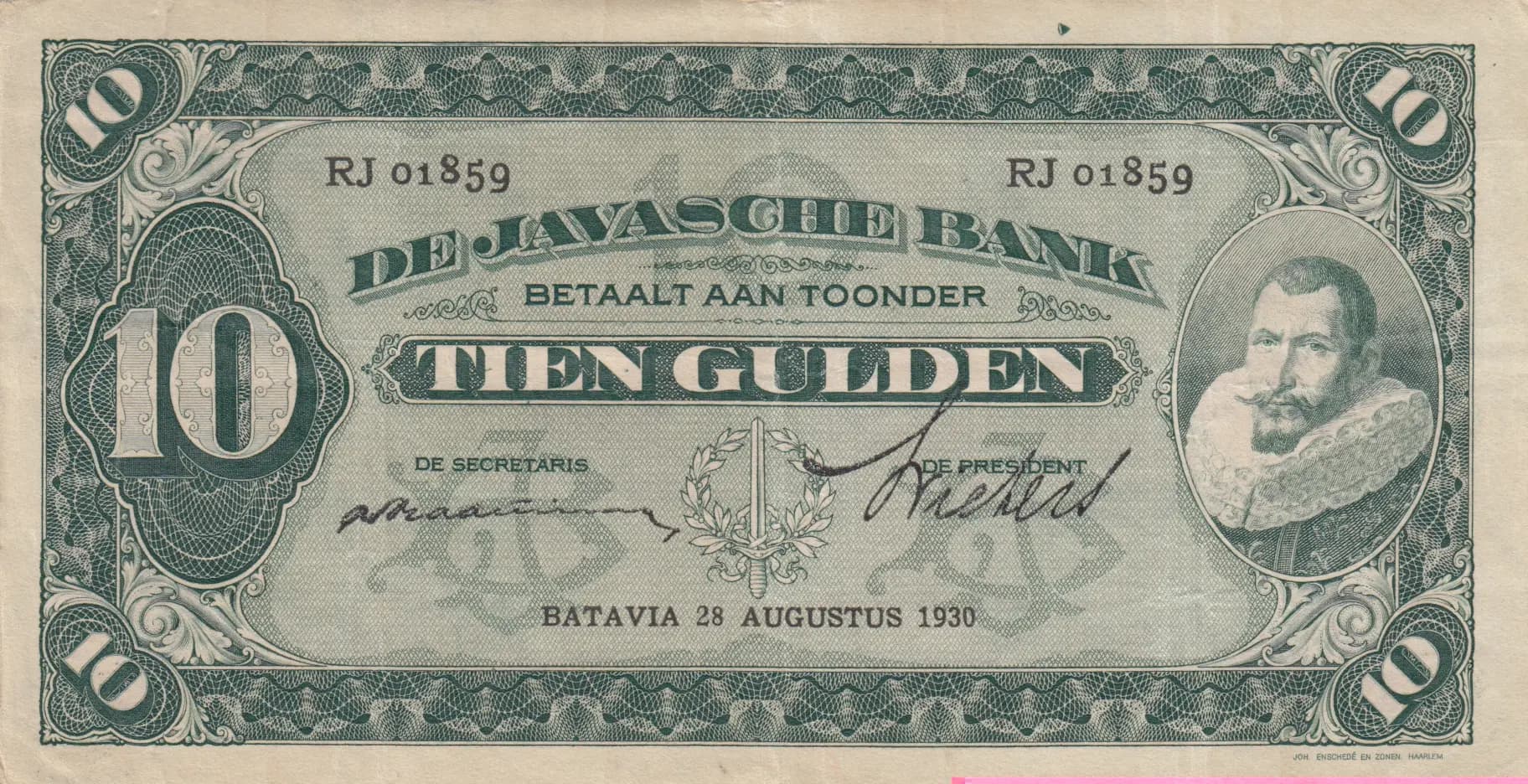
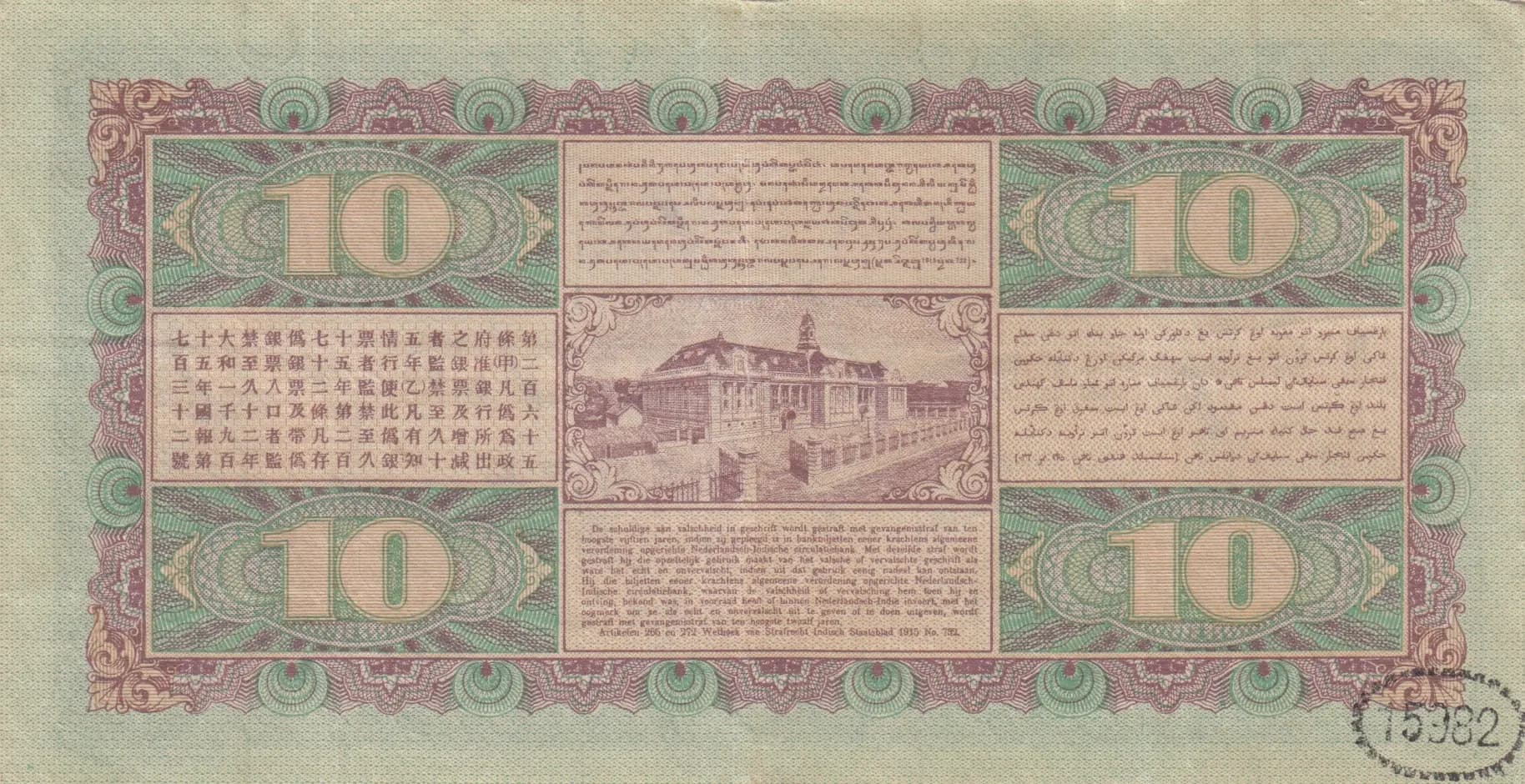
A handsome 10 gulden banknote from De Javasche Bank dated 28 August 1930, graded VF, displaying the characteristic ornate design and multi-lingual security features typical of Netherlands Indies currency. The note exhibits well-preserved printing with teal and cream coloring, though age-related discoloration is evident, consistent with its 95-year circulation history. The front features an elegant portrait of a bearded historical figure within an ornamental circular frame, while the reverse showcases a colonial-era building with Chinese and Arabic script, reflecting the cosmopolitan nature of the Dutch East Indies economy.
Common. This is a standard circulation issue from a major colonial issuer with substantial print runs typical of a 10 gulden denomination note from an established banking institution. The VF condition grade and presence of institutional marking (archive number 15382 on reverse) suggests this example has institutional provenance rather than extreme scarcity. No evidence of short print runs, recall status, or limited issuance exists for this Pick number. Notes of this denomination and issuer regularly appear in numismatic markets at accessible price points.
This banknote represents the height of Dutch colonial financial authority in the East Indies, issued by De Javasche Bank during a period of relative economic stability in the late 1920s-early 1930s. The inclusion of Chinese characters and Arabic script on the reverse reflects the significant Chinese merchant communities and Islamic populations integral to Netherlands Indies commerce and society. The choice to depict a bearded historical figure and a classical colonial building underscores the Dutch colonial administration's effort to project stability and legitimacy in its financial institutions.
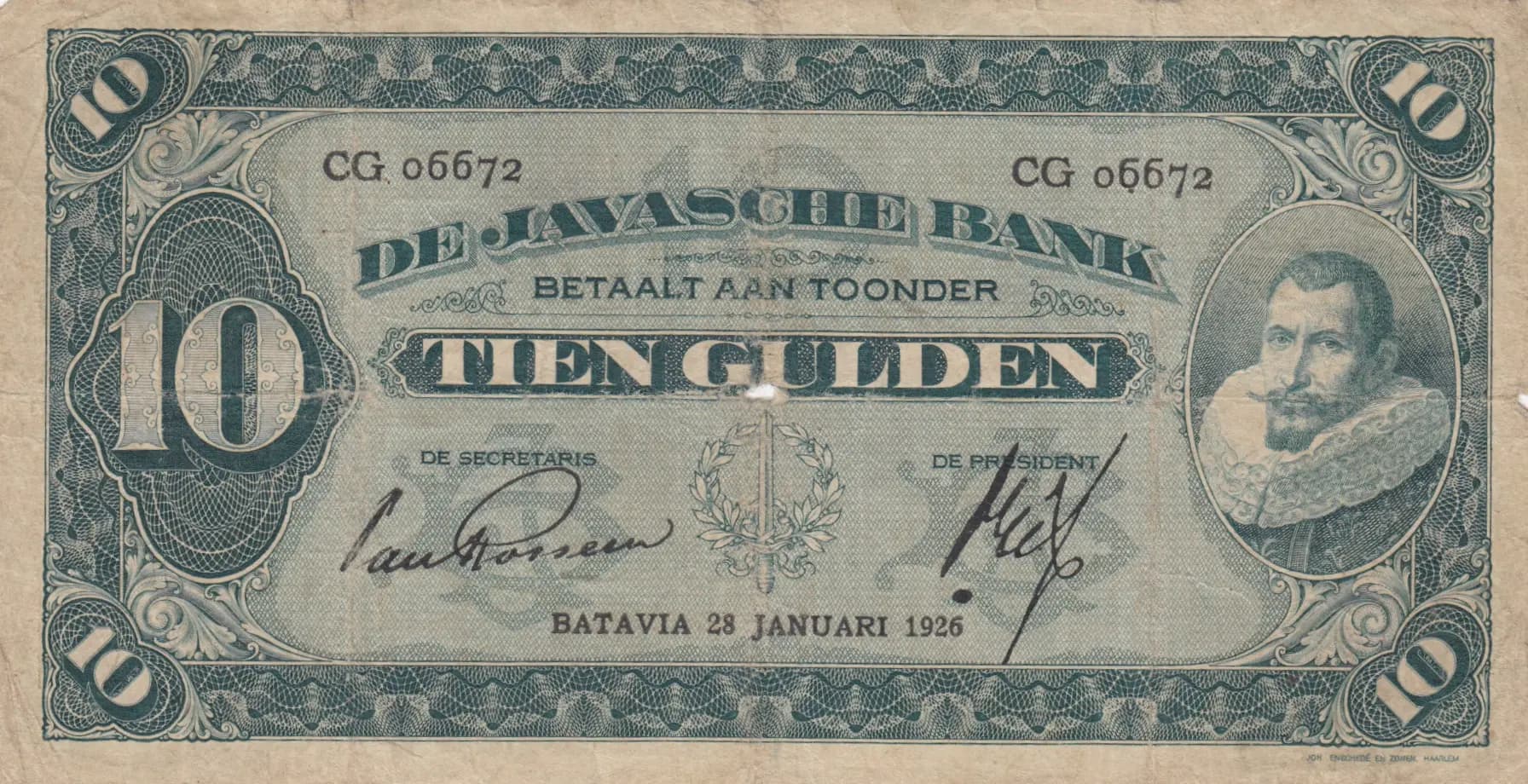
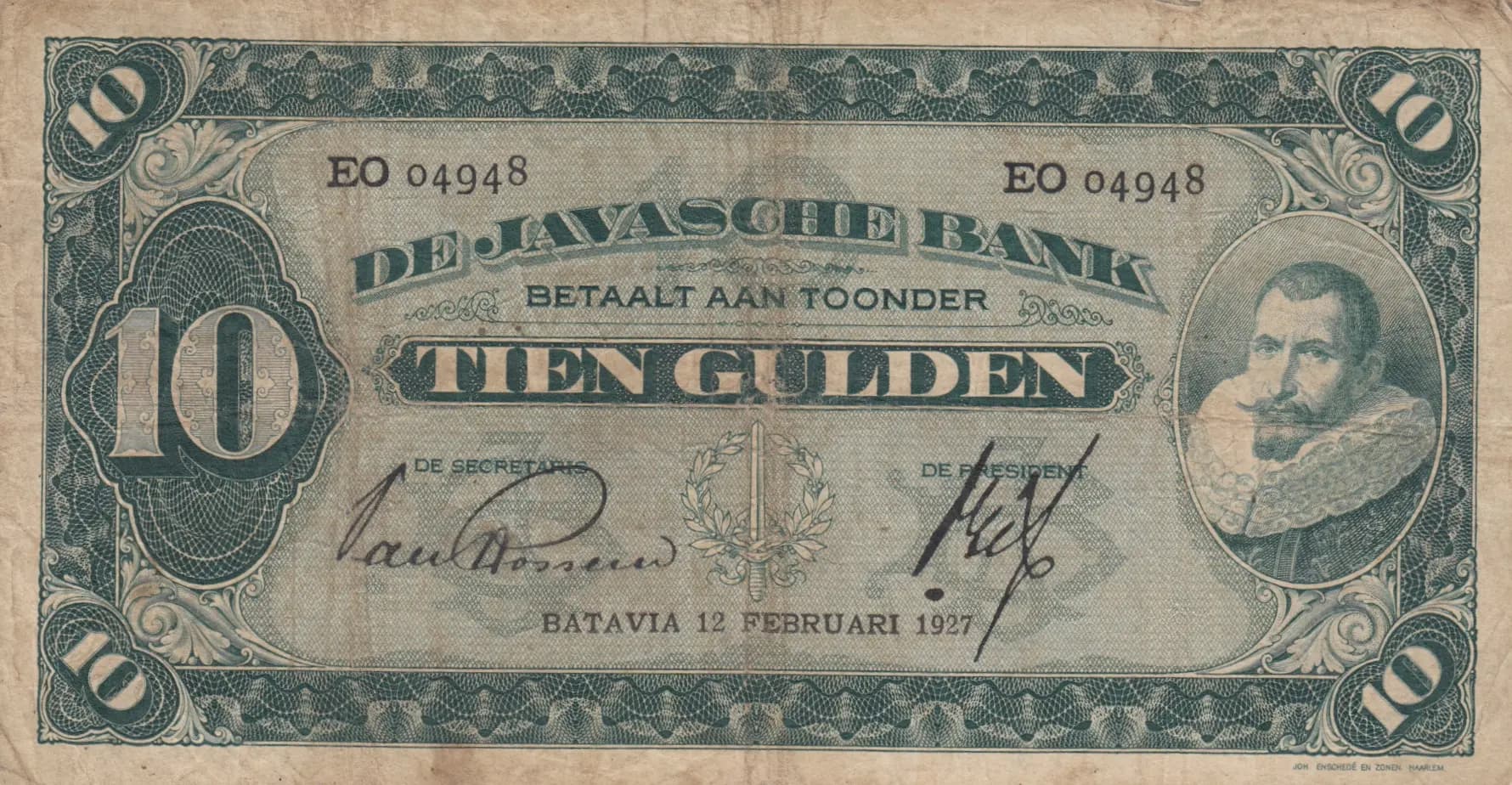
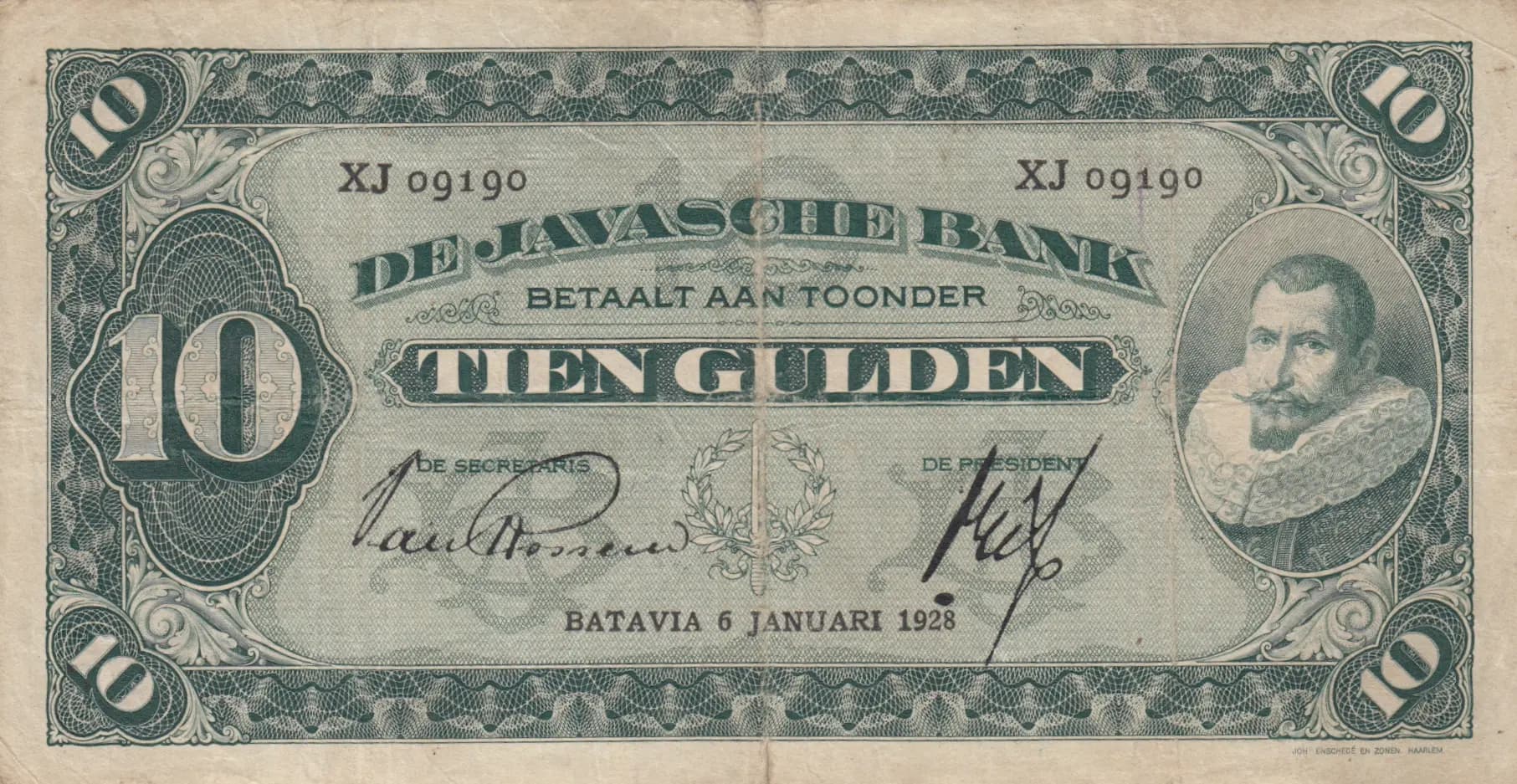
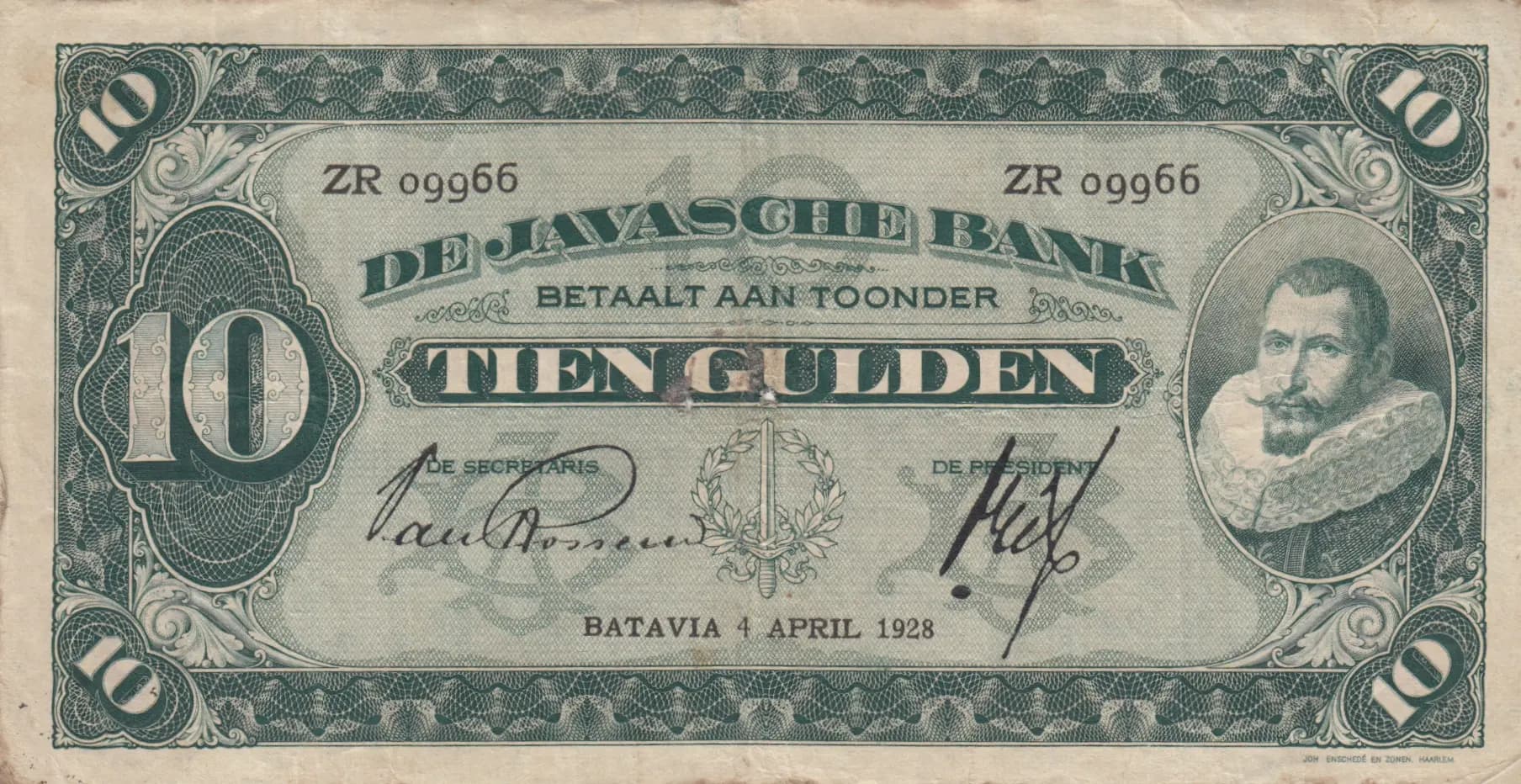
The obverse features an ornate border of intricately engraved floral and geometric patterns framing the central design. A circular portrait of a bearded male figure in historical period dress with draped fabric occupies the right side—likely representing a historical figure of significance to Dutch colonial history. The center displays the bank name 'DE JAVASCHE BANK' at top with denomination 'TIEN GULDEN' centered, and the date 'BATAVIA 28 AUGUSTUS 1930' at bottom, flanked by signature lines for the Secretary and President. A decorative laurel wreath appears below the signatures. The reverse showcases large ornamental numerals '10' in the upper and lower left corners within decorative frames. The center depicts a classical colonial-era building with multiple stories and arched architectural features—likely representing the De Javasche Bank headquarters in Batavia (Jakarta). Flanking text blocks contain Chinese characters (left) and Arabic script (right), with Dutch regulatory text at the base. The entire reverse is framed by an ornate border of repeating circular motifs.
FRONT: 'DE JAVASCHE BANK' (The Java Bank), 'BETAALT AAN TOONDER' (Payable to Bearer), 'TIEN GULDEN' (Ten Guilders), 'DE SECRETARIS' (The Secretary), 'DE PRESIDENT' (The President), 'BATAVIA 28 AUGUSTUS 1930' (Batavia, 28 August 1930), Serial number 'RJ 01859' (appears upper left and upper right). BACK: Large denomination '10' in ornamental frames; Chinese traditional characters (legal tender notice/regulatory text); Arabic script (legal tender notice/regulatory text); Dutch/Latin regulatory text at lower edge. The back design incorporates multilingual security text emphasizing the note's legal tender status across the diverse linguistic populations of the colony.
This note was produced using steel engraving, the standard security printing method for high-value currency of the 1930s era. The visual evidence of intricate geometric microdot patterns, fine line work in decorative elements, and the exceptional detail in both the portrait and architectural rendering are characteristic of skilled engraving work. While specific printer attribution for this particular Pick number requires verification, many Netherlands Indies banknotes of this period were produced by major European security printers. The multi-script rendering and security through complexity (Chinese and Arabic text) suggests deliberate design layering typical of professional security printing houses.
Serial number 'RJ 01859' observed on this specimen. Varieties for De Javasche Bank 1930 10 gulden notes (Pick 70d) are primarily distinguished by serial number prefixes and signature combinations. The 'RJ' prefix indicates this specific block within the print run. The date of 28 August 1930 and Batavia location are consistent with standard issue specifications for this Pick number. No overprints or significant variations from the standard design are evident on this example.