10 gulden 1929
About This Note
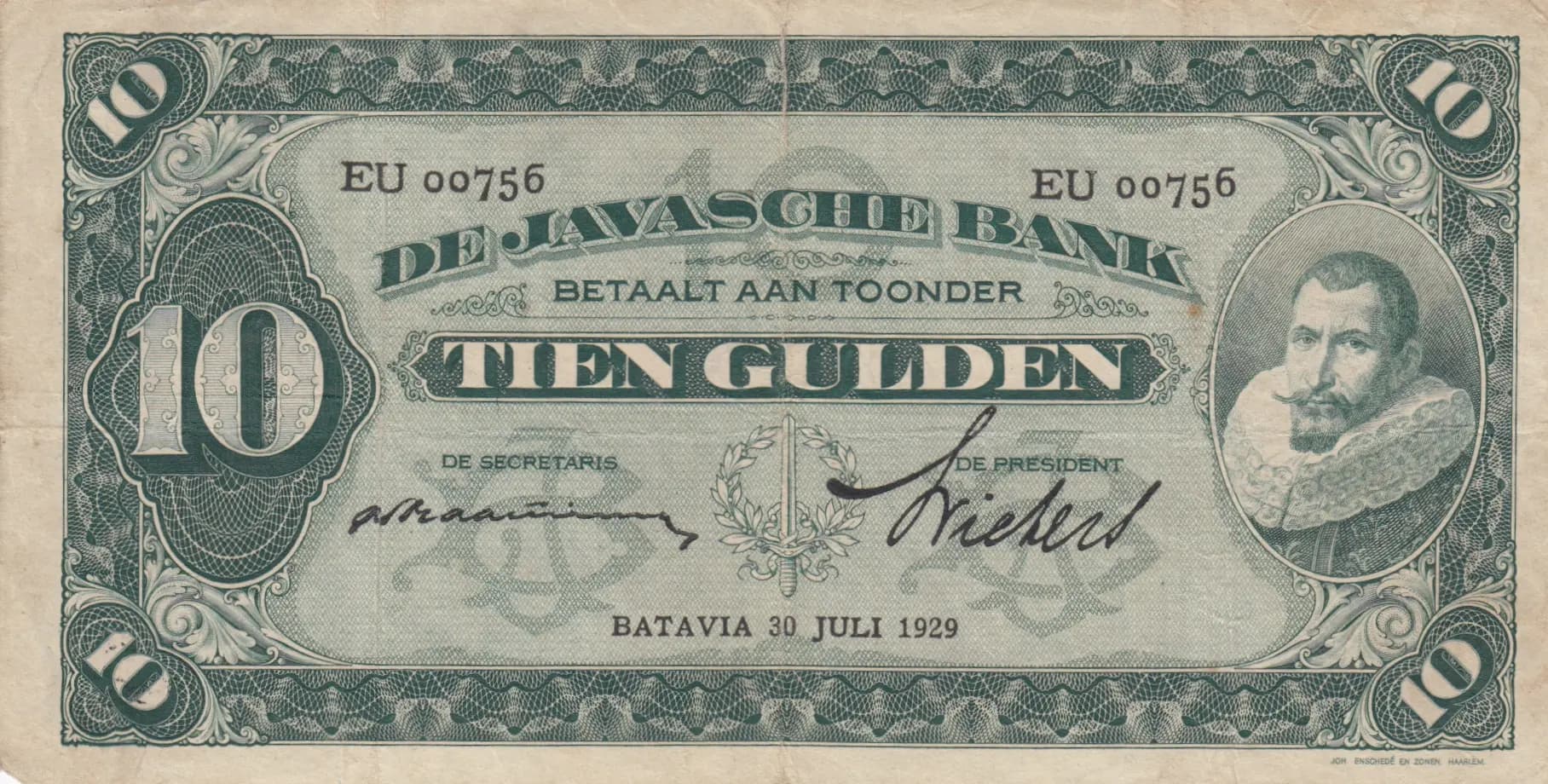
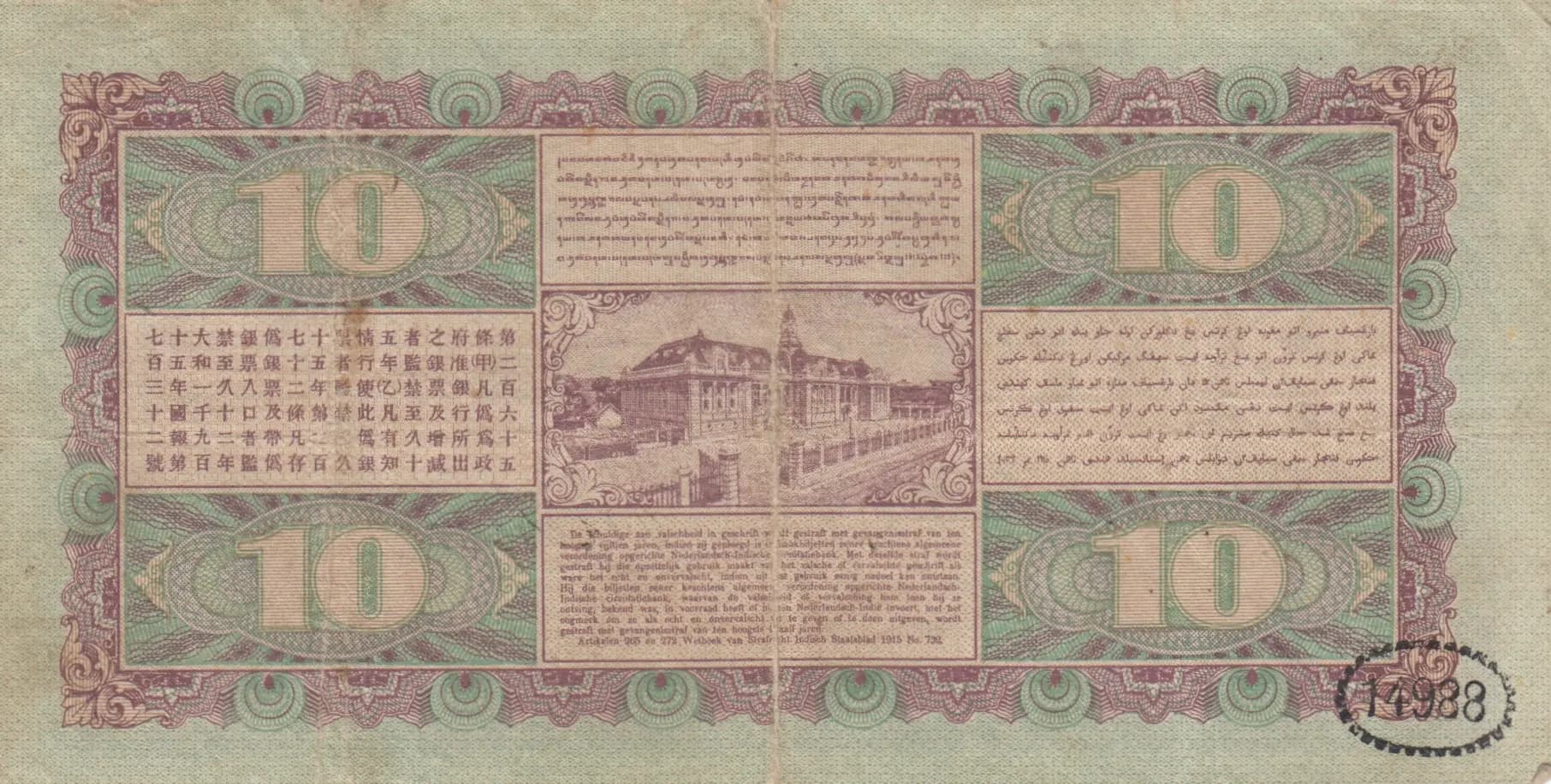
A well-preserved example of the Javasche Bank's 10 Gulden note from 1929, featuring ornate Art Deco-influenced design with teal and cream coloring on the obverse. The note displays moderate circulation wear with visible center fold creasing and age-related foxing, consistent with VF grade. The reverse showcases a striking colonial-era architectural vignette with multilingual text panels in Dutch, Chinese, and Arabic, reflecting the Dutch East Indies' diverse population and commercial importance.
Common. The Javasche Bank issued this denomination in substantial quantities during 1929, and surviving examples in VF condition are readily available to collectors. No evidence of limited print runs, early recalls, or short-term issuance indicates this is a standard circulating issue of the period. The note's availability in the collector market and the absence of specific rarity designations in major catalogs confirm common status.
Issued by the Javasche Bank (Java Bank) in Batavia on July 30, 1929, this note represents the height of Dutch colonial currency in the East Indies during the late interwar period. The multilingual inscriptions and architectural imagery reflect Java's role as the economic and administrative center of the Dutch East Indies, with text in Dutch, Chinese (for the significant Chinese merchant community), and Arabic (for Muslim populations). The colonial building depicted on the reverse symbolizes Dutch administrative authority and economic control in Southeast Asia during this era.
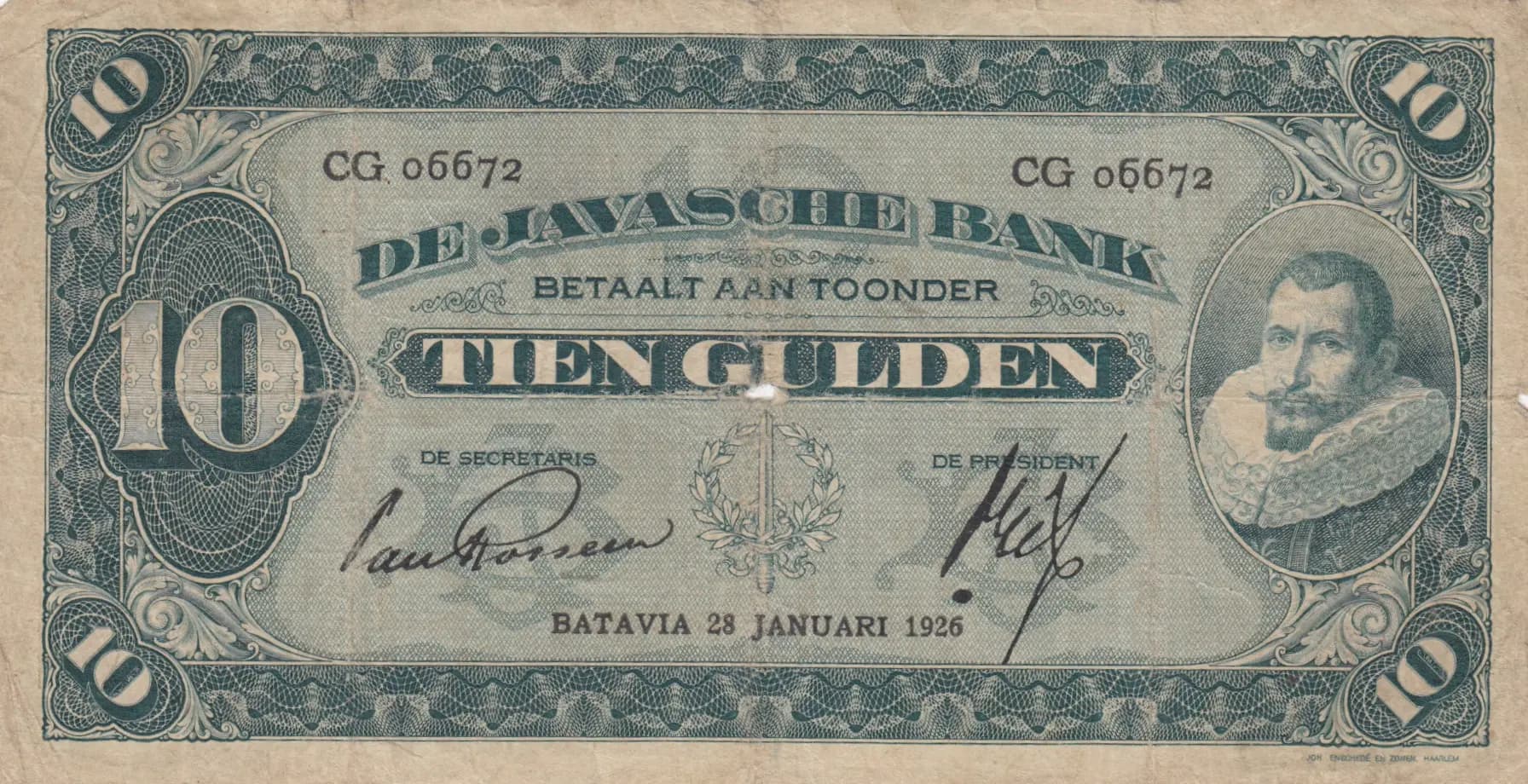
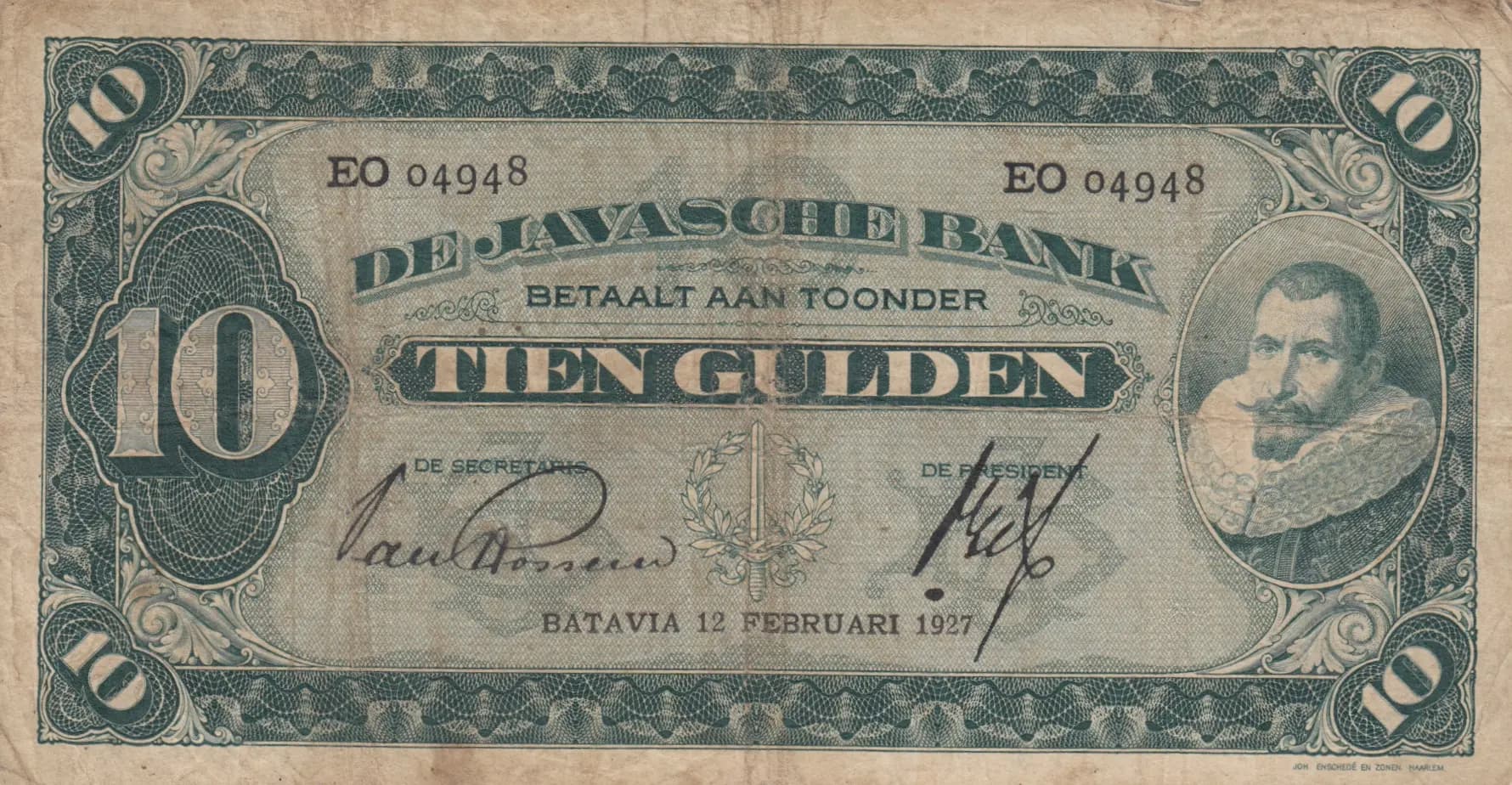
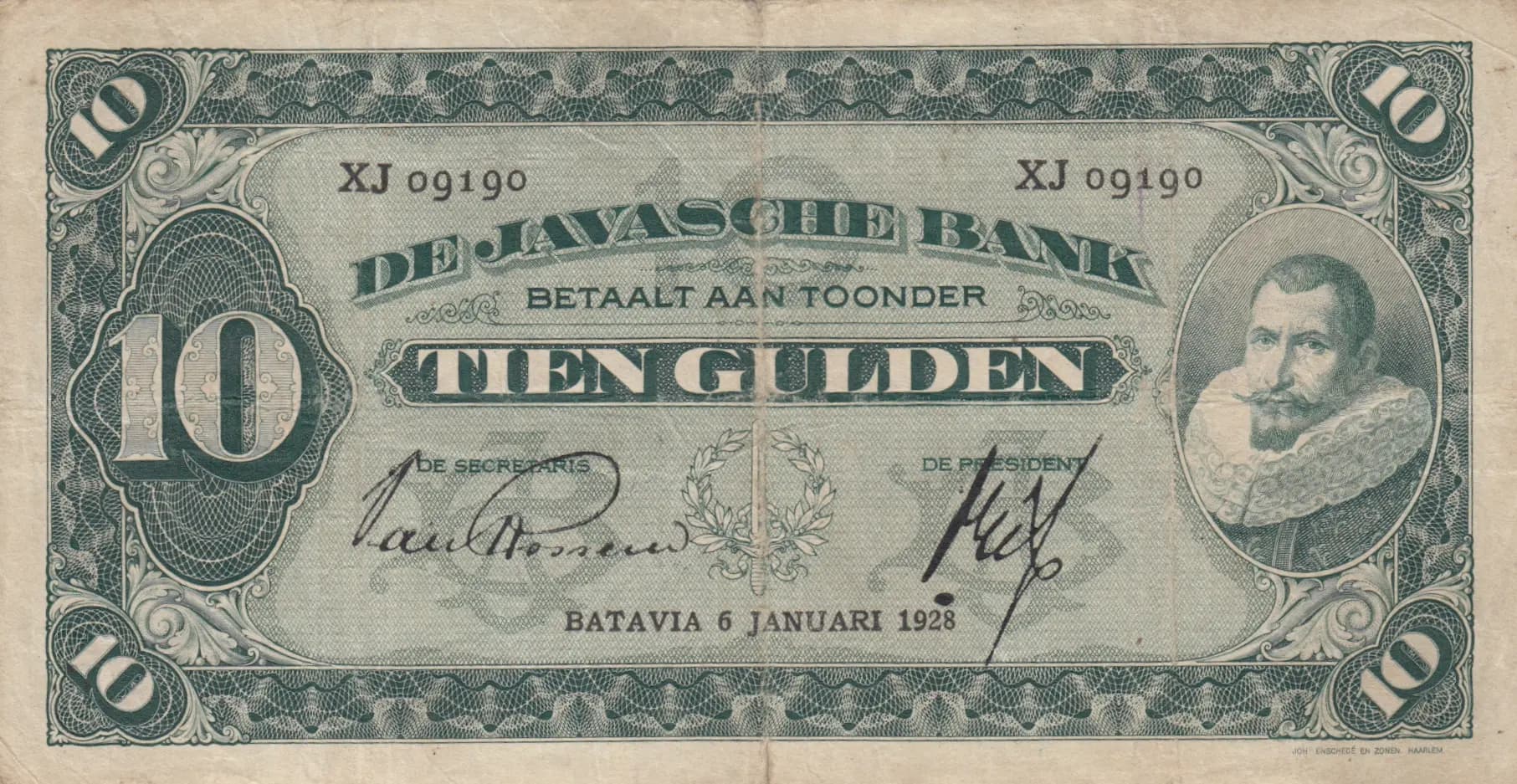
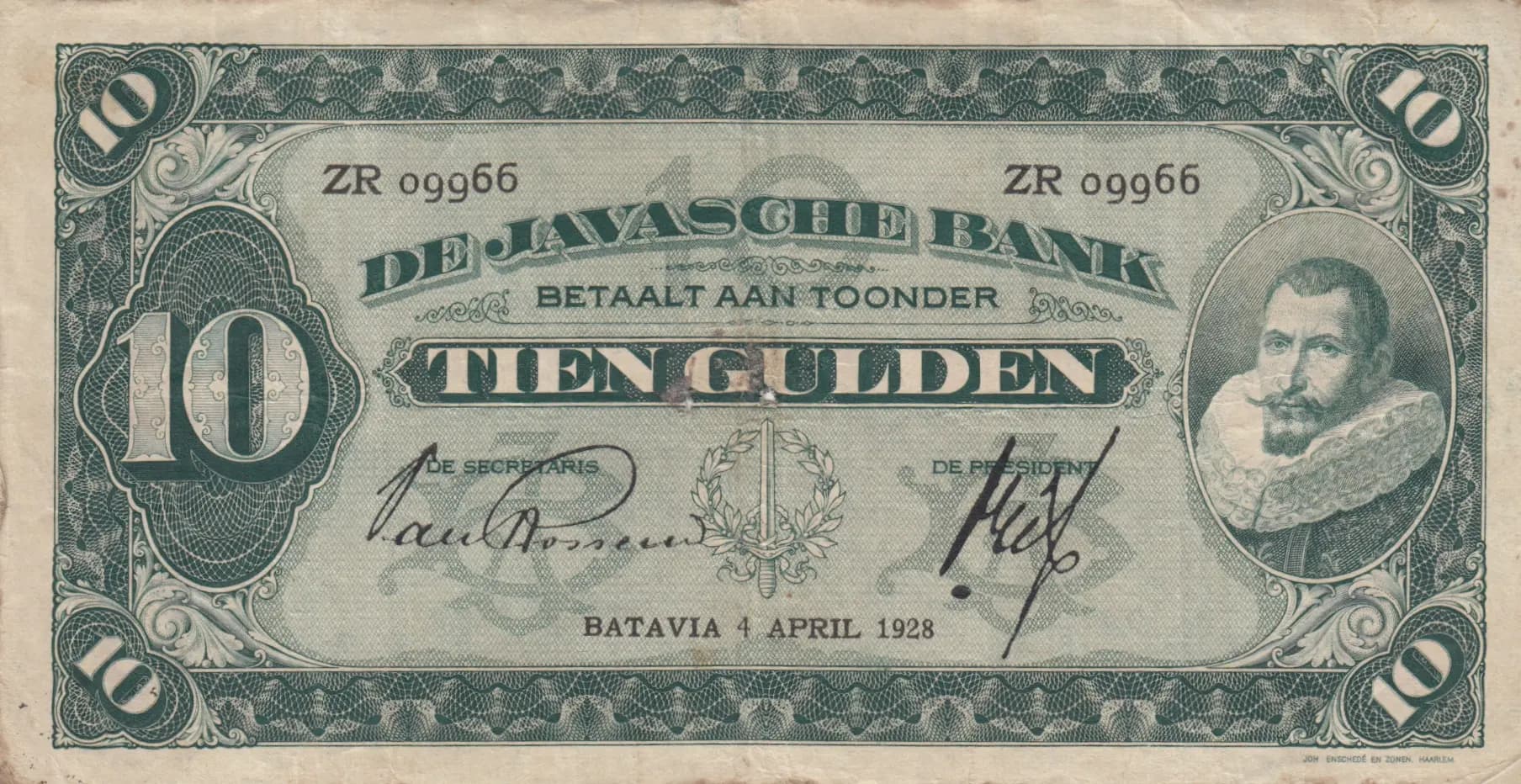
The obverse features an unidentified male portrait in period dress with a prominent ornate collar, positioned on the right side of the note, rendered in fine engraving with intricate scrollwork and laurel wreath designs flanking the central denomination text. The reverse depicts a significant colonial-era architectural structure with domed features, likely representing a government or administrative building in Batavia (modern Jakarta), surrounded by decorative circular medallions in the border. The multilingual text panels (Dutch, Chinese, and Arabic) are integral to the design, reflecting the multicultural commercial base of the Dutch East Indies. Security elements include fine line engraving throughout, intricate border patterns, and the strategic placement of serial numbers.
FRONT: 'DE JAVASCHE BANK' (The Java Bank) | 'BETAALT AAN TOONDER' (Pays to Bearer) | 'TIEN GULDEN' (Ten Guilders) | 'DE SECRETARIS' (The Secretary) | 'DE PRESIDENT' (The President) | 'BATAVIA 30 JULI 1929' (Batavia, July 30, 1929) | Serial number 'EU 00756'. BACK: Denomination '10' (appearing in all four corners) | Dutch legal/regulatory text panel (left side) | Chinese characters containing legal text (center panel) | Arabic script text panel (right side) | Serial/reference markings.
Intaglio/engraving process, typical of high-security banknote production from this era. The fine line work, detailed vignettes, and ornate borders are characteristic of hand-engraved steel plate production. While the specific printer is not confirmed by the Pick catalog data provided, Dutch East Indies notes of this period were commonly produced by European security printers such as De La Rue or similar specialized banknote printers. The quality of the engraving and multi-language capability suggests a premium security printing operation.
Pick 70d represents the 1929 Batavia issue dated July 30, 1929. Varieties for this denomination typically exist in signature combinations (President and Secretary variations), serial number prefixes, and minor color or printing register variations. The observed serial number 'EU 00756' with the prefix 'EU' represents one documented variety. Collectors should note variations in signature combinations and serial number prefixes when cataloging examples of this issue, as multiple plates and signature combinations were used during the production run.